Reflux Surgery in China: A Guide for International Patients
Key Takeaways
- Laparoscopic fundoplication at a top-tier Chinese public hospital typically runs $8,000–$15,000 all-in, against $30,000–$60,000 in the United States for the same procedure.
- China’s highest-volume esophageal surgery centers perform hundreds of anti-reflux operations annually, and the Fudan specialty rankings name specific top-10 hospitals for digestive surgery.
- The hard part is not the surgery — it is access. Public hospital outpatient slots cannot be reserved from abroad in advance, so a first in-person consultation is almost always required before any operation is scheduled.
- Anyone comparing options should understand candidacy criteria, the S2 visa category, and what follow-up looks like after flying home.
Reflux surgery is a procedure that tightens the valve between your stomach and your esophagus so acid stops washing upward. The most common version, laparoscopic Nissen fundoplication, takes a surgeon roughly 90 minutes and leaves five small incisions instead of one large one. If you have been managing gastroesophageal reflux disease with daily proton-pump inhibitors and still waking up with a burning throat, you already understand why people search for real numbers on reflux surgery cost China and elsewhere. Our team at China Medical Services helps international patients work through exactly that question — what it costs, where to go, and what the process actually looks like.
The Problem: A Procedure That Works but Stays Out of Reach
Roughly 20 percent of adults in Western countries experience weekly GERD symptoms, according to the American College of Gastroenterology. Of those, an estimated 10 to 15 percent have symptoms that persist despite medication. That is millions of people who qualify for a surgical consult and never get one.
Cost is the first wall. A 2023 analysis of U.S. claims data put the average total charge for laparoscopic anti-reflux surgery between $30,000 and $60,000, with patient out-of-pocket exposure frequently exceeding $6,000 even with insurance. In the UK, NHS waiting lists for benign upper-GI surgery have stretched past 12 months in several trusts. In Canada, the median wait from surgical referral to operation for general surgery hovers around 20 weeks nationally — longer in some provinces.
Meanwhile, a patient in Manila, Lagos, or Dubai may face a different problem entirely: no local surgeon performs high-volume anti-reflux work. Volume matters here. Fundoplication is a technically demanding operation where outcomes track closely with how many the surgeon does each year.
Why China Delivers Results for Anti-Reflux Surgery
China’s top hospitals are not a budget compromise. They are, in several measurable ways, a legitimate alternative. Here is the structural case.
Clinical Volume That Western Centers Cannot Match
Fuwai Hospital in Beijing performs more than 14,000 cardiac operations a year — the highest volume of any heart center globally. The same volume logic applies across surgical specialties. A senior esophageal surgeon at a Fudan top-100 hospital may perform 150 to 300 anti-reflux procedures annually, while many Western general surgeons do fewer than 20. Repetition builds muscle memory, and muscle memory reduces complications.
Technology and Workflow at Scale
A single Chinese tertiary hospital can see 10,000 outpatients in a day. That sounds chaotic — and for a non-Chinese speaker, it is. But the same scale means a full pre-operative workup (high-resolution manometry, 24-hour pH impedance study, endoscopy, barium swallow) can be completed in two to three days rather than spread across six weeks. Operating theaters run six days a week at many top centers. The system is built for throughput, and that compresses your total time in-country.
Cost Advantage Without the Quality Trade-Off
Lower prices in China come from labor economics, not corner-cutting. Surgeon salaries are a fraction of U.S. levels, hospital overhead is lower, and implant and instrument costs are negotiated at national scale. A laparoscopic fundoplication at a top public hospital typically falls between $8,000 and $15,000 including hospital stay. Private international hospitals in Shanghai or Beijing may quote $18,000 to $28,000 for the same operation with English-speaking staff and direct insurance billing. Both figures sit far below U.S. benchmarks.
| Cost Component | Top Chinese Public Hospital | China Private International Hospital | United States |
|---|---|---|---|
| Surgeon and OR fees | $4,000–$7,000 | $9,000–$14,000 | $15,000–$30,000 |
| Hospital stay (3–5 days) | $2,000–$4,000 | $5,000–$9,000 | $10,000–$20,000 |
| Pre-op testing | $800–$1,500 | $1,500–$3,000 | $3,000–$6,000 |
| Anesthesia | $700–$1,200 | $1,500–$2,500 | $3,000–$5,000 |
| Typical total | $8,000–$15,000 | $18,000–$28,000 | $30,000–$60,000 |
These are ranges. Final quotes vary by hospital and case complexity — a redo operation or a patient with prior hiatal hernia repair will cost more.
Who Actually Qualifies for Fundoplication
Not everyone with heartburn is a surgical candidate. Chinese surgeons generally apply the same criteria used in Western guidelines, and the workup is designed to confirm three things.
- Proven acid exposure. A 24-hour pH study must show abnormal esophageal acid exposure. Without it, surgery is guesswork.
- Medication failure or intolerance. You have tried PPIs at adequate dose for at least 8 to 12 weeks, or you cannot tolerate them.
- Normal or near-normal esophageal motility. A weak esophagus changes the operation — a partial wrap instead of a full Nissen — or rules surgery out entirely.
Hiatal hernia size also matters. A large paraesophageal hernia is repaired at the same time. A patient with obesity and a BMI above 35 is often steered toward gastric bypass instead, because the reflux is driven by weight and fundoplication alone frequently fails.
If a clinic offers you anti-reflux surgery without manometry and pH testing first, walk away. That is not a shortcut. It is a red flag.
How Long Is Recovery After Acid Reflux Surgery?
Recovery is genuinely faster than most patients expect, but the diet timeline is stricter than they hope.
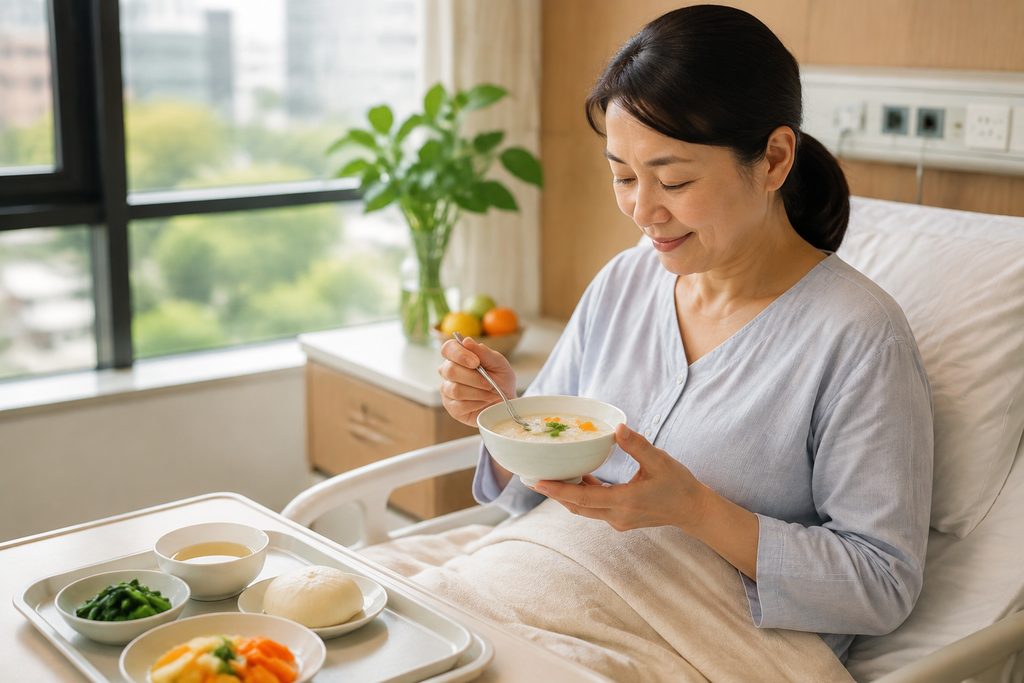
Days 1–2: You are walking the ward within hours of waking up. Most patients are on clear liquids the same day. Pain is managed with oral analgesics, and many report only shoulder-tip discomfort from the gas used during laparoscopy.
Days 3–5: Discharge typically happens on day 3 or 4. You move to full liquids — protein shakes, thin soups, yogurt. No bread, no rice, no meat.
Weeks 1–2: Soft foods only. Scrambled eggs, mashed vegetables, well-cooked fish. Swallowing may feel tight for the first ten days as post-operative swelling settles. This is normal.
Weeks 3–6: Gradual reintroduction of normal textures. Most patients return to desk work at two to three weeks. Heavy lifting — anything over 10 pounds — is off the table until week six.
Month 3 onward: Full diet. Some patients notice they cannot eat large volumes in one sitting and need to eat smaller, more frequent meals permanently. That is the wrap working as intended.
If you are flying long-haul afterward, most surgeons advise waiting 10 to 14 days before boarding. Blood clot risk and the physical strain of air travel both argue for patience.
How to Choose a Center — and What the Rankings Really Mean
The Fudan Hospital Rankings are China’s most cited hospital quality reference. The general Top 100 list groups hospitals into tiers (A++++ down to A) rather than numbering them, so you will not find “the number one hospital in China” — that framing is a marketing invention. What the rankings do provide is a specialty reputation list covering 45 disciplines, each with a named top 10. For digestive surgery and gastroenterology, that list points to a small set of institutions in Beijing, Shanghai, and Guangzhou.
Practical selection criteria that matter more than brand:
- Does the surgical team perform at least 100 anti-reflux procedures annually?
- Is there a dedicated esophageal physiology lab on site?
- Can the hospital’s international department provide records in English?
- What is the reoperation rate, and how is it tracked?
Our department guides break down the Fudan specialty top 10 by discipline, and the top hospitals directory groups them by city so you can match geography to logistics.
Is Reflux Surgery in China Safe? The Honest Answer
Complication rates at high-volume Chinese centers are comparable to published Western figures. Laparoscopic fundoplication carries roughly a 2 to 5 percent rate of significant complications — perforation, bleeding, pneumothorax — and a 5 to 10 percent rate of persistent dysphagia requiring dilation. These numbers come from international meta-analyses, not Chinese-specific data, because China’s top centers generally publish in the same journals using the same outcome definitions.
What is different is the surrounding infrastructure. Language barriers, unfamiliar consent processes, and the fact that public hospitals require upfront payment before insurance reimbursement all add friction. Our private international hospital directory lists JCI-accredited facilities with English-speaking staff and direct billing, which removes much of that friction at a higher price point.
The honest caveat: if something goes wrong after you fly home, your local surgeon inherits a case they did not perform. Bring your operative report, discharge summary, and imaging on a USB drive. Ask for them before you leave the hospital, not after.
Practical Logistics: Visa, Payment, and Follow-Up
International patients coming to China for medical treatment use the S2 visa, which covers short-stay private affairs including medical care. Accompanying family members apply under the same category. The M visa is for commercial and trade activity and has nothing to do with medical treatment — if a service tells you otherwise, that is a warning sign. Stays beyond 180 days require the S1 category. Always confirm current requirements with your nearest Chinese embassy or consulate, since documentation rules change.
Payment at public hospitals is upfront. International credit cards work at some counters but not all; wire transfer before arrival is the safer route. Private international hospitals typically bill insurers directly. If you carry travel medical insurance, confirm coverage in writing before you travel — many policies exclude elective procedures.
Follow-up after returning home is the most under-planned part of the trip. Arrange a local gastroenterologist before you leave China. Share your pH study, manometry results, and operative notes. Schedule a barium swallow at three months to confirm the wrap is intact.
Request your complete medical records in English before discharge. Chinese hospitals will provide them, but the process takes two to three business days and is far easier to complete while you are still on site.
Frequently Asked Questions
Generally, no. Public hospital outpatient appointments cannot be reserved from overseas in advance — registration happens on the day of the visit. Surgery is scheduled only after an in-person consultation. The exception is the international or VIP department at certain hospitals, which can sometimes arrange a pre-scheduled specialist visit. Anyone promising you a confirmed surgery date before a face-to-face evaluation is overstating what is possible.
Packages vary widely. A legitimate one typically covers airport pickup, hospital appointment coordination, interpretation during consultations, and help with admission paperwork. It does not cover the surgical fee itself, which is paid directly to the hospital. Be cautious with any quote that bundles “surgery” into a single flat price before you have been evaluated — the operation you need depends on findings that only emerge after testing.
Redo fundoplication is a substantially harder operation with higher complication rates, and not every center performs them. If you have had prior anti-reflux surgery, say so at the very first contact. It changes which hospitals are appropriate for your case and how the pre-operative workup is structured.
Plan for 14 to 21 days minimum. That covers arrival, two to three days of testing, the operation, a three-to-five-day hospital stay, and a post-operative check before you fly. Some patients extend to four weeks if they want a follow-up endoscopy before departure.
Your Next Step
Reflux surgery is a well-established operation with predictable outcomes, and China’s top centers offer it at a fraction of Western prices with comparable clinical standards. The barrier is navigation, not quality. Our team is not a hospital and we do not provide diagnoses or treatment — we handle the coordination layer: matching your case to the right specialty center, arranging appointments through official international departments, and providing bilingual support on the ground. If you would like a clear picture of what your specific situation would involve, you can start a free consultation and we will walk through it with you, no obligation attached.
This article is for general informational purposes only and does not constitute medical advice. Treatment decisions should always be made in consultation with a qualified physician who has reviewed your individual medical history.
For more medical information and treatment options in China, visit chinamedservices.com (China Medical Services).
