Rehabilitation: Getting Back to Life After Stroke, Surgery, or Spinal Injury
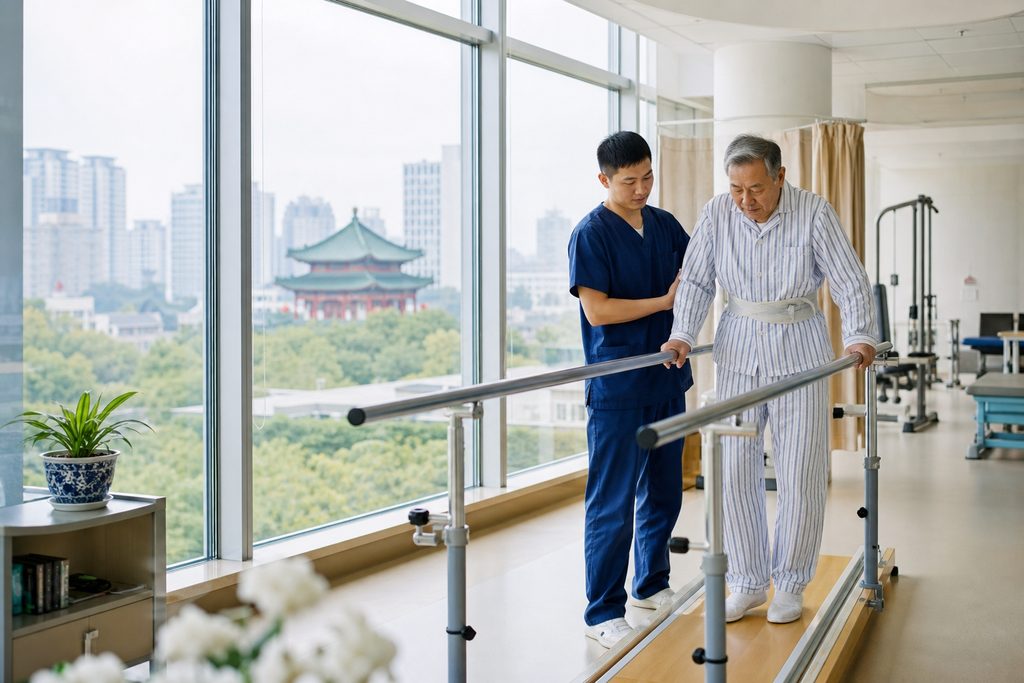
Rehabilitation is the medical specialty that helps you regain function after a major health event — a stroke, heart surgery, spinal cord injury, or joint replacement. It is not passive rest. It is structured, intensive retraining of your brain and body, delivered by physical therapists, occupational therapists, speech-language pathologists, and rehabilitation physicians working as one team. And for international patients weighing where to do that work, stroke rehab cost China has become a serious point of comparison: top-tier Chinese rehabilitation hospitals deliver outcomes on par with Western centers at a fraction of the price.
This matters because rehabilitation is where recovery actually happens. A successful surgery or acute treatment is only half the battle. What you do in the weeks and months after determines whether you walk again, speak clearly again, return to work, or live independently. The stakes are enormous. So is the price difference. We will walk through the real numbers, the best hospitals, what timelines to expect, and the logistics of doing rehab in China as a foreign patient.
Key Takeaways
- Inpatient stroke rehabilitation in China typically costs $150–$400 per day at top public hospitals, versus $1,500–$3,000 per day in the United States.
- China’s best rehabilitation hospitals treat enormous patient volumes — some admit over 10,000 rehab inpatients annually — which builds clinical experience that smaller Western centers cannot match.
- The biggest barrier is not cost or quality — it is language and navigation. Public hospital rehab wards rarely have English-speaking staff, so a bilingual coordinator is often essential.
- Rehabilitation is a long game. Stroke recovery plateaus can take 6–12 months; spinal cord rehab often runs 3–6 months inpatient. Plan accordingly before committing to any program abroad.
The Problem: Rehabilitation at Home Is Expensive, Fragmented, and Often Too Slow
In the United States, a single day of inpatient rehabilitation costs between $1,500 and $3,000. A typical 3-week stroke rehab stay runs $30,000 to $60,000 before insurance. Even with good coverage, copays and out-of-network charges routinely push patients into five-figure territory. In the UK, NHS rehab is free but wait times for specialized neurorehabilitation can stretch to 6–8 weeks or longer after discharge from acute care. Canada reports similar bottlenecks: median wait time for inpatient stroke rehabilitation in some provinces exceeds 30 days.
That delay is not just inconvenient. It is clinically harmful. The first 90 days after a stroke are when neuroplasticity — the brain’s ability to rewire itself — is at its peak. Every week spent waiting for a rehab bed is a week of lost recovery potential. Research published in Stroke shows that earlier, more intensive rehabilitation leads to significantly better functional outcomes at 6 and 12 months. So the problem is twofold: cost and access. Both push patients away from the care they need at the moment they need it most.
And this affects a lot of people. Stroke hits approximately 795,000 Americans every year. Spinal cord injuries affect roughly 18,000 new patients annually in the US alone. Cardiac surgery volumes are in the hundreds of thousands. Each of these patients needs rehabilitation. Many cannot afford it at home, or cannot wait for it.
Why China’s Rehabilitation System Delivers Comparable Results at a Fraction of the Cost
Clinical Volume Builds Expertise That Smaller Centers Cannot Match
China’s top rehabilitation hospitals operate at a scale that is hard to comprehend from a Western perspective. China Rehabilitation Research Center in Beijing — one of the country’s leading rehab institutions — treats tens of thousands of inpatients and outpatients each year. Huashan Hospital’s rehabilitation department in Shanghai, affiliated with Fudan University, runs one of the most respected neurorehabilitation programs in Asia. These are not small boutique clinics. They are high-volume, high-intensity rehabilitation factories where therapists see more complex cases in a month than many Western therapists see in a year.
Volume matters in rehabilitation. A physical therapist who has guided 200 stroke patients through gait retraining this year has seen patterns, complications, and plateaus that a therapist who treats 20 patients a year has not. That experience translates into faster problem-solving when a patient hits a wall. It is the same principle that makes high-volume surgical centers safer: repetition builds competence.
Integrated Traditional Chinese Medicine Adds a Layer Most Western Programs Lack
Chinese rehabilitation programs routinely integrate acupuncture, tuina massage, and herbal medicine alongside conventional physical and occupational therapy. This is not alternative medicine bolted on as an afterthought — it is a core part of the rehabilitation protocol in many top Chinese hospitals. For stroke patients with spasticity, acupuncture has shown measurable benefits in reducing muscle stiffness and improving motor function in multiple randomized controlled trials. For spinal cord injury patients, tuina and moxibustion are commonly used to manage neuropathic pain and improve circulation.
You do not have to choose between conventional rehab and TCM. In China, they are delivered together, under one roof, by teams that communicate with each other. That integration is rare in the West, where acupuncture is often a separate, out-of-pocket add-on. Here, it is part of the standard care pathway. For patients interested in exploring this approach, our guide to TCM hospitals for international patients explains what to expect.
Cost Advantage Without Quality Compromise: The Structural Reasons
The price difference is real and it is not because Chinese rehab is worse. It is because the underlying economics are different. Labor costs for therapists and nurses in China are substantially lower than in the US or Europe. Hospital construction and operating costs are lower. Malpractice insurance — a massive hidden cost in American healthcare — is far less expensive. And the sheer patient volume means fixed costs are spread across many more patients.
None of that affects clinical quality. What affects quality is training, protocol design, and volume. China’s top rehabilitation hospitals score well on all three. Many are JCI-accredited or hold Fudan University Hospital Rankings positions in rehabilitation medicine. The top-ranked hospital database we maintain includes rehabilitation departments that meet rigorous international standards. Lower cost here reflects lower overhead, not lower standards.
A word of caution: China’s top rehabilitation hospitals are excellent. China’s average hospitals are not. The gap between the best and the rest is wide. When evaluating rehab options, insist on hospitals that appear in the Fudan rankings or hold JCI accreditation. Do not choose based on price alone.
Stroke Rehab Cost China: Real Numbers and What They Include
Let us talk about the actual figures for stroke rehab cost China. At top public hospitals with international patient departments, inpatient stroke rehabilitation typically costs between $150 and $400 per day. That includes the bed, nursing care, daily physical therapy, occupational therapy, speech therapy as needed, and physician rounds. A 4-week comprehensive stroke rehab program therefore runs roughly $4,200 to $11,200. Add TCM therapies like acupuncture and tuina, and the total might reach $6,000 to $15,000 for a month.
Compare that to the United States, where the same 4-week program costs $42,000 to $84,000 at an inpatient rehabilitation facility. Even with insurance covering 80%, the patient’s out-of-pocket share could exceed the entire cost of the Chinese program. For uninsured or underinsured patients, the math is even starker.
| Rehabilitation Service | China (Top Public Hospital) | United States | United Kingdom (Private) |
|---|---|---|---|
| Inpatient stroke rehab (per day) | $150–$400 | $1,500–$3,000 | $800–$1,600 |
| 4-week stroke rehab program | $4,200–$11,200 | $42,000–$84,000 | $22,400–$44,800 |
| Outpatient physiotherapy session | $20–$60 | $75–$150 | $60–$120 |
| Acupuncture session (add-on) | $15–$40 | $75–$125 | $50–$90 |
| Cardiac rehab full program (12 weeks) | $800–$2,500 | $3,000–$8,000 | $2,500–$6,000 |
These are ranges, not quotes. Final pricing varies by hospital, case complexity, and whether you go through the international department or the standard public channel. International departments charge more — typically 1.5 to 2 times the standard rate — but they provide English-speaking coordinators, private rooms, and streamlined admission. For most foreign patients, that premium is worth it. Navigating a Chinese public hospital rehab ward without language support is extremely difficult.
How Long Does Spinal Rehab Take? Timelines and What to Expect
Spinal cord injury rehabilitation is the longest and most intensive form of rehab. The honest answer to how long does spinal rehab take is: it depends entirely on the level and completeness of the injury. But there are benchmarks.
For incomplete spinal cord injuries — where some motor or sensory function is preserved below the injury level — inpatient rehabilitation typically lasts 3 to 6 months. Patients with complete injuries may need 4 to 8 months of inpatient rehab, followed by ongoing outpatient therapy for a year or more. The first 6 months after injury are when the most dramatic functional gains occur. After that, progress slows but does not stop. Many patients continue improving for 18 to 24 months with consistent therapy.
China’s top spinal rehabilitation programs, such as those at China Rehabilitation Research Center in Beijing and West China Hospital in Chengdu, structure their care around these timelines. A typical day includes 3 to 4 hours of active therapy: physical therapy for mobility and transfers, occupational therapy for daily living skills, and often aquatic therapy or robotic-assisted gait training. TCM therapies are added for pain and spasticity management. The intensity is high, and that is the point. More therapy hours per day correlates with better functional outcomes.
Practical tip: If you are considering spinal rehab in China, bring every imaging study, operative report, and discharge summary from your acute care hospital. Chinese rehab physicians will want to review the surgical approach and any hardware placed before designing your therapy plan. Incomplete records mean delays.
Is Cardiac Rehab Available in Shanghai? Yes — and It Is More Comprehensive Than You Might Expect
The short answer to is cardiac rehab available in Shanghai is yes, at multiple top-tier hospitals. Zhongshan Hospital, affiliated with Fudan University, runs one of China’s most established cardiac rehabilitation programs. Ruijin Hospital, Shanghai Chest Hospital, and Huashan Hospital all offer structured cardiac rehab for post-surgical and post-MI patients. These programs follow the same three-phase model used in the US and Europe: inpatient mobilization, supervised outpatient exercise, and long-term maintenance.
What differs is the integration of TCM. Chinese cardiac rehab programs frequently incorporate tai chi, qigong, and acupuncture alongside conventional exercise training and risk factor management. Multiple studies, including a 2021 meta-analysis in the Journal of the American Heart Association, have shown that tai chi improves exercise capacity and quality of life in cardiac patients. In China, these are not fringe add-ons. They are standard components of the cardiac rehab protocol.
For international patients, Shanghai is also one of the easiest Chinese cities to navigate. It has the highest concentration of English-speaking medical staff outside Beijing, a large expatriate community, and excellent international flight connections. Our Shanghai hospital guide covers the major rehab-capable institutions in detail.
How to Book a Rehab Package in China: The Practical Path
The process to book rehab package China is not like booking a hotel room. Chinese public hospitals do not allow overseas patients to reserve rehab beds online. You cannot email a hospital and get a confirmed admission date. The system works differently.
Here is the real path. First, you need a clinical evaluation. That means sending your medical records — imaging, operative reports, discharge summaries, current medications — to the hospital’s international department or rehabilitation department for review. A rehab physician will assess whether you are a suitable candidate for their program and what level of care you need. This remote review typically takes 3 to 7 business days.
Second, if the hospital accepts your case, you will receive a treatment plan and cost estimate. This is when you apply for your visa. Foreigners coming to China for medical treatment use the S2 visa, which is the short-stay category for private affairs including medical treatment. Your hospital will issue an invitation letter and treatment confirmation document that you submit with your visa application. The S2 visa typically allows stays of up to 180 days. For rehab programs longer than 180 days, you would need the S1 visa.
Third, you travel to China, complete an in-person evaluation, and begin treatment. This is the critical point: the hospital will not finalize your rehab plan until they have assessed you in person. The remote review gets you in the door. The in-person evaluation determines your actual program. That is simply how Chinese public hospitals operate. There is no way around it.
Budgeting note: Plan for at least 3–5 days in China before your rehab program formally begins. That covers the in-person evaluation, any additional testing, and administrative setup. It is not wasted time — it is part of the process.
For patients who want help with this process, a bilingual coordinator can handle the record translation, hospital communication, visa document collection, and on-the-ground logistics. This is not about jumping queues. It is about not getting lost in a system where everything is in Chinese and the rules are unfamiliar. Our team has guided patients through affordable post surgery rehab abroad programs across China, and we have seen how much smoother the process goes with experienced local support. If you want to understand what that coordination looks like, the patient services page explains the model in plain language.
Choosing the Right Rehab Hospital: What Actually Matters
If you are looking for the best neuro rehab hospital Beijing has to offer, you will find several strong candidates. China Rehabilitation Research Center is the largest rehabilitation-focused hospital in the country and a national referral center for complex neurorehabilitation. Peking University Third Hospital has a highly regarded rehabilitation medicine department. Xuanwu Hospital, affiliated with Capital Medical University, is known for stroke and neurology care with strong rehab integration. Each has different strengths.
How do you choose? Look at four things. First, volume: how many patients with your condition does the department treat annually? High volume means experienced therapists and refined protocols. Second, accreditation: is the hospital JCI-accredited or ranked in the Fudan rehabilitation medicine specialty list? Third, integration: does the rehab program include TCM therapies if you want them, and do the TCM and conventional teams actually coordinate? Fourth, international patient infrastructure: does the hospital have an international department with English-speaking staff? Without that, you will struggle.
For neurorehabilitation specifically, also ask about the therapy modalities available. Robotic-assisted gait training, functional electrical stimulation, virtual reality balance training, and constraint-induced movement therapy are all available at China’s top neurorehab centers. Not all hospitals have all of these. If a specific modality matters to you, confirm it is available before you commit.
One more consideration: city choice. Beijing and Shanghai have the most internationally experienced hospitals. But they are also the most expensive cities in China, and hospital pricing reflects that. Chengdu, Guangzhou, and Hangzhou offer excellent rehab programs at lower cost, with lower living expenses during your stay. The trade-off is fewer English-speaking staff and less international patient infrastructure. For a 3-month rehab stay, those cost differences add up to thousands of dollars. Our specialty department rankings can help you compare rehabilitation programs across cities.
Practical Considerations: Visas, Payment, and Follow-Up Care
Let us get concrete about the logistics. These are the things that trip people up.
Visa: You need an S2 visa for medical treatment stays under 180 days. Your hospital must provide an invitation letter and treatment confirmation before you apply. The visa application is submitted through your local Chinese embassy or consulate. Processing typically takes 4 to 10 business days, but can take longer during peak periods. Apply early. If your rehab program will exceed 180 days — possible for spinal cord injury patients — you need an S1 visa, which requires additional documentation.
Payment: Chinese public hospitals require prepayment. You will deposit money upfront, and the hospital draws down against that balance as services are delivered. International departments typically accept international credit cards and bank transfers. Standard public wards often require payment through Chinese banking apps like WeChat Pay or Alipay, which are difficult for foreigners to set up without a Chinese bank account. This is another reason international patients gravitate
Frequently Asked Questions
Yes. The hospitals used for international patients are JCI-accredited and follow the same international safety standards as top hospitals in the US and Europe. Surgical teams perform high volumes of procedures — often more than their Western counterparts — which studies show leads to better outcomes.
Costs vary by procedure and hospital, but international patients typically save 40-80% compared to US prices — even when factoring in travel and accommodation. A consultation with our team will give you an exact, all-inclusive quote with no hidden fees.
Send us your existing medical reports to get started. We handle everything from hospital selection and appointment scheduling to visa assistance and post-operative recovery planning. Your medical records are reviewed by the specialist before you even book a flight.
For more medical information and treatment options in China, visit chinamedservices.com (China Medical Services).
