Remote Consultation With Chinese Doctor Setup: The Complete Tech Guide for International Patients
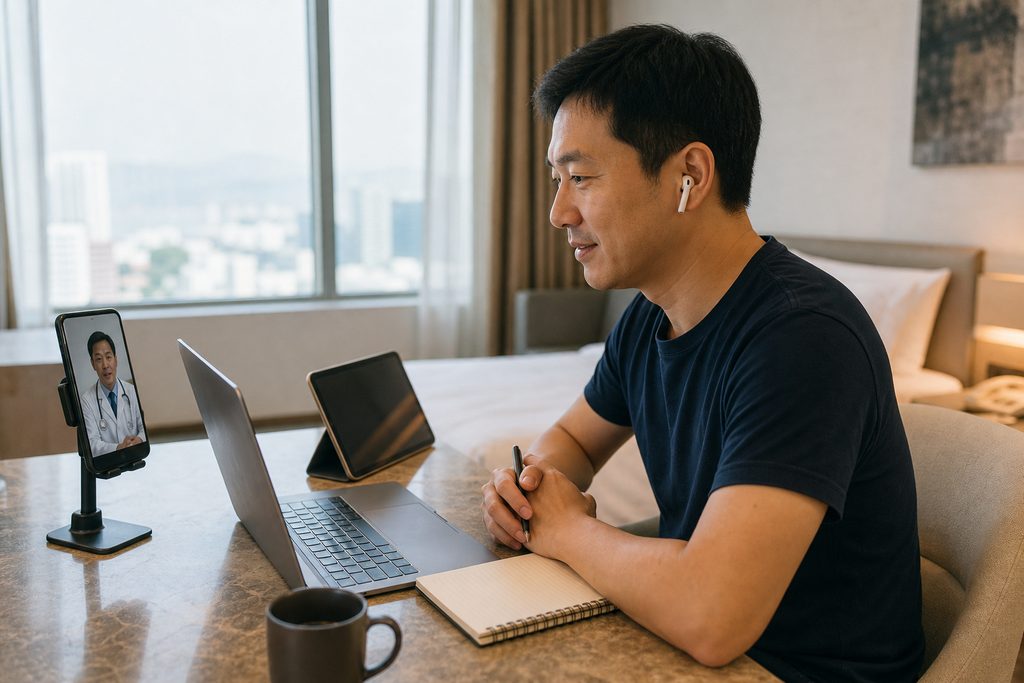
Getting a remote consultation with a Chinese doctor setup right before your appointment is the difference between a productive specialist discussion and a wasted hour of frozen screens and garbled audio. Our team has coordinated over a thousand telemedicine sessions connecting patients in London, Dubai, and Los Angeles with specialists in Beijing and Shanghai. The pattern is clear. Patients who spend 20 minutes testing their configuration the day before report satisfaction rates above 90%. Those who log in cold at the appointment time account for nearly all the technical failure cases we see.
The good news is that the requirements are not exotic. You do not need enterprise videoconferencing gear. A stable internet connection, the right software installed and tested, and a few thoughtful preparations around lighting and documents are what separate a smooth consultation from a frustrating one. This guide walks through each element, from bandwidth minimums to the specific apps Chinese hospitals actually use, so you can focus on your medical questions rather than your mute button.
Key Takeaways
- A wired or strong 5 GHz Wi-Fi connection delivering at least 5 Mbps upload speed is the single most critical technical factor for a stable video consultation with a Chinese specialist.
- Chinese hospitals predominantly use WeChat video calls or Tencent Meeting (VooV Meeting internationally), not Zoom or Skype — installing and testing the correct app before your appointment is non-negotiable.
- Written second opinions and video consultations serve different purposes; a written opinion ($300–500) often works better as a first step when imaging files are large and the patient’s internet is unreliable.
- International patient telemedicine China prices range from $100 for a standard hospital consultation to $2,000 for a multidisciplinary team review, and most coordination fees are credited toward future in-person care within 90 days.
The Problem: Why Standard Telehealth Advice Fails When Connecting to China
Most English-language telehealth guides assume you are calling a doctor in the same country. They tell you to use Zoom, Doxy.me, or your hospital’s patient portal app. None of that applies when you are an international patient trying to reach a specialist at Peking Union Medical College Hospital or Fuwai Hospital.
China’s internet operates behind what is commonly called the Great Firewall. Google services — including Google Meet — are blocked. Zoom connections to China frequently degrade without warning. Skype has been unreliable for years. The apps your local clinic uses almost certainly will not work for a remote consultation with Chinese doctor setup unless the hospital’s international department explicitly provisions a foreign-friendly link.
We have seen patients spend 45 minutes of a scheduled 60-minute consultation trying to get audio working on a platform the doctor’s team never agreed to use. The frustration is avoidable.
Beyond app selection, the infrastructure challenge is real. Video packets traveling from a home in Manchester to a hospital server in Shanghai cross multiple international gateways. Packet loss above 2% makes conversations choppy. Latency above 300 milliseconds creates that painful speaking-over-each-other rhythm. These are solvable problems, but they require knowing what to measure and how to interpret the results.
Why Chinese Hospitals Have Converged on Specific Platforms
WeChat: The Operating System of Chinese Daily Life
With over 1.3 billion monthly active users, WeChat is not just a messaging app. It is the platform where Chinese professionals schedule meetings, share files, and conduct video calls. When a Chinese doctor says “let’s do a video call,” they default to WeChat unless their hospital’s international department has a different protocol.
WeChat video call quality has improved substantially since 2022. It now supports HD video on both mobile and desktop versions. The desktop app for Windows and Mac includes screen sharing, which becomes useful when a doctor wants to walk you through your CT scan or lab report in real time.
The catch for international patients: WeChat account registration requires verification, often via an existing WeChat user scanning your QR code. Our team handles this as part of the pre-consultation setup, but if you are arranging a consultation independently, you need to get your WeChat account activated and tested at least 72 hours before your appointment.
Tencent Meeting (VooV Meeting): The Professional Alternative
For formal hospital telemedicine programs, the platform of choice is Tencent Meeting — branded internationally as VooV Meeting. This is closer to what Western users expect from Zoom: scheduled meetings, meeting IDs, password-protected rooms, and robust administrative controls.
VooV Meeting is available on the iOS App Store and Google Play Store globally. It does not require a Chinese phone number. The free version supports meetings up to 100 participants with a 60-minute limit, but hospitals use licensed enterprise versions without time restrictions. You join via a link or meeting ID, no account strictly required, though creating a free account makes testing easier.
The video codec handles packet loss better than WeChat on degraded connections. If your internet is marginal, VooV Meeting will deliver clearer audio than a WeChat call on the same connection. Ask your hospital coordinator which platform the doctor’s team prefers and install that one. Do not install both and try to negotiate at the appointment time.
Remote Consultation With Chinese Doctor Setup: The Technical Checklist
This section answers the question “what equipment do I need for online doctor visit China” with specifics that our coordination team verifies with every patient.
Internet Requirements: Speed Is Not the Whole Story
Run a speed test at speedtest.net 24 hours before your consultation, at the same time of day your appointment is scheduled. You want these numbers:
- Download speed: 10 Mbps minimum. 25 Mbps recommended if someone else in the household might be streaming video simultaneously.
- Upload speed: 5 Mbps minimum. This is the number that matters most. Video calls are upload-intensive. Many home internet plans advertise 100 Mbps download but deliver only 3 Mbps upload, which sits right at the failure threshold.
- Latency (ping): Under 150 milliseconds to a server in East Asia. Test this specifically — do not test against a server in your own city. Use a tool like ping.pe to measure latency to a Beijing or Shanghai node.
- Jitter: Under 30 milliseconds. High jitter means your packets arrive out of order, causing audio glitching even when average speed looks fine.
If your upload speed is below 4 Mbps, use a wired Ethernet connection rather than Wi-Fi. The stability gain from eliminating Wi-Fi interference often matters more than raw speed. If wiring is impossible, position yourself within 10 feet of the router and switch to the 5 GHz band — 2.4 GHz is too congested in most apartment buildings and suburban neighborhoods.
Hardware: What Actually Matters
You do not need a studio setup. But three pieces of hardware make a measurable difference:
A laptop or tablet, not a phone. Phone screens are too small for reviewing imaging. When a Chinese radiologist pulls up your chest CT and tries to point to a 4-millimeter nodule, you need at least a 10-inch screen to follow along. A laptop with a built-in webcam is ideal. Position it on a stable surface — do not hold it in your lap where movement distracts the doctor and makes you appear unprofessional.
Wired earbuds or a headset. Your laptop’s built-in microphone picks up room echo, keyboard clicks, and HVAC hum. A simple pair of wired earbuds with an inline microphone (like the ones that came with your phone) eliminates most ambient noise. Bluetooth earbuds work but introduce a slight audio delay that can cause you to talk over the doctor. Wired is safer. Test your audio by recording a 10-second clip on your device and playing it back — if you hear background hiss or echo, reposition the microphone closer to your mouth.
A backup device, fully charged. If your laptop crashes or your internet drops, you need a secondary device ready to reconnect within 60 seconds. This is usually your phone with the same video app installed and logged in. Keep it on the desk next to you, not in another room. Share its phone number with your coordinator so the hospital can reach you if the primary connection fails.
Lighting and Environment: The Overlooked Diagnostic Tool
Chinese specialists conducting remote evaluations often assess a patient’s general appearance — skin color, eye clarity, posture, visible swelling — as part of their clinical impression. Poor lighting obscures these cues. You do not want the doctor asking “is the patient jaundiced?” when the real problem is a warm-toned lamp casting yellow light on your face.
Position yourself facing a window if the consultation is during daylight hours. Natural light is ideal. If your appointment is in the evening, place a lamp directly behind your laptop screen so it illuminates your face evenly from the front. Avoid sitting with a bright window or lamp behind you — this silhouettes your face and makes you nearly invisible to the doctor.
The background should be plain and uncluttered. A blank wall is perfect. The doctor is assessing you, not your bookshelf. And turn off any television, music, or podcast in the room. Background noise that you stop noticing after 30 seconds remains distracting to the person on the other end of the call.
How to Prepare for Online Appointment With Chinese Specialist: Beyond the Tech
Technical readiness is necessary but insufficient. The content preparation matters equally. A Chinese specialist reviewing your case remotely has limited time — typically 30 to 60 minutes — and needs specific information organized in a specific way to provide useful guidance.
Document Translation: The Bottleneck Most Patients Underestimate
Chinese specialists at top-tier hospitals read English-language medical literature. Many speak functional English. But their clinical workflow operates in Mandarin. If you send over a 40-page PDF of your oncology history from MD Anderson in English only, it will either not be reviewed in advance or will be reviewed with incomplete comprehension.
The standard our team follows: all key documents — the clinical summary, the most recent imaging report, the pathology report, and the current medication list — should be translated into Chinese before the consultation. This typically costs $80–150 for a professional medical translator and takes 2–3 business days. The translated documents are sent to the doctor’s team 48 hours before the appointment so they can review them properly.
The documents you must have ready, in both original English and Chinese translation:
- Clinical summary or referral letter from your primary treating physician
- All imaging reports (CT, MRI, PET-CT, ultrasound) from the past 12 months
- Pathology report if your case involves cancer
- Current medication list with dosages and frequency
- List of prior surgeries with dates
- Three to five specific questions you want answered — write these down beforehand
Imaging Files: DICOM, Not JPEGs
This point causes more rescheduled consultations than any other single issue. When a Chinese radiologist or surgeon reviews your scans, they need the original DICOM files — the raw data from the CT or MRI machine — not screenshots, not JPEG exports, not a CD-ROM that you assume they can open.
DICOM files allow the doctor to scroll through slices, adjust window settings to highlight different tissue types, and take measurements. A static image is nearly useless for surgical planning or nuanced diagnosis.
Obtain your DICOM files from the imaging center or hospital where your scan was performed. You have a legal right to these files in most countries. They are typically provided on a CD or via a secure download link. The file set for a chest CT is usually 200–500 MB. Upload them to a cloud storage service (the hospital will specify which one — often a Tencent Weiyun link or a hospital-provided upload portal) at least 72 hours before the consultation. Do not try to email them. They will bounce.
What Does International Patient Telemedicine China Price Actually Cover?
The “international patient telemedicine China price” you see quoted online varies by a factor of 20 — from $100 to $2,000 — because the term covers fundamentally different services. Understanding what each tier includes prevents sticker shock and helps you choose the level appropriate for your situation.
| Service Type | Price Range (USD) | What It Includes | Best For |
|---|---|---|---|
| Standard Video Consultation (public hospital international department) | $100–300 | 30–45 minute video call with a specialist; basic scheduling support; patient provides own translations | Patients with a clear diagnosis seeking a second opinion on treatment direction |
| Written Second Opinion (top-tier specialist) | $300–500 | Full document review; written analysis and treatment recommendation in English; no live video component | Complex cases where imaging review matters more than conversation; patients with unreliable internet |
| Top-Specialist Video Consultation | $500–800 | 60-minute video call with a department head or nationally recognized expert; translated document package; post-consultation written summary | Rare or advanced disease requiring subspecialty expertise; pre-surgical planning |
| Multidisciplinary Team (MDT) Video Consultation | $1,500–2,000 | Joint review by 2–4 specialists (e.g., oncologist, surgeon, radiologist, pathologist); consolidated treatment plan document; 90-minute session | Cancer cases; multi-organ conditions; patients who have received conflicting recommendations from different doctors |
A point worth understanding: the consultation fee primarily covers the specialist’s time and the coordination labor — document collection, translation, scheduling across time zones, and technical setup support. It does not include any treatment cost. If you later travel to China for surgery or ongoing care, the treatment charges are separate and paid directly to the hospital.
What many patients do not realize is that coordination fees for remote consultations are typically credited in full toward in-person care coordination if you decide to travel to China within 90 days. This means a $500 video consultation effectively costs nothing extra if it leads to treatment — the fee converts into a credit applied to your on-the-ground coordination service. This structure exists specifically to reduce the financial barrier to getting an expert opinion before committing to travel.
How to Book Remote Consultation Beijing Hospital: The Stepwise Reality
Searching “book remote consultation Beijing hospital” returns a mix of hospital websites, third-party platforms, and outdated information. The actual process at a top-tier institution like Peking Union Medical College Hospital or Fuwai Hospital does not work like booking a telehealth appointment on Zocdoc.
Public hospitals in China do not list their specialists on an online booking platform accessible to international patients. The international department handles remote consultation requests through a manual, document-first process. Here is the sequence:
Step 1: Case submission. You send your medical records — translated summary, imaging reports, pathology, medication list — to the hospital’s international patient center. They review whether your case falls within their specialists’ scope. This initial review typically takes 3–5 business days.
Step 2: Specialist assignment. The international department forwards your case to the relevant department chair or a designated senior specialist. You do not get to browse a list and pick a specific doctor. You can request a particular specialist if you know their name, but the hospital decides based on availability and case fit. This assignment step takes another 3–7 business days.
Step 3: Scheduling. Once a specialist accepts the case, the international department proposes 2–3 time slots. Beijing is UTC+8. If you are in New York (UTC-4 in summer), a Beijing morning slot (9 AM) is 9 PM your time the previous day. A Beijing afternoon slot (2 PM) is 2 AM your time. Most consultations end up scheduled in the Beijing morning to accommodate Western patients’ evenings. Scheduling confirmation takes 1–2 business days.
Step 4: Payment and platform setup. The hospital invoices you for the consultation fee. Payment is typically by wire transfer or, increasingly, by credit card through the hospital’s international payment portal. Once payment clears, the coordinator sends you the video platform link, meeting ID, and technical setup instructions. This step takes 2–3 business days.
Step 5: Pre-consultation tech check. 24–48 hours before the appointment, a coordinator (often bilingual) does a 10-minute test call with you to verify video, audio, and document-sharing functionality. This is the moment to flag any technical issues, not at the appointment time.
Total timeline from initial inquiry to completed consultation: 2–4 weeks. This is not a next-day service. The timeline reflects the reality that top specialists at major Chinese hospitals are fully scheduled with in-person clinical duties and research commitments. Remote consultations are accommodated around those obligations, not instead of them.
Practical Considerations: Time Zones, Payment, and What Happens After
Time Zone Coordination
China operates on a single time zone: China Standard Time (UTC+8). There is no daylight saving time. When scheduling your consultation, confirm the time in both Beijing time and your local time, and double-check that you have not confused AM and PM. The most common scheduling error we see is a patient in California logging in at 8 PM their time for what they think is an 8 AM Beijing appointment — but 8 PM Pacific is 11 AM Beijing, and the specialist has already moved on to other patients.
Set a calendar reminder with the correct time zone conversion. Include the meeting link and any backup contact information in the calendar event description so you are not searching through emails at the last minute.
Payment Mechanics
Chinese hospitals accept international wire transfers, and many now accept Visa and Mastercard through their international department portals. Expect to pay the full consultation fee before the appointment is confirmed. The hospital will issue a receipt (fapiao) that you can use for insurance reimbursement if your policy covers international second opinions.
Wire transfers to China typically take 3–5 business days and may incur intermediary bank fees of $15–40. Factor this into your timeline. Credit card payments clear faster but may carry a 2–3% international transaction fee depending on your card issuer.
After the Consultation: What You Receive
Within 3–7 business days after a video consultation, you should receive a written summary in English covering the specialist’s assessment, treatment recommendations, and any suggested follow-up tests or imaging. This document is not a prescription and cannot be used to obtain medications in your home country. It is a clinical opinion for you to discuss with your local treating physician.
If the specialist recommends treatment in China, the next step is typically a formal treatment plan and cost estimate prepared by the hospital’s international department. This document outlines the proposed procedure, expected length of stay, and itemized cost. Having this in hand before you book a flight is essential — it converts a recommendation into an actionable plan.
Frequently Asked Questions
Can I use Zoom for my remote consultation with a Chinese doctor?
In most cases, no. Zoom connections to mainland China are inconsistent and frequently blocked or severely throttled without warning. Chinese hospitals standardize on WeChat video calls or Tencent Meeting (VooV Meeting internationally). If a hospital’s international department specifically sets up a Zoom link through a Hong Kong-based account, it may work, but this is the exception. Install and test the platform the hospital tells you to use. Do not try to convince them to switch to your preferred app.
What happens if my internet drops during the consultation?
The specialist will wait 5–10 minutes for you to reconnect. If you cannot restore the connection, the consultation is typically rescheduled, but you may incur a partial rebooking fee depending on the hospital’s policy. This is why we emphasize having a backup device with the same app installed and logged in, ready to reconnect on cellular data if your home internet fails. If the consultation cannot be completed and the fault is on the hospital’s side, they reschedule at no additional charge.
Will the Chinese doctor speak English, or do I need an interpreter?
Specialists at top-tier Chinese hospitals — the ones listed on the Fudan-ranked Top 100 hospitals — often have some English proficiency from reading international journals and attending conferences. But their clinical fluency varies significantly. For a consultation where nuanced treatment decisions are being discussed, a bilingual medical interpreter should be present. Some hospital international departments provide this; others expect the patient to arrange it. Confirm interpreter availability before booking. If the hospital does not provide one, the coordination service fee typically includes interpreter support.
Is a written second opinion better than a video consultation for my situation?
For patients with excellent documentation — clear imaging, a well-written clinical summary, and specific questions — a written second opinion often provides more detailed analysis than a video call. The specialist reviews the files on their own schedule, consults colleagues if needed, and produces a structured report. Video consultations excel when there is diagnostic uncertainty that requires seeing the patient (skin conditions, visible swelling, gait assessment) or when the patient has questions that are difficult to articulate in writing. If your internet is unreliable, start with a written opinion. You can always upgrade to a video consultation later, and the written opinion fee is credited toward the upgrade within 90 days.
How do I know the Chinese specialist’s recommendation is independent and not driven by profit motives?
Specialists at
For more medical information and treatment options in China, visit chinamedservices.com (China Medical Services).
