Rhabdomyosarcoma: Shanghai Sixth Orthopedics Guide for Families
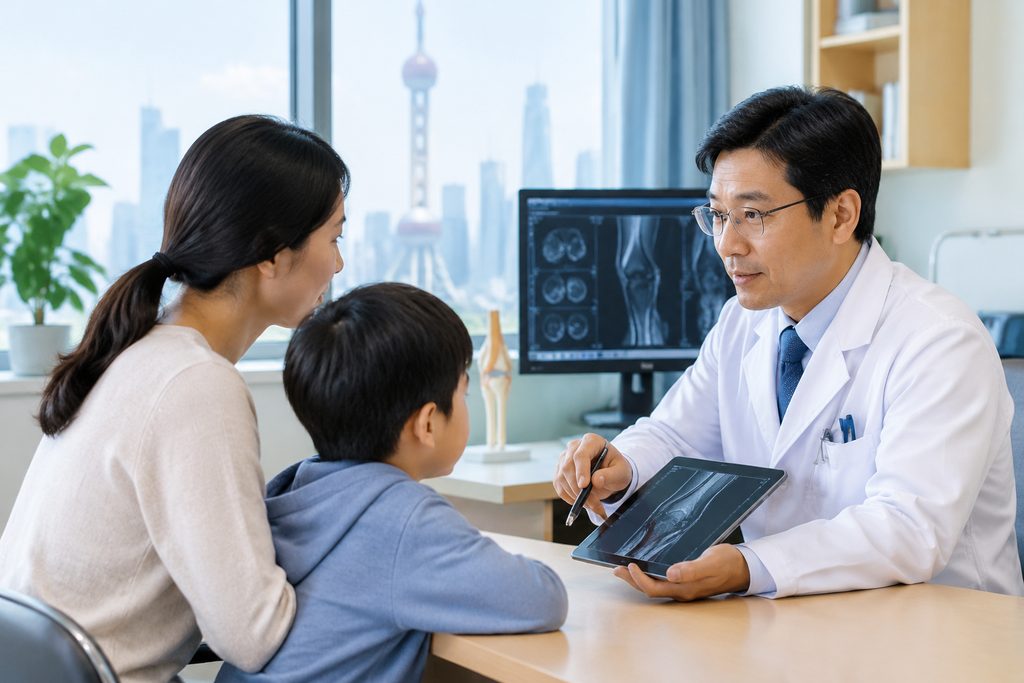
What if the hardest part of your child’s cancer diagnosis wasn’t the medicine at all — but figuring out where in the world that medicine should happen?
For families researching a Shanghai Sixth Orthopedics guide for families, the search usually starts late at night, after a specialist has said the word “rhabdomyosarcoma” and everyone has gone quiet. Rhabdomyosarcoma is a rare soft-tissue sarcoma that mostly affects children and adolescents, and it demands a very specific combination of skills: pediatric oncology, precision imaging, surgical expertise in limb and trunk tumors, radiation planning, and long-term rehabilitation. Few hospitals worldwide hold all of those under one roof.
That’s why families look beyond their home country. And that’s where the honest questions begin — not just “which hospital” but “can we even get in, and what will it actually take?”
The Short Answer: What Shanghai Sixth Orthopedics Offers Families
Shanghai Sixth People’s Hospital is an orthopedic referral center in China, and its name comes up repeatedly when families search for limb-sparing sarcoma surgery. For rhabdomyosarcoma specifically, though, the realistic picture is more layered than a single hospital name suggests.
Rhabdomyosarcoma is treated by a multidisciplinary team — pediatric oncology leads chemotherapy, radiology handles imaging, surgery manages resection, and pathology confirms subtype and fusion status. Orthopedic strength matters most when the tumor sits in a limb, near a joint, or in a location where preserving function is the whole point.
So the honest answer: Shanghai Sixth Orthopedics is a serious option for the surgical and reconstructive side of care. It is rarely the entire answer on its own. Most families end up coordinating between a pediatric oncology center and an orthopedic team, and in China that coordination is something you arrange deliberately rather than assume.
Who This Is Right For — and Who It Isn’t
Not every family should fly to Shanghai. Being clear about that protects you from a very expensive mistake.
Families who tend to benefit:
- Children with confirmed or strongly suspected rhabdomyosarcoma where limb-sparing surgery is technically difficult
- Cases where the local team has offered amputation but function-preserving resection may still be possible
- Families seeking a second surgical opinion before committing to a major operation
- Patients needing complex reconstruction after tumor removal
- Households where the cost difference between home-country and Chinese care is decisive
Families who should think twice:
- Children in an acute crisis — active bleeding, sepsis, tumor lysis, or uncontrolled symptoms. Stabilize first. Travel is not a treatment.
- Cases where chemotherapy has already begun and interrupting the protocol carries real risk
- Families who cannot commit to several weeks in China, sometimes longer
- Anyone expecting a guaranteed surgery date before an in-person examination — that is not how Chinese public hospitals work
That last point matters more than most families expect, so let’s be blunt about it.
How Chinese Hospital Access Actually Works
Ordinary public hospital outpatient clinics in China generally cannot be booked from overseas in advance. You register on the day, in person, and surgery is scheduled only after a face-to-face consultation. That is the standard rule, not a quirk of one hospital.
If you want to lock in a specialist appointment or a hospital bed ahead of arrival, the route is the hospital’s international department or VIP channel. You get senior specialists, English-speaking support, and faster scheduling. You also pay roughly 1.5 to 2 times the standard-channel price. That premium buys access and coordination, not better medicine — the surgeons are the same people.
This is exactly where a bilingual medical companion earns their keep. A top-tier Chinese hospital can see tens of thousands of outpatients in a single day. Signage, registration kiosks, payment terminals, and department numbering are built for Chinese speakers. Without language support, a family can lose an entire day to a queue they didn’t understand.
| Access Route | Can You Book Ahead? | Language Support | Relative Cost | Best For |
|---|---|---|---|---|
| Standard public outpatient | No — same-day registration | Limited to none | Baseline | Local residents, routine follow-up |
| Hospital international / VIP department | Yes, with coordination | English-speaking staff | About 1.5–2× baseline | International families, time-sensitive cases |
| Private international hospital | Yes, direct booking | Full English service | Highest | Comfort, insurance direct billing |
| Remote video or written second opinion | Yes, before travel | Translated by coordinator | Lowest entry cost | Deciding whether to travel at all |
Which column fits you? If your child’s case is stable and you mainly want a surgical opinion, the remote second-opinion route is the cheapest way to learn whether Shanghai is even relevant. If you’ve already decided to travel and time is tight, the international department path is the realistic one.
Rhabdomyosarcoma Subtype and Why It Changes the Plan
Here is the piece families most often miss, and it’s the one that should drive every decision.
Rhabdomyosarcoma is not one disease. Embryonal, alveolar, spindle cell, and pleomorphic subtypes behave differently, and alveolar RMS frequently carries PAX3-FOXO1 or PAX7-FOXO1 fusion genes that flag a higher-risk course. Treatment intensity, radiation timing, and surgical aggressiveness all shift based on subtype, fusion status, tumor site, and whether the disease has spread.
What does this mean practically? A surgeon cannot tell you whether limb-sparing resection is feasible until pathology and imaging are reviewed together. And an orthopedic department alone cannot stage or risk-stratify your child. You need oncology, radiology, and pathology in the same conversation.
When you request a written second opinion or a multidisciplinary video consultation, ask specifically that the case be reviewed jointly by pediatric oncology and orthopedic surgery. A single-department opinion on a sarcoma is a partial opinion.
What It Costs: A Realistic Range
Cost is usually the second question families ask, right after “is it possible.”
Chinese top-tier public hospitals generally run complex surgical care at roughly one-fifth to one-tenth of comparable U.S. charges. For rhabdomyosarcoma, total cost depends heavily on whether the plan involves surgery alone, surgery plus radiation, or a full chemotherapy protocol spanning many months.
Because we cannot quote a treatment price without a confirmed plan, here are the coordination costs instead — the part that is knowable in advance:
- Written second opinion from a top hospital specialist: $300–500
- Video consultation with a standard international department: $100–300
- Top-specialist video consultation: $500–800
- Multidisciplinary team (MDT) video consultation: $1,500–2,000
- In-person top-specialist consultation coordination: $800–1,200
- Bilingual medical companion: from $300 per day
- Hospital appointment coordination: from $300
- Airport transfer: $200 round-trip
Any consultation fee is credited in full toward on-the-ground coordination if you travel within 90 days. That credit applies to the coordination fee only — never to hospital treatment charges, which are billed by the hospital directly.
Hospital treatment costs themselves vary by hospital, protocol, and case complexity, and must be confirmed with the treating institution. Chinese public hospitals typically require prepayment, with insurance reimbursement handled afterward in your home country. Private international hospitals often bill insurers directly.
Practical Considerations: Records, Visas, and Payment
Documentation first. Assemble pathology slides and blocks, the written pathology report, molecular and fusion testing results, all MRI/CT/PET imaging on DICOM disc, chemotherapy and radiation records, and a plain summary of the timeline. Translated records move much faster through review.
Visa category matters, and it is commonly gotten wrong. Medical travel to China uses the S2 visa, annotated for medical treatment purposes. Stays beyond 180 days fall under S1. Accompanying family members apply for S2 as well. The M visa is a commercial and trade category and has nothing to do with medical care — if anyone tells you to apply for an M visa for treatment, that advice is wrong. Always confirm current requirements with the Chinese embassy or consulate in your country, since documentation expectations change.
Payment. Bring a card that works internationally plus a backup. UnionPay, Visa, and Mastercard are widely accepted at large hospitals, but daily limits and foreign-transaction blocks cause real problems at the payment window. Tell your bank before you travel.
Follow-up after returning home. Ask the Chinese team, in writing, for the operative report, pathology, imaging, and a recommended surveillance schedule. Your home oncologist will need all of it, and reconstructing it later is painful.
If you want to understand how hospital selection works across specialties, our overview of China’s top-ranked departments by specialty is a useful starting point, and the Fudan-ranked top hospitals by city shows how centers cluster in Beijing, Shanghai, and Guangzhou.
Frequently Asked Questions
Can we book surgery at Shanghai Sixth People’s Hospital before we arrive?
No, not directly. Chinese public hospitals require an in-person consultation before any operation is scheduled. What can be arranged in advance is an international-department appointment, and admission afterward remains subject to hospital rules and the surgeon’s assessment. Anyone promising you a confirmed surgery date from overseas is overpromising.
Is it cheaper than treating our child at home?
Often, but not always. Surgical and hospital charges in China’s top public hospitals typically run well below U.S. prices. Add flights, accommodation for a parent, food, a companion, and possibly a long stay, and the gap narrows. For families with insurance that covers care at home, staying may be financially smarter. Run the full numbers before deciding.
What if the Chinese team recommends something our doctors disagree with?
That happens, and it’s not a failure — it’s information. Ask both teams to explain their reasoning in writing, and have your home oncologist review the Chinese recommendation before you commit. A second opinion is only useful if you actually weigh it against the first. No hospital, in China or anywhere, can promise a clinical outcome.
Your Next Step
Rare pediatric sarcoma care rewards preparation over speed. Get the records in order, get a written or video opinion before booking flights, and treat any single hospital as one part of a team rather than the whole answer.
We are China Medical Services, a coordination service — not a hospital, and not a provider of medical advice. We translate records, arrange appointments through official international departments, and provide bilingual companions on the ground. We do not diagnose, and we cannot guarantee admission or results. If you’d like an honest read on whether Shanghai makes sense for your child’s case, start with a free consultation and we’ll tell you what’s realistic.
This article is general information only and is not a substitute for advice from a qualified physician. Treatment decisions for rhabdomyosarcoma should always be made with your child’s own medical team.
For more medical information and treatment options in China, visit chinamedservices.com (China Medical Services).
