Robotic Surgery in China: Over 30,000 Annual Procedures for International Patients
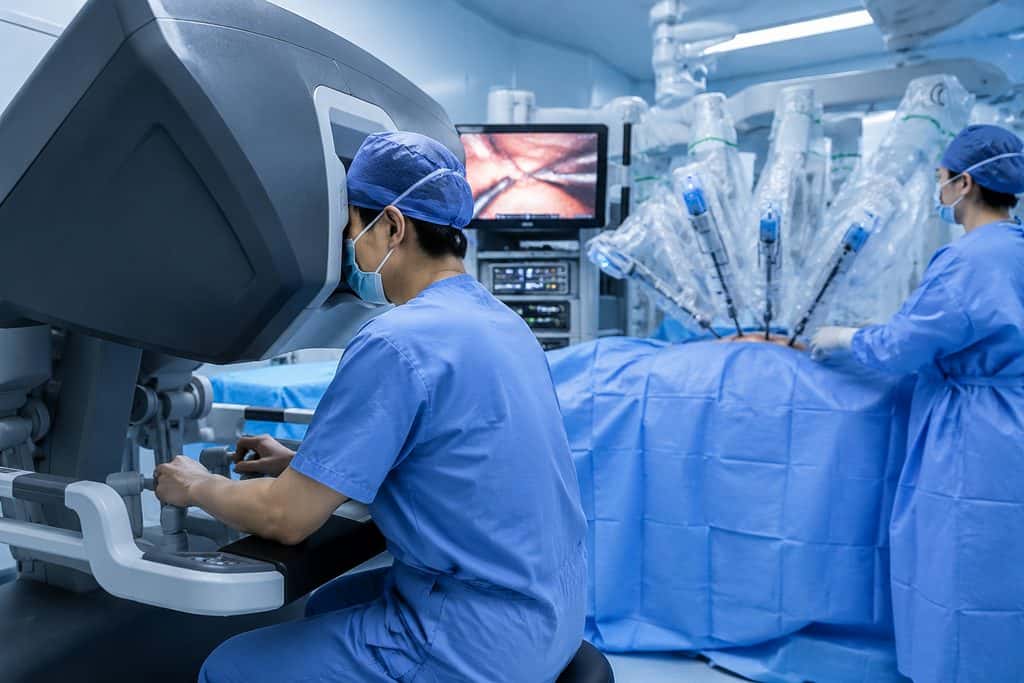
A patient in London waits 18 weeks for a prostatectomy. In Shanghai, the same procedure happens within days—performed by a surgeon who completes over 300 robotic cases annually. The outcomes are comparable. The price is not.
This is the reality reshaping global surgical care. China’s hospitals now perform more than 30,000 robot-assisted procedures each year, a figure that has grown sharply since the first Da Vinci system was installed in 2006. For international patients facing long queues, prohibitive costs, or limited access to robotic surgery at home, this volume represents something concrete: experience you can count on.
We are not a hospital. We do not provide medical treatment or clinical diagnoses. Our team acts as your logistical architects—we bridge the gap between you and China’s top-tier surgical expertise. From the first inquiry to post-operative clearance for your flight home, we handle the coordination so you can focus on recovery.
Key Takeaways
- Chinese hospitals completed over 30,000 robot-assisted surgeries in 2023, with certain urology and gynecology teams logging case volumes among the highest globally.
- Robotic surgery cost China typically runs 50–70% below US and European prices, even at top-tier university hospitals using the latest Da Vinci Xi systems.
- Language barriers and hospital registration systems make independent navigation extremely difficult—bilingual coordination is not a luxury, it is a practical necessity.
- The best robotic surgery hospital China international patients can access are concentrated in Beijing, Shanghai, and Guangzhou, with specific centers dominating urology, gynecology, and orthopedics.
The Problem: Surgical Delays and Costs Are Forcing Patients to Look Abroad
Wait times for elective surgery in publicly funded health systems have reached breaking points. The Canadian Institute for Health Information reports that only 66% of patients receive their hip replacement within the benchmark 26-week window. In the UK’s NHS, the waiting list for planned hospital treatment hit 7.6 million in 2024. For someone with a condition that worsens by the month, these are not statistics. They are lost mobility, persistent pain, and shrinking treatment options.
Cost is the other wall. A robotic prostatectomy in the United States runs between $35,000 and $70,000, depending on the hospital and insurance negotiations. Even insured patients face deductibles and out-of-network charges that can exceed $10,000. For the uninsured or underinsured, the math is simple: surgery is out of reach.
Medical tourism has long filled this gap. But the traditional destinations—Thailand, India, South Korea—are no longer the only players. China has entered the conversation, and it has done so with a specific strength: massive surgical volume on robotic platforms, concentrated in academic medical centers that publish their outcomes in peer-reviewed journals.
Who We Are
China Medical Services connects international patients with a curated network of 340+ top-ranked hospitals across 37 cities. We are not clinicians. We are your bilingual, boots-on-the-ground coordination team. We translate medical records, match your condition to the right surgical department, schedule consultations through hospital international patient centers, arrange visas and accommodation, and place a bilingual medical companion at your side from admission through discharge. Think of us as the local partner who knows which hospital’s robotic surgery program actually has capacity—and which one has a six-month queue for the same procedure.
Why Robotic Surgery in China Delivers Results
Clinical Volume Drives Better Outcomes
The relationship between surgical volume and patient outcomes is well documented. A 2016 study in The Lancet found that for complex cancer surgeries, patients treated at high-volume centers had significantly lower 30-day mortality rates. Chinese robotic surgery programs operate at volumes that are difficult to match elsewhere. A single urology department at a major Shanghai hospital logs over 1,200 robotic prostatectomies annually. The surgeon at the console may have completed more procedures in three years than a typical Western surgeon performs in a decade.
This matters for safety. The learning curve for robotic prostatectomy—the number of cases a surgeon needs before complication rates plateau—is estimated at 150 to 250 procedures. In low-volume centers, a surgeon might take years to reach that threshold. In China’s busiest robotics programs, new attending surgeons cross it within their first 12 months under proctored supervision.
What does this mean when you ask how safe is robotic prostatectomy in China? The data from major centers show complication rates comparable to those reported in US and European registries. Positive surgical margin rates, continence recovery at 12 months, and potency preservation all fall within internationally accepted benchmarks. The difference is not the technology—it is the intensity of exposure. These teams simply see more cases.
Technology and Efficiency at Scale
China operates one of the world’s largest fleets of Da Vinci surgical systems, with over 300 units installed as of late 2023. The Xi model—the latest generation with enhanced visualization and instrument articulation—is standard at university hospitals in Beijing, Shanghai, and Guangzhou. These are not older systems relegated to medical tourism. They are the same platforms used at Mayo Clinic and Charité Berlin.
But hardware is only part of the story. The operational model in Chinese academic hospitals is built for throughput. Dedicated robotic operating rooms run from morning until late evening, sometimes with two shifts of surgical teams. Turnover time between cases—the interval when the room is cleaned, instruments are restocked, and the next patient is positioned—is often under 30 minutes. This efficiency is not rushed care. It is the product of specialized nursing teams, standardized protocols, and the simple reality that when you perform thousands of the same procedure, every motion becomes optimized.
For international patients considering robotic hysterectomy abroad, this operational tempo translates to shorter hospital stays. While recovery time after robotic hysterectomy abroad varies by individual, the procedure itself typically requires only one night of inpatient observation at Chinese hospitals, with discharge the following morning. The minimally invasive nature of robotic surgery—smaller incisions, less blood loss, reduced post-operative pain—means the clinical pathway is already compressed. Efficient hospital systems compress it further by eliminating administrative delays.
Robotic Surgery Cost China: The Structural Advantage
Let us address the question that brings most international patients to this page. The robotic surgery cost China is substantially lower than in Western countries, and the reasons are structural, not a reflection of quality.
| Procedure | China (Top Public Hospital) | United States | United Kingdom (Private) |
|---|---|---|---|
| Robotic Prostatectomy | $12,000 – $18,000 | $35,000 – $70,000 | £18,000 – £28,000 |
| Robotic Hysterectomy | $8,000 – $14,000 | $25,000 – $50,000 | £12,000 – £20,000 |
| Robotic Knee Replacement | $15,000 – $22,000 | $40,000 – $65,000 | £16,000 – £25,000 |
| Robotic Colorectal Resection | $14,000 – $20,000 | $45,000 – $80,000 | £20,000 – £35,000 |
These figures are estimates and vary by hospital and case complexity. But the pattern holds: Chinese pricing runs 50–70% below US benchmarks and 30–50% below UK private sector rates.
Why? Labor costs in China’s healthcare sector are lower—not because surgeons are underqualified, but because the overall wage structure in the economy differs. Hospital construction and equipment costs are amortized over far larger patient volumes. Pharmaceutical and implant pricing, while rising, remains below Western levels. And the administrative overhead that bloats US hospital bills—billing departments, insurance negotiation teams, compliance armies—is dramatically thinner in China’s public hospital system.
This is not bargain-basement surgery. The best robotic surgery hospital China international patients can access are Fudan-ranked academic centers with JCI accreditation or equivalent domestic quality certifications. The Da Vinci surgery China medical tourism prices you see quoted reflect the same technology, comparable outcomes, and a fundamentally different cost base.
What You Need to Know Before Going Alone
We are direct about the barriers because pretending they do not exist serves no one. Coming to China for robotic surgery without local coordination is difficult in ways that are not obvious from abroad.
- Visa Requirements Are Specific: Medical treatment in China requires an S2 visa with the purpose of medical care explicitly noted. This is not a tourist visa. The application requires an invitation letter from the Chinese hospital confirming your treatment arrangement. Family members accompanying you also need S2 visas. The M visa is for commercial business and cannot be used for medical travel. Getting the invitation letter without a local contact inside the hospital’s international patient department can take weeks of back-and-forth.
- Public Hospital Registration Is Not Online for Foreigners: China’s public hospitals use domestic ID-linked registration systems. As a foreign passport holder, you cannot simply book a specialist consultation through a hospital website or app. Outpatient visits require in-person registration with original identification, and surgical scheduling happens only after the attending surgeon has examined you in clinic. There is no workaround for this. The pathway is: fly to China, attend the outpatient clinic, get examined, schedule surgery. Anyone promising to lock in a surgery date before you arrive is either booking through a VIP international channel—which exists, and which we use—or making promises they cannot keep.
- Language Is a Clinical Barrier, Not an Inconvenience: Informed consent for surgery requires understanding risks, alternatives, and post-operative instructions. In a Chinese public hospital, consent forms are in Mandarin. Nurses explaining discharge medications speak Mandarin. The physiotherapist showing you how to move after your robotic knee replacement speaks Mandarin. A translation app on your phone is not sufficient for this. You need a human being who understands medical terminology in both languages and can advocate for you when something feels wrong.
How We Help You Navigate This
These barriers exist for structural reasons. They are not designed to exclude international patients—China’s hospitals actively welcome foreign visitors—but the system was built for a domestic population. Our job is to bridge that gap.
Before you travel, we collect your medical records, have them translated by medical translators, and present your case to the international patient departments of hospitals whose robotic surgery programs match your condition. We do not choose the hospital for you. We present options—typically two or three centers with relevant surgical volume and capacity—and explain the trade-offs. One hospital might have a shorter wait but higher cost. Another might have the most published research on your specific procedure but a longer scheduling window. The decision is yours.
Once you select a hospital, we secure the invitation letter for your S2 visa application. We coordinate your outpatient consultation date so that you arrive in China with a confirmed appointment, not a hope and a prayer. A bilingual medical companion meets you at the hospital on consultation day, guides you through registration and payment, translates during the surgeon’s examination, and ensures you understand the surgical plan, risks, and recovery timeline.
During your hospital stay, the companion remains present—not 24 hours a day, but during key moments: pre-operative briefing, post-operative rounds, discharge instructions. If you want to book robotic knee replacement China package that includes accommodation, airport transfers, and companion services, we can arrange that. But we never sell a “package” that obscures the clinical realities. Surgery is surgery. Our value is making the logistics invisible so you can focus on getting through it.
After discharge, we help coordinate follow-up consultations—either in person if you stay in China for recovery, or via video consultation if you return home. Any video consultation fees you pay are credited in full toward future on-the-ground coordination services within 90 days, should you return for additional treatment.
Frequently Asked Questions
The safety profile at major Chinese academic centers is comparable to Western benchmarks. Published series from hospitals like Shanghai Changhai Hospital and Peking University First Hospital report complication rates, positive margin rates, and functional recovery outcomes that fall within the range reported in US and European literature. The key variable is hospital selection. A high-volume center with a dedicated robotic urology team and JCI accreditation is a fundamentally different environment from a low-volume general hospital that performs occasional robotic cases. We only work with the former.
Most patients are discharged within 24 hours of robotic hysterectomy. Full recovery—return to normal activities including work—typically takes 2 to 4 weeks, which is faster than open or conventional laparoscopic hysterectomy due to smaller incisions and less tissue trauma. For international patients, we generally recommend staying in China for at least 7 to 10 days after discharge. This allows for a wound check, removal of any external sutures, and a final consultation with the surgeon before flying. Long-haul flights increase the risk of deep vein thrombosis, so your surgeon will provide specific guidance on compression stockings and, in some cases, prophylactic anticoagulation for the flight home.
You can coordinate a comprehensive plan, but we are careful with the word “package.” Surgery is not a consumer product with a fixed price tag. The hospital charges for the procedure, implants, anesthesia, medications, and inpatient stay. These vary based on your specific anatomy, the implant system used, and any unexpected findings during surgery. What we can do is provide a realistic cost estimate before you travel, coordinate your hospital admission, arrange accommodation near the hospital for your recovery period, and schedule outpatient physiotherapy sessions. The Da Vinci surgery China medical tourism prices you see online are typically base surgical fees. Our estimates include the full expected cost range so there are no surprises.
There is no single best hospital—there is the best match for your specific condition. For urologic cancers, centers like Changhai Hospital in Shanghai and Peking University First Hospital in Beijing have robotic case volumes among the highest in Asia. For gynecologic robotic surgery, Peking Union Medical College Hospital and West China Hospital in Chengdu are reference centers. For robotic joint replacement, Beijing Jishuitan Hospital’s orthopedic volume is extraordinary—over 300 joint procedures per month across all techniques. We help match your diagnosis to the center with the deepest experience in that specific procedure. Our database of top-ranked hospitals covers 340+ institutions across 37 cities, and we narrow that list based on your clinical needs.
This is the question every patient should ask. The hospitals we work with are tertiary academic centers with full intensive care capabilities, 24-hour in-house surgical residents, and attending surgeons on call. They manage complications—bleeding, infection, anastomotic leak, implant issues—as part of routine practice. The standard of emergency care in these institutions is high. What international patients need to understand is that medical liability in China operates differently from Western jurisdictions. Malpractice litigation is less common and compensation structures differ. We strongly recommend that all patients carry international medical travel insurance that includes coverage for complication management and, if necessary, medical evacuation. We can suggest insurers familiar with medical travel to China, but we do not sell insurance ourselves. Our role is to stay with you through any complication, ensure communication between you and the clinical team remains clear, and help coordinate whatever additional care is needed.
Your Next Step
Robotic surgery in China is not the right choice for everyone. It makes the most sense for patients who face long wait times or prohibitive costs at home, who need a procedure that benefits from high-volume surgical teams, and who are willing to travel for care that matches or exceeds the clinical standards they would receive locally. The numbers tell a clear story: over 30,000 robot-assisted procedures annually, outcomes on par with Western centers, and costs that make treatment accessible to people who have been priced out of their own health systems.
If you want to understand whether this path fits your situation, start with a conversation. Our team reviews your medical records, discusses your options, and provides a transparent picture of costs, timelines, and hospital choices—without pressure and without charge for the initial consultation. Visit our patient coordination page to begin. You deserve to know all your options. We are here to help you understand them.
For more medical information and treatment options in China, visit chinamedservices.com (China Medical Services).
