Scoliosis Surgery Cost China with Companion: Full Support for Spine Correction
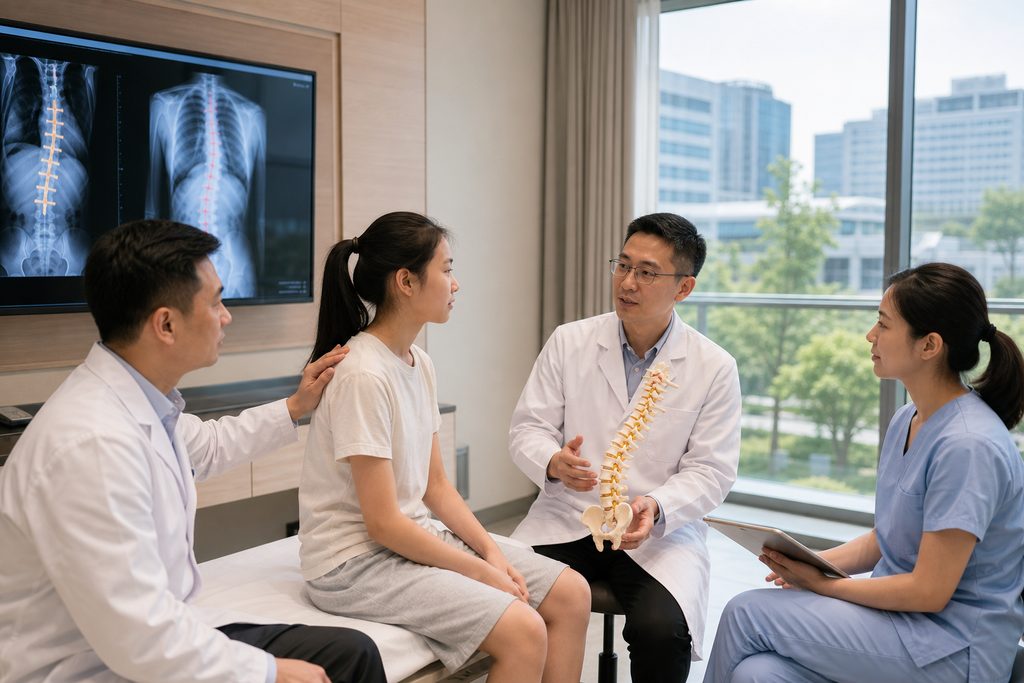
What if the price tag on a straight spine didn’t have to break your family’s future? That’s the question that brings families from 40-plus countries to our desk every month. The scoliosis surgery cost China with companion support typically lands between $28,000 and $55,000 for a single-curve posterior spinal fusion. That’s the number you came for. But the number alone is useless without knowing what it buys, where it’s spent, and who stands beside you through every pre-op anxiety and post-op milestone.
Our team has coordinated spine correction pathways for a 14-year-old from London whose curve hit 62 degrees and a 58-year-old engineer from Dubai tired of living with a 45-degree lumbar curve he’d ignored since his twenties. Their cases were different. Their question was the same: can we do this safely, affordably, and without feeling alone in a foreign hospital corridor?
Scoliosis Surgery Cost China with Companion: The Short Answer
For an uncomplicated adolescent idiopathic scoliosis case requiring posterior instrumentation and fusion of 8 to 12 vertebral levels, the all-inclusive hospital bill at a top-tier Chinese orthopedic center runs $28,000 to $42,000. Adult degenerative or revision cases push higher, landing between $38,000 and $55,000. These figures cover the implant system, surgeon and anesthesiologist fees, operating theater, inpatient stay of 7 to 14 days, and standard post-surgical imaging. They do not yet include your flight, local accommodation for a parent or spouse, or the bilingual companion who turns a bewildering hospital campus into a navigable path.
The variance is real. A straightforward Lenke type 1 curve in a healthy 15-year-old costs less than a double major curve in a 55-year-old with osteopenia requiring longer fusion, denser pedicle screw constructs, and a slower monitored recovery. The implant brand matters too — domestically manufactured titanium systems approved by the NMPA can trim $6,000 to $9,000 off the hardware line item versus imported DePuy Synthes or Medtronic systems, with comparable clinical outcomes documented in multiple Chinese orthopedics journals over the past decade.
Who This Is Right For — and Who It Isn’t
This pathway works for families who are medically cleared and logistically ready. It’s not for everyone.
You’re likely a good candidate if your orthopedic surgeon at home has confirmed surgical indication — typically a Cobb angle exceeding 45 to 50 degrees in an adolescent, or a progressive adult curve causing documented pain, pulmonary compromise, or sagittal imbalance. You’re also a fit if you can commit 3 to 4 weeks on the ground in China and have a family member willing to travel. And you need to be comfortable with a model where the surgical team speaks through a medically fluent interpreter rather than directly in English — though many top Chinese spine surgeons read and write English at a high level, their spoken fluency varies.
This route is not right for you if your curve is below 40 degrees and still manageable with bracing or physiotherapy — flying across the world for observation is a misuse of resources. It’s also a poor fit if you have unstable cardiac or pulmonary comorbidities that make a long-haul flight risky before major surgery, or if your home orthopedic team refuses to provide post-operative follow-up. That last point is non-negotiable. You need a surgeon back home who will see you at 6 weeks, 3 months, 6 months, and 12 months post-op. If that relationship doesn’t exist, build it before you book a flight.
The Options, Compared
No single pathway fits every spine. Here’s how the genuine alternatives stack up for a typical adolescent posterior fusion of 10 levels.
| Factor | US Hospital (in-network) | China Public Top-Tier | China Private International |
|---|---|---|---|
| Total surgical cost | $120,000–$250,000+ | $28,000–$42,000 | $55,000–$80,000 |
| Implant system | Medtronic/DePuy/J&J | Domestic or imported, per choice | Usually imported brand |
| Surgeon volume (annual) | 30–80 scoliosis cases | 100–200+ scoliosis cases | 50–100 scoliosis cases |
| English-speaking staff | Native | Limited; companion essential | Fluent; companion optional |
| Wait time to surgery | 3–8 weeks | 2–4 weeks after consultation | 1–3 weeks |
| Family accommodation | Nearby hotel, self-arranged | Nearby serviced apartment, $40–$80/night | On-site family suite, $120–$200/night |
| Post-op rehab on site | Acute rehab facility, separate billing | Inpatient physio starts day 3–4 post-op | Integrated rehab wing, bundled pricing |
If you’re price-sensitive and your case is straightforward, the public top-tier route with a bilingual companion delivers the strongest value proposition. The private international hospital option makes sense for families who want a Western-style hospitality layer and are willing to pay for it — roughly double the public-tier price but still half of US rates. The US route remains the default if insurance covers it fully and you have zero appetite for international logistics.
What “Full Support” Actually Means on the Ground
The phrase “scoliosis surgery package China all inclusive” gets searched a lot. It sounds tidy. The reality is more textured.
A genuinely supported pathway starts with remote evaluation. You send standing full-spine X-rays, bending films, and a recent MRI to a department like the orthopedic spine unit at Peking University Third Hospital or the spine surgery division at Changzheng Hospital in Shanghai — both ranked among China’s top 10 for orthopedics by the Fudan specialty reputation list. A written second opinion comes back within 5 to 7 working days. It confirms the surgical plan, recommended levels of fusion, implant density, and estimated inpatient stay. That document costs $300 to $500 and is credited in full if you proceed to surgery coordination within 90 days.
Then the companion layer kicks in. A bilingual medical escort meets your family at the airport, handles hospital registration and medical record creation, sits beside you during the pre-op consultation to ensure every question gets answered, and remains on the ward through the first post-op mobilization. They don’t wear scrubs. They don’t give medical advice. They make sure the system doesn’t swallow you whole — translating the anesthesiologist’s pre-op checklist, explaining why the nurse needs another blood draw, and telling the canteen your child is cleared for soft solids.
The hospital’s own case manager coordinates admission scheduling, operating theater booking, and discharge paperwork. Our team bridges the gap between that hospital workflow and your family’s daily needs: accommodation within walking distance, SIM cards, pharmacy runs, and video calls back to your home orthopedic team.
Recovery: The Timeline Nobody Should Sugarcoat
How long is recovery after scoliosis surgery in China? The honest answer splits into three phases.
Days 1 through 3 post-op are rough. Your child or you will be flat in bed with a drain, a catheter, and patient-controlled analgesia. The physiotherapist will get legs moving and insist on log-rolling by day 2. Pain is controlled but present. By day 4 or 5, most patients sit at the bedside and take a few steps with a walker. The drain comes out. The catheter comes out. The world starts to feel possible again.
Discharge from the hospital typically happens between day 7 and day 10. You won’t be flying home yet. You’ll spend another 7 to 10 days in a nearby serviced apartment, returning to the hospital for wound checks and physiotherapy sessions. Walking builds up from 10 minutes to 30 minutes. Stairs get introduced. The companion remains on call during this period — not at the bedside 24/7, but reachable and present for scheduled hospital visits.
The flight home happens around day 18 to 21. You’ll need a medical clearance letter from the surgical team, and the airline will require advance notice for a post-spinal-fusion passenger. Aisle seat, extra legroom, and pre-boarding assistance are non-negotiable. Once home, the first 6 weeks are strictly no bending, no lifting over 5 kilograms, and no twisting. By 3 months, most adolescents are back in school full-time. Adults take longer — figure 4 to 6 months before full work duties resume, assuming no physically demanding job. Fusion continues to consolidate over 12 to 18 months, which is why that home orthopedic follow-up is essential.
Is Scoliosis Surgery Safe for Adults in China?
This question sits at the heart of every inquiry we receive from patients over 40. The short answer: yes, with the right surgical team and realistic expectations.
Adult scoliosis surgery is inherently more complex than adolescent correction. The spine is stiffer. Osteopenia or osteoporosis may compromise screw purchase. The risk of proximal junctional kyphosis and adjacent segment disease climbs with age. China’s top orthopedic centers manage these cases at high volume. A surgeon at a major spine unit may perform 150 to 200 deformity corrections annually, of which 30 to 40 percent are adult patients — many with degenerative scoliosis superimposed on a pre-existing adolescent curve that was never treated.
The safety profile mirrors what you’d find at a high-volume US academic center. A 2020 retrospective study published in the *European Spine Journal* analyzing posterior spinal fusion outcomes across multiple Chinese tertiary hospitals reported a major complication rate of 3.8 percent for adult deformity correction, comparable to the 4.2 percent cited in equivalent Scoliosis Research Society datasets from North American centers. Infection rates, neurological complication rates, and implant failure rates all fell within internationally accepted benchmarks.
What makes the difference is pre-operative optimization. If you’re an adult with a 55-degree lumbar curve and your bone density scan shows T-scores below -2.0, the surgical plan must account for that — larger diameter screws, possible cement augmentation, and a longer fusion construct to distribute load. The best Chinese spine units will order a DEXA scan as part of the pre-op workup and adjust the plan accordingly. If a hospital skips that step, walk away.
Choosing Where to Have Surgery: The Hospital Decision That Shapes Everything Else
The best spine correction hospital Shanghai for international patients is not a single institution — it’s the one whose surgical volume, subspecialty focus, and international patient workflow align with your specific curve pattern.
Shanghai’s Changzheng Hospital orthopedic department handles among the highest spinal deformity caseloads in the country, with a dedicated scoliosis unit that sees complex revisions and adult deformities referred from across Asia. Peking Union Medical College Hospital in Beijing brings the weight of China’s most recognized hospital brand and a spine team that publishes extensively in international journals. West China Hospital in Chengdu runs a massive orthopedic service with a dedicated pediatric spine division that manages adolescent scoliosis at scale.
For families specifically searching for adolescent scoliosis surgery abroad with full support, the pediatric orthopedic units at Beijing Children’s Hospital and Shanghai’s Xinhua Hospital deserve attention. These centers manage hundreds of adolescent idiopathic scoliosis cases annually and have refined their perioperative protocols around the specific needs of teenagers — pediatric anesthesiologists, age-appropriate pain management, and physiotherapists who know how to motivate a 14-year-old to walk on day 3.
The practical step is to send your imaging to two or three of these centers simultaneously through a coordinated second opinion process. Compare the surgical plans. Compare the communication quality. Then decide.
Practical Considerations: Documentation, Visas, and Money
Your medical file must include standing full-spine posteroanterior and lateral X-rays taken within the past 3 months, a spine MRI within the past 6 months, and any previous surgical records if this is a revision case. For adults over 50, add a bone densitometry report and a cardiac clearance letter. All documents need certified English translation if they’re in another language — the Chinese surgical team reads English medical terminology but will not interpret Arabic, French, or Russian reports.
The visa category is an S2 short-term private affairs visa, with the hospital’s invitation letter specifying the medical purpose. Processing takes 5 to 10 working days at most Chinese embassies and consulates. The accompanying parent or spouse applies under the same S2 category with a supporting letter confirming their role as caregiver. Do not apply for an M visa — that’s for commercial and trade visitors, and using it for medical treatment creates problems at the border and with hospital registration.
Payment is upfront. Chinese public hospitals require a deposit before admission, typically $15,000 to $25,000 wired to the hospital’s international patient account. The balance is settled at discharge. Credit cards work at international patient departments, but wire transfers carry lower fees. International health insurance with out-of-network international coverage may reimburse a significant portion — you’ll need to submit itemized bills and translated discharge summaries, which the hospital’s international department provides as standard. Check with your insurer before committing.
Language is the friction point that surprises people most. Even at top-tier hospitals, the nursing staff, physiotherapists, and ward administrators speak Mandarin. The attending surgeon likely reads English medical literature fluently but may not conduct a nuanced conversation about post-operative expectations in English. This is where the companion earns their place — not as a luxury, but as the communication layer without which small problems become big anxieties.
Frequently Asked Questions
Can we book adolescent scoliosis surgery abroad with full support before traveling?
You can lock in the surgical plan, the surgeon, and the approximate surgery date before you fly. What you cannot do is skip the in-person pre-operative consultation. Chinese law and hospital policy require the surgeon to examine the patient face-to-face, review imaging on the hospital’s own PACS system, and obtain signed consent before proceeding to the operating theater. The typical sequence is: remote evaluation confirms candidacy and surgical plan, you fly to China, the pre-op consultation happens within 2 to 3 days of arrival, and surgery follows 3 to 7 days later. The companion is with you from the moment you land.
What if something goes wrong during or after surgery?
The same major complications that occur in any spine surgery — infection, implant malposition, neurological injury, dural tear — can occur in China. The difference is that you’re far from home when they do. Top-tier Chinese hospitals have the resources to manage these complications: revision surgeons on staff, infectious disease specialists, and intensive care units equipped for post-operative crises. The real challenge is communication during a complication. This is the scenario where a bilingual companion becomes most critical — not for medical decision-making, but for ensuring you understand exactly what has happened and what the team is doing about it. Before you travel, confirm that your travel insurance covers medical evacuation. It’s a remote risk, but knowing the exit door exists makes the room feel safer.
Does the quoted scoliosis surgery cost China with companion cover everything?
No quote covers everything, and any provider who claims otherwise is not being straight with you. The hospital bill covers the surgery, implants, inpatient stay, and in-hospital physiotherapy. The companion fee covers the escort’s time and translation labor. What falls outside: international flights, the 2 to 3 weeks of accommodation for your family, meals, local transport, any additional imaging or lab work ordered during pre-op assessment, and post-discharge medications you’ll take home. Budget an additional $5,000 to $8,000 beyond the surgical quote for these ancillary costs. It’s still a fraction of the US price. But it’s not zero.
Will my child’s spine stay corrected long-term?
Adolescent idiopathic scoliosis treated with modern pedicle screw instrumentation and fusion has a documented long-term correction maintenance rate above 90 percent at 10-year follow-up, according to multiple longitudinal studies. The fused segment will not curve again. What can happen — and this is true regardless of where the surgery is performed — is that the unfused segments above and below the fusion can develop degenerative changes or, in a growing adolescent, a phenomenon called adding-on where the curve extends beyond the fused levels. This is why surgical planning matters so much: selecting the correct upper and lower instrumented vertebrae is the single most important determinant of long-term outcome. The Chinese surgeons at the centers we’ve described perform this judgment call hundreds of times per year. That volume matters.
Your Next Step
You now have the numbers, the timeline, the hospital names, and the honest risks. The decision is yours, but it doesn’t need to be made in the dark. Our team at China Medical Services coordinates the remote evaluation, the hospital matching, the visa documentation, and the on-ground companion support for families pursuing spine correction in China. We are not a hospital. We do not diagnose, treat, or recommend specific surgical approaches. We connect you with the institutions and surgeons who do, and we make sure language and logistics never become the reason a family walks away from care they genuinely need.
If you’re ready to explore whether your or your child’s curve qualifies for this pathway, send us the imaging. We’ll take it from there — no pressure, no promises we can’t keep, just a clear-eyed assessment of what’s possible.
Request a free case evaluation and hospital matching consultation.
For more medical information and treatment options in China, visit chinamedservices.com (China Medical Services).
