Best Hospitals in Shanghai for International Patients: A Complete City Medical Guide
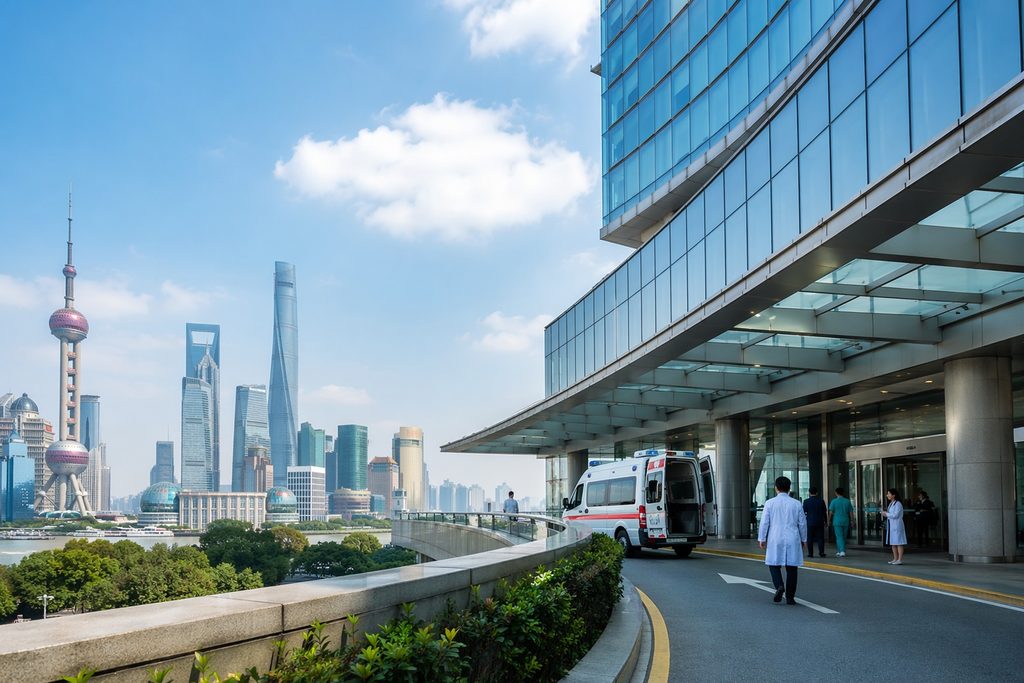
When 42-year-old Michael first heard the diagnosis, he had no idea where to start looking for treatment. The quote from his local hospital in Houston came back at $140,000 for the cardiac procedure he needed. His insurance deductible made it impossible. A colleague mentioned looking abroad. Shanghai? The name conjured images of skyscrapers and street food—not necessarily world-class heart surgery. But the numbers were hard to ignore. The same procedure, performed at a top-ranked Shanghai hospital using comparable technology, would likely fall between $15,000 and $25,000. The real question wasn’t whether the savings were real. It was whether the quality was.
Shanghai is home to 18 of China’s top 100 hospitals, ranked by the authoritative Fudan University Hospital Rankings. That concentration of elite medical infrastructure puts it second only to Beijing nationwide. For international patients, the city offers a unique dual-track system: massive public teaching hospitals with staggering clinical volumes, and sleek private international facilities designed around Western expectations. Navigating between them—understanding which hospital suits your condition, your budget, and your language needs—is where things get complicated. This guide breaks down exactly what you need to know, including a realistic look at the best international hospitals in Shanghai price list, so you can make an informed decision without the guesswork.
Key Takeaways
- Shanghai’s top-tier hospitals perform procedures at 1/5 to 1/10 of US costs — a cardiac bypass averaging $15,000-25,000 compared to $120,000+ in America, with clinical volumes that often exceed Western benchmarks.
- Two distinct hospital categories serve international patients: JCI-accredited private international hospitals with English-speaking staff and direct insurance billing, and the VIP/international wings of public academic giants ranked among China’s elite.
- You cannot simply book surgery from overseas at a public hospital. Standard outpatient registration requires physical presence. Pre-arranging a surgical slot means going through official international departments—a process that demands local coordination.
- Visa requirements are specific and non-negotiable. Medical treatment requires an S2 visa. Showing up with a business visa will get you turned away at the hospital’s international desk.
The Problem: When the Best Care at Home Is Out of Reach
Medical debt affects approximately 1 in 5 American households. That is not a rounding error—it is a systemic failure that pushes patients into impossible choices. Wait for treatment you cannot afford. Drain retirement savings. Or look elsewhere.
The math is stark. A hip replacement in the United States runs $40,000 to $60,000. In Shanghai? $10,000 to $18,000 at a top public hospital’s international wing. Cancer treatment protocols that would cost $150,000 or more in Western Europe or North America often land between $30,000 and $60,000 here. These are not discount procedures at second-rate facilities. We are talking about hospitals like Zhongshan Hospital Fudan University and Ruijin Hospital, institutions that handle case volumes dwarfing most Western centers.
But cost is only one dimension of the problem. Wait times in Canada and the UK routinely stretch months for elective surgeries. In Shanghai, once you are in the system, the bottleneck is not the operating room—it is getting properly connected in the first place. That distinction matters enormously.
Who We Are
We are not a hospital. We do not provide medical treatment, clinical diagnoses, or make promises about outcomes. Our team at China Medical Services functions as your logistical architects—the bridge between you and Shanghai’s top-tier medical expertise. We handle hospital matching, appointment coordination, bilingual medical companions, visa guidance, and the thousand small frictions that make navigating a foreign healthcare system exhausting. We exist because excellent hospitals mean nothing if you cannot access them efficiently.
Why Shanghai’s Medical System Delivers Results
Clinical Volume Drives Better Outcomes
Surgeons get better the more they operate. This is not controversial—it is settled medical evidence. A 2015 study in The Lancet found a clear inverse relationship between surgical volume and patient mortality across multiple procedure types. Shanghai’s top cardiac center, Zhongshan Hospital, performs over 10,000 cardiac surgeries annually. Compare that to a well-regarded US hospital that might do 500. When you need a complex valve repair, do you want the team that does 20 a year, or the team that does 20 a week?
The same pattern holds across specialties. Orthopedic surgeons at Shanghai Sixth People’s Hospital, internationally famous for microsurgery and limb reconstruction, handle case complexities that most Western surgeons see only in textbooks. The volume is not just a number on a brochure. It translates directly to muscle memory, pattern recognition, and intraoperative judgment.
Technology and Efficiency at Scale
Walk into the international wing of Huashan Hospital and you will see equipment that matches any Western academic medical center. Da Vinci surgical robots. PET-CT scanners. Proton therapy centers for cancer treatment. Shanghai has invested heavily in medical technology over the past decade, and the top hospitals deploy it at a scale that is hard to comprehend. A single public hospital here might see 10,000 outpatient visits in a day. The systems that handle that volume—registration, triage, imaging, discharge—are built for speed.
That efficiency has a downside, which we will address honestly in a moment. But if what you need is a specific procedure done well and done soon, the operational tempo here works in your favor.
Cost Advantage Without Quality Compromise
Does cheaper mean worse? Not when the cost difference is structural rather than quality-driven. Chinese hospital costs are lower for reasons that have nothing to do with clinical standards: lower labor costs for nursing and support staff, lower administrative overhead compared to the US insurance-driven bureaucracy, and enormous economies of scale. The surgeons training at Fudan University’s affiliated hospitals go through residencies as rigorous as any Western program. Many have completed fellowships in the US or Europe. The implants, drugs, and devices are often the same multinational brands—Medtronic, Stryker, Roche—used in American operating rooms.
The price gap is not a signal of inferior care. It is a reflection of different economic structures. That is a crucial distinction for anyone researching the best international hospitals in Shanghai price list and wondering if the numbers are too good to be true.
Shanghai’s Hospital Landscape: Finding Your Fit
Understanding how to choose a hospital in Shanghai for foreigners starts with recognizing that you are not choosing from one system. You are choosing between two parallel tracks. Each serves a different patient profile.
Track One: The Private International Hospitals
For many expats and international patients, the question “is Shanghai medical care good for expats” leads directly to the private international sector. Facilities like Jiahui International Hospital, United Family Healthcare, and ParkwayHealth operate on a familiar model: English-speaking staff throughout, JCI accreditation, direct billing with major international insurers, and a service philosophy that resembles a five-star hotel as much as a hospital.
These are the top JCI accredited hospitals Shanghai for surgery for patients who prioritize comfort, language accessibility, and insurance convenience. The physicians are often bilingual, many trained abroad. Wait times are minimal. The trade-off? These hospitals are not typically the centers where you will find China’s most renowned subspecialists. For complex oncology, rare cardiac conditions, or cutting-edge neurosurgery, the public academic giants still hold the edge in clinical expertise.
Track Two: Public Hospital International Wings
This is where the real heavy medicine happens. Hospitals like Zhongshan, Ruijin, Huashan, and Renji run dedicated international departments or VIP wings. These units exist specifically to serve foreign patients and high-end domestic patients willing to pay premium pricing—typically 1.5 to 2 times standard public rates, which still lands far below Western costs.
The advantage here is direct access to the same senior specialists who run the hospital’s main departments. You get the clinical expertise of a top-100 hospital with the service layer of a concierge practice. The disadvantage is that these departments are not always as polished as a Jiahui or United Family. The English may be functional rather than fluent. The decor may be institutional rather than luxurious. You are trading some comfort for elite clinical firepower.
For patients seeking affordable cancer treatment Shanghai for international patients, the international wing of Fudan University Shanghai Cancer Center deserves particular attention. It is one of Asia’s highest-volume oncology centers, with subspecialty teams that see more cases of specific cancers in a month than many Western hospitals see in a year.
Understanding the Real Costs
Any best international hospitals in Shanghai price list you find online should be treated as a directional guide, not a binding quote. Costs vary significantly by hospital tier, procedure complexity, and the specific physician involved. That said, here are realistic ranges based on our case experience:
| Procedure | Public Hospital International Wing | Private International Hospital | US Comparison |
|---|---|---|---|
| Cardiac Bypass Surgery | $15,000 – $25,000 | $35,000 – $50,000 | $120,000+ |
| Hip Replacement | $10,000 – $18,000 | $25,000 – $35,000 | $40,000 – $60,000 |
| Cancer Treatment (6-month protocol) | $30,000 – $60,000 | $60,000 – $90,000 | $150,000+ |
| Spine Surgery (complex fusion) | $18,000 – $30,000 | $40,000 – $55,000 | $80,000 – $120,000 |
| Comprehensive Health Screening | $500 – $1,500 | $1,500 – $3,000 | $2,500 – $5,000 |
These figures include hospital fees, surgeon fees, and standard post-operative care. They do not include travel, accommodation, or our coordination services. Some patients ask about Shanghai medical tourism packages all-inclusive pricing. While a few private hospitals offer bundled packages for straightforward procedures like health screenings or cosmetic surgery, complex surgical care is almost never sold as a fixed-price package. Too many variables exist. Your final cost depends on your specific diagnostic workup, the surgeon’s assessment, and any complications that arise.
Our team provides detailed cost estimates after reviewing your medical records and confirming availability with the relevant department. We charge a coordination fee—from $300 for basic appointment coordination to $5,000-8,000 for comprehensive VIP end-to-end management—but we never mark up hospital charges. You pay the hospital directly at their published international department rates.
What You Need to Know Before Going Alone
We need to be direct about the barriers. Too many patients arrive in Shanghai assuming they can walk into a top hospital and get treated. The reality is more complicated.
- Visa Requirements: Medical treatment in China requires an S2 visa with a notation specifying the medical purpose. The accompanying family member also needs an S2. This is not a tourist visa, and it is absolutely not an M business visa. Hospitals will check. Getting the S2 requires an invitation letter from the Chinese hospital—which means you need a confirmed hospital relationship before you can even apply for the visa. It is a chicken-and-egg problem that catches many patients off guard.
- Payment Systems: Public hospitals in China operate on a pre-payment model. You deposit funds upfront, and treatment proceeds as long as the balance covers costs. International credit cards do not always work reliably at hospital payment counters. WeChat Pay and Alipay dominate, but linking a foreign card to these platforms is not straightforward. Private international hospitals are more flexible, often accepting direct insurance billing. But the public giants? Cash or Chinese bank transfers are still the default.
- Language and Navigation: A top Shanghai public hospital might see 15,000 outpatients in a single day. Signage is increasingly bilingual in international departments, but step outside that bubble and you are functionally illiterate without Chinese. Registration queues, pharmacy counters, imaging check-in—each step is a potential dead end if you cannot communicate. This is not a criticism of the hospitals. It is simply the operational reality of institutions built to serve a domestic patient base.
How We Help You Navigate This
These barriers exist for structural reasons. They are not designed to exclude foreign patients—they are the natural byproduct of a healthcare system optimized for China’s domestic population of 1.4 billion. Our job is to build a bridge across them.
Before you travel, we handle the hospital matching process. You send us your medical records. We translate them, identify the appropriate specialists at the appropriate hospitals, and coordinate with the international departments to confirm that your case can be accepted. We arrange the invitation letter that unlocks your S2 visa application. We provide clear cost estimates so you arrive knowing what to expect.
During your treatment, a bilingual medical companion—from $200 per day—meets you at the hospital entrance and stays with you through every step. Registration, payment, escorting you to the right consultation room, translating your conversation with the specialist, picking up prescriptions, scheduling follow-up imaging. This is not a luxury add-on. In a hospital system where a single missed instruction can mean hours of lost time, it is the difference between a manageable experience and a demoralizing one.
After your procedure, we coordinate discharge instructions, medication schedules, and follow-up appointments. If you need rehabilitation or Traditional Chinese Medicine support during recovery, we connect you with appropriate providers from our network of TCM hospitals. The goal is continuity—a coherent patient journey rather than a disconnected series of stressful encounters.
Frequently Asked Questions
At public hospitals, standard outpatient registration cannot be done from overseas. You must be physically present for the initial consultation. However, through a hospital’s official international department or VIP channel, pre-arrangement is possible. This is what we coordinate—confirming that a surgical slot exists and that the relevant specialist has reviewed and accepted your case before you board the plane. It is not a shortcut around the system. It is using the system’s own designated pathway for international patients.
Shanghai’s top hospitals have complication management protocols comparable to any Western academic center. They have ICUs, emergency response teams, and the full range of diagnostic and interventional capabilities. The real question is not whether complications can be managed—they can. It is whether you have someone on the ground who can communicate with the medical team on your behalf if you are incapacitated, and whether your family back home has a clear line of communication. This is where having a bilingual coordinator becomes not just helpful but essential.
Most US and European health insurance plans do not provide in-network coverage at Chinese hospitals. Some international expat insurance plans do—especially those from providers like Cigna Global, Aetna International, or Allianz. Private international hospitals in Shanghai are much more likely to handle direct billing with these insurers. Public hospital international wings typically require you to pay upfront and seek reimbursement yourself. We always recommend confirming coverage with your insurer before committing to any treatment plan.
Look at the data, not the décor. The Fudan University Hospital Rankings evaluate Chinese hospitals on clinical reputation, research output, and specialty-specific outcomes. Hospitals like Zhongshan and Ruijin consistently rank in the highest tier. Their cardiac surgery volumes exceed any single US center. Their oncology departments participate in international clinical trials. If you are evaluating a specific hospital, ask about their case volumes for your procedure, their complication rates, and whether their specialists have international training or certifications. Reputable hospitals will answer these questions. If a hospital cannot or will not, that is information in itself.
Your Next Step
Choosing to travel halfway around the world for medical care is never a simple decision. The savings are real. The clinical quality at Shanghai’s best hospitals is real. But the friction of navigating a foreign system alone is also real—and it is the factor that most determines whether the experience feels like a smart decision or a stressful mistake.
If you are considering treatment in Shanghai, start with a conversation. Our team reviews your medical situation, explains which hospitals and specialists are relevant to your case, and gives you a clear picture of costs and timelines. There is no charge for the initial consultation, and no pressure to commit. You get information. You make the decision. That is how it should work. Reach out to our team when you are ready to explore your options.
Medical disclaimer: This article is for informational purposes only and does not constitute medical advice. Treatment decisions should be made in consultation with a qualified physician. Costs cited are estimates based on typical cases and vary by hospital, physician, and individual clinical factors.For more medical information and treatment options in China, visit chinamedservices.com (China Medical Services).
