Shanghai Cancer Center International Patient Service: Oncology Care Without the Wait
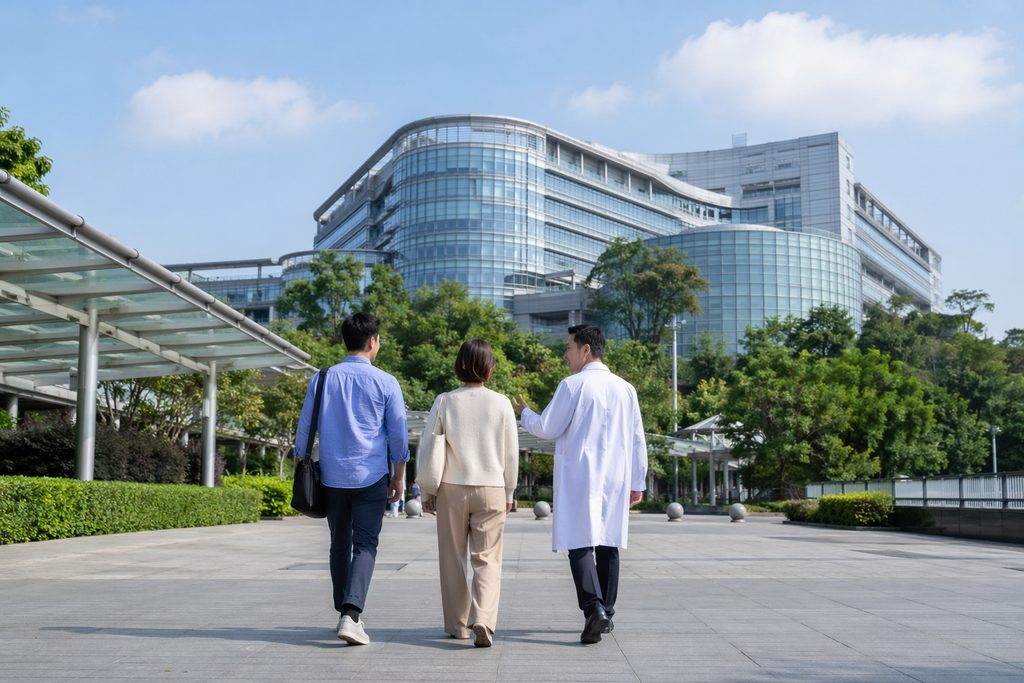
When 42-year-old Michael first heard the diagnosis, he had no idea where to start looking for treatment. His local hospital in Manchester had given him a timeline: six weeks until the next available consultation with a specialist. Six weeks of waiting. Six weeks of a tumor growing while he sat on a list. He started searching online at 3 a.m. and typed in a desperate question: is there a faster way to get world-class cancer care without bankrupting my family?
Michael’s situation is not rare. It is the reality for thousands of patients across the UK, Canada, and parts of Europe where public healthcare systems, strained by demand, force agonizing delays. For many, the answer lies 9,000 kilometers east.
Shanghai Cancer Center (Fudan University Shanghai Cancer Center) is one of Asia’s highest-volume oncology institutions. It treats over 1.5 million outpatients and admits more than 90,000 inpatients annually. But for an international patient, walking through its doors without a plan is a recipe for chaos. The registration counters are packed. The signs are in Mandarin. The queues can stretch for hours. This is where the concept of an international patient service transforms from a luxury into a necessity. We bridge that gap.
Key Takeaways
- Shanghai Cancer Center ranks among China’s top 5 oncology hospitals by Fudan specialty reputation, managing volumes that rival the largest Western cancer centers.
- The cash-pay cancer treatment cost Shanghai international hospital pathways often range from 30% to 50% of equivalent private care in the United States.
- Language, visa paperwork, and the sheer physical scale of Chinese public hospitals are the three biggest barriers for foreign patients acting alone.
- International patient coordination is not about skipping lines—it is about legally accessing the hospital’s official VIP international department with proper translation and logistics support.
The Problem: When Waiting Is Not an Option
A 2023 study published in The Lancet Oncology examined delays across 12 high-income countries. It found that the median wait time from urgent GP referral to first oncology consultation exceeded 28 days in the UK, with surgical interventions often delayed by an additional 45 to 60 days. That is a critical window. For aggressive malignancies like triple-negative breast cancer or small-cell lung cancer, a two-month delay can mean the difference between a curative resection and managing a metastasis.
Cost is the second punch. In the US, a standard course of chemotherapy without insurance can run from $10,000 to $30,000 per month. Immunotherapy pushes that figure much higher. Even insured patients face deductibles that wipe out savings.
This dual pressure creates a specific type of medical refugee: the patient who is too sick to wait, but too financially exposed to afford the private route at home. They look for a third path. High-quality care, immediate access, transparent pricing. That path often leads to Shanghai.
Who We Are
We are not a hospital. We do not provide medical treatment or clinical diagnoses. We are your logistical architects. Our team operates as a bridge between you and China’s top-tier medical expertise. We translate your medical records into precise clinical Chinese, coordinate with the official international patient service desks, secure the right visa invitation letters, and put a bilingual case manager at your side through every consultation. We exist because navigating a 2,000-bed public hospital in a foreign language is not something anyone should do alone. Our network covers 340+ top-ranked hospitals across 37 cities, but Shanghai Cancer Center remains one of our most requested destinations for oncology care.
Why Shanghai Cancer Center Delivers Results for International Patients
Clinical Volume That Sharpens Expertise
In oncology, volume correlates with outcomes. A surgeon who performs 200 esophagectomies a year simply sees complication patterns that a surgeon performing 20 a year will never encounter. Shanghai Cancer Center operates at a scale that is difficult to comprehend from a Western lens. Its pathology department processes approximately 50,000 frozen section diagnoses annually. Its radiation oncology department runs over 20 linear accelerators. This is not just big. It is focused repetition at a granular level.
For a foreign patient asking “is Shanghai Cancer Center good for international patients,” the answer starts with that volume. The hospital’s thyroid cancer team, for instance, has published extensively on nerve-sparing techniques, driven by a caseload that dwarfs most European centers. The institution is ranked among China’s top 10 for oncology in the Fudan specialty reputation rankings, a distinction that places it in the top tier of the 35,000+ hospitals nationwide.
Technology Deployed at Scale, Not in Silos
Western hospitals often market a single piece of equipment—one Da Vinci robot, one proton center—as a differentiator. Chinese top-tier hospitals deploy technology in fleets. Shanghai Cancer Center operates multiple robotic surgical systems. Its proton and heavy ion center, a collaboration with Siemens, represents one of the few such facilities in Asia capable of treating complex radioresistant tumors. The difference is operational. When a machine goes down for maintenance, patient flow does not stop. The system absorbs the disruption because there is built-in redundancy.
For patients considering oncology medical tourism China fast track pathways, this redundancy means your treatment schedule is not fragile. It does not collapse if a single device needs recalibration.
The Real Cancer Treatment Cost Shanghai International Hospital Comparison
Let us address the question everyone asks but often struggles to answer precisely: what is the actual cancer treatment cost Shanghai international hospital patients face? The numbers vary by protocol, but the structural gap is consistent.
| Treatment | Estimated US Cash Price (USD) | Shanghai International Dept (USD) |
|---|---|---|
| Standard Chemotherapy (per cycle) | $10,000 – $30,000 | $2,500 – $6,000 |
| Radical Prostatectomy (robotic) | $35,000 – $55,000 | $18,000 – $28,000 |
| Breast Lumpectomy + Sentinel Node Biopsy | $20,000 – $35,000 | $7,000 – $12,000 |
| PET-CT Scan | $3,000 – $6,000 | $500 – $900 |
| Proton Therapy (full course) | $100,000 – $150,000 | $40,000 – $65,000 |
These figures reflect the hospital’s international department pricing. They are not the local subsidized rates. They are the cash-pay rates for foreign patients. And they still undercut US private-sector pricing by a wide margin. The reason is structural: lower physician labor costs, higher patient throughput, and a medical supply chain that is largely domestic. Lower cost here does not signal lower quality. It signals a different economic model.
When patients ask “how much does chemotherapy cost in Shanghai,” the answer depends on the regimen. A standard FOLFOX cycle for colorectal cancer might run $2,800. The same cycle in a US outpatient center can exceed $12,000. The drugs are the same. The monitoring protocols are the same. The price is not.
Can You Just Book a Cancer Treatment Package Shanghai Online?
A common search phrase we see is “book cancer treatment package Shanghai.” The intent is understandable. Patients want certainty. They want a fixed price, a fixed date, a fixed outcome. But oncology does not work like a knee replacement. A tumor’s molecular profile, the patient’s performance status, and the staging all dictate the protocol. No reputable hospital will sell a “cancer package” sight unseen. What does exist is a pre-arranged evaluation pathway.
Here is how it works. You send us your pathology slides, your imaging (DICOM files), and your clinical summary. We have them translated by medical translators—not general linguists—and submitted to the international department at Shanghai Cancer Center. The oncology team reviews your case and determines if they can offer a treatment plan. If yes, they issue a treatment proposal with a cost estimate. This is the closest thing to a “package” that exists in ethical oncology. It is a proposal, not a shopping cart.
We have seen patients arrive expecting to click “buy” on a chemotherapy bundle. That expectation needs gentle correction. What you are buying is speed, expertise, and coordination. The clinical decisions remain in the hands of the attending oncologist, as they should.
What You Need to Know Before Going Alone
Honesty matters. We have seen patients try to navigate this system solo. Some succeed. Most burn time and money they do not have. Here is what you are up against.
- Visa Requirements: Medical treatment in China requires an S2 visa, specifically annotated for medical purposes. You need an official invitation letter from the hospital. Public hospital registration desks do not issue these. Only the international department or a registered medical coordination entity can provide the documentation that a Chinese consulate will accept. Apply with a tourist L visa and you risk rejection at the hospital’s admission desk.
- Payment Systems: Chinese public hospitals run on a prepaid deposit system. You load funds onto a patient card at a dedicated machine. These machines accept UnionPay. They often reject foreign Visa and Mastercard. We have watched patients stand at a payment kiosk for 45 minutes, card after card declining, while the queue behind them grows hostile. Cash works, but carrying $15,000 in RMB notes is not a solution most people are comfortable with.
- Medical Records and Imaging: Your home-country PET-CT on a CD means nothing if the Chinese radiologist cannot load the viewer. DICOM files need to be on a USB drive, formatted correctly. Pathology slides need to be physically recut and restained for review by the Chinese pathology department. This is not a digital handoff. It is a physical, logistical chain that breaks easily without someone managing it.
How We Help You Navigate This
These barriers exist for structural reasons. They are not designed to exclude foreign patients. They are simply the default state of a system built for 1.4 billion domestic users. Our job is to route around them.
Before you travel, we handle the document translation, the case submission to the hospital’s international patient service, and the visa invitation letter. We confirm that the oncology department has accepted your case and that a bed or infusion chair is reserved in the international wing. We arrange your airport pickup and accommodation near the hospital. We do not book you a hotel and hope for the best. We place you within walking distance of the treatment center because post-chemotherapy fatigue is real and a 40-minute taxi ride is miserable.
During your treatment, a bilingual medical companion stays with you. This person is not a translator on a phone app. They are physically present. They hold your patient card. They queue at the payment counter. They sit in the consultation room and ensure that when the oncologist says “we are seeing a partial response on the CT,” you hear those exact words in English, not a garbled summary. They translate your questions back to the doctor without editing them for brevity. You ask a question. The doctor hears it. That loop is sacred.
After treatment, we coordinate follow-up imaging schedules and remote consultations. If you need a written second opinion from a specialist at a different institution—say, a thoracic surgeon at one of China’s top-ranked oncology departments—we can arrange that without you needing to return to Shanghai. The goal is continuity, not a one-off transaction.
For patients exploring the best oncology hospital in China for foreigners, Shanghai Cancer Center consistently appears at the top of the list. But “best” is a word that needs context. It is best for patients who need high-volume surgical oncology, advanced radiation, and a team that has seen your specific cancer subtype hundreds of times. It is not the best for someone who wants a spa-like environment and a single attending physician who holds their hand through every blood draw. The environment is clinical, efficient, and direct. We prepare you for that reality so you arrive with clear expectations.
Frequently Asked Questions
For a full course of treatment including surgery and adjuvant chemotherapy, most international patients spend between $30,000 and $70,000 in total. This covers hospital fees, surgeon fees, anesthesia, and the international ward surcharge. It does not include accommodation, flights, or our coordination service. The figure varies sharply by cancer type. A thyroidectomy might cost $8,000. An esophagectomy with a 10-day ICU stay can exceed $50,000. We provide a detailed estimate after the hospital reviews your case—never before.
The hospital’s international department employs English-speaking staff. The attending physicians often speak functional medical English. But the system around the doctor—the nurses, the phlebotomists, the CT technicians, the billing clerks—overwhelmingly operate in Mandarin. A solo English-speaking patient will struggle with the interstitial moments: finding the right lab, understanding the prep instructions for a scan, knowing which window to pay at. This is precisely why a bilingual companion changes the experience from exhausting to manageable.
You cannot book a fixed-price cancer package online. You can, however, secure a pre-arranged evaluation slot and a treatment proposal. The hospital needs to see your tissue, your scans, and your bloodwork before committing to a protocol and a price. Anyone offering a fixed-price cancer package without a prior medical review is selling something that does not exist in ethical medicine. We secure the evaluation slot, translate your case, and get you the proposal. That is the fastest legitimate path.
This happens more often than patients expect. Chinese pathology departments routinely recut and restain biopsy slides. They sometimes find discordant results—a different grade, a different receptor status. When this occurs, the treatment plan shifts. We have seen a patient arrive for a presumed glioblastoma only to have the Shanghai pathologist identify a less aggressive glioma. The surgical plan changed. The prognosis changed. This is not a flaw. It is the reason you seek a second opinion at a high-volume center.
The “fast track” is not a separate clinical pathway. It is a coordination efficiency. A domestic patient might wait three weeks for a CT slot and another two weeks for a multidisciplinary team review. The international department consolidates these steps. Your scans, bloodwork, and specialist consultations are scheduled in a compressed block, often over 48 to 72 hours. You arrive Monday, complete staging by Wednesday, and sit with the oncologist Thursday for a treatment recommendation. The medicine is the same. The scheduling is compressed because the international department controls its own resource allocation, separate from the public queue.
Your Next Step
Michael, the patient from Manchester, landed in Shanghai on a Tuesday. By Friday, he had a revised pathology report, a PET-CT, and a treatment plan that started the following Monday. He did not skip any line. He simply entered a parallel system designed for patients who travel for care. The waiting ended when his case was submitted through the right channel.
If you are facing a diagnosis and a calendar that does not align with your survival odds, there is a path forward. It requires paperwork, patience, and a willingness to travel. It does not require you to be wealthy. It requires you to be informed. We can help with that. Start with a free consultation about your case, and we will tell you honestly whether Shanghai Cancer Center is a viable option for the specific cancer you are fighting.
Medical Disclaimer: This article is for informational purposes only and does not constitute medical advice. Treatment decisions should be made in consultation with a qualified oncologist after a thorough clinical evaluation. Outcomes vary by individual case. We do not guarantee treatment results or specific physician assignments.
For more medical information and treatment options in China, visit chinamedservices.com (China Medical Services).
