Complex Infectious Disease Diagnosis China: Inside Shanghai Huashan Hospital’s Tropical Disease Center
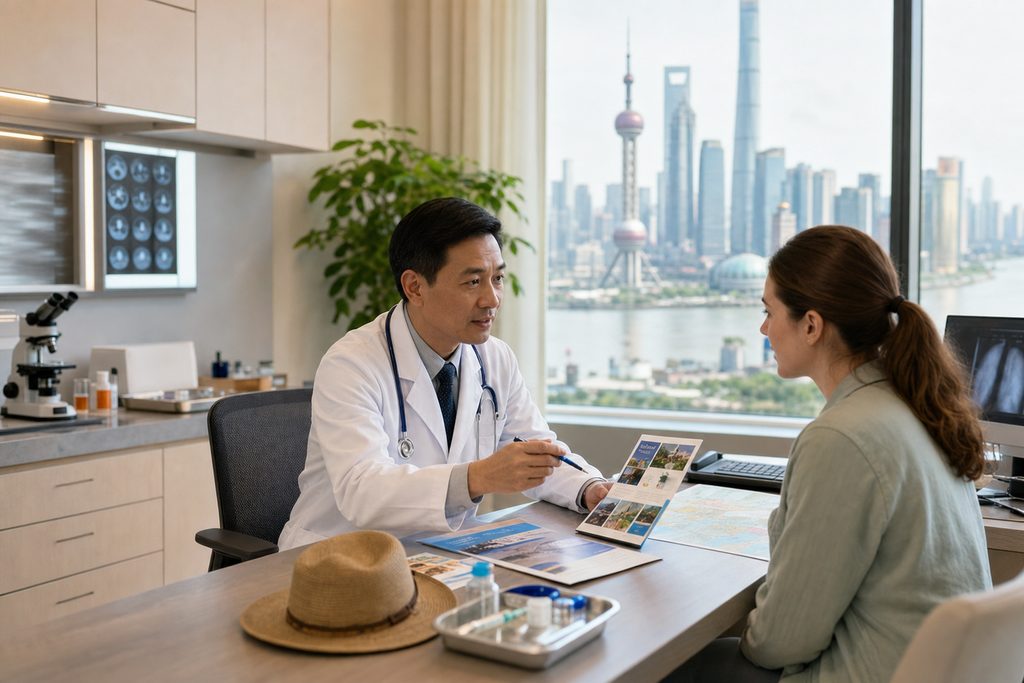
When 42-year-old Michael first heard the diagnosis, he had no idea where to start looking for treatment. A construction project manager from Manchester, he’d returned from a six-month assignment in West Africa with a fever that wouldn’t quit. His local NHS trust ran panels. Then more panels. The results were inconclusive. The fatigue deepened. His liver enzymes spiked. Somewhere in his bloodstream, an uninvited pathogen was dismantling his health piece by piece—and no one could name it. Michael’s case isn’t rare. It’s the new normal for a hyper-mobile world. And it’s why a growing number of patients are looking beyond their borders for answers, specifically toward one institution: the Complex Infectious Disease Diagnosis China pathway at Shanghai Huashan Hospital’s Tropical Disease Center.
We are not a hospital. We do not provide medical treatment or clinical diagnoses. We are your logistical architects—we bridge the gap between you and China’s top-tier medical expertise. When a diagnosis remains stubbornly out of reach, our team handles the ground-level complexity so you can focus on what matters: getting better.
Key Takeaways
- Shanghai Huashan Hospital‘s Department of Infectious Diseases manages over 4,000 inpatient cases annually, making it one of the highest-volume centers globally for complex tropical and infectious disease diagnosis.
- The center operates China’s only BSL-3 laboratory dedicated to clinical infectious disease, enabling same-batch metagenomic next-generation sequencing (mNGS) that identifies pathogens in under 48 hours—a capability that routinely solves cases Western labs have classified as “fever of unknown origin.”
- Language barriers, visa logistics, and the hospital’s sheer scale (daily outpatient volume exceeding 10,000) make independent navigation extremely difficult for non-Mandarin speakers. This is not a facility designed for walk-in international patients.
- Before committing to travel, understand that Huashan’s international wing requires in-person specialist evaluation before any inpatient admission. No remote booking of hospital beds is possible through standard channels.
The Problem: When Standard Diagnostics Hit a Wall
Fever of unknown origin. That’s the clinical label applied when a patient’s temperature exceeds 38.3°C on multiple occasions over three weeks, and a week of inpatient investigation yields no answer. It’s a phrase that sounds tidy but feels like falling through ice. The underlying causes span over 200 conditions. Infections account for roughly 30% of cases. Neoplasms, another 20%. Autoimmune conditions, collagen vascular diseases, miscellaneous causes—and in up to 50% of cases in some Western series, the etiology remains unidentified even after exhaustive workup. Not knowing is its own pathology. It corrodes hope. It delays targeted therapy. It turns a patient’s life into an open-ended diagnostic loop.
The situation gets harder when the pathogen is tropical. Many Western labs simply don’t see enough malaria, leptospirosis, melioidosis, scrub typhus, or visceral leishmaniasis to develop deep diagnostic intuition. Their assays are designed for local epidemiology. Their reference libraries skew toward temperate-zone organisms. A returning traveler with a rickettsial infection can cycle through three specialists and four hospitals before anyone thinks to run the right serology. By then, organ damage may have already begun. This is not a criticism of Western medicine. It’s a statement about volume and exposure. Diagnostic excellence follows patient flow. And the flow of complex infectious disease cases has shifted.
Who We Are
China Medical Services exists for one reason: to connect international patients with the specific Chinese hospitals best equipped to solve their medical problems. We maintain a database of 340+ top-ranked hospitals across 37 cities. We do not offer medical opinions. We offer operational clarity. Visa guidance, appointment coordination, bilingual medical companions who physically accompany you through hospital corridors, and the quiet competence that turns a daunting foreign medical system into a navigable path. When a patient like Michael contacts us, we absorb the friction.
Why Shanghai Huashan Hospital Delivers Answers Where Others Cannot
Clinical Volume That Reshapes Diagnostic Instinct
Huashan Hospital, affiliated with Fudan University, sits on the front line of China’s infectious disease response. Its Department of Infectious Diseases was established in 1956 and has since evolved into the National Clinical Research Center for Infectious Diseases. The numbers tell the story. The department’s outpatient clinic sees over 150,000 patient visits per year. Its inpatient service manages more than 4,000 admissions annually. The fever clinic alone—a dedicated unit for undiagnosed febrile illness—processes approximately 30,000 cases each year. Compare this to a major US academic center, where an infectious disease division might manage 500 to 800 inpatient consults annually. The pattern-recognition gap is real. A Huashan attending physician may encounter more cases of disseminated histoplasmosis in one year than a Western ID specialist sees in a career. That exposure translates into diagnostic speed—and speed, in infectious disease, is organ salvage.
The center also benefits from China’s unique epidemiological position. The country spans temperate, subtropical, and tropical zones. Domestic clinicians manage everything from brucellosis in Inner Mongolia to dengue in Guangdong to the parasitic infections endemic in rural Yunnan. Add in the Belt and Road Initiative’s effect on travel and trade—Chinese workers returning from Africa, Southeast Asia, and Latin America—and you get a clinical ecosystem where tropical medicine is not an exotic subspecialty. It’s Tuesday.
Diagnostic Technology Without the Wait
How does Huashan Hospital diagnose complex infections when other labs have failed? The answer involves a layered approach that starts broad and narrows fast. The cornerstone is metagenomic next-generation sequencing. In simple terms, mNGS extracts all nucleic acid from a patient sample—blood, cerebrospinal fluid, bronchoalveolar lavage, tissue biopsy—and sequences everything. Bacterial DNA. Fungal RNA. Viral particles. Parasitic genomes. The output is a complete census of microbial life in that sample, cross-referenced against massive pathogen databases. Huashan’s BSL-3 facility runs these assays in-house. Turnaround time: 24 to 48 hours from sample receipt. For a patient who has been undiagnosed for months, that window is transformative.
Western hospitals use mNGS too. The difference is often logistical. Many send samples to external reference labs, adding days of transit. Some require sequential approval through institutional review boards for non-standard testing. Huashan’s integrated model—the lab sits physically within the infectious disease building—collapses those delays. The sequencing data lands on the attending physician’s desk while the patient is still in the fever ward. That same-day integration of molecular data with clinical presentation is what cracks cases that have stumped multiple prior admissions. The center also maintains extensive culture capabilities for slow-growing organisms like Mycobacterium tuberculosis and Burkholderia pseudomallei, plus serological panels for rickettsial diseases, leptospirosis, and arboviruses that many Western labs have de-prioritized.
What Is the Success Rate of Tropical Disease Treatment in China?
Patients ask this directly. They want a number. The honest answer is that “success rate” depends entirely on the pathogen, the stage at presentation, and the host’s immune status. A young patient with uncomplicated falciparum malaria diagnosed and treated promptly has a cure rate exceeding 98%. A patient with late-stage melioidosis and septic shock faces a mortality risk of 40% or higher even with optimal care. What Huashan offers is not a guarantee of cure—no ethical institution makes that promise—but a probability shift. Earlier diagnosis. Targeted therapy from day one. Fewer empiric antibiotic courses that miss the mark. In a 2021 retrospective study published by Huashan’s team in Emerging Microbes & Infections, the center’s mNGS-guided approach identified the causative pathogen in 67% of culture-negative febrile illness cases that had previously been labeled FUO. That’s two-thirds of patients who finally got an answer. For many, that answer meant a specific drug rather than a broad-spectrum gamble. There is no global registry comparing tropical disease treatment outcomes across countries. But the structural advantages—volume, integrated lab, rapid sequencing—are hard to replicate elsewhere.
Shanghai Huashan Hospital Tropical Disease Cost: What International Patients Should Expect
Let’s address the financial question head-on. The Shanghai Huashan Hospital tropical disease cost varies significantly based on the complexity of the diagnostic workup and the length of inpatient stay. We provide ranges, not fixed prices, because every case is different. A straightforward outpatient evaluation with targeted serologies and imaging might run from $800 to $2,500. A comprehensive inpatient diagnostic admission—the kind needed for an undiagnosed febrile illness with mNGS, multiple imaging modalities, specialist consultations, and a one-week stay—typically falls between $5,000 and $15,000. Extended treatment with intravenous antimicrobials, ICU monitoring, or surgical intervention for abscess drainage pushes costs higher. For context, a similar undiagnosed FUO workup at a major US academic center can exceed $50,000 before a diagnosis is even reached. The structural reasons are straightforward. Lower labor costs. High patient volume amortizing equipment investments. A hospital system designed for throughput rather than margin maximization. Lower cost does not signal lower quality here. It signals different economics.
Payment at Huashan’s international wing operates on a deposit-and-reconciliation model. Patients pre-fund an estimated treatment amount. The hospital deducts charges daily. Any surplus is refunded at discharge. This is not the insurance-direct-billing model familiar to American patients. Most international visitors pay out of pocket and seek reimbursement from their home insurers afterward. Our team assists with obtaining the itemized invoices and translated medical records required for claims submission.
What You Need to Know Before Going Alone
Shanghai Huashan Hospital is a public institution of staggering scale. Its main campus on Wulumuqi Road handles over 10,000 outpatient visits daily. The corridors are crowded. The signage is predominantly in Mandarin. The registration system requires a Chinese ID-linked health card or a passport-verified international patient registration. Even finding the correct building—the infectious disease unit operates from a dedicated compound—can consume half a day if you arrive unprepared. These are not complaints. They are realities of a hospital serving a population of 1.4 billion. The system works efficiently for those who know how to navigate it. For those who don’t, it can feel impenetrable.
- Visa Requirements: Foreign nationals seeking medical treatment in China require an S2 visa with the purpose of medical treatment explicitly stated. This is not the same as an L tourist visa or an M business visa. The application requires an invitation letter from the treating hospital, a medical certificate outlining the condition and treatment plan, and proof of sufficient funds. Processing times vary by consulate but typically range from 5 to 15 business days. Applying with incorrect documentation triggers delays that can stretch to weeks.
- Language and Clinical Communication: While Huashan’s international medical center provides English-speaking coordinators, the infectious disease specialists themselves conduct rounds and write notes in Mandarin. A clinical history that loses nuance in translation—the exact temporal pattern of fevers, the quality of pain, the sequence of symptoms—can misdirect the diagnostic process. A bilingual medical companion who understands both the language and the clinical terminology is not a luxury. It’s a diagnostic safeguard.
- Appointment and Admission Logistics: Huashan’s infectious disease specialists see outpatients by appointment. Those appointments cannot be booked online from overseas through any public portal. The international medical center accepts email inquiries, but response times vary. More critically, no inpatient bed is reserved without an in-person specialist evaluation first. You cannot fly to Shanghai with a guaranteed admission date. You fly for an outpatient consultation, and the specialist decides whether hospitalization is warranted. That uncertainty is difficult to manage from 6,000 miles away.
How We Help You Navigate This
These barriers exist for structural reasons. They are not malice or indifference. A public hospital serving China’s domestic population was never designed to accommodate walk-in international patients. Our role is to build the bridge. We start by collecting your medical records, translating them into clinical Mandarin, and presenting your case to the relevant department at Huashan to confirm that your condition falls within their expertise. If it does, we coordinate a consultation appointment with an infectious disease specialist and handle the hospital’s invitation letter for your S2 visa application. That letter is often the single most time-sensitive document in the entire process. We track it. We chase it. You don’t.
Once you arrive in Shanghai, a bilingual medical companion meets you at the hospital entrance. This person handles registration, navigates you to the correct department, sits beside you during the consultation to ensure every symptom and concern is accurately conveyed, and manages payment deposits, pharmacy queues, and imaging appointments. If the specialist orders an inpatient admission, the companion coordinates the bed assignment and admission paperwork. After discharge, we assist with obtaining translated discharge summaries, lab reports, and imaging on CD for continuity of care back home. The entire journey—from first inquiry to post-discharge follow-up—is managed so you face one point of contact, not a fragmented system.
For patients who cannot travel immediately, we also facilitate remote options. A video consultation with a Huashan infectious disease specialist costs from $500 to $800. A written second opinion based on your existing records runs from $300 to $500. These are not substitutes for in-person evaluation when a physical exam and onsite testing are needed. But they can clarify whether travel is warranted—or whether your case can be managed with a treatment plan your home physician can execute. Any remote consultation fee is credited in full toward our on-the-ground coordination service if you later travel to China for treatment within 90 days.
Frequently Asked Questions
Not through any public online system. The hospital’s international medical center accepts inquiries by email and phone, but response times vary and there is no real-time booking portal accessible to foreign patients. Our team handles this coordination on your behalf, following up persistently with the department to secure a confirmed consultation slot. We do not charge a coordination fee unless an appointment is successfully arranged.
It happens. No center solves every case. Huashan’s approach reduces the probability of a missed diagnosis significantly, but some fevers remain unexplained even after mNGS, advanced imaging, and subspecialty review. In those instances, the center’s rheumatology and hematology consultants—who collaborate closely with the infectious disease team—evaluate for non-infectious causes like adult-onset Still’s disease, hemophagocytic lymphohistiocytosis, or occult malignancy. The diagnostic net is wide. If no answer is found, you return home with a documented, systematic exclusion of the most likely pathogens, which itself has clinical value for your ongoing care.
For outpatient evaluation alone, plan for three to five business days. This allows for the specialist consultation, blood draws, imaging, and initial results review. If hospitalization is recommended, the typical inpatient stay for an undiagnosed febrile illness ranges from five to fourteen days, depending on how quickly the diagnostic tests yield actionable results and how you respond to empiric or targeted therapy. We advise patients to budget two to three weeks total in Shanghai and to maintain flexible return tickets.
Huashan’s international medical center exists specifically for this purpose. It provides English-speaking coordinators, private or semi-private inpatient rooms, and streamlined billing for self-paying international patients. The clinical care—the specialists, the lab, the treatment protocols—is identical to what Chinese nationals receive. What differs is the service layer around that care. But the international wing is not a separate hospital. It is a gateway into the same institution. That means you access Huashan’s top infectious disease physicians, but you do so through a channel designed for patients who do not speak Mandarin and who need administrative support. This hybrid model—world-class public hospital expertise with a private service wrapper—is common among China’s elite medical institutions and works well when managed properly.
Your Next Step
A complex infectious disease diagnosis that remains unresolved after multiple evaluations is exhausting. It consumes time, money, and emotional bandwidth. Shanghai Huashan Hospital’s Tropical Disease Center offers diagnostic capabilities that are genuinely difficult to find elsewhere—not because the technology is exclusive, but because the combination of high case volume, integrated rapid sequencing, and clinician experience creates a diagnostic yield that changes outcomes. The path to accessing that expertise is logistically demanding. That’s what we handle.
If you are considering evaluation at Huashan, start with a conversation. Tell us about your case. We will assess fit, explain the realistic timeline and Shanghai Huashan Hospital tropical disease cost expectations, and outline the specific steps from record collection to consultation. There is no charge for the initial discussion and no obligation. You deserve an answer. We help you find it.
For more medical information and treatment options in China, visit chinamedservices.com (China Medical Services).
