Top Liver Cancer Hospital in Shanghai: Zhongshan Hospital Costs & Access
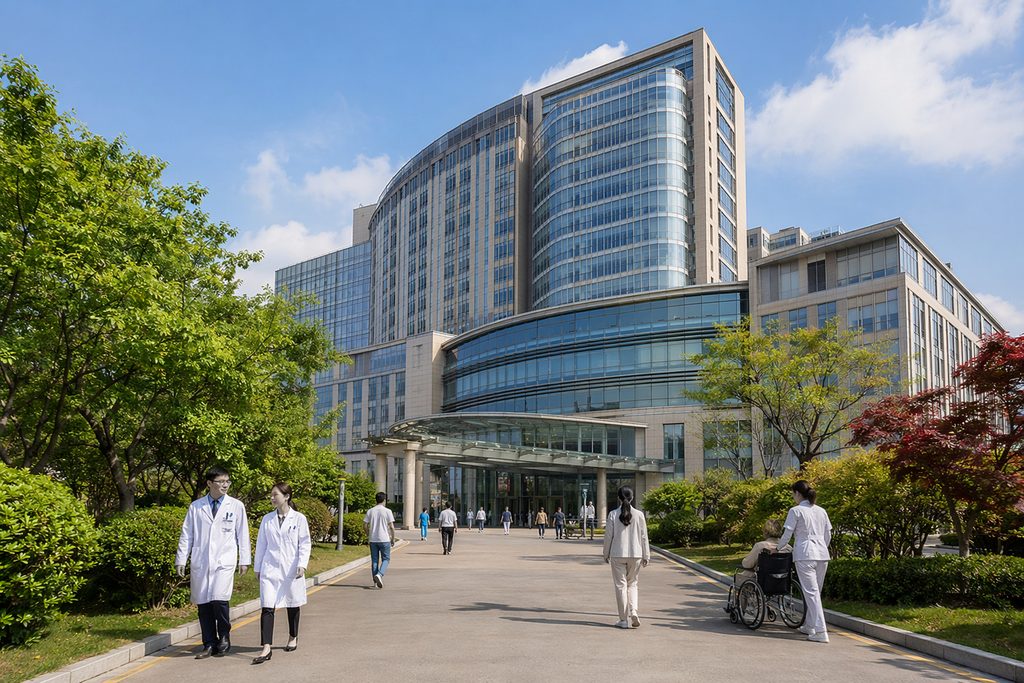
Top Liver Cancer Hospital in Shanghai: The Short Answer
Zhongshan Hospital, affiliated with Fudan University, is consistently ranked among China’s top 10 hospitals for oncology and is widely considered the leading center for liver cancer surgery in Shanghai. The liver cancer treatment cost Shanghai at this hospital typically runs between $18,000 and $45,000 for a partial hepatectomy, depending on tumor complexity and length of stay. That compares with $120,000 to $250,000 for equivalent surgery at major U.S. centers.
But the real answer is more complicated than a price tag. Zhongshan performs over 4,000 liver resections annually — a surgical volume that shapes outcomes. Access for international patients, however, does not happen by walking in. The hospital’s public outpatient system cannot be booked from overseas. You need the international medical department or a coordination pathway, which changes both the logistics and the final bill.
Who This Is Right For — and Who It Isn’t
Zhongshan Hospital suits a specific patient profile. The surgeons here handle complex hepatocellular carcinoma (HCC), large tumors, vascular involvement, and repeat resections. If your local oncologist has said surgery is too risky or the tumor is borderline resectable, a second opinion from this team may open options.
Good candidates typically include:
- Patients with HCC or intrahepatic cholangiocarcinoma who are surgical candidates but face long waits at home
- Patients with recurrent liver cancer after prior resection or ablation
- Patients seeking high-volume surgical experience for tumors in difficult locations
- Families comparing costs between Western centers and top-tier Chinese hospitals
Who should not pursue this path?
- Patients with end-stage liver failure requiring transplantation evaluation first — organ transplant access for foreign nationals is heavily restricted and not a realistic short-term plan
- Patients too unstable to fly or with active uncontrolled infections
- Patients whose primary need is palliative care coordination close to home
- Patients expecting a Western-style private hospital experience — Zhongshan is a public hospital with high patient volume, even in its VIP wing
Being blunt about this matters. Zhongshan is a remarkable institution. It is not a resort.
The Options, Compared
Liver cancer treatment is not one procedure. The right option depends on tumor stage, liver function, and overall health. Here is how the main modalities compare at Zhongshan and what drives the Zhongshan Hospital liver cancer price.
| Treatment Option | Typical Cost at Zhongshan (USD) | U.S. Equivalent Cost | Hospital Stay | Best For |
|---|---|---|---|---|
| Radiofrequency / Microwave Ablation | $8,000 – $15,000 | $30,000 – $60,000 | 1–3 days | Small tumors (<3 cm), poor surgical candidates |
| Partial Hepatectomy (Open) | $18,000 – $35,000 | $120,000 – $200,000 | 7–14 days | Resectable tumors, good liver reserve |
| Laparoscopic Hepatectomy | $22,000 – $40,000 | $150,000 – $250,000 | 5–10 days | Peripheral tumors, faster recovery |
| TACE (Chemoembolization) | $6,000 – $12,000 per session | $20,000 – $40,000 per session | 1–2 days | Unresectable tumors, bridge to surgery |
| Targeted Therapy + Immunotherapy | $3,000 – $8,000 per month | $15,000 – $30,000 per month | Outpatient | Advanced HCC, systemic disease |
Which column fits you? If your tumor is small and you cannot tolerate surgery, ablation at Zhongshan costs less than a U.S. MRI workup. If you need a major resection, the savings are dramatic — often 80% or more off U.S. pricing. But systemic therapy pricing depends heavily on whether you use generic Chinese PD-1 inhibitors, which can cut monthly costs to under $2,000, or imported branded drugs.
Why Zhongshan’s Liver Cancer Volume Changes the Math
Volume is the quiet variable most patients overlook. Zhongshan’s liver surgery department performs more than 4,000 resections per year. Most Western centers manage 100 to 300. That gap matters when a tumor sits near the hepatic vein or the surgeon must preserve enough functional liver to avoid post-operative failure.
Does volume guarantee better outcomes? No single number does. But the evidence points one direction. A 2019 analysis in The Lancet Oncology found that hospitals performing more than 50 liver resections annually had significantly lower perioperative mortality than low-volume centers. Zhongshan clears that threshold roughly 80 times over.
What this means practically: surgeons here have seen rare anatomical variants, managed difficult bleeding, and refined techniques like selective hepatic vascular occlusion. That experience translates into a willingness to attempt resections that other centers decline.
And the question “is Zhongshan Hospital good for liver cancer” answers itself when you look at referral patterns. Patients fly in from across China and from Southeast Asia, the Middle East, and Russia. The hospital’s oncology department also runs one of China’s largest clinical trial programs for HCC, which sometimes offers access to novel agents before they reach Western markets.
How Much Does Liver Cancer Surgery Cost in Shanghai: The Full Breakdown
The headline number never tells the whole story. Here is what actually drives the final bill for a hepatectomy at Zhongshan.
Surgeon and operating room fees: $6,000 to $12,000 depending on complexity and whether you use the standard or VIP surgical track.
Hospital bed charges: The standard international ward runs $150 to $300 per night. VIP single rooms run $400 to $800. A 10-day stay adds $1,500 to $8,000.
Anesthesia: $2,000 to $4,000 for a major liver resection.
Consumables and surgical instruments: $5,000 to $15,000. This is where variance explodes. Laparoscopic staplers, energy devices, and hemostatic agents all add up. The hospital itemizes these.
Pre-operative workup: $2,000 to $5,000 for contrast-enhanced MRI, CT, blood work, and liver function testing. If you bring recent imaging from home, some of this may be waived.
Pathology and post-operative care: $1,500 to $3,000.
Add it up and a straightforward open hepatectomy lands around $25,000 to $35,000. A complex laparoscopic case with a long ICU stay can reach $45,000. The liver cancer treatment cost Shanghai figure you should plan for is $30,000 to $50,000 all-in, including travel, accommodation, and coordination services.
What is not included: flights, visa fees, hotel for family members, post-discharge rehabilitation, and any complications requiring extended ICU care. Budget a 15% contingency.
Practical Considerations: Records, Visas, and Language
Getting to Zhongshan requires more than a plane ticket. The logistics are manageable if you prepare.
Medical records. You need complete documentation: recent CT or MRI in DICOM format, pathology slides if a biopsy was done, blood work including AFP and liver function panels, and a summary letter from your current oncologist. All documents must be translated into Chinese. Our team handles this translation and formats records to Chinese hospital standards.
Visa. Foreign patients traveling to China for medical treatment apply for an S2 visa, which covers short-term private affairs including medical care. Family members accompanying you also apply for S2 visas. The hospital’s international department provides an invitation letter and treatment confirmation that supports the application. Approval timelines vary by embassy, so allow 3 to 6 weeks.
Payment. Public hospitals in China, including Zhongshan’s international wing, require pre-payment. You deposit an estimated amount, the hospital draws down as services are provided, and you settle the balance on discharge. International credit cards are accepted at the international department. Wire transfers are also possible. U.S. insurance rarely covers treatment in China directly — you pay upfront and file for reimbursement. Some international insurers with direct billing agreements may work with the hospital’s billing office.
Language. Zhongshan’s international department has English-speaking coordinators, but the wards, nursing staff, and radiology departments operate in Chinese. Without a bilingual companion, you will struggle with queue tickets, medication instructions, and discharge paperwork. This is not a reflection on the hospital’s quality — it is the reality of a public institution serving thousands of patients daily.
Follow-up after returning home. Your Zhongshan team will provide a discharge summary and imaging CDs. You should schedule follow-up imaging with your local oncologist at 1, 3, and 6 months post-surgery. Video follow-up consultations with the Zhongshan team are available and cost $100 to $300 per session.
Frequently Asked Questions
Zhongshan is ranked among China’s top 10 for oncology in the Fudan University hospital rankings, which are the most authoritative in the country. Its liver surgery volume exceeds 4,000 cases per year. Other strong options include Peking Union Medical College Hospital in Beijing and West China Hospital in Chengdu, but for hepatocellular carcinoma specifically, Zhongshan is the reference center most oncologists name first.
Plan on $25,000 to $45,000 for a partial hepatectomy through the international department, including surgeon fees, hospital stay, and operating room costs. Ablation runs $8,000 to $15,000. These figures are 70% to 85% below U.S. pricing. The final number depends on tumor size, surgical approach, and whether complications extend your stay.
You cannot book a public outpatient appointment from overseas. What you can do is submit your records for a written second opinion or video consultation first. If the Zhongshan team confirms you are a surgical candidate, the international department can then schedule your admission and surgery date before you fly. This remote evaluation step is the only practical way to arrive with a confirmed plan.
Zhongshan has a dedicated liver ICU with experience managing post-hepatectomy liver failure, bleeding, and bile leaks. Complication rates for major liver resection are published and in line with international benchmarks. But you should understand the limits: if you require a liver transplant, that path is not open to foreign nationals in China. Your treatment plan should include a clear understanding of what happens if resection is not curative.
Most international patients pay out of pocket and file for reimbursement with their insurer. The international department provides itemized invoices and medical documentation in English to support claims. A small number of insurers with direct billing agreements may settle directly with the hospital. Confirm with your insurer before committing.
Your Next Step
The decision to travel to Shanghai for liver cancer surgery is weighty. Zhongshan Hospital offers surgical volume and pricing that few Western centers can match, but the path requires preparation: records translation, visa paperwork, and a realistic understanding of what a Chinese public hospital feels like. We are not a hospital and we do not diagnose or treat. What we do is handle the coordination — records preparation, remote consultation scheduling, visa documentation support, and on-the-ground bilingual accompaniment. If you are considering Zhongshan for liver cancer treatment, a free consultation with our coordination team is the lowest-pressure way to understand whether this path makes sense for your specific case. You can also review our guide to China’s top-ranked hospitals or explore oncology department rankings to compare alternatives before you commit.
Zhongshan Hospital earns its reputation. Whether it earns your trust depends on your tumor, your liver function, and your tolerance for navigating a system built for scale rather than comfort. Start with a second opinion. The rest follows from there.
For more medical information and treatment options in China, visit chinamedservices.com (China Medical Services).
