Sichuan Cancer Hospital Radiation Oncology: A Guide for International Patients
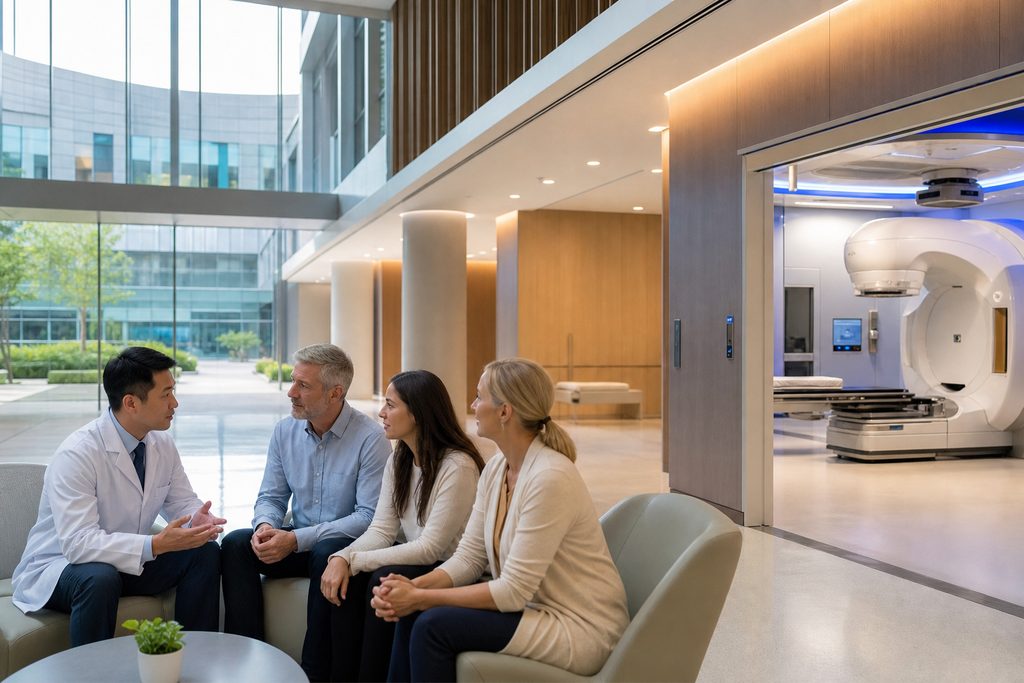
You’ve probably heard that getting advanced cancer treatment abroad means either waiting months or paying six figures. The reality at one of China’s largest cancer centers is different. Sichuan Cancer Hospital radiation cost for foreigners typically runs between $8,000 and $25,000 for a standard course of intensity-modulated radiation therapy (IMRT), depending on the number of fractions and technique used. That compares to $50,000–$120,000 for comparable treatment at many U.S. cancer centers. The hospital treats over 400,000 outpatients annually and operates one of the most active radiation oncology departments in western China.
But there’s a catch. The public system here isn’t built for walk-in international patients. You cannot simply email the department and book a radiation slot. Access requires navigating a specific pathway — one that involves documentation review, in-person consultation, and often a local coordinator who speaks the language. We’ll break down exactly how that works.
Radiation Oncology at Sichuan Cancer Hospital: The Short Answer
For international patients who need radiotherapy — whether for head and neck cancers, cervical cancer, lung cancer, or post-operative adjuvant treatment — Sichuan Cancer Hospital offers genuine clinical depth at a fraction of Western prices. The hospital’s radiation oncology department operates multiple linear accelerators, including machines capable of IMRT, volumetric modulated arc therapy (VMAT), and stereotactic body radiation therapy (SBRT). As a specialty cancer hospital, it focuses exclusively on oncology, which means radiation oncologists, physicists, and dosimetrists work on cancer cases all day, every day.
The hospital ranks among China’s top 10 for oncology in the Fudan University Hospital Rankings, the country’s most authoritative hospital evaluation system. For a patient asking “is Sichuan Cancer Hospital good for international patients,” the honest answer is: clinically yes, logistically it takes preparation. The clinical expertise is there. The international patient infrastructure is more limited than at, say, a private hospital in Shanghai — but that’s also why the cost is lower.
Who This Is Right For — and Who It Isn’t
Radiation oncology abroad is not for every cancer patient. Some cases genuinely benefit from traveling. Others don’t. Here’s how we see it after years of coordinating care in China.
Typically good candidates:
- Patients with a confirmed cancer diagnosis and a clear radiation treatment plan already developed by their home oncologist
- Patients who need IMRT or VMAT for head and neck, cervical, prostate, or rectal cancers — techniques where Chinese top-tier hospitals have extensive case volume
- Patients whose insurance does not cover radiation at home, or who face multi-month wait times
- Patients with family or business connections in China who can manage extended stays
- Patients seeking a second opinion on radiation dosing or technique from a high-volume center
Who should not pursue this:
- Patients with rapidly progressing disease who cannot tolerate a 2–4 week gap in treatment
- Patients requiring highly experimental protocols, such as certain proton therapy trials not available at this hospital
- Patients who need daily coordination with a primary care team at home and cannot manage remote communication
- Patients whose condition requires concurrent chemotherapy with agents that are difficult to source or administer abroad
- Anyone expecting a Western-style private hospital experience — this is a large Chinese public institution
If you fall in the first group, the math can work in your favor. If you’re in the second, staying closer to home is often the better call.
The Options, Compared
When international patients consider radiation oncology in China, they’re usually weighing three paths: a top-tier Chinese public cancer hospital, a private international hospital in China, or staying home for treatment. The table below lays out the real differences.
| Factor | Sichuan Cancer Hospital (Public) | Private International Hospital (China) | U.S./U.K. Cancer Center |
|---|---|---|---|
| IMRT cost (full course) | $8,000–$25,000 | $25,000–$45,000 | $50,000–$120,000 |
| Wait time for radiation start | 1–3 weeks after consultation | 1–2 weeks | 2–8 weeks depending on region |
| English-speaking staff | Limited; interpreters needed | Standard | Standard |
| Radiation oncologist case volume | Very high (specialty cancer hospital) | Moderate | Varies widely |
| Insurance direct billing | Rarely; pay upfront, claim later | Common | Standard |
| Technology available | IMRT, VMAT, SBRT, 3D-CRT | IMRT, VMAT, often newer machines | Full range including proton in some centers |
The public hospital column suits cost-sensitive patients who prioritize clinical volume and are willing to manage language and administrative friction. The private international hospital suits patients who want English-speaking staff and insurance direct billing, and who are willing to pay roughly double the public price. Staying home suits patients with strong insurance, no financial pressure, and a treatment timeline that works locally.
What “Radiation Oncology at Sichuan Cancer Hospital” Actually Means for You
This is the part most articles skip. Radiation oncology is not a single treatment — it’s a department that delivers several distinct techniques, and what you pay depends heavily on which one your case requires. At Sichuan Cancer Hospital, the most common modalities for international patients are:
- 3D-CRT (three-dimensional conformal radiation therapy): The most basic modern technique. Used for palliative cases or simple tumor geometries. Lowest cost.
- IMRT (intensity-modulated radiation therapy): Shapes the radiation beam to match tumor contours, sparing nearby organs. Standard for head and neck, prostate, and many other sites. This is the workhorse technique and the basis for most cost estimates.
- VMAT (volumetric modulated arc therapy): A faster form of IMRT that delivers radiation in a continuous arc around the patient. Shorter treatment sessions, slightly higher cost per fraction.
- SBRT (stereotactic body radiation therapy): High-dose, precisely targeted radiation delivered in 1–5 sessions. Used for early-stage lung cancer, liver lesions, and oligometastatic disease. Highest cost per fraction but fewest total sessions.
Your radiation oncologist will determine which technique fits your tumor location, stage, and treatment goals. The cost difference between 3D-CRT and SBRT can be 3–4x. That’s why any price you see online is a starting point, not a quote.
The department also performs brachytherapy for cervical and prostate cancers — a procedure where radioactive sources are placed directly inside or next to the tumor. This is a specialized service that many smaller centers don’t offer, and it’s one reason patients travel to comprehensive cancer hospitals like this one.
What It Costs: Radiation Therapy Pricing in China
Let’s talk real numbers. How much does radiotherapy cost in China? At a top-tier public cancer hospital like Sichuan Cancer Hospital, here’s what you’re looking at:
- IMRT full course (25–35 fractions): $8,000–$18,000
- VMAT full course (25–35 fractions): $10,000–$22,000
- SBRT (1–5 fractions): $6,000–$15,000 total
- Brachytherapy (per implant): $3,000–$8,000
- 3D-CRT palliative course (10–15 fractions): $4,000–$8,000
These figures cover the radiation planning, physics, and delivery. They do not include the initial consultation fee, imaging (CT simulation, MRI, PET-CT if needed), blood work, or any concurrent chemotherapy. Those add another $1,500–$4,000 depending on what your case requires.
What drives the variance? Three things. First, the number of fractions — more sessions means more cost. Second, the technique — VMAT costs more per fraction than standard IMRT. Third, whether you need additional imaging or re-planning mid-course. A patient with a straightforward prostate cancer case might spend $10,000 all-in. A head and neck patient requiring 35 fractions of VMAT with weekly imaging could approach $25,000.
Ask for a written cost breakdown before committing. The hospital’s international patient office or your coordinator should itemize consultation, imaging, planning, and delivery costs separately. This protects you from surprise charges mid-treatment.
Practical Considerations: Records, Visas, and Follow-Up
Getting to Chengdu for radiation therapy requires more than booking a flight. Here’s what actually matters.
Medical records. You’ll need complete documentation: pathology reports, imaging (preferably DICOM files on a CD or cloud link), prior treatment summaries, and a referral letter from your oncologist. These must be translated into Chinese for the hospital’s review. A written second opinion service can handle this translation and submit your file to the relevant department before you travel — that costs $300–$500 and gives you a clear read on whether the hospital will accept your case.
Visa. Foreign nationals seeking medical treatment in China use the S2 visa, which is the short-stay category for private affairs including medical care. You’ll need supporting documents from the hospital — typically an invitation letter or treatment confirmation — to apply. Family members accompanying you also apply for S2 visas. Processing varies by embassy and your nationality, so start this process at least 4–6 weeks before your intended travel date. No one can guarantee visa approval, and the hospital’s documents are necessary but not sufficient on their own.
Payment. Chinese public hospitals operate on a pre-payment model. You’ll deposit funds upfront, and treatment costs are deducted as you go. International credit cards are not always accepted at hospital cashiers. Plan to have a Chinese bank account, a local payment app like WeChat Pay or Alipay, or a coordinator who can handle payments on your behalf.
Language. This is the biggest practical hurdle. The hospital’s radiation oncology department operates in Chinese. Some senior physicians speak English, but nurses, technicians, and administrative staff typically do not. You’ll need a bilingual medical companion — someone who can translate during consultations, guide you through the hospital’s sprawling campus, and handle registration, payment, and scheduling. Our bilingual medical companion service exists precisely for this reason. You can manage without one, but expect significantly more friction.
Follow-up after returning home. Radiation side effects often peak 2–4 weeks after treatment ends — which may be after you’ve flown home. Before leaving Chengdu, get a complete treatment summary in English: total dose, fractionation, technique, and any concurrent therapies. Your home oncologist needs this to manage late effects and schedule appropriate surveillance imaging. Also confirm who you contact at the hospital if you have questions three months later.
Frequently Asked Questions
Clinically, it’s a strong choice — the hospital ranks among China’s top 10 for oncology in the Fudan rankings and treats a massive volume of radiation oncology cases. Operationally, it’s a Chinese public hospital first. English support is limited, and the international patient pathway is less polished than at private hospitals in Beijing or Shanghai. You’ll get excellent medical care, but you’ll work for it administratively. That’s the tradeoff for the lower cost.
A full course of IMRT in China costs roughly $8,000–$25,000 at a top-tier public cancer hospital. Comparable treatment in the U.S. runs $50,000–$120,000. Even adding travel, accommodation, and coordination fees, most international patients spend 60–80% less in China. The gap narrows if you need proton therapy — which is not available at Sichuan Cancer Hospital and is expensive everywhere.
Not directly through the public registration system. Chinese public hospitals require an in-person consultation before scheduling radiation. However, you can complete the remote evaluation beforehand — submitting your records for departmental review and getting a written opinion on whether your case is suitable. That doesn’t guarantee a specific start date, but it dramatically reduces the chance you’ll fly to Chengdu and be told your case isn’t a fit. Our coordination team handles this remote review process as a standard first step.
This is a real risk, and it’s why we tell patients to be honest about their disease trajectory. Radiation planning itself takes 1–2 weeks after your initial consultation — CT simulation, target delineation, physics planning, and quality assurance. If your tumor is growing quickly, that delay matters. Discuss this openly with your home oncologist before committing to treatment abroad. For aggressive disease, staying local is often the safer choice.
Most U.S. and European insurers do not have direct billing arrangements with Chinese public hospitals. You’ll pay upfront and file for reimbursement. Some international insurance plans do cover treatment at recognized foreign hospitals — Sichuan Cancer Hospital’s international department can provide the itemized receipts and documentation your insurer requires. Check your policy’s out-of-network and international coverage clauses before you commit. If you have a plan with no out-of-network benefits, you’ll be paying entirely out of pocket.
Your Next Step
Radiation oncology at Sichuan Cancer Hospital offers genuine value for international patients who need high-quality IMRT, VMAT, or SBRT at a fraction of Western prices. The clinical expertise is real, the case volume is high, and the cost difference is substantial. What’s harder is the pathway: language, documentation, visa, payment, and follow-up logistics.
That’s where we come in. China Medical Services is not a hospital and we don’t provide medical advice or diagnoses. We’re a coordination service that helps international patients navigate Chinese healthcare — from remote record review and written second opinions to bilingual accompaniment and treatment coordination in Chengdu. If you’re seriously considering radiation therapy at Sichuan Cancer Hospital, start with a free consultation. We’ll review your situation, explain what’s realistic, and help you decide whether this path makes sense for your case. No pressure, no obligation — just a clear-eyed assessment of your options.
For more medical information and treatment options in China, visit chinamedservices.com (China Medical Services).
