Sir Run Run Shaw Hospital Orthopedics: Costs & Access for Foreigners
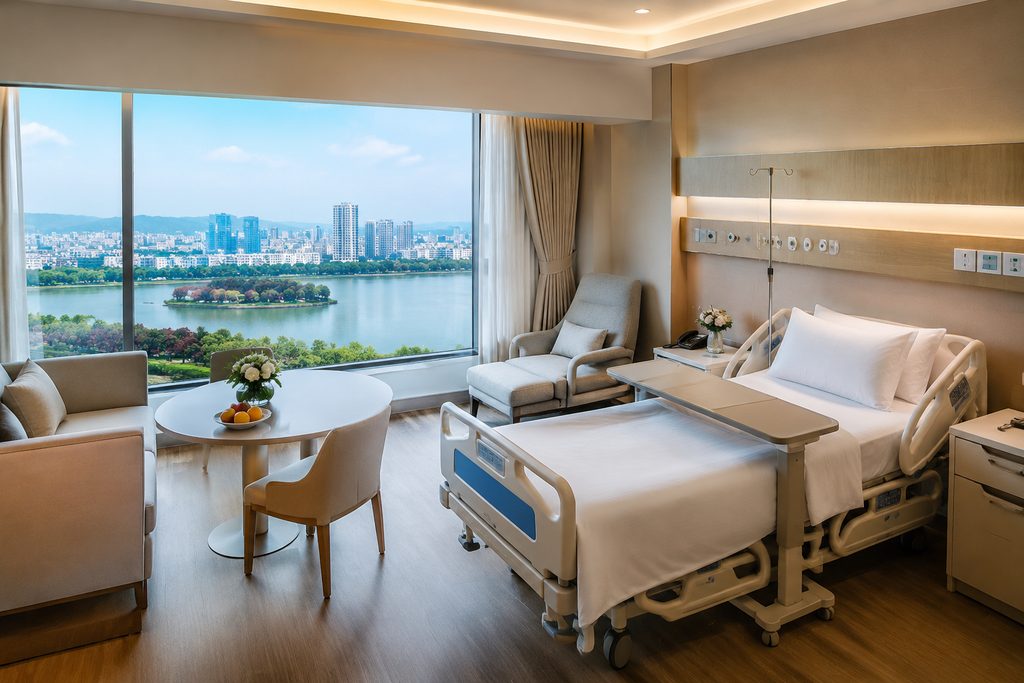
While patients in Canada waited a median 27.4 weeks for orthopedic surgery in 2023, surgeons at Sir Run Run Shaw Hospital in Hangzhou perform joint replacements within days of a confirmed surgical plan. The Sir Run Run Shaw Hospital orthopedic surgery price typically ranges from $8,000 to $18,000 for a total knee or hip replacement — a figure that includes implant, hospital stay, and surgeon fees. For an American facing a $40,000+ bill after insurance, or a UK patient staring at an 18-month NHS queue, that contrast is hard to ignore.
The question is not whether the numbers are real. They are. The question is whether a foreign patient can actually access this care safely, efficiently, and without the system swallowing them whole. This guide answers that directly.
Key Takeaways
- Total knee or hip replacement at Sir Run Run Shaw Hospital costs roughly $8,000–$18,000, typically 60–80% less than US list prices.
- The hospital is a top-tier teaching institution in Hangzhou, ranked among China’s strongest orthopedic centers by the Fudan specialty reputation list.
- Foreign patients cannot simply book surgery online — the process requires a face-to-face consultation first, unless you use the hospital’s international/VIP coordination pathway.
- Language, payment, and post-operative follow-up are the three areas where international patients most often need structured support.
The Problem: Orthopedic Surgery Costs and Wait Times Are Crushing Patients
In the United States, the average total cost for a knee replacement now exceeds $35,000, with many patients paying $5,000–$10,000 out of pocket even with commercial insurance. In the United Kingdom, the NHS reported over 370,000 patients waiting more than 18 weeks for trauma and orthopedic treatment in 2024. Canada’s situation is worse — the Fraser Institute’s annual survey consistently shows orthopedic surgery wait times above 25 weeks from referral to treatment.
These are not abstract statistics. They represent real people delaying mobility, losing income, and living with chronic pain while systems strain under demand. A 62-year-old teacher in Manchester with severe osteoarthritis doesn’t have 18 months to wait for a hip replacement. She has a life to return to.
Medical travel is no longer a fringe option. It’s a rational response to structural failure in high-cost, high-wait systems. And China — specifically its top-tier public teaching hospitals — has emerged as a legitimate destination for orthopedic care.
Why Sir Run Run Shaw Hospital Delivers Results for Orthopedic Patients
Clinical Volume That Western Surgeons Rarely Match
Sir Run Run Shaw Hospital (SRRSH), affiliated with Zhejiang University School of Medicine, is one of the most respected teaching hospitals in eastern China. Its orthopedic department handles thousands of joint replacement procedures annually. A senior orthopedic surgeon at a major Chinese teaching hospital may complete 300–500 joint replacements per year. The average US orthopedic surgeon performs around 60–70. Volume matters. Multiple studies, including research published in The Journal of Bone & Joint Surgery, have demonstrated a clear inverse relationship between surgeon volume and complication rates in total joint arthroplasty.
This is not about speed for its own sake. It’s about repetition that breeds precision. When a surgical team does something several times a week, every week, the workflow becomes smoother, the decision-making faster, and the outcomes more consistent.
A Structured Pathway Built for Scale, Not Bureaucracy
Chinese public hospitals operate differently from Western ones. The outpatient-to-surgery pathway is compressed. A patient can have imaging, lab work, and a surgical consultation on the same day. Pre-operative clearance is typically completed within 24–48 hours. Surgery scheduling follows within days, not months.
For international patients, the hospital’s international medical center provides dedicated coordination: English-speaking staff, expedited registration, and assistance with medical record translation. This is not a luxury add-on. It is the mechanism that makes the compressed timeline accessible to someone who doesn’t speak Mandarin.
Cost Advantage Without Quality Compromise
The Sir Run Run Shaw Hospital orthopedic surgery price is lower than Western equivalents for structural reasons, not quality reasons. Chinese labor costs for nurses, technicians, and support staff are significantly lower. Hospital administrative overhead is leaner. Implant costs, while comparable globally, are negotiated at scale by large public hospital systems.
And the clinical bar is not lower. SRRSH is JCI-accredited. Its orthopedic department participates in international research collaborations. The hospital follows evidence-based protocols that mirror those used in leading centers in the US and Europe. Lower cost here reflects economic structure — not compromised care.
How Much Is Knee Replacement in Hangzhou: Real Numbers and Comparison
This is the section most readers came for. Let’s put real figures on the table. The how much is knee replacement in Hangzhou question deserves a direct answer, with context.
| Procedure | Sir Run Run Shaw (Hangzhou) | US Average List Price | UK Private Average |
|---|---|---|---|
| Total Knee Replacement | $8,000 – $14,000 | $35,000 – $50,000 | $18,000 – $25,000 |
| Total Hip Replacement | $9,000 – $16,000 | $40,000 – $55,000 | $19,000 – $27,000 |
| Arthroscopic ACL Repair | $3,000 – $6,000 | $15,000 – $25,000 | $7,000 – $12,000 |
| Spinal Fusion (single level) | $10,000 – $18,000 | $60,000 – $110,000 | $30,000 – $45,000 |
These ranges vary by implant choice, case complexity, and whether the patient uses the standard pathway or the international VIP pathway. The international pathway typically adds 50–100% to the base price — but still lands far below Western figures.
For context, a patient paying $12,000 out of pocket in Hangzhou for a knee replacement would spend less than the typical US deductible plus coinsurance for the same procedure. That’s the math driving interest in orthopedic medical tourism packages China cost comparisons.
Is Sir Run Run Shaw Hospital Good for Orthopedics? Evaluating the Evidence
The honest answer is yes — with qualifications. Is Sir Run Run Shaw Hospital good for orthopedics is a fair question, and the evidence supports a positive answer.
SRRSH is consistently listed in the Fudan University Hospital Rankings, the most authoritative hospital evaluation system in China. Its orthopedic specialty appears among the top-ranked departments in the eastern China region. The hospital is a major teaching affiliate of Zhejiang University, one of China’s top three medical education institutions. It holds JCI accreditation, which means it meets international standards for patient safety and care quality.
What this means in practice: you are not choosing an unknown facility. You are choosing a hospital with demonstrated clinical volume, academic rigor, and international accreditation. That said, no hospital is perfect. Communication barriers persist even at the best institutions. The standard public pathway is not designed for foreigners. And post-operative follow-up across borders requires planning.
For patients comparing options, the orthopedics specialty rankings across China’s top hospitals provide useful context. Shanghai’s Ruijin and Zhongshan hospitals, Beijing’s Jishuitan, and Hangzhou’s SRRSH all represent strong choices for joint replacement — the decision often comes down to logistics, cost, and personal fit.
Book Hip Replacement Sir Run Run Shaw Hospital: The Step-by-Step Process
You cannot simply book hip replacement Sir Run Run Shaw Hospital online like a hotel room. Chinese public hospitals require a face-to-face consultation before any surgery is scheduled. This is non-negotiable. Here’s how the process actually works for an international patient.
Step 1: Remote Pre-Evaluation. You send your existing medical records — X-rays, MRI reports, blood work, and a summary of your condition. The hospital’s international team reviews these documents and provides a preliminary assessment. This step costs between $100 and $300 for a video consultation, or $300–$500 for a written second opinion from a senior specialist. This is not a prescription. It’s an evaluation of whether you are a suitable candidate and what the likely treatment path looks like.
Step 2: Travel and In-Person Consultation. You travel to Hangzhou on an S2 visa, which is the short-stay visa category used for medical treatment and private affairs in China. Your accompanying family member also applies for an S2 visa. At the hospital, you meet the orthopedic surgeon, complete any additional imaging, and finalize the surgical plan. This consultation typically happens within 1–2 days of arrival when coordinated through the international pathway.
Step 3: Pre-Operative Clearance. Blood tests, ECG, chest X-ray, and anesthesia evaluation. Usually completed in one day at SRRSH. Results are reviewed within 24 hours.
Step 4: Surgery. Most joint replacements are scheduled within 3–7 days of the initial consultation, assuming no complications are found. The surgery itself takes 1–2 hours. Hospital stay for a hip replacement is typically 3–5 days.
Step 5: Post-Operative Recovery and Discharge. Physical therapy begins the day after surgery. You are discharged with a detailed rehabilitation plan, medications, and a follow-up schedule. Most international patients plan for 10–14 days total in Hangzhou before returning home.
Practical tip: Bring all original imaging discs, not just reports. Chinese orthopedic surgeons prefer to review the actual DICOM files, not radiologist summaries. This saves time and avoids repeat scans.
Best Orthopedic Hospital Shanghai for Foreigners vs. Hangzhou: Choosing Your City
Some readers searching for the best orthopedic hospital Shanghai for foreigners may not have considered Hangzhou. That’s worth reconsidering. Shanghai is 45 minutes from Hangzhou by high-speed rail. The two cities are effectively one medical corridor.
Shanghai offers more choices — Ruijin, Zhongshan, and Huashan hospitals all have strong orthopedic departments. But Shanghai is also more expensive, more crowded, and more expensive to stay in. A hotel near a top Shanghai hospital runs $100–$200 per night. In Hangzhou, comparable accommodation costs $50–$100.
Hangzhou’s advantages are real: lower costs, a calmer environment for recovery, and a hospital (SRRSH) that rivals Shanghai’s best in orthopedic volume and reputation. The Hangzhou medical travel guide on our site covers the logistics in detail. For patients who want maximum choice and don’t mind higher costs, Shanghai’s top hospitals remain excellent options. The right answer depends on your budget, your condition, and your tolerance for urban intensity.
Practical Considerations: Visas, Payment, and Follow-Up for Orthopedic Patients
Let’s be concrete about the logistics.
Visa: Foreigners traveling to China for medical treatment use the S2 visa, annotated for medical purposes. Family members accompanying you also apply for S2 visas. The standard S2 allows stays up to 180 days. For treatment requiring longer stays, the S1 visa applies. You will need an invitation letter from the hospital confirming your treatment plan. Processing typically takes 1–2 weeks at your local Chinese embassy or consulate. Requirements change; always verify with the embassy before booking flights.
Payment: Chinese public hospitals require pre-payment. You deposit funds at admission, and the hospital draws down as services are provided. Major international credit cards are accepted at the international medical center, but the standard public payment counters often only accept Chinese bank cards or cash. Budget for this. The total cost is typically settled before discharge, with a refund of any unused balance.
Insurance: Most Western insurance plans do not directly reimburse Chinese public hospitals. You pay out of pocket, then submit claims for reimbursement. Some international insurance plans (Cigna Global, Allianz, Bupa) have direct billing arrangements with certain Chinese hospitals — but SRRSH’s international center is not currently on most direct-billing lists. Check with your insurer before committing.
Language: The international medical center at SRRSH has English-speaking coordinators. The surgical team may have limited English. A bilingual medical companion who can translate clinical conversations, explain paperwork, and navigate the hospital floors is not a luxury — it’s the difference between a smooth process and a stressful one.
Follow-up after returning home: Your surgeon will provide a written discharge summary in English (request this explicitly). You will need a local orthopedic surgeon in your home country to handle wound checks, suture removal if needed, and long-term rehabilitation. Telemedicine follow-up with the SRRSH team is possible via the international center, typically at $100–$300 per video consultation.
Frequently Asked Questions
No. Chinese public hospital regulations require an in-person consultation before any surgery is scheduled. You can complete a remote pre-evaluation and video consultation to confirm you are a suitable candidate, but the final surgical plan requires a face-to-face meeting with the surgeon in Hangzhou.
SRRSH is a JCI-accredited teaching hospital with full emergency and intensive care capabilities. Orthopedic complications — infection, implant failure, deep vein thrombosis — are managed on-site with standard international protocols. After you return home, your local orthopedic surgeon handles follow-up care. The hospital provides a complete discharge summary and imaging records to facilitate this handoff. No hospital can guarantee zero complications, but the risk profile at a high-volume center like SRRSH is comparable to Western benchmarks.
No. SRRSH uses the same implant brands found in Western hospitals — Zimmer Biomet, Stryker, DePuy Synthes, Smith & Nephew. The cost difference comes from lower labor costs, leaner hospital overhead, and negotiated implant pricing at scale. The implant you receive in Hangzhou is the same device you would receive in New York or London.
Plan for 14 days total. This includes 1–2 days for consultation and pre-operative clearance, 3–5 days for the hospital stay, and 5–7 days for early recovery and rehabilitation before flying home. Longer stays are advisable for complex cases or if you want supervised physical therapy before departure.
Your Next Step
The decision to travel abroad for orthopedic surgery is significant. You need reliable information, honest cost estimates, and a clear understanding of the process before you commit. That’s what this guide provides — and what our team does every day. China Medical Services helps international patients navigate the Chinese healthcare system: hospital matching, appointment coordination, bilingual medical companionship, and visa guidance. We are not a hospital, and we do not provide diagnoses or treatment recommendations. But we do help you understand your options and move forward with confidence. If you’re considering orthopedic surgery at Sir Run Run Shaw Hospital or elsewhere in China, start with a free consultation — we’ll help you map the path from where you are to where you need to be. Request your free consultation here, or return to the China Medical Services homepage to explore more.
For more medical information and treatment options in China, visit chinamedservices.com (China Medical Services).
