SMILE Eye Surgery in China: How We Arrange Your Procedure
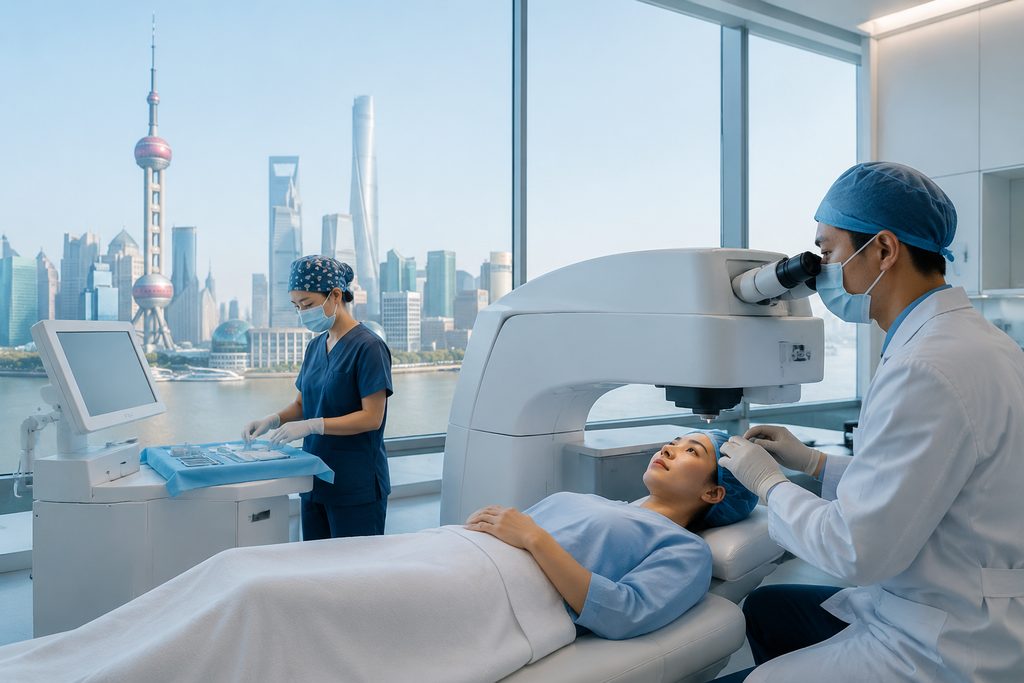
You’ve probably heard that traveling abroad for surgery means gambling with quality. The numbers tell a different story. The average SMILE eye surgery cost in China runs between $2,200 and $3,800 per eye at top-tier public and private hospitals—roughly one-third to one-half of what patients pay in the United States or Western Europe. At China Medical Services, we have helped patients from over a dozen countries navigate this exact procedure without the stress of going it alone.
But cost is only part of the equation. The real question is whether the hospital, the surgeon, and the follow-up care match what you would expect at home. Sometimes they do. Sometimes they exceed it. And sometimes, for certain patients, staying home is genuinely the better call. This guide walks through all of it.
SMILE Eye Surgery in China: The Short Answer
Yes, you can get SMILE eye surgery in China at a high standard of care for significantly less money than in the US, UK, or Australia. The procedure itself takes about 10 to 15 minutes per eye. Most patients fly home within 5 to 7 days of surgery. The catch is that arranging it from overseas requires more than just booking a flight—you need the right hospital, the right documentation, and someone on the ground who speaks the language.
That is where the complexity hides. Chinese public hospitals do not let foreign patients simply email a surgery request and get a date. You need a face-to-face consultation first. That is a hard rule across virtually all public institutions. Private international hospitals in Shanghai and Beijing offer more flexibility, but at a higher price point. We will break down exactly how this works.
Who This Is Right For — and Who It Isn’t
SMILE (Small Incision Lenticule Extraction) corrects myopia and mild astigmatism by removing a small piece of corneal tissue through a tiny incision. It is less invasive than LASIK and typically causes less dry eye. But it is not for everyone.
Good candidates typically include:
- Adults aged 18 to 45 with stable vision for at least 12 months
- Myopia between -1.00 and -10.00 diopters
- Astigmatism up to -5.00 diopters
- Corneal thickness sufficient for safe tissue removal
- No active eye infection, severe dry eye, or autoimmune disease affecting the eyes
Who should not pursue this abroad:
- Patients with keratoconus or other corneal irregularities
- Pregnant or nursing women, due to hormonal vision fluctuations
- Anyone with uncontrolled diabetes or immune disorders
- Patients who cannot commit to at least one follow-up visit within the first month
- People whose prescription has changed in the past year
If you fall into the second list, no hospital in China—or anywhere else—should operate on you. A reputable ophthalmologist will tell you the same. We would rather tell you now than have you fly across the world for a rejection.
The Options, Compared
Not all SMILE surgery in China is the same. Hospital tier, city, and service channel change both price and experience. Here is a realistic comparison based on what our team sees across our network of 340+ top-ranked hospitals in 37 cities.
| Option | Typical Cost (Both Eyes) | Wait Time | English Support | Best For |
|---|---|---|---|---|
| Public hospital, standard outpatient | $2,200–$3,200 | 1–3 weeks after consultation | Limited | Budget-focused patients comfortable with basic Chinese support |
| Public hospital, international/VIP department | $3,500–$5,000 | 3–10 days | Good | Patients who want a top specialist plus English coordination |
| Private international hospital (e.g., United Family, Jiahui) | $5,500–$8,000 | 2–7 days | Excellent | Patients prioritizing comfort, direct insurance billing, and Western-style care |
| United States (for reference) | $4,500–$7,500 | 1–4 weeks | Native | Patients who prefer to stay home despite higher cost |
If you are comparing the best SMILE eye surgery hospital in Shanghai against a clinic in your home country, the Shanghai option usually wins on price and surgeon volume. But the private international route in China narrows that gap considerably. Choose based on what you value: raw savings or a seamless English-language experience.
Arranging the Procedure: What We Actually Do
This is the part most overseas patients underestimate. You cannot simply book SMILE surgery from abroad like a hotel room. Chinese hospitals require a pre-operative consultation. The surgeon must examine your cornea in person before approving the procedure. That means your first trip to China includes a consultation, and possibly surgery a few days later—not the same day.
Our team handles the sequence. You send us your existing eye examination reports. We translate them into Chinese and submit them to the ophthalmology department at your chosen hospital. The doctor reviews your records and confirms whether you are a likely candidate. If yes, we schedule the in-person consultation. After that exam, if everything checks out, surgery is typically scheduled within 1 to 7 days depending on the hospital.
This two-step process is non-negotiable at public hospitals. Private international hospitals sometimes allow a video pre-screening, but even they require an in-person slit-lamp exam and corneal topography before the laser touches your eye. Anyone who tells you otherwise is cutting corners.
What It Costs — and What Drives the Price
The smile eye surgery cost in China varies by hospital tier, city, and whether you use the standard or international channel. Public hospital standard pricing runs $2,200 to $3,200 for both eyes. The international department of the same hospital charges $3,500 to $5,000. Private international hospitals charge $5,500 to $8,000.
What is included in the surgical fee: the pre-operative examination, the SMILE procedure itself, basic post-operative eye drops, and usually one or two follow-up visits within the first week. What is not included: flights, accommodation, visa fees, our coordination service, and any additional testing if the doctor orders specialized corneal imaging beyond the standard workup.
So why the price spread? Three factors. First, surgeon seniority—chief ophthalmologists at Fudan-ranked hospitals command higher fees. Second, the service channel—international departments bundle in English coordination and shorter waits. Third, the city—Shanghai and Beijing are pricier than Chengdu or Hangzhou. The same SMILE procedure in Chengdu might cost 20% less than in Shanghai.
Practical Considerations: Documents, Visa, and Recovery
You need a valid passport with at least six months remaining. You need your most recent eye examination report—preferably within the last six months, including refraction, corneal topography, and pachymetry. If you wear contact lenses, stop wearing soft lenses at least one week before your consultation, and rigid lenses at least three weeks before. Contact lens wear changes corneal shape and can lead to inaccurate measurements.
For the visa, the applicable category is the S2 visa, which covers short-term private affairs including medical treatment. Your accompanying family member also applies for an S2. The hospital provides an invitation letter and treatment confirmation documents to support the application. We guide you through this, but approval always rests with the Chinese embassy or consulate in your country. No one can guarantee a visa.
Payment at public hospitals is typically required upfront. Most accept international credit cards, but limits apply. Some hospitals require a deposit via bank transfer before scheduling surgery. Private international hospitals often accept direct insurance billing if your insurer has a partnership agreement. Check with your insurer before booking anything.
Recovery after SMILE is fast. Most patients see clearly within 24 hours. Vision stabilizes over two to four weeks. You should plan to stay in China for at least 5 to 7 days after surgery for the initial follow-up. After returning home, you will need a local ophthalmologist for follow-up at one month, three months, and six months. Your Chinese surgeon provides a detailed post-operative report in English for your home doctor.
Do not book your return flight for the day after surgery. You need at least one in-person follow-up with the operating surgeon, usually 24 to 48 hours post-op. Fly too early and you lose the safety net that makes this worth doing.
Is SMILE Eye Surgery Safe in China?
The short answer is yes—at the right hospital. China’s top ophthalmology departments perform thousands of refractive surgeries annually. The volume matters. A surgeon who does 500 SMILE procedures a year has seen complications that a surgeon doing 50 has only read about. That experience shows up in outcomes.
But safety is not uniform across all 35,000+ hospitals in China. The gap between a Fudan-ranked ophthalmology department and an unranked local clinic is substantial. This is why hospital selection matters more than country selection. We only work with hospitals in the top 5%—those ranked by the Fudan University hospital rankings or holding JCI accreditation. That is our entire database: 340+ hospitals across 37 cities, nothing below that threshold.
Complications from SMILE are rare but real. The most common is under-correction or over-correction, which may require a second procedure or glasses for certain tasks. Dry eye affects roughly 10-20% of patients in the first month, though most resolve within three months. Infection is extremely rare—under 0.1%—when proper sterile protocol is followed. A responsible surgeon discusses all of this before you sign the consent form.
How Long Is Recovery from SMILE Eye Surgery?
Most patients return to work within 2 to 3 days. Computer work is possible within 48 hours, though you may experience mild eye strain for the first week. Driving is typically allowed after the first follow-up confirms adequate vision—usually day 2 or 3. Strenuous exercise and swimming should wait two weeks. Contact sports and activities with eye injury risk should wait one month.
Night vision issues—halos and glare—affect some patients for the first few weeks. These usually fade as the cornea heals. Full visual stability takes one to three months. If you are planning SMILE surgery abroad, factor this timeline into your schedule. The surgery is quick; the recovery is a commitment.
Frequently Asked Questions
No. Chinese hospitals require an in-person pre-operative consultation before scheduling surgery. You can arrange the consultation in advance through the hospital’s international department or a coordination service like ours, but the surgery date is only confirmed after the doctor examines your eyes. This applies to public and private hospitals alike.
Expect to pay $2,200 to $3,800 per eye at a top Chinese public hospital, compared to $4,500 to $7,500 per eye in the United States. The smile laser eye surgery price abroad varies significantly by country—Singapore and South Korea fall between China and the US, while India is sometimes cheaper than China but with more variable quality control.
Your Chinese surgeon provides a complete post-operative record in English. You take this to a local ophthalmologist for follow-up care. Most issues—dry eye, residual refractive error, mild inflammation—are manageable by any qualified eye doctor. For anything requiring the original surgeon’s input, video consultations can be arranged. We do not abandon patients after they leave China; the relationship continues through the recovery period.
You apply for an S2 visa, which covers short-term private affairs including medical treatment. The hospital provides supporting documents. Your accompanying family member also applies for an S2. Processing times vary by country, so start the visa process at least 4 to 6 weeks before your planned travel date.
At top-ranked hospitals, yes. The ophthalmology departments at Fudan-ranked institutions use the same Zeiss VisuMax laser systems found in leading Western clinics. Their surgeons train internationally and publish in peer-reviewed journals. The difference is volume—Chinese top hospitals often perform more refractive surgeries annually than comparable Western centers, which translates to deeper clinical experience. The key is choosing the right hospital, not just the right country.
Your Next Step
SMILE eye surgery in China offers genuine savings and access to high-volume, experienced surgeons. But it requires planning, documentation, and on-the-ground coordination that most overseas patients cannot manage alone. That is exactly what we do. China Medical Services is not a hospital and we do not provide medical advice or diagnoses. We connect you with top-ranked ophthalmology departments, translate your records, coordinate your consultation, and arrange bilingual support throughout your stay.
If you are considering SMILE surgery abroad, start with a conversation. Send us your existing eye exam reports through our free consultation page. We will review them, recommend a shortlist of hospitals, and give you an honest assessment of whether this path makes sense for your eyes—before you spend a single dollar on flights.
Your vision deserves clarity, not guesswork.
For more medical information and treatment options in China, visit chinamedservices.com (China Medical Services).
