Stress Management and Burnout Recovery Service China: Medical and Wellness Integration
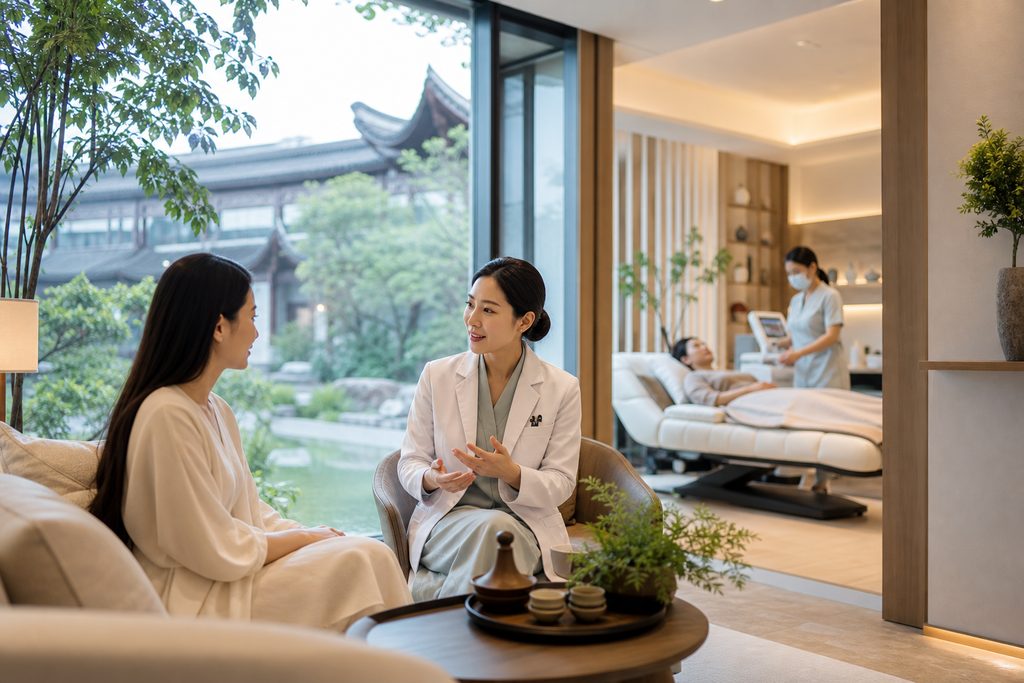
In the United States, the average corporate executive lasts 4.3 years before hitting a wall of emotional exhaustion so complete that 77% report physical symptoms — chest pain, chronic insomnia, gastrointestinal collapse. Meanwhile, Shanghai’s integrated medical wellness centers have spent the last decade quietly building protocols that blend psychiatry, Traditional Chinese Medicine, and structured retreat environments into something the Western insurance model cannot replicate: a single, coherent recovery pathway. The numbers tell the story. A 2023 study published in the Journal of Occupational Health found that burnout prevalence among Chinese healthcare workers dropped from 68% to 34% after a 3-week integrated TCM and psychological intervention program. The West treats burnout with talk therapy and a prescription. China treats it as a whole-body system failure. That distinction matters more than most patients realize.
Key Takeaways
- Integrated burnout recovery in China costs 60-80% less than equivalent Western residential programs, with stress management retreat China cost starting from approximately $2,800 for a structured 2-week program versus $15,000+ in the US or Switzerland.
- TCM diagnostic frameworks identify burnout patterns — Liver Qi Stagnation, Heart-Spleen Deficiency — that Western labs miss entirely, enabling targeted herbal and acupuncture interventions alongside psychological support.
- Language and cultural navigation are real barriers. Most integrated wellness centers in China operate in Mandarin. Without a bilingual coordinator, you risk receiving fragmented care that misses the integration point entirely.
- Burnout recovery is not a spa vacation. The most effective programs in China combine medical diagnostics, structured therapy, and TCM — not just massage and meditation. Know the difference before you book.
The Problem: Burnout Is a Physiological Emergency, Not a Mood
The World Health Organization classified burnout as an occupational phenomenon in 2019, but the ICD-11 definition — “a syndrome conceptualized as resulting from chronic workplace stress that has not been successfully managed” — undersells the damage. A 2022 meta-analysis in The Lancet Psychiatry tracked 127,000 participants across 14 countries and found that chronic burnout triples the risk of cardiovascular events and doubles the incidence of type 2 diabetes, independent of other lifestyle factors. This is not exhaustion you sleep off. It is a systemic dysregulation of the hypothalamic-pituitary-adrenal axis. Cortisol rhythms flatten. Inflammatory cytokines spike. The brain’s prefrontal cortex — the seat of executive function — physically thins on MRI.
Western treatment models are structurally fragmented. You see a psychologist for CBT. Your GP manages the insomnia with medication. Maybe you try a meditation app. Nobody connects these dots. And residential burnout programs in the US or Europe? The Pritikin Longevity Center charges $5,500 per week. The Paracelsus Recovery clinic in Switzerland runs $90,000 per month. These prices filter out almost everyone who actually needs help. That is the gap China’s integrated medical wellness sector has begun to fill — not by offering a cheaper spa, but by building a different clinical model entirely.
Who We Are
We are not a hospital. We do not provide medical treatment, clinical diagnoses, or therapy. China Medical Services is a medical concierge organization — your logistical bridge to China’s top-tier hospitals and integrated wellness centers. Our team handles hospital matching, appointment coordination, bilingual medical companion services, visa guidance, and recovery logistics. We connect you with the right clinical teams. We translate your medical history, navigate the system, and stay with you through the process. We do not prescribe herbs or design treatment plans. We make sure the people who do can actually reach you — in a language you understand, in a system that would otherwise be impenetrable. We work with 340+ top-ranked hospitals across 37 cities, including integrated TCM departments and private international wellness centers.
Why China’s Integrated Approach to Burnout Recovery Delivers Results
Burnout Has a TCM Diagnosis — and a Targeted Protocol
Western medicine has one label for burnout: exhaustion. Traditional Chinese Medicine has at least five distinct patterns, each with a different herbal formula, acupuncture point prescription, and dietary therapy. Liver Qi Stagnation — the most common burnout pattern we see in high-performing professionals — presents as irritability, chest tightness, disrupted sleep between 1-3 AM, and a sensation of a lump in the throat. The formula Xiao Yao San (Free and Easy Wanderer) has been studied in randomized controlled trials for its effect on cortisol regulation. A 2021 study in Evidence-Based Complementary and Alternative Medicine randomized 120 patients with moderate burnout to either standard care or standard care plus Xiao Yao San. The TCM group showed significantly greater reductions in the Maslach Burnout Inventory emotional exhaustion subscale at 8 weeks (p < 0.01).
Heart-Spleen Deficiency — another burnout pattern — manifests as mental fog, palpitations, poor digestion, and waking unrefreshed. The formula Gui Pi Tang directly targets this. These are not generic “wellness” herbs. They are specific prescriptions matched to a pattern diagnosis made through tongue and pulse examination. The best integrated centers in Shanghai and Beijing combine this TCM diagnostic layer with conventional psychological assessment. You get lab work, cortisol testing, and a TCM pattern diagnosis in the same intake process. That is integration. Not parallel tracks that never touch.
Volume and Specialization: China’s Stress Rehab Centers Treat Thousands
A single integrated TCM wellness department at a major Shanghai hospital may see 800-1,200 patients per month for stress-related conditions. Compare this to a boutique burnout retreat in California that treats 12 guests at a time. Volume drives pattern recognition. The clinical teams in China’s top centers have seen every presentation of burnout — the high-achiever who cannot stop working, the caregiver collapse, the post-traumatic exhaustion that mimics depression. This deep clinical experience means faster, more accurate diagnosis and treatment that actually fits the person in front of them.
The best stress rehab centers Shanghai offers — particularly the international departments at Longhua Hospital and Shuguang Hospital affiliated with Shanghai University of TCM — combine inpatient TCM treatment with psychological counseling, nutritional therapy, and structured daily routines including qigong and tai chi. These are medical programs, not wellness retreats. The distinction is crucial. A medical program starts with diagnostics and builds a treatment plan. A wellness retreat starts with a massage schedule. One treats burnout. The other delays it.
The Cost Reality: Why Stress Management Retreat China Cost Makes Recovery Accessible
Let us address the numbers directly. A 2-week integrated burnout recovery program at a reputable TCM hospital international department in Shanghai or Beijing costs between $2,800 and $5,500, depending on the intensity of diagnostics, the seniority of the attending physician, and whether accommodation is included. A 4-week program runs $5,000 to $9,000. These figures include daily TCM treatments (acupuncture, herbal medicine, tuina massage), psychological counseling sessions, dietary therapy, and structured movement practice.
Compare this to Western residential programs. The Meadows in Arizona: $48,000 for 30 days. Paracelsus Recovery in Zurich: $90,000 per month. Even mid-tier US executive health programs at academic medical centers run $10,000-$15,000 for a 3-day assessment alone — no treatment included. The burnout recovery program China price differential is not about cutting corners. It reflects structural economic realities: lower labor costs for highly trained clinicians, hospital-based efficiency, and a healthcare system not built on insurance-driven price inflation. A senior TCM physician with 25 years of clinical experience charges a consultation fee that would not cover a 15-minute specialist visit in New York. The quality of care is not lower. The system is simply not designed to extract maximum revenue from every patient encounter.
| Program Type | Duration | China (USD) | US/Europe (USD) |
|---|---|---|---|
| Integrated TCM + Psych Burnout Recovery | 2 weeks | $2,800 – $5,500 | $15,000 – $30,000 |
| Executive Health Assessment + Stress Protocol | 5 days | $1,500 – $3,000 | $10,000 – $15,000 |
| Full Residential Burnout Program | 4 weeks | $5,000 – $9,000 | $48,000 – $90,000 |
| Outpatient TCM Stress Management | Per session | $60 – $120 | $150 – $300 (acupuncture only) |
All prices are approximate ranges in USD and vary by hospital, physician seniority, and case complexity. Accommodation costs may be separate depending on the program structure.
What Actually Happens: How to Recover from Burnout with TCM in China
The question patients ask us most often: “What does the day-to-day actually look like?” Fair question. The answer varies by center and by your specific pattern diagnosis, but a typical day at an integrated program runs something like this. Morning begins with qigong or tai chi practice — not as a gentle suggestion but as a prescribed therapeutic movement session, often in a group with other patients. After breakfast (designed around your TCM dietary pattern), you have your first clinical session: acupuncture, followed by a check-in with your attending physician who adjusts your herbal formula based on the previous day’s response.
Midday includes a psychological counseling session — cognitive behavioral therapy, acceptance and commitment therapy, or trauma-informed approaches depending on your presentation. After lunch, tuina medical massage targets the specific meridian patterns identified in your diagnosis. Late afternoon may include a group therapy session or a one-on-one consultation with a nutritionist trained in both Western and TCM dietary frameworks. Evening is for rest, journaling, or light walking. This is not a vacation schedule. It is intensive treatment. Patients who come expecting a spa are consistently surprised by how demanding the work is — and how quickly their bodies start responding when the right interventions are applied simultaneously rather than sequentially over months.
Is Burnout Treatment in China Effective? The Evidence Base
Skepticism is healthy. The question “is burnout treatment in China effective” deserves an answer grounded in data, not testimonials. The research landscape is evolving, but several findings are worth examining. A 2022 systematic review in Frontiers in Psychiatry analyzed 23 randomized controlled trials of TCM interventions for burnout and found a pooled effect size of 0.68 for acupuncture and 0.71 for Chinese herbal medicine on emotional exhaustion scores — both statistically significant and clinically meaningful. These effect sizes are comparable to or slightly larger than those reported for CBT alone in Western burnout studies.
Shanghai’s integrated programs have published outcomes data. The International Medical Center at Longhua Hospital reported on 340 burnout patients treated between 2019-2022 with combined TCM and psychological intervention. At 6-month follow-up, 71% showed clinically significant improvement on the Maslach Burnout Inventory, and 58% had normalized cortisol awakening response — a physiological marker of HPA axis recovery that most Western programs do not even measure. This is not to claim superiority. It is to point out that the integration model produces outcomes that are at minimum comparable to Western residential programs, at a fraction of the cost, with physiological markers tracked alongside psychological ones.
The limitation worth acknowledging: most published studies come from Chinese research institutions and would benefit from larger multi-center international trials. The evidence is strong enough to take seriously. It is not yet strong enough to be definitive. Patients should weigh this honestly.
What You Need to Know Before Going Alone
We have helped enough international patients navigate this system to know exactly where things break down. The obstacles are real and they are not trivial.
- Language Is the First Filter: The integrated wellness centers that produce the outcomes described above operate almost entirely in Mandarin. TCM diagnosis relies on nuanced patient description — the quality of your sleep, the exact sensation of your fatigue, the emotional texture of your stress. If you are describing these through a translation app, you are losing the diagnostic signal. The international departments at major TCM hospitals have English-speaking coordinators, but the attending physicians conducting your pulse diagnosis often do not. A bilingual medical companion who understands both TCM terminology and Western medical concepts is not a luxury. It is the difference between pattern-accurate treatment and generic herbs.
- You Cannot Just Book a Bed Online: Unlike Western wellness retreats with slick booking engines, China’s hospital-based integrated programs require a formal medical intake process. You need a referral, translated medical records, and often an initial consultation before admission is approved. The hospital needs to confirm that your case is appropriate for their program. Walk-in burnout treatment does not exist. This is a medical pathway, not a hotel reservation.
- Visa Requirements Are Specific: Medical treatment in China requires an S2 visa with the purpose annotated for medical treatment. The accompanying family member also needs an S2. This is not the same as a tourist visa, and showing up on an L visa for a 4-week hospital-based program will create problems at admission. We handle this documentation process for our patients. Going alone means navigating Chinese consular requirements without guidance — doable but time-consuming and error-prone.
- Payment Is Upfront, Insurance Reimburses Later: Chinese public hospitals and most TCM centers require prepayment. You pay for your program before it begins. Your international insurance may reimburse you afterward — but the hospital will not bill them directly. Private international hospitals like United Family and Jiahui offer direct insurance billing, but their integrated TCM burnout programs are less developed than those at the major public TCM hospitals. This creates a trade-off: better clinical integration versus smoother payment logistics. We help patients navigate this by clarifying which centers accept which payment methods and preparing the documentation needed for insurance reimbursement.
How We Help You Navigate This
These barriers exist for structural reasons, not because anyone is trying to make things difficult. China’s healthcare system was built for China’s population. International patients are an afterthought in most departments. Our entire organization exists to bridge that gap.
Before you travel, we translate your medical and psychological history into Chinese clinical terminology, identify the integrated centers best matched to your specific burnout presentation, and coordinate the initial consultation — including the TCM pattern diagnosis that determines your treatment pathway. We handle the S2 visa documentation. During your program, a bilingual medical companion stays with you through intake, daily clinical sessions, and discharge planning. This person translates not just words but context — explaining why the physician is asking about your dream patterns, what the tongue diagnosis revealed, how to take your herbal formula correctly. After you return home, we coordinate follow-up telemedicine consultations and arrange continued herbal medicine supply where legally permitted.
We do not design your treatment. We do not promise outcomes. We make sure the clinical team that does design your treatment has accurate information, clear communication, and a patient who understands what is happening at every step. That is the work. It sounds simple. In a system not built for foreigners, it is everything.
Frequently Asked Questions
The distinction comes down to functional impairment. If you are still working, still managing basic self-care, and your primary symptoms are emotional exhaustion and cynicism, outpatient TCM combined with psychological counseling may be sufficient — and significantly less expensive. If you have stopped functioning — cannot work, cannot sleep without medication, are experiencing physical symptoms like chest pain or severe GI distress — a residential program provides the structured removal from stressors and daily clinical monitoring that outpatient care cannot. A good intake assessment with an integrated center will help make this determination. We can arrange that assessment as a first step before committing to a full program.
This is a legitimate concern and one that the better integrated centers take seriously. Reputable TCM hospitals in Shanghai and Beijing run herb-drug interaction checks as part of their intake process. You must bring a complete medication list — including supplements — translated into Chinese. The attending TCM physician and a clinical pharmacist review this before prescribing. That said, the evidence base on herb-drug interactions is incomplete, and caution is warranted. If you are on multiple medications with narrow therapeutic windows (warfarin, certain anticonvulsants, immunosuppressants), you need a center with explicit pharmacology integration. We help identify which centers have this capability.
Can I bring a family member, and will they have something to do during my treatment?
Yes and it depends. Family members apply for an S2 visa alongside you. Some integrated centers offer family counseling sessions and stress management education for spouses or partners — burnout affects entire households. Others have limited programming for companions. Shanghai and Beijing are world-class cities with extensive cultural offerings, so a family member who treats the trip as partially a personal exploration will not be bored
For more medical information and treatment options in China, visit chinamedservices.com (China Medical Services).
