Sun Yat-sen University Cancer Center Gynecologic Oncology: A Guide for International Patients
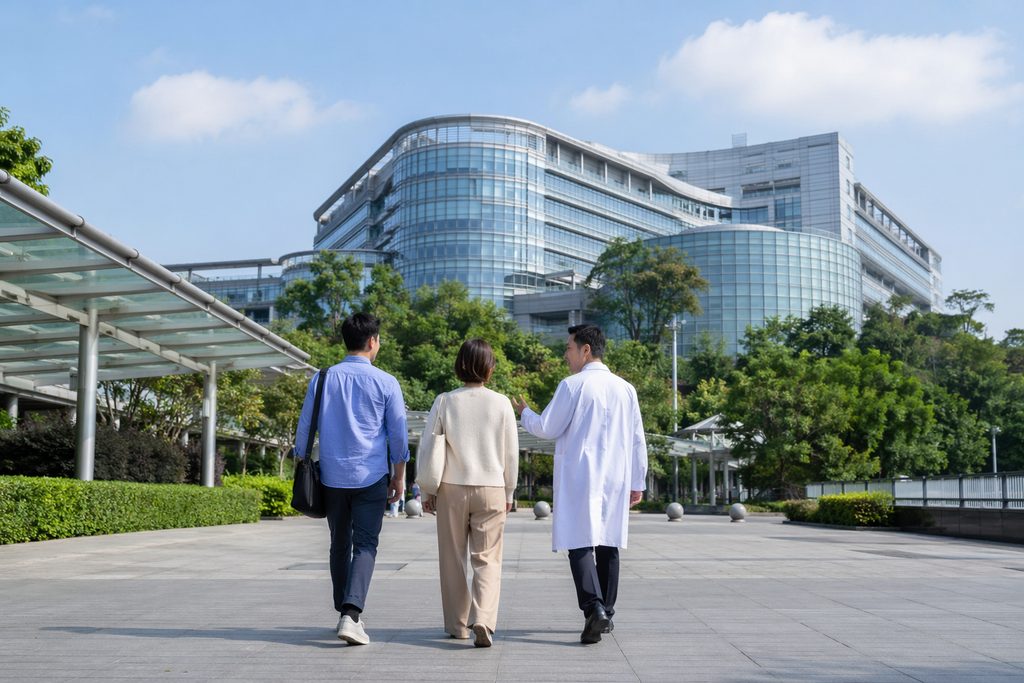
When 41-year-old Elena from Manchester was diagnosed with stage II ovarian cancer, her NHS oncologist laid out a treatment plan. The waiting time for debulking surgery? Eight weeks. Eight weeks of knowing the tumor was still there, still growing. She started searching. Her questions were specific: where can I get treated sooner, what will it cost, and will the quality be the same? Eventually her search led her to one institution repeatedly: Sun Yat-sen University Cancer Center in Guangzhou. The gynecologic oncology treatment cost China figures she found online were a fraction of what private care would cost in the UK. But numbers on a screen don’t answer the harder questions. Is it safe? How does a foreigner even navigate a Chinese hospital? What happens after surgery when you fly home?
This guide addresses those questions directly. We work with international patients considering treatment at Chinese hospitals, including Sun Yat-sen University Cancer Center. We don’t sell treatment. We explain how the system actually works, what to expect, and where the real risks and benefits lie. The top-ranked hospitals in China operate differently from Western institutions. Understanding those differences before you commit matters more than any single price quote.
How This Actually Works, Step by Step
The process for an international patient at Sun Yat-sen University Cancer Center follows a sequence that surprises many Westerners. You cannot simply email the hospital and book a surgery date. Chinese public hospitals, including elite cancer centers, require an in-person consultation before any surgical admission. That’s the rule, not an exception.
Here’s the realistic sequence. First, you send your existing medical records: pathology reports, imaging (CT, MRI, PET scans), surgical notes, and a summary from your current oncologist. These need English-to-Chinese translation for the hospital’s review. A gynecologic oncology team reviews the materials and decides whether your case is appropriate for their department. This review typically takes 3 to 7 business days. If accepted, you receive a written opinion and a proposed treatment direction. You then decide whether to proceed with a video consultation or travel to Guangzhou for an in-person evaluation. Only after that in-person visit can surgery or chemotherapy admission be scheduled. There is no shortcut around this step.
What many patients don’t realize: you can designate Sun Yat-sen University Cancer Center specifically, and a coordination service can handle the registration, medical card creation, and proxy consultation using your translated materials. But admission still requires the hospital’s own rules to be satisfied. We’ll return to this in the timeline section.
Gynecologic Oncology at Sun Yat-sen University Cancer Center: What International Patients Need to Know
Sun Yat-sen University Cancer Center (SYSUCC) sits in Guangzhou, a city of 18 million in southern China. It consistently ranks among China’s top oncology institutions in the Fudan University hospital rankings — a classification system covering the top 100 hospitals nationally, grouped into tiers rather than numbered positions. For gynecologic cancers specifically, SYSUCC’s oncology department is widely regarded as one of the strongest in Asia. The center handles a volume of gynecologic cancer cases that few Western institutions can match. High case volume correlates with surgical proficiency, particularly for complex procedures like radical hysterectomy and ovarian cancer debulking.
But volume is not the same as quality. What distinguishes SYSUCC is its combination of high case numbers, academic research output, and specialized gynecologic oncology teams that separate it from general hospitals. The center operates a dedicated gynecologic oncology ward, runs clinical trials for cervical, endometrial, and ovarian cancers, and uses the same staging and treatment protocols recognized internationally — NCCN guidelines, FIGO staging, and standard chemotherapy regimens. The technology is not experimental. The difference is cost and waiting time.
For international patients, the practical question of Sun Yat-sen University Cancer Center international patients price depends on which channel you use. The standard public channel charges local rates but offers no English support and requires navigating a system designed for domestic patients. The international VIP channel adds English-speaking coordination, priority scheduling with senior specialists, and private ward options. Expect to pay roughly 1.5 to 2 times the standard rate for that access. Even at that multiplier, the total cost typically lands far below Western private care.
A Realistic Timeline
Timelines matter more than most patients expect. Here’s what a realistic sequence looks like for an international patient pursuing gynecologic cancer treatment at SYSUCC.
| Stage | Duration | What Actually Happens |
|---|---|---|
| Document collection and translation | 3–7 days | Gather pathology slides, imaging files, surgical notes. Professional medical translation into Chinese required. |
| Remote review by gynecologic oncology team | 3–7 business days | The department reviews your case. You receive a written opinion on feasibility and proposed treatment direction. |
| Video consultation (optional but recommended) | 1–2 weeks scheduling lead time | You speak directly with the oncology team. Discuss symptoms, goals, and treatment options. Cost ranges from $500–800 for a top-specialist video consultation. |
| Visa application (S2) | 1–4 weeks | Apply for an S2 visa with supporting documents from the hospital. Processing times vary by country and consulate. |
| Travel to Guangzhou and in-person consultation | 2–5 days | Meet the treating oncologist. Additional imaging or blood work may be ordered. Surgery date discussed. |
| Surgery scheduling | 1–3 weeks after consultation | Depends on operating room availability and your pre-operative preparation. |
| Hospital stay and initial recovery | 7–14 days for major surgery | Length depends on procedure type and complications. Chemotherapy may extend total stay. |
| Return home and follow-up | Ongoing | Coordinate with your home oncologist. SYSUCC can provide treatment summaries and remote follow-up consultations. |
Total realistic time from first contact to surgery: 6 to 10 weeks. That’s faster than many public systems in the UK, Canada, or parts of Europe, but it is not immediate. Anyone promising a surgery date within days is not being honest about how Chinese hospitals operate.
What Can Go Wrong — and What Happens Then
Several failure points exist in this process. Knowing them in advance changes how you prepare.
First, the remote review may reject your case. This happens when the cancer is too advanced for meaningful intervention, when the proposed treatment is not something SYSUCC offers, or when the medical records are incomplete. The recourse is straightforward: ask for the specific reason, then either supplement the records or pursue a different institution. China has multiple top oncology departments across different cities, and a rejection from one does not mean rejection from all.
Second, the visa may be delayed. S2 visa processing for medical purposes requires supporting documentation from the hospital. If the hospital’s invitation letter is delayed or the consulate requests additional materials, your timeline slips. The recourse is to apply early and to keep a buffer in your planning. We typically advise patients to apply for the S2 visa as soon as the hospital confirms acceptance, not after booking flights.
Third, and this is the hardest one: you may arrive in Guangzhou and the in-person evaluation reveals something the remote review couldn’t see. The tumor may have progressed. A comorbidity may complicate surgery. The treating team may recommend a different approach than what was discussed remotely. This is not deception — it’s the reality of medicine. The recourse is to be mentally prepared for plan changes. Travel with a flexible return ticket. Budget for the possibility of a longer stay than initially planned.
Fourth, language friction. Even at an international-facing department, not every nurse, technician, or administrative staff member speaks English. The VIP channel mitigates this, but it doesn’t eliminate it. A bilingual medical companion who handles registration, queue management, payment, and translation during consultations reduces this friction substantially. Expect to pay from $300 per day for that service.
Is Cervical Cancer Treatment Safe in China? What the Data Shows
The question “is cervical cancer treatment safe in China” deserves a direct answer. Safety depends not on the country but on the institution. At a top-tier cancer center like SYSUCC, cervical cancer treatment follows the same protocols used at major Western centers. Radical hysterectomy, lymph node dissection, concurrent chemoradiation, and brachytherapy are all standard offerings. The surgical teams perform these procedures at high volume. The complication rates are comparable to Western benchmarks, though direct comparative data is limited because Chinese hospitals do not publicly report outcomes the way some Western registries do.
Where safety concerns are legitimate: lower-tier hospitals. China has over 35,000 hospitals, and quality varies enormously. The hospitals in the Fudan top 100 represent the top 5% — institutions with academic oversight, peer review, and international collaboration. SYSUCC falls firmly in this category. Choosing a hospital outside this tier for cancer surgery introduces real risk. This is why hospital selection matters more than country selection.
For ovarian cancer specifically, the quality of debulking surgery is the single most important prognostic factor. A surgeon who performs 200 debulking procedures annually will achieve better outcomes than one who performs 20. At SYSUCC, the gynecologic oncology team operates at the high end of that volume curve. That’s the argument for considering China — not cost alone, but volume-driven proficiency at a price Western patients can actually afford.
Practical Considerations: Records, Visa, Payment, and Follow-Up
Before you book anything, sort out these logistics. They determine whether the entire plan is even feasible.
Medical records. You need complete documentation: original pathology slides (or digital pathology images), all imaging in DICOM format on a CD or cloud link, surgical notes if you’ve had prior surgery, and a current treatment summary. Incomplete records are the most common reason for remote review delays or rejections. Get everything from your current oncologist before you start the process.
Visa category. For medical treatment in China, the applicable short-stay category is the S2 visa, which covers medical treatment and private affairs. Family members accompanying you also apply for S2. The M visa is for commercial and trade activities and is not appropriate for medical travel. Processing requirements vary by embassy, and approval is never guaranteed. The hospital’s invitation letter is a key supporting document.
Payment. Chinese public hospitals require pre-payment for inpatient care. You deposit funds upfront, and the hospital draws down as services are provided. Insurance reimbursement happens afterward — Chinese hospitals do not typically bill international insurers directly. Private international hospitals in China do offer direct billing, but SYSUCC is a public institution. Budget for the full treatment cost upfront, then claim reimbursement from your insurer. For reference, a radical hysterectomy for cervical cancer at a top Chinese hospital typically ranges from $8,000 to $15,000, depending on complexity and ward type. The same procedure in the US commonly exceeds $50,000. Ovarian cancer debulking surgery runs higher — $15,000 to $25,000 in China versus $100,000+ in the US. These are ranges, not quotes. Every case differs.
Follow-up at home. The hardest part of overseas treatment is continuity of care. Before you leave for China, arrange a follow-up plan with your home oncologist. SYSUCC provides a detailed discharge summary and treatment record in English (if requested through the international channel). Your home oncologist can use that to manage ongoing chemotherapy, surveillance imaging, and recurrence monitoring. Remote follow-up video consultations with the SYSUCC team are available for patients who want continued input from the treating surgeons.
Frequently Asked Questions
For major gynecologic cancer surgery, expect to pay roughly one-fifth to one-tenth of US private rates. A radical hysterectomy at a top Chinese cancer center typically costs $8,000–15,000. The same procedure in the US commonly runs $50,000 or more. Chemotherapy and radiation add to the total, but the ratio holds. Prices vary by hospital, ward type, and case complexity — always get a written estimate before committing.
No. Chinese public hospitals require an in-person consultation before any surgical admission. You can complete the remote review and video consultation first, which gives you a strong indication of whether surgery will be offered. But the final decision and scheduling happen after you arrive and meet the treating team. A coordination service can help you designate SYSUCC and arrange the proxy consultation, but no one can guarantee a specific surgery date before you’re physically evaluated.
There is no single “best” oncologist — there are strong departments with senior specialists. Look for hospitals in the Fudan top-tier oncology rankings, then evaluate their gynecologic oncology volume and international patient infrastructure. SYSUCC ranks among the strongest options. Within the department, the international VIP channel typically assigns senior attending surgeons rather than junior staff. Ask about the specific surgeon’s experience with your cancer type before proceeding.
The main risk is choosing a package that prioritizes logistics over medical quality. Some “medical tourism” operators bundle airport transfers, hotel bookings, and hospital visits into a package — but the hospital they connect you with may not be a top-tier cancer center. Verify the hospital’s ranking independently. Check whether the package includes translation of medical records, access to senior specialists, and post-operative follow-up coordination. A package that seems cheap may route you to a lower-tier facility where surgical outcomes are less predictable.
Your home oncologist takes over your care. SYSUCC provides a comprehensive discharge summary in English, including pathology results, surgical details, and recommended follow-up schedules. If complications arise, your home hospital manages them. Remote consultations with your SYSUCC team remain available, but emergency care happens locally. Plan for this before you travel — identify which hospital near home will handle your follow-up and share your Chinese treatment records with them promptly.
Your Next Step
Choosing where to receive cancer treatment is one of the most consequential decisions you’ll ever make. The information in this guide is meant to help you evaluate Sun Yat-sen University Cancer Center as an option, not to push you toward any single path. We are China Medical Services, and our role is narrow: we help international patients navigate Chinese hospitals through case management, document translation, appointment coordination through official hospital channels, and bilingual medical companionship. We don’t treat patients, we don’t guarantee outcomes, and we don’t promise access to specific surgeons. What we do is make the process less opaque. If you’d like to discuss whether SYSUCC or another top Chinese cancer center fits your situation, request a free consultation and our team will walk you through the realistic options. No pressure. Just clarity.
Treatment abroad is never simple. But for patients facing long waits at home and costs that strain every resource, China’s top cancer centers represent a legitimate alternative. The key is going in with eyes open — understanding the process, the timeline, the risks, and the real numbers. That’s what this guide is for.
For more medical information and treatment options in China, visit chinamedservices.com (China Medical Services).
