Suprasellar Tumor Surgery in Shanghai: What to Know Before You Go
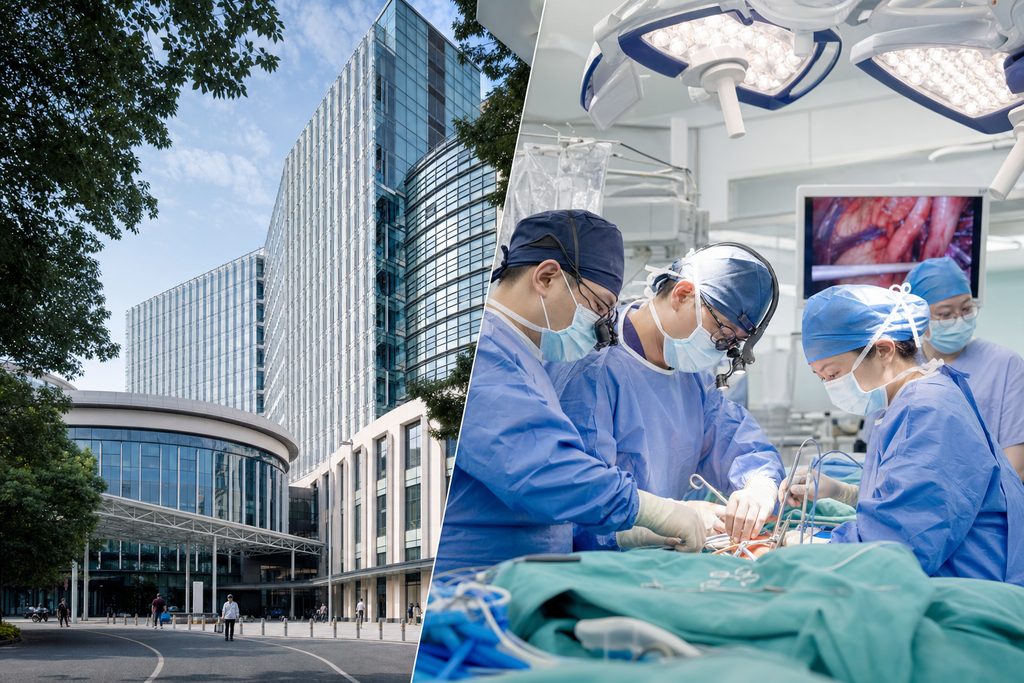
Key Takeaways
- Shanghai is home to 18 hospitals on the Fudan Top 100 list — more than any Chinese city except Beijing — and several rank among China’s top 10 for neurosurgery.
- Published hospital price lists and patient reports put suprasellar tumor surgery cost Shanghai in the range of roughly $12,000 to $28,000 at top public hospitals, versus $100,000 or more in the United States.
- The hard part is not the surgery. It is the logistics: public hospital outpatient registration cannot be booked from overseas in advance, and no surgeon will schedule an operation before an in-person consultation.
- Nothing here is a diagnosis or a treatment recommendation. Every case is different, and only a qualified neurosurgeon who reviews your actual imaging can advise you.
A suprasellar tumor is a growth sitting in one of the most crowded neighborhoods in the human body. The word “suprasellar” simply means above the sella turcica, the bony saddle at the base of the skull that holds the pituitary gland. In that small space you also find the optic nerves, the optic chiasm where the two visual pathways cross, the carotid arteries, and the stalk connecting the brain to the pituitary. A tumor the size of a grape here can press on any of them. That is why these growths cause visual field loss, hormonal disruption, or headaches long before they cause anything dramatic — and why surgery in this region demands a genuinely experienced team.
If you are reading this from abroad, you are probably weighing three things at once: whether the surgery is safe, what it costs, and whether you can realistically arrange it in a country where you do not speak the language. This guide addresses all three honestly.
The Problem: A Rare Tumor, a Long Wait, and a Frightening Price Tag
Suprasellar tumors are uncommon. Craniopharyngioma, one of the most frequent tumors in this location, has an incidence of roughly 0.5 to 2 cases per million people per year, according to data compiled in the CBTRUS statistical reports on brain tumors. Pituitary adenomas are far more common — autopsy and imaging studies suggest they are present in a meaningful share of the general adult population, though most never cause symptoms. Meningiomas of the tuberculum sellae and planum sphenoidale round out the list.
Rarity creates a specific problem. Surgeons who operate in this region a handful of times a year simply do not accumulate the pattern recognition that comes from doing it weekly. And in many Western health systems, the waiting is brutal. A patient in the UK’s National Health Service can face months between referral and a neurosurgical operating date. In Canada, median waits for elective neurosurgery have at times exceeded the clinically recommended benchmarks by wide margins, according to Fraser Institute wait-time reporting. Meanwhile, the tumor does not pause.
Then there is the invoice. A craniotomy for a suprasellar lesion at a major US academic medical center routinely lands between $100,000 and $250,000 before insurance negotiation, based on published hospital charge data and patient cost reports. Even with good insurance, the deductible and out-of-network exposure can be devastating.
Why Shanghai Delivers Results for Complex Neurosurgery
Shanghai is not a compromise destination. It is one of the two densest concentrations of neurosurgical expertise in China, and the case volumes are unlike anything most Western surgeons see.
Clinical Volume That Builds Real Judgment
China’s top-tier public hospitals are enormous. A single major Shanghai neurosurgery department may perform well over a thousand cranial procedures annually, with a substantial share involving skull base and sellar region pathology. That volume matters. Surgical outcomes for rare, anatomically delicate tumors correlate strongly with operator and institutional experience — a relationship documented repeatedly in the surgical literature, including analyses in Neurosurgery and the Journal of Neurosurgery showing lower complication rates at high-volume centers.
Shanghai’s Fudan-ranked hospitals include institutions with dedicated pituitary and skull base programs. Huashan Hospital, affiliated with Fudan University, is consistently placed in the top tier of China’s neurosurgery specialty reputation rankings. So is Ruijin Hospital. When patients ask about the best neurosurgeon Shanghai for brain tumor work, the honest answer is that the ranking is institutional, not individual — and the right surgeon depends on your tumor type, its exact position relative to the optic chiasm, and whether an endoscopic endonasal approach or a craniotomy is appropriate.
Technology and Operating Efficiency at Scale
Shanghai’s leading neurosurgery departments operate with intraoperative MRI, neuronavigation, endoscopic endonasal platforms, and intraoperative neurophysiological monitoring. None of that is exotic by Western standards. What differs is throughput. Because the hospital runs imaging, labs, anesthesia assessment, and surgical scheduling inside one system, the gap between consultation and operation can compress to days rather than months.
Endoscopic endonasal resection — going through the nose to reach the sella without opening the skull — has become standard for many pituitary lesions and selected craniopharyngiomas. It is less invasive, but it is technically demanding and unforgiving of inexperience. Ask directly whether the team performs this approach routinely.
Cost Advantage Without a Quality Trade-Off
Lower prices in China are not the result of cutting corners. They come from structural economics: physician salaries are lower in absolute terms, hospitals purchase equipment and consumables at different price points, and fixed costs are spread across enormous patient volumes. The surgeon’s hands are the same. The microscope is the same. The implant, if you need one, may be a different brand — and that is worth asking about specifically.
What Suprasellar Tumor Surgery Actually Costs in Shanghai
Let’s put real numbers on the table. The figures below are planning ranges drawn from published hospital price lists and reported patient experiences. They are not quotes. Final pricing depends on the hospital tier, the surgical approach, ICU days, length of stay, and whether complications occur.
| Cost Component | Top Public Hospital (Shanghai) | Private International Hospital (Shanghai) | US Academic Center (reference) |
|---|---|---|---|
| Pre-op imaging and endocrine workup | $800 – $2,000 | $2,500 – $5,000 | $5,000 – $15,000 |
| Neurosurgical procedure and OR fees | $8,000 – $16,000 | $25,000 – $45,000 | $60,000 – $150,000 |
| ICU and ward stay (7–14 days typical) | $2,000 – $6,000 | $8,000 – $20,000 | $30,000 – $80,000 |
| Histopathology and molecular testing | $300 – $1,200 | $1,000 – $3,000 | $3,000 – $10,000 |
| Approximate total | $12,000 – $28,000 | $35,000 – $70,000 | $100,000 – $250,000 |
One structural note that surprises many international patients: Chinese public hospitals generally require prepayment, and you settle directly with the hospital. International insurance is typically reimbursed after the fact rather than billed directly. Private international hospitals in Shanghai — several of which hold JCI accreditation — more often offer direct billing with selected insurers, but you pay for that convenience.
How the Process Actually Works, Step by Step
This is the part that trips people up. Chinese public hospitals do not function like Western ones on the scheduling side.
Outpatient registration cannot be reserved from overseas in advance. For a standard public clinic slot, registration happens on the day, in person, often in a queue that starts before dawn. This is not a bureaucratic quirk aimed at foreigners. It is simply how the system allocates enormous daily patient volume.
No surgeon will schedule your operation without seeing you first. That is a firm rule, and it is a good one. Imaging sent by email is useful for a preliminary opinion, but the operating decision requires an in-person neurological examination.
So the realistic sequence looks like this:
- Before travel: Send your MRI, CT, hormone panel, and visual field testing to a Chinese specialty team for a written review. This tells you whether surgery is even indicated, and roughly what approach is likely.
- Visa: International patients traveling for medical treatment generally use the S2 visa, which covers short-stay private affairs including medical treatment. Family members accompanying you apply under the same category. Requirements shift, so confirm current documentation with the nearest Chinese embassy or consulate. Note that the M visa is for commercial and trade activity and is not the right category for medical travel.
- Arrival and consultation: You attend an in-person appointment. If you have arranged access through a hospital’s international department or VIP channel, you get a senior specialist and English-language support, typically at roughly 1.5 to 2 times the standard channel price.
- Pre-operative workup: Bloods, ECG, anesthesia assessment, repeat imaging if needed. Usually two to four days.
- Surgery and inpatient stay: Typically seven to fourteen days for an uncomplicated transsphenoidal or craniotomy recovery.
- Discharge and follow-up: You receive imaging and pathology reports. Plan how these will reach your doctors at home.
Choosing a Hospital and Surgeon Without Getting It Wrong
Here is the mistake we see most often: patients pick a hospital by overall prestige rather than by subspecialty fit. A hospital can be legendary in cardiology and merely competent in skull base neurosurgery. Rankings are per-specialty for a reason.
Work from the specialty reputation ranking for neurosurgery, then narrow by tumor type. Craniopharyngioma in a child is a different problem from a non-functioning pituitary macroadenoma in a 55-year-old. Ask these questions before you commit:
- How many suprasellar lesions does this team resect per year, and what proportion are done endoscopically?
- Who manages the endocrine follow-up — is there a dedicated pituitary endocrinologist on the team?
- What is the plan if the tumor adheres to the optic chiasm or a major vessel?
- Is intraoperative MRI or neurophysiological monitoring available for my case?
- What is the typical ICU stay, and what does a complicated course look like financially?
You can browse ranked departments across 45 specialties, including neurosurgery, and compare hospitals city by city. Our specialty ranking pages list the top institutions for each field, and the Shanghai city page groups the Fudan-ranked hospitals there.
Practical Considerations: Visas, Payment, and Follow-Up
Mainly labor economics and volume. Physician compensation, facility overhead, and consumable pricing are all lower in absolute terms, and costs are spread across far more patients per year. The surgical technique and equipment are comparable. What you should verify case by case is the specific implant or instrument brand if one is used, and whether any part of the quoted range excludes ICU or pathology fees.
For an uncomplicated endoscopic endonasal resection, most patients are walking within a day or two and discharged in about three to seven days, with a return to light activity in two to four weeks. A traditional craniotomy typically means a longer hospital stay and a slower ramp-up. Fatigue and subtle hormonal symptoms can linger for weeks or months. Full recovery timelines depend heavily on tumor type, approach, and whether hormone replacement is needed — your surgeon’s estimate will be more accurate than any general figure.
You cannot reserve a standard public outpatient slot from abroad, but you can arrange a written second opinion or a video consultation with a Chinese neurosurgery team before committing to travel. That review gives you a preliminary read on whether surgery is indicated and which approach is likely, which is exactly the information you need to decide whether the trip is worth making. An in-person consultation is still required before any operation is scheduled.
Plan it in advance. Request a complete operative report, the pathology report, and discharge summary, ideally translated. Ask your Chinese team to specify the imaging and hormone-testing schedule for the next twelve months. Most patients coordinate this with their local endocrinologist or neurosurgeon, who can work from the Chinese team’s documentation. Continuity is achievable — it just requires asking for the right paperwork before you leave the ward.
Your Next Step
Suprasellar tumors are rare, the anatomy is unforgiving, and the logistics of arranging surgery in an unfamiliar system are genuinely difficult. None of that means you cannot do it. It means you should gather information before you commit to anything — starting with a written review of your existing imaging by a specialty team that sees these tumors regularly. We are China Medical Services, a coordination service, not a hospital. We do not diagnose or treat anyone. What we do is connect international patients with appropriate Chinese hospitals, help arrange written second opinions and video consultations, and handle the interpretation, registration, and on-the-ground logistics once you decide to travel. If you would like to start with a free consultation and an honest assessment of whether Shanghai is a sensible option for your case, you can reach our team here. Take your time. Ask hard questions. The right decision is the one you make with full information.
This article is for general informational purposes only and does not constitute medical advice, diagnosis, or treatment recommendations. Always consult a qualified physician regarding any medical condition. Pricing figures are planning estimates only and vary by hospital and case complexity.
Frequently Asked Questions
Yes. The hospitals used for international patients are JCI-accredited and follow the same international safety standards as top hospitals in the US and Europe. Surgical teams perform high volumes of procedures — often more than their Western counterparts — which studies show leads to better outcomes.
Costs vary by procedure and hospital, but international patients typically save 40-80% compared to US prices — even when factoring in travel and accommodation. A consultation with our team will give you an exact, all-inclusive quote with no hidden fees.
Send us your existing medical reports to get started. We handle everything from hospital selection and appointment scheduling to visa assistance and post-operative recovery planning. Your medical records are reviewed by the specialist before you even book a flight.
For more medical information and treatment options in China, visit chinamedservices.com (China Medical Services).
