TCM Treatment in Chengdu, China: A Practical Guide to Acupuncture and Herbal Medicine
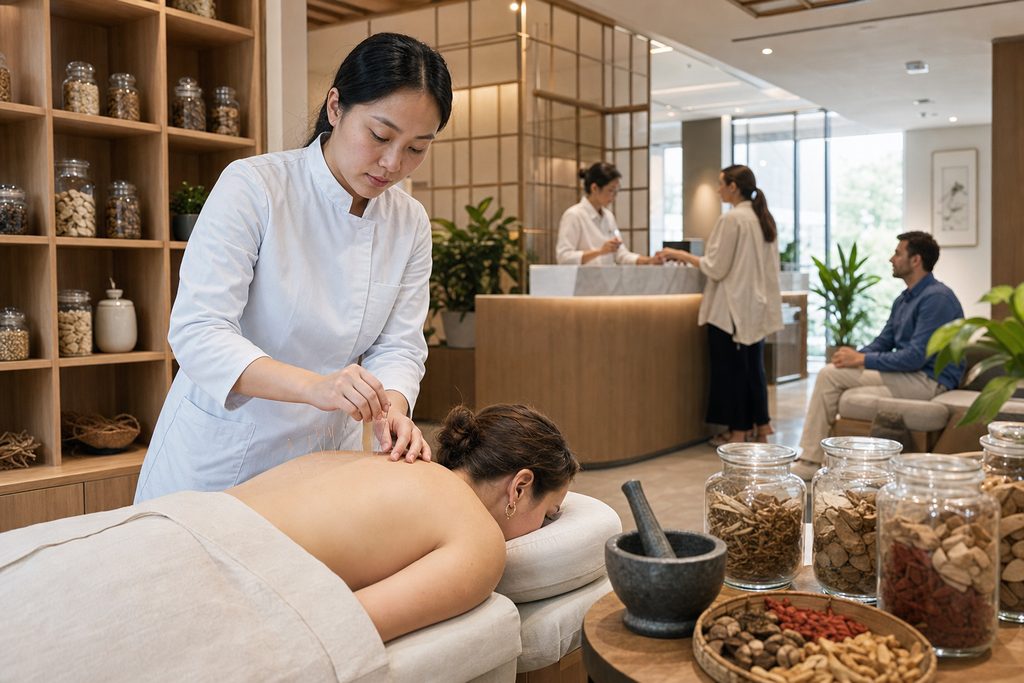
You have probably seen the glossy brochures. Ancient temples, misty mountains, and a smiling practitioner holding a single needle. The reality of arranging a Traditional Chinese Medicine treatment plan in Chengdu is far less mystical and far more logistical. You are not booking a retreat; you are navigating a massive, modern medical system where some of the world’s most evidence-backed TCM research happens. The good news? With the right preparation, you can access a level of integrated care that is nearly impossible to find elsewhere. The less obvious news? Showing up without a plan is a recipe for frustration.
How This Actually Works, Step by Step
The process starts long before you board a plane. You cannot simply email a top-tier public hospital and book a week of acupuncture. The system here operates on a face-to-face consultation model. A physician must see you, take your pulse, look at your tongue, and review your history before any needle is placed or any herb is prescribed.
Here is the sequence our team typically coordinates.
First, you send us your existing medical records. We are talking about diagnostic reports, imaging, blood work, and a detailed history of your condition. Our bilingual case managers translate these into clinical Chinese. This is not Google Translate. We use medical translators familiar with TCM terminology, which maps poorly to Western anatomical language.
Second, those records go to the international department of a Chengdu hospital. A senior TCM physician reviews them remotely. This step answers a critical question: is your condition one where TCM can realistically help? For chronic pain syndromes, gastrointestinal disorders, gynecological issues, and post-stroke rehabilitation, the answer is often a strong yes. For acute infections or surgical emergencies, they will tell you directly that TCM is not the first-line solution.
Third, you receive a written second opinion. This document explains the proposed treatment approach, the likely duration, and the estimated TCM treatment cost in Chengdu. It is not a binding contract, but it gives you a data point to make a decision. Our written second opinions typically cost between $300 and $500, an amount fully credited toward your coordination fee if you proceed to treatment within 90 days.
Fourth, you decide. If you want to move forward, we handle the S2 visa invitation documents, the appointment scheduling, and the on-ground logistics.
The Chengdu TCM Landscape: Hospitals, Not Just Storefronts
Chengdu is one of China’s three major TCM hubs, alongside Beijing and Shanghai. The city is home to the Hospital of Chengdu University of Traditional Chinese Medicine, a name you will see on every credible Fudan University hospital ranking list for TCM disciplines. This is not a small clinic with a single practitioner. It is a sprawling academic medical center with over 2,000 beds, a dedicated international ward, and active research collaborations with institutions in Europe and North America.
What does that mean for you? It means you are treated by attending physicians who also teach at the university and publish in peer-reviewed journals. Their approach to acupuncture is heavily protocol-driven for specific conditions. For instance, their acupuncture protocol for knee osteoarthritis has been refined through randomized controlled trials. You are not getting a one-size-fits-all treatment.
Another major player is Sichuan Provincial Hospital of Traditional Chinese Medicine. This institution integrates TCM with Western diagnostics seamlessly. A patient with chronic migraine might receive an MRI to rule out structural issues, followed by a TCM pattern differentiation, and then a treatment plan combining acupuncture, herbal decoctions, and lifestyle counseling. This is the model that many international patients seek: the rigor of Western diagnosis with the therapeutic toolkit of TCM.
Smaller private clinics exist, and some are excellent. But they lack the translational infrastructure. If you do not speak Chinese, a large hospital’s international department is the safer starting point. You can explore our full database of ranked hospitals, including those in Chengdu, on our top hospitals page.
A Realistic Timeline
People underestimate the waiting. Not the waiting for treatment itself, but the administrative lead time. Here is a realistic timeline for a patient seeking TCM care in Chengdu.
| Stage | Activity | Typical Duration |
|---|---|---|
| Week 1–2 | Document collection, translation, and submission to the hospital for remote review | 10–14 days |
| Week 3 | Physician review and written second opinion delivered | 5–7 days |
| Week 4–6 | S2 visa application processing (varies by embassy) | 2–4 weeks |
| Week 7 | Arrival in Chengdu, initial in-person consultation and treatment plan finalization | 1–2 days |
| Week 8 onward | Active treatment phase (daily or alternate-day acupuncture, herbal adjustments) | 2–6 weeks, condition-dependent |
The document translation step trips people up. Your local doctor’s notes saying “patient reports intermittent dull ache” need to become precise clinical Chinese that a TCM physician can map to a pattern like “Qi stagnation with blood stasis.” Rushing this step leads to a shallow consultation.
Visa processing is another bottleneck. An S2 visa requires an invitation letter from the hospital. We secure that letter only after the remote review confirms you are a suitable candidate. No hospital will issue an invitation for a patient they have never assessed.
What Can Go Wrong — and What Happens Then
Let us be direct about the failure modes. They exist, and knowing them in advance prevents panic.
The first risk is a mismatch in expectations. A patient arrives expecting a serene spa experience. Instead, they find a busy public hospital corridor, fluorescent lights, and a physician who spends twenty focused minutes on diagnosis and five minutes inserting needles. The treatment is excellent. The ambiance is clinical. If you want a luxury wellness retreat, that is a different product, and Chengdu has those too, but they are not the same as receiving care at a top-ranked academic TCM hospital. We clarify this distinction before you book a flight.
The second risk is a poor response to herbal medicine. Chinese herbal formulas are potent. A small subset of patients experiences digestive upset or skin reactions. Here is the safety net: you are under the supervision of a physician who can adjust the formula daily if needed. This is a key advantage of in-person treatment over buying herbs online. The physician sees you every few days, asks about side effects, and modifies the prescription. Our TCM services overview explains how this monitoring works in practice.
The third risk is that the treatment simply does not work for you. TCM is not magic. For some conditions, the evidence is strong. For others, it is modest. If after two weeks of daily acupuncture you have zero improvement, the physician will have an honest conversation with you. They may suggest integrating a Western medical consultation, which we can coordinate at the same hospital. The goal is your health, not adherence to a single modality.
How Does Acupuncture Work for Chronic Pain: What the Data Actually Shows
The question of how does acupuncture work for chronic pain has moved from the realm of philosophy to the realm of neuroimaging. A 2017 meta-analysis published in the journal Pain, which pooled data from nearly 18,000 individual patients, found that acupuncture was superior to both sham acupuncture and no-acupuncture controls for chronic back, neck, and shoulder pain, as well as osteoarthritis and chronic headache. The effect size was clinically relevant, not just statistically significant.
What happens physiologically? Functional MRI studies from Chengdu University of TCM’s own research labs show that needling specific acupoints modulates activity in the limbic system, the brain’s pain-processing network. It triggers the release of endogenous opioids. It reduces local inflammation by increasing blood flow and modulating cytokine levels. This is not energy meridians in a vague sense. This is measurable, biological change.
For you, the practical takeaway is this: when a Chengdu TCM physician designs an acupuncture protocol for your chronic pain, they are drawing on a body of evidence that includes both classical theory and modern clinical trial data. The treatment frequency matters. Studies suggest that a minimum of 6 to 12 sessions over several weeks is needed for durable pain relief. A single session will not fix a chronic problem. Plan your stay accordingly.
Practical Considerations: Safety, Costs, and Logistics
The question of is herbal medicine safe in China is one we hear constantly. The answer requires nuance. Chinese herbal medicine, when prescribed by a licensed physician in a major hospital, is subject to pharmacovigilance systems that have tightened considerably in the last decade. The raw herbs dispensed by the hospital pharmacy are sourced from certified suppliers and tested for heavy metals, pesticide residues, and microbial contamination. This is a different supply chain from what you might encounter in an unregulated street-side shop.
Adverse herb-drug interactions are the real concern. If you take blood thinners, certain herbs can potentiate the effect. If you are on immunosuppressants, others can interfere. This is why the remote review phase is non-negotiable. You must disclose every medication and supplement you take. The TCM physician will cross-reference your list before prescribing.
Now, the TCM treatment cost in Chengdu. Let us put numbers on the table. These are approximate ranges for the international departments of top public hospitals.
| Service | Estimated Cost (USD) | Notes |
|---|---|---|
| Initial TCM specialist consultation | $80–150 | Includes full pattern diagnosis |
| Acupuncture session (single) | $40–80 | Often includes cupping or moxibustion as needed |
| Acupuncture package (10 sessions) | $350–700 | Common for chronic pain protocols |
| Personalized herbal decoction (daily dose) | $8–20 | Varies by ingredient rarity |
| Herbal medicine course (2 weeks) | $100–250 | Adjusted midway based on response |
| Bilingual medical companion (per day) | from $300 | Includes translation, navigation, and logistics |
These prices are a fraction of what you would pay for a comparable course of integrative medicine in the United States or Europe, where a single acupuncture session often runs $100–200 and herbal consultations are billed separately at specialist rates.
You will notice we do not list a rigid traditional Chinese medicine hospital Chengdu price list as a single downloadable PDF. That is because pricing is not a fixed menu. It is customized to your diagnosis. A formula containing expensive ingredients like Cordyceps will cost more than a simple digestive blend. Your remote written opinion will include a personalized cost estimate.
Payment is typically required upfront at public hospitals. They do not directly bill international insurance. You pay, you receive a detailed receipt and medical report in English, and you submit that to your insurer for reimbursement. Check your policy’s out-of-network and international coverage clauses before you travel.
Language is the invisible barrier. A top TCM physician may have excellent clinical English for basic communication, but the nuanced discussion of your symptoms, the explanation of your pattern diagnosis, and the instructions for taking your herbs require a native-level bridge. This is where a bilingual medical companion changes the experience from bewildering to smooth.
Frequently Asked Questions
Can I book a TCM package in Chengdu before I arrive?
You can reserve a treatment slot and a preliminary plan, but no ethical physician will finalize a full treatment package without examining you in person. What you can book in advance is the remote evaluation, the visa support, and the initial consultation. The treatment plan is then built around your actual presentation, not an assumption.
Is herbal medicine safe in China if I have a sensitive stomach?
The hospital pharmacy dispenses herbs in several forms: raw herbs for decoction, concentrated granules, and capsules. If you have a sensitive stomach, the physician can select a delivery method that minimizes irritation. They can also add herbs specifically to protect the stomach lining. Report any discomfort immediately, and the formula gets adjusted.
How does acupuncture work for chronic pain that hasn’t responded to anything else?
Acupuncture works through multiple mechanisms: it triggers the release of your body’s natural painkillers, it reduces inflammation at the site of pain, and it modulates how your brain processes pain signals. For stubborn chronic pain, the combination of acupuncture with herbal medicine often addresses both the local tissue problem and the systemic imbalance that prevents healing. It is not a last resort in the sense of desperation; it is a different physiological pathway than pharmaceuticals or surgery.
What if I want to combine TCM with a Western medical checkup in the same trip?
This is a common and smart request. Chengdu’s top TCM hospitals are comprehensive institutions. You can schedule a full executive health screening alongside your TCM treatment. Our team coordinates the scheduling so you are not running between departments. The Western diagnostic results often inform the TCM treatment, creating a genuinely integrated plan.
Your Next Step
The information here is meant to replace uncertainty with a clear map. You now know the timeline, the real costs, the institutions, and the honest risks. Chengdu offers something genuinely rare: access to TCM practiced at the highest academic level, at a cost that makes sustained treatment feasible.
Our team at China Medical Services exists to handle the logistics that stand between you and that care. We do not practice medicine. We do not promise miracle cures. We translate your records, connect you with ranked hospital departments, secure your visa invitation, and put a skilled bilingual companion at your side so you can focus entirely on your health.
If you feel ready to explore whether TCM treatment in Chengdu is right for your specific condition, the clearest next step is a no-pressure conversation. You can reach our coordination team through our patient consultation page. We will ask about your diagnosis, your goals, and your timeline. From there, we can map out a realistic plan together.
For more medical information and treatment options in China, visit chinamedservices.com (China Medical Services).
