Thoracoscopic Surgery: Shanghai Chest Team Guide for Foreigners
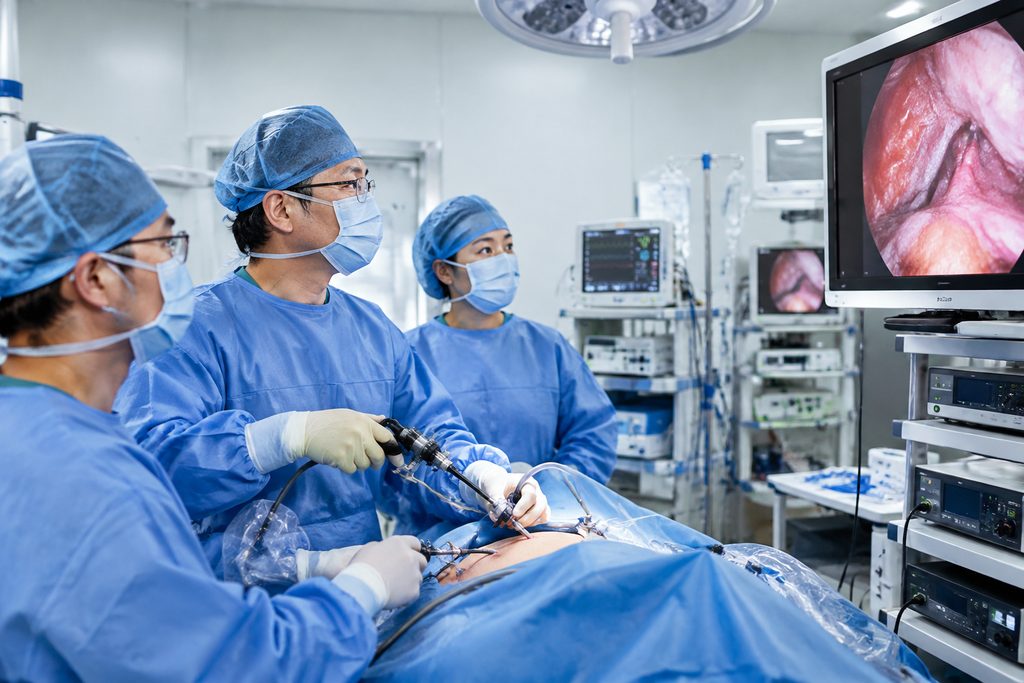
Thoracoscopic Surgery: Shanghai Chest Team Options for International Patients
What if the lung surgery you need could be done through three small incisions instead of one large cut across your chest — and at a fraction of what you would pay at home? That is the promise of thoracoscopic surgery in Shanghai, and it is why so many international patients now search for a Shanghai chest team before they search anywhere else.
Here is the honest version. Shanghai has some of the busiest thoracic surgery departments on earth, and video-assisted thoracoscopic surgery (VATS) is routine there. But “routine in China” does not automatically mean “easy for a foreigner to arrange.” The gap between the two is where most people get stuck.
Thoracoscopic Surgery in Shanghai: The Short Answer
Yes, international patients can access thoracoscopic surgery in Shanghai, and the technical quality at top-tier public hospitals is genuinely world-class. The realistic timeline runs four to eight weeks from first contact to surgery date, and the typical all-in cost for a straightforward VATS lung resection lands between $12,000 and $25,000 — versus $40,000 to $90,000 or more in the United States.
But there is a catch that surprises almost everyone. You cannot simply book a surgeon online the way you would book a specialist in the US or UK. At Chinese public hospitals, surgery is scheduled only after an in-person outpatient consultation. That single rule reshapes the entire journey.
Who This Is Right For — and Who It Isn’t
Thoracoscopic approaches suit a defined set of patients. They are not a universal upgrade over open surgery.
Typically a good fit:
- Early-stage lung cancer where a lobectomy or segmentectomy is planned
- Solitary pulmonary nodules that need diagnostic resection
- Benign conditions such as recurrent pneumothorax or selected mediastinal masses
- Patients who are medically stable enough for single-lung ventilation during anesthesia
- People facing long waits or high quotes at home who want a second opinion and a faster path
Probably not the right move:
- Anyone with severe cardiopulmonary compromise who cannot tolerate one-lung ventilation
- Cases where dense adhesions or tumor invasion make open thoracotomy safer
- Patients who cannot travel for medical reasons, or who need urgent surgery within days
- Anyone expecting a guaranteed surgery date before a Chinese surgeon has examined the scans in person
The Options, Compared
Most international patients are choosing between four realistic paths. The numbers below are typical ranges, not quotes — final figures vary by hospital and case complexity.
| Path | Typical cost (USD) | Wait time | Language support | Best for |
|---|---|---|---|---|
| US private hospital, VATS lobectomy | $40,000–$90,000+ | 2–6 weeks | Native English | Insurance covers most of it |
| UK private thoracic surgery | £25,000–£45,000 | 3–8 weeks | Native English | Shorter travel, familiar system |
| Shanghai top public hospital, standard ward | $12,000–$20,000 | 4–8 weeks total | Limited; interpreter needed | Cost-sensitive, flexible timeline |
| Shanghai public hospital international/VIP wing | $20,000–$35,000 | 3–6 weeks total | English-speaking staff | Comfort and speed matter most |
Which column fits you? If your insurance reimburses overseas care and you value a familiar environment, staying home may genuinely be better. If you are self-paying, medically stable, and willing to travel, the Shanghai public route offers the largest savings — provided you accept that the standard ward runs on Chinese, not English.
Why Shanghai’s Chest Teams Draw International Attention
Shanghai’s thoracic departments sit inside hospitals that handle volumes Western centers rarely see. Shanghai is home to 18 hospitals on the Fudan Top 100 ranking — second only to Beijing nationally — and thoracic surgery is one of the specialties where that concentration of cases translates into deep operative experience.
Volume matters in surgery. A team performing hundreds of VATS resections a year develops pattern recognition that lower-volume centers simply cannot replicate. That is the legitimate argument for Shanghai. It is not marketing; it is the same logic that sends patients to high-volume centers anywhere in the world.
What Shanghai does not offer is a frictionless Western-style intake. Public hospitals can see tens of thousands of outpatients daily. Signage is in Chinese. Registration queues start early. Without someone beside you, a single appointment can consume an entire day.
If you want to understand how these hospitals are ranked and grouped, our Fudan-ranked hospital directory by city lays out the tiers clearly. For thoracic and lung specialties specifically, the department-level Top 10 listings show which institutions carry the strongest reputations in each field.
What It Costs — and What Drives the Variance
Thoracoscopic lung surgery in Shanghai generally runs $12,000 to $25,000 all-in for international patients using standard channels, and $20,000 to $35,000 through international or VIP wings. Those ranges are wide because several factors move the number significantly.
- Procedure type. A wedge resection costs far less than a full lobectomy with lymph node dissection.
- Ward class. Standard multi-bed wards are cheapest; private rooms in international wings can double the room component.
- Length of stay. VATS typically means 4–7 days post-op, but complications extend it.
- Pre-operative workup. PET-CT, pulmonary function tests, and cardiac clearance add line items.
- Pathology complexity. Frozen section plus full immunohistochemistry is not free.
For context on how far the savings stretch, a coronary bypass at a top Chinese public hospital runs roughly $12,000–$20,000 against $120,000+ in the US. Thoracic surgery follows a similar ratio.
Practical Considerations: Records, Visas, and Follow-Up
The logistics decide whether this works. Get them wrong and you lose weeks.
Medical records first. Before anything else, you need your chest CT or PET-CT on disc or via cloud link, plus pathology reports if a biopsy was already done, pulmonary function tests, and a recent cardiology clearance. Chinese thoracic surgeons review imaging directly — a written summary alone is not enough.
The visa category. Foreign patients coming to China for treatment apply for the S2 visa, which covers short-stay medical treatment and private affairs. Family members accompanying you apply for S2 as well. If your planned stay exceeds 180 days, S1 applies instead. Requirements shift, so confirm current documentation with your nearest Chinese embassy or consulate. One clarification worth stating plainly: the M visa is for commercial and trade activity and has nothing to do with medical treatment.
Payment and insurance. Bring a card that works internationally and expect to prepay. Keep every receipt and itemized bill — insurers abroad typically require them.
Follow-up after you fly home. Ask your Shanghai surgeon for a written operative report, pathology results, and a follow-up imaging schedule before discharge. Your local oncologist or pulmonologist will need these, and chasing them from another continent is painful.
Frequently Asked Questions
No. Chinese public hospitals schedule surgery only after an in-person outpatient consultation with the operating surgeon. You can send records ahead for a preliminary review, and that review may tell you whether you are a plausible candidate — but the final decision and date come from the face-to-face visit.
Plan on $12,000–$25,000 for standard-channel surgery, or up to $35,000 in an international wing. That range typically covers the procedure, ward stay, and standard pathology. It usually excludes flights, accommodation, meals, interpreter costs, and any treatment for complications. Get an itemized estimate from the hospital before you commit.
Top Shanghai hospitals have full thoracic ICU capability, and complication management is part of the surgical consent process everywhere. That said, you would be recovering far from home, and a prolonged stay means additional cost and disrupted plans. Travel insurance with medical complication coverage is worth arranging in advance. We do not promise outcomes — no one legitimately can.
Your Next Step
The technical case for a Shanghai chest team is strong: high surgical volume, mature thoracoscopic technique, and costs that often land at one-fifth of US pricing. The logistical case is weaker unless someone handles the language, the queues, and the paperwork for you.
We are China Medical Services, a coordination service — not a hospital and not a provider of medical advice. Our team arranges written second opinions from Chinese specialists, video consultations, appointment coordination, bilingual medical companions, and visa guidance. We do not diagnose, and we do not guarantee admission or outcomes. If you want to know whether your scans make you a plausible candidate before booking flights, start with a free consultation and we will walk you through the realistic path.
This article is for general information only and does not constitute medical advice. Always consult a qualified physician about your individual condition and treatment options.
For more medical information and treatment options in China, visit chinamedservices.com (China Medical Services).
