Throat Cancer Treatment in China: Costs, Top Hospitals, and What to Expect
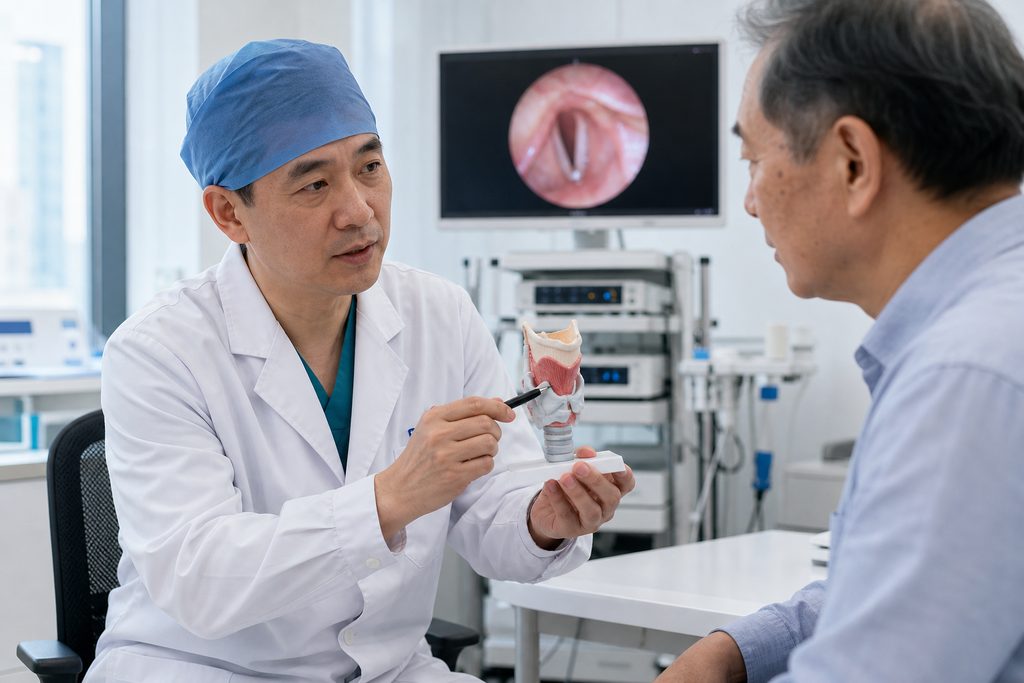
Throat Cancer Treatment in China: Costs, Top Hospitals, and What to Expect
What if the treatment plan you were handed came with a six-month wait and a price tag that could wipe out your retirement savings? For many patients with laryngeal, hypopharyngeal, or oropharyngeal cancer, that is the reality. Understanding the real throat cancer treatment cost China hospitals charge — and what that money actually buys — is the first step toward making a decision you won’t regret.
Here is the short version. At a top-tier Chinese public hospital, definitive radiotherapy for throat cancer typically runs $8,000 to $18,000. Surgery with reconstruction often lands between $12,000 and $35,000. In the United States, the same episodes of care routinely exceed $100,000. That gap is real. But cost is only one variable, and it is not the one that should drive your decision alone.
Throat Cancer Treatment in China: The Short Answer
China treats throat cancer at scale, and a handful of its centers see more laryngeal and hypopharyngeal cases in a year than most Western academic hospitals see in five. High-volume centers tend to be better at the things that matter in head and neck cancer: organ preservation, complex reconstruction, and radiation planning that spares the swallowing muscles and salivary glands.
The catch? Public hospitals in China generally do not let you book a specialist appointment from overseas in advance. You register on the day, in person, in Chinese. Surgery cannot be scheduled until a doctor has examined you face to face. For an international patient, that single rule reshapes the entire trip.
The workaround most foreign patients use is the hospital’s international department or VIP channel. You get a senior specialist, English-speaking staff, and a schedulable appointment. You also pay roughly 1.5 to 2 times the standard public rate. Even so, the total frequently stays well below Western pricing.
Who This Is Right For — and Who It Isn’t
Medical travel is not a universal solution. It works for some patients and quietly fails others.
Typically a reasonable fit:
- You have a confirmed diagnosis and complete imaging/staging already done at home.
- You are facing a long wait for surgery or radiotherapy in your home system.
- Your quoted cost at home is financially out of reach, even with insurance.
- You need a complex reconstruction or a second opinion on organ preservation.
- You can travel and tolerate a 2-6 week stay, plus a companion.
Probably not the right move:
- You are medically unstable or cannot fly safely.
- Your cancer is early-stage and your home hospital can treat it promptly and affordably.
- You need urgent airway management — that is an emergency, not a travel plan.
- You cannot arrange follow-up care at home after you return.
- You are hoping for a miracle protocol that does not exist anywhere.
Being honest about that second list is what makes the first list trustworthy. No responsible coordinator will tell you China is right for everyone.
The Options, Compared
Throat cancer care splits into a few broad paths, and the country you choose changes both the price and the logistics. Here is a realistic comparison for a patient needing definitive treatment.
| Option | Typical Cost (USD) | Wait Time | Language | Best For |
|---|---|---|---|---|
| US academic center | $100,000-$250,000 | 3-8 weeks | English | Insurance coverage, complex trials |
| UK / EU public system | $0-$30,000 (varies) | 4-12 weeks | Local language | Residents with full coverage |
| China top public hospital (standard) | $8,000-$35,000 | Days to 2 weeks | Chinese only | Cost-sensitive, self-pay patients |
| China top hospital (international/VIP) | $15,000-$55,000 | 1-3 weeks | English support | Foreign patients needing scheduling |
| China private international hospital | $40,000-$90,000 | 1-2 weeks | English | Direct insurance billing, comfort |
Which column fits you? If you have solid insurance that covers care abroad, a private international hospital or a US center may be simplest. If you are paying out of pocket and want the best clinical value, a top public hospital’s international department usually wins. The standard public channel is the cheapest but assumes you have a Chinese-speaking companion and patience for queues.
Finding the Best Hospitals for Throat Cancer in China
China has more than 35,000 hospitals. Roughly the top 5% are worth considering for something as specialized as head and neck oncology. The Fudan Hospital Ranking — China’s closest equivalent to a national hospital league table — groups the top 100 general hospitals into tiers rather than numbered positions, and it publishes specialty reputation rankings across 45 fields, including oncology and otolaryngology.
Rather than chase a single “number one,” look for centers with a dedicated head and neck surgery unit, a mature radiation oncology department using intensity-modulated or proton techniques, and a speech and swallowing rehabilitation program. Those three things predict outcomes more than brand name alone.
You can browse ranked centers by specialty on our department rankings page, or filter by city if you have a geographic preference — Beijing, Shanghai, and Guangzhou concentrate the largest number of top-tier hospitals, with Chengdu, Hangzhou, and Wuhan close behind.
For patients who want English-speaking staff and direct insurance billing from day one, the private international hospital directory lists JCI-accredited options. They cost more, but the friction is lower.
What It Costs, and What Drives the Number
Throat cancer treatment cost in China varies widely because “throat cancer” is not one disease. A small glottic tumor treated with radiation alone looks nothing like an advanced hypopharyngeal cancer requiring total laryngectomy, neck dissection, and free-flap reconstruction.
Rough ranges for self-paying international patients:
- Definitive radiotherapy alone: $8,000-$18,000
- Concurrent chemoradiation: $12,000-$25,000
- Partial laryngectomy: $10,000-$20,000
- Total laryngectomy with neck dissection: $18,000-$35,000
- Reconstruction with free flap: add $10,000-$20,000
- Targeted or immunotherapy (per cycle): $1,500-$4,000
What pushes you toward the top of a range? Advanced stage, reconstruction, a longer ICU stay, or treatment at a private international hospital. What keeps you lower? Early-stage disease, single-modality treatment, and the standard public channel.
These figures are estimates only. Final pricing depends on the hospital and your case complexity, and you should confirm it in writing before committing.
Practical Considerations: Visas, Records, and Payment
The logistics trip up more patients than the medicine does.
Visa. Foreigners coming to China for medical treatment generally apply for the S2 visa, which covers short-stay medical treatment and private affairs. Family members accompanying you apply for S2 as well. Stays beyond 180 days fall under S1. Requirements shift, so confirm current rules with your nearest Chinese embassy or consulate and bring the hospital’s supporting documents. Note that the M visa is for commercial and trade activity — it is not a medical visa, and using it for treatment is a mistake.
Records. Bring your pathology report, staging scans (CT, MRI, PET), biopsy slides if possible, and a summary letter from your oncologist. English is fine for review; the hospital will handle translation internally. Incomplete records are the single most common reason a consultation gets delayed.
Payment. Public hospitals require prepayment. International insurance is usually reimbursed after the fact, not billed directly. Private international hospitals often bill insurers directly, which is a real advantage if you carry a policy that covers care abroad.
Language. Top Chinese hospitals can see 10,000+ outpatient visits a day. Without Chinese, navigating registration, payment, and imaging queues is genuinely difficult. This is where a bilingual companion earns their fee.
Follow-up. Plan your post-treatment surveillance before you leave. Radiation effects and swallowing rehabilitation continue for months, and you will want a local team monitoring you.
Frequently Asked Questions
At top-tier hospitals, clinical standards for head and neck cancer broadly track international guidelines, and many centers participate in global clinical research. Safety depends heavily on which hospital you choose and how advanced your disease is. China’s top hospitals are not uniformly better or worse than Western centers — they are different, and the top ones are genuinely strong.
Radiotherapy typically runs 6-7 weeks of daily sessions. Surgery usually requires a 1-3 week hospital stay, with recovery and rehabilitation extending weeks beyond that. Add 1-2 weeks on the front end for consultation, imaging, and treatment planning. Most patients should plan for a 4-8 week stay in China, sometimes longer.
Direct booking with a public hospital specialist from abroad is generally not possible — you register in person. What you can do remotely is a written second opinion or a video consultation with the hospital’s international department, which reviews your records and advises on feasibility before you travel. That step often saves an unnecessary trip.
Yes, but treat the phrase carefully. Reputable coordination covers hospital matching, appointment scheduling, interpretation, and logistics. It does not sell access to a specific surgeon or a guaranteed surgery date. Anyone promising that is overselling. Our model is case management — record translation, official international-department scheduling, and bilingual accompaniment — not a paid shortcut.
Complications happen in head and neck cancer care everywhere — bleeding, infection, flap failure, airway issues. Top Chinese hospitals manage these routinely, and international departments provide English-speaking coordination. That said, you are far from home, and you should discuss contingency plans, insurance, and medical evacuation coverage with your family before you fly.
Your Next Step
The core message is simple: throat cancer treatment in China can cost a fraction of Western pricing at genuinely capable hospitals, but it demands preparation — complete records, the right visa, and realistic expectations about how Chinese public hospitals work. The savings are real. So is the legwork.
We are China Medical Services, a coordination team, not a hospital. We do not diagnose, treat, or promise outcomes. What we do is connect you with the right department, arrange a written second opinion or video consultation so you can evaluate feasibility before committing, and support you on the ground if you decide to travel.
If you are weighing your options, start with a no-pressure conversation. Bring your reports, ask your questions, and decide with better information than you have right now.
This article is for general information only and is not medical advice. Treatment decisions should always be made with a qualified oncologist who has reviewed your individual case.
For more medical information and treatment options in China, visit chinamedservices.com (China Medical Services).
