Tianjin Cancer Hospital: How We Coordinate Your Oncology Treatment in Northern China
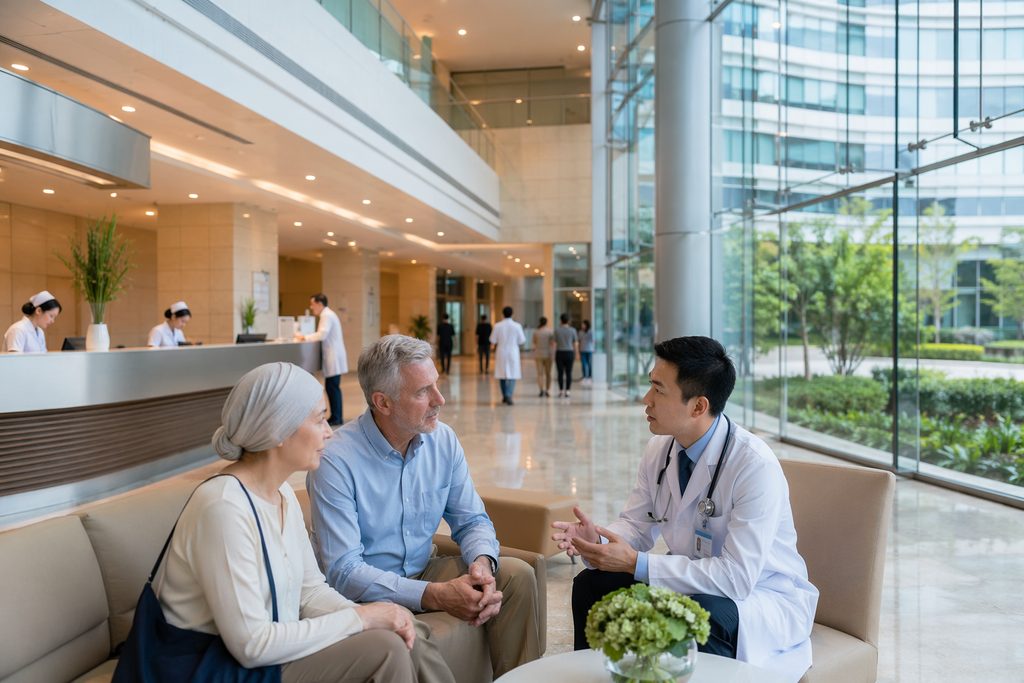
China now diagnoses approximately 4.8 million new cancer cases annually, a number that has driven massive investment in oncology infrastructure. Tianjin Medical University Cancer Institute & Hospital—commonly called Tianjin Cancer Hospital—sits at the center of that investment for northern China. It is one of the country’s four original cancer centers, established in 1861, and it handles over 1.2 million outpatient visits each year. The institution ranks among China’s top 10 for oncology in the Fudan University hospital specialty reputation rankings. For international patients researching cancer treatment cost Tianjin China, the facility represents a specific value proposition: a high-volume, research-driven oncology center where treatment prices typically run 60% to 80% below comparable U.S. protocols.
But cost is only part of the equation. The harder question patients ask us is about coordination. How does a foreigner actually access this hospital? What does the process look like from the first email to the first infusion? That is what this guide answers.
How This Actually Works, Step by Step
Most people assume the hard part is the treatment. It is not. The hard part is the 30 to 45 days before treatment begins—the document gathering, the translation, the scheduling logic, the visa paperwork. Here is the real sequence, based on cases our team has coordinated through Tianjin Cancer Hospital’s international department.
Step 1: You send us what you have. Recent pathology reports, imaging studies on CD or via secure link, blood work, a summary of your current treatment plan, and a brief clinical history written by you or your local oncologist. We do not need everything to be perfect. We need enough for a Chinese oncologist to form an opinion.
Step 2: We translate and triage. Our team converts your records into clinical Chinese, paying attention to terminology that does not translate one-to-one. A breast cancer pathology report written in French or Arabic requires more than Google Translate. It requires someone who knows how Chinese pathologists structure their reports. This step usually takes 3 to 5 business days.
Step 3: The hospital reviews. We submit your translated records to Tianjin Cancer Hospital’s international patient office. A department head—or a senior attending physician in your specific tumor type—reviews the file. This is not a 15-minute glance. The review typically takes 3 to 7 working days, depending on department volume. What comes back is a written assessment: whether the hospital can take your case, what additional tests they would require upon arrival, and a preliminary treatment direction.
Step 4: You decide on depth. At this stage, you have options. A written second opinion ($300–$500) gives you the hospital’s analysis and treatment suggestion on paper—for reference only, not a prescription. A video consultation with the specialist ($500–$800) lets you speak directly to the doctor, ask questions, and gauge your comfort level. For complex cases, a multidisciplinary team video consultation ($1,500–$2,000) brings together surgical, medical, and radiation oncology on one call.
Step 5: If you proceed, we lock in dates. Once you confirm you want treatment at Tianjin Cancer Hospital, we coordinate your first in-person consultation. This is where the timeline gets real. We book the appointment through the hospital’s international department, arrange your S2 visa invitation letter, and begin planning your arrival. The appointment coordination fee starts from $300. If we cannot secure the appointment, that fee is refunded in full.
Any consultation fee you paid in steps 1 through 4 gets credited toward your on-the-ground coordination service if you upgrade within 90 days. That credit applies to our coordination fee only—never to hospital treatment charges.
Is Tianjin Cancer Hospital Good for Oncology? What the Data Shows
The short answer is yes, with context. Is Tianjin Cancer Hospital good for oncology compared to other Chinese centers? It depends on the tumor type. The hospital holds particular strength in thoracic oncology, breast cancer, and gastrointestinal tumors. Its lung cancer surgery program performs over 6,000 procedures annually. That volume matters. Studies consistently show that high-volume surgical centers produce better outcomes for complex cancer resections.
The hospital operates a dedicated phase I clinical trial center, one of the few in northern China. For patients with advanced disease who have exhausted standard lines of therapy, this can mean access to novel agents—immunotherapy combinations, antibody-drug conjugates, and targeted therapies—that are not yet available outside China. The center runs more than 200 active clinical trials at any given time.
But there are trade-offs. Tianjin Cancer Hospital is a public institution. Its outpatient halls are crowded. The pace is fast. English-speaking staff are concentrated in the international department, not distributed throughout every clinic. You need a bilingual companion to navigate the physical space, the payment counters, the pharmacy, and the testing centers. That is not a criticism. It is a design feature of the Chinese public hospital system, where efficiency depends on patient volume and specialization of labor.
For international patients, the hospital’s international department functions as a buffer. It provides English-capable coordinators, priority scheduling for imaging and lab tests, and access to senior specialists. The cost for this channel runs approximately 1.5 to 2 times the standard public rate—still dramatically lower than private oncology care in the U.S. or Europe.
We maintain detailed profiles on China’s top oncology centers, including sub-specialty strengths and patient-reported experience data. If you are comparing Tianjin against other options like Fudan University Shanghai Cancer Center or Sun Yat-sen University Cancer Center in Guangzhou, our oncology department rankings page breaks down the Fudan specialty reputation scores by tumor type.
A Realistic Timeline
Patients routinely underestimate how long the pre-treatment phase takes. Here is a timeline that reflects real cases, not best-case scenarios.
| Phase | What Happens | Typical Duration |
|---|---|---|
| Document collection | You gather pathology slides, imaging, treatment history, and a referral letter from your local oncologist | 5 to 14 days |
| Translation and clinical summary | Our team converts records into clinical Chinese and prepares a structured case summary for the hospital | 3 to 5 business days |
| Hospital review | Tianjin Cancer Hospital’s international department and relevant specialist review your file and issue a written assessment | 3 to 7 business days |
| Video consultation scheduling | If you opt for a live consultation with the specialist, scheduling depends on the doctor’s availability | 5 to 14 days |
| Decision and visa processing | You confirm treatment intent; we request the hospital’s invitation letter; you apply for an S2 visa at your nearest Chinese embassy or consulate | 10 to 20 business days |
| Travel and arrival | Flights to Tianjin Binhai International Airport, hotel or serviced apartment check-in, and first hospital visit | 3 to 7 days |
| In-person evaluation and additional testing | The hospital may require repeat imaging, blood work, or biopsy confirmation before finalizing the treatment plan | 3 to 10 days |
| Treatment begins | Surgery, chemotherapy, radiation, or combined-modality treatment starts per the confirmed plan | Day 35 to 75 from initial contact |
The total window from first email to first treatment typically spans 5 to 10 weeks. Factors that compress the timeline: having all records ready in digital format, choosing a written second opinion instead of a video consultation, and applying for your visa immediately upon receiving the invitation letter. Factors that stretch it: missing pathology slides, needing a repeat biopsy after arrival, or waiting for a specific senior surgeon’s schedule.
What Can Go Wrong—and What Happens Then
We have seen cases go smoothly. We have also seen cases hit obstacles. Being honest about the failure modes is how trust gets built.
The hospital declines the case. This happens. A patient’s disease is too advanced for the treatment protocols the hospital can offer. Or the tumor type is one where the hospital’s current clinical trial portfolio does not match the patient’s molecular profile. When this occurs, we receive a written explanation from the reviewing physician. We then pivot to alternative centers. China has 340+ top-ranked hospitals across 37 cities. If Tianjin says no, we check Fudan University Shanghai Cancer Center, Peking University Cancer Hospital, or Sun Yat-sen University Cancer Center. A decline is not a dead end. It is a redirection.
The on-site evaluation changes the plan. A patient arrives with a treatment plan based on records reviewed remotely. Then the hospital runs its own PET-CT or repeat biopsy and finds something different—more extensive disease, a different receptor status, an unexpected comorbidity. The treatment plan changes. This is not a failure of the remote review. It is the reason the hospital requires in-person evaluation before finalizing anything. We prepare patients for this possibility from the first conversation.
The visa gets delayed. S2 visa processing times vary by country and by season. Some embassies process in 4 business days. Others take 3 weeks. During Chinese holiday periods—particularly Lunar New Year and the first week of October—embassy staffing drops and processing slows. We cannot control the embassy. We can tell you, based on recent cases from your country, what to expect. And we can push the hospital to adjust your appointment date if the visa arrives late.
Communication friction during treatment. Even with the international department’s English-speaking coordinators, the day-to-day reality of treatment involves nurses, technicians, and junior doctors who speak Mandarin. Our bilingual companion service bridges this gap. From $300 per day, a companion handles translation during ward rounds, explains medication instructions, and navigates the payment and pharmacy queues. It is not a luxury. For a non-Mandarin speaker in a Chinese public hospital, it is operational necessity.
Cancer Treatment Cost Tianjin China: Real Numbers for International Patients
The phrase cancer treatment cost Tianjin China gets typed into search engines thousands of times per month. Here is what the numbers actually look like at Tianjin Cancer Hospital’s international department, based on cases coordinated in the past year.
| Treatment Category | Estimated Cost at Tianjin Cancer Hospital (International Dept) | Estimated Cost in the U.S. (for reference) |
|---|---|---|
| Radical lung cancer surgery (lobectomy, 5-7 day stay) | $12,000 – $18,000 | $60,000 – $90,000 |
| Breast cancer surgery (mastectomy with sentinel node biopsy) | $6,000 – $10,000 | $25,000 – $50,000 |
| Course of standard chemotherapy (6 cycles, outpatient) | $8,000 – $15,000 | $30,000 – $80,000 |
| IMRT radiation course (6-8 weeks, head and neck) | $10,000 – $16,000 | $50,000 – $100,000 |
| PET-CT scan (whole body) | $700 – $1,000 | $3,000 – $6,000 |
| Immunotherapy (per dose, checkpoint inhibitor, drug cost varies) | $1,500 – $4,000 | $8,000 – $15,000 |
These are international department prices, which run higher than standard public rates because they include English coordination, priority scheduling, and access to senior specialists. Standard public rates—available to Chinese residents—are roughly 30% to 50% lower. The figures above are ranges, not quotes. Final pricing depends on case complexity, length of stay, specific drug regimens, and whether complications arise.
The Tianjin Cancer Hospital international patient price structure differs from what you may encounter at private international hospitals like United Family or Jiahui. Those facilities offer Western-style amenities, direct insurance billing, and fully English-speaking environments. Their prices run higher—closer to 50% to 70% of U.S. rates. Tianjin Cancer Hospital’s international department occupies a middle ground: clinical access to a top-tier public oncology center, with a coordination layer that makes it navigable for foreigners, at a price point that remains substantially below Western private care.
If you are evaluating an oncology medical tourism package China, be cautious. Some agencies bundle hospital fees, hotel stays, and translator services into a single opaque price. We do not sell packages. We provide itemized coordination services—appointment booking, document translation, bilingual companionship, airport transfer—and you pay the hospital directly for treatment. You always know what goes to the hospital and what goes to us. That separation matters for transparency and for any insurance reimbursement you may pursue.
How Does Tianjin Cancer Hospital Coordinate Treatment for Foreigners? The Internal Workflow
Understanding how does Tianjin Cancer Hospital coordinate treatment for foreigners requires understanding the hospital’s internal structure. The international patient office is not a marketing department. It is a clinical coordination unit staffed by nurses and administrators who speak English, Japanese, Korean, and Russian. They sit inside the hospital, not in an off-site call center.
When our team submits your records, the international office logs the case, assigns a tracking number, and routes the file to the department head whose specialty matches your diagnosis. That department head—a practicing oncologist, not an administrator—reviews your file alongside their regular clinical workload. This is why the review takes days, not hours. It is also why the assessment carries weight. The doctor reviewing your case may be the same doctor who would treat you.
If the department head accepts the case, the international office issues a preliminary treatment opinion and a cost estimate. This estimate covers the hospital’s charges for the proposed treatment plan. It does not include our coordination fees, your travel, your accommodation, or incidental expenses in Tianjin. The estimate is valid for a limited window—typically 30 days—after which the hospital may require updated imaging or a revised quote.
Once you confirm, the international office reserves your first consultation slot and generates the visa invitation letter. This letter is the document you take to the Chinese embassy to apply for your S2 visa. The letter states the purpose of your visit (medical treatment), the inviting institution (Tianjin Cancer Hospital), and the expected duration of stay.
On the day of your first appointment, the international office assigns a coordinator to meet you at the hospital entrance. That coordinator walks you through registration, payment of the initial deposit, and the sequence of consultations and tests scheduled for that day. If you have also engaged our bilingual companion, our team member works alongside the hospital coordinator to ensure nothing gets lost in translation—literally or clinically.
For patients wanting to book cancer treatment at Tianjin Cancer Hospital directly, without an intermediary: it is possible in theory but difficult in practice. The international office accepts direct inquiries. But the language barrier, the document formatting requirements, and the lack of a local contact inside the hospital make the process slow and error-prone. Most international patients who succeed in booking directly already have a Chinese-speaking family member or friend managing the communication. For everyone else, a coordination service compresses weeks of back-and-forth into days.
Practical Considerations: Records, Visa, Payment, and Follow-Up
Medical records. The single most common delay we see is incomplete pathology. Chinese oncologists want the original pathology report, the immunohistochemistry panel, and—for many tumor types—the actual glass slides or digital whole-slide images. A one-page summary from your local doctor is not enough. If you had surgery or a biopsy outside China, request the full pathology package before you contact us. It saves two weeks.
Visa category. You will apply for an S2 visa, which covers short-term private affairs including medical treatment. Your accompanying family member applies for the same category. The hospital’s invitation letter is the key supporting document. We guide you through the application, but approval rests with the Chinese embassy or consulate in your country. Processing times range from 4 business days to 3 weeks. Plan accordingly.
Payment. Tianjin Cancer Hospital requires a deposit upon registration, typically 50% to 100% of the estimated treatment cost. The hospital accepts wire transfers, UnionPay, and major credit cards. Insurance direct billing is not available through the international department. You pay the hospital, then seek reimbursement from your insurer. We advise patients to contact their insurance provider before traveling to confirm coverage for overseas oncology care and to understand the claims process. Some international insurers have pre-negotiated rates with specific Chinese hospitals. Tianjin Cancer Hospital is not on every insurer’s direct-billing list.
Language during
Frequently Asked Questions
Yes. The hospitals used for international patients are JCI-accredited and follow the same international safety standards as top hospitals in the US and Europe. Surgical teams perform high volumes of procedures — often more than their Western counterparts — which studies show leads to better outcomes.
Costs vary by procedure and hospital, but international patients typically save 40-80% compared to US prices — even when factoring in travel and accommodation. A consultation with our team will give you an exact, all-inclusive quote with no hidden fees.
Send us your existing medical reports to get started. We handle everything from hospital selection and appointment scheduling to visa assistance and post-operative recovery planning. Your medical records are reviewed by the specialist before you even book a flight.
For more medical information and treatment options in China, visit chinamedservices.com (China Medical Services).
