Transgender Surgery Support Service China: Gender-Affirming Procedure Coordination
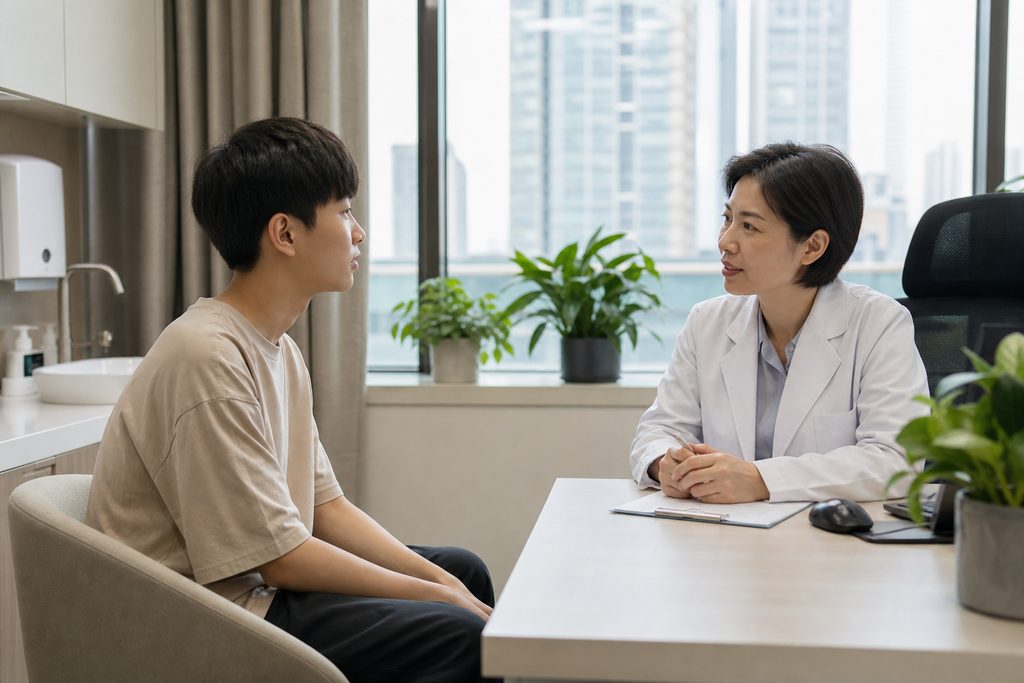
While patients in the United Kingdom often face a wait of 5 years or more for a first NHS gender identity clinic appointment, surgeons at Shanghai Ninth People’s Hospital perform over 200 gender-affirming procedures annually. Two different worlds. One shared need. The transgender surgery cost China offers—often 60% to 70% lower than equivalent private care in the US or Europe—draws serious attention. But cost is only part of the equation. Safety, coordination, and finding a surgeon who truly understands your goals matter more.
Key Takeaways
- Gender-affirming procedures at China’s top public hospitals typically cost 60-70% less than US private-pay rates, with MTF bottom surgery ranging from $8,000 to $15,000.
- Shanghai Ninth People’s Hospital is a nationally designated center for plastic and reconstructive surgery, handling high volumes of complex gender-affirming cases annually.
- Independent navigation of China’s public hospital system is extremely difficult without Mandarin fluency and local knowledge—appointments, payments, and post-operative instructions happen entirely in Chinese.
- A dedicated coordinator bridges the language gap, arranges medical visa documentation, and ensures continuity of care without making unrealistic promises about specific surgeons or dates.
The Problem: Long Waits and Crushing Costs at Home
Access to gender-affirming surgery in Western healthcare systems has reached a breaking point. In Canada, some provincial health systems report wait times exceeding 2 years just for a surgical consultation. In the Netherlands, the Amsterdam UMC gender clinic temporarily stopped accepting new adult referrals in 2023 because the waiting list had grown beyond any clinically reasonable horizon. These are not anecdotes. They are the lived reality for thousands of people.
Private-sector options exist but carry staggering price tags. MTF vaginoplasty in the United States often ranges from $25,000 to $50,000 without insurance. FTM top surgery can run $8,000 to $15,000. For patients paying out of pocket, these numbers push care permanently out of reach. The transgender surgery cost China presents becomes a lifeline—not because it is cheap, but because it is achievable. The same procedures at a top-tier Chinese public hospital fall between $8,000 and $15,000 for MTF bottom surgery, and $3,000 to $6,000 for FTM top surgery. The gap is structural, not a reflection of quality.
Who We Are
We are not a hospital. We do not provide medical treatment, surgical consultations, or clinical advice of any kind. Our team operates as your logistical backbone—handling hospital matching, appointment coordination, bilingual medical companion services, visa documentation support, and local recovery logistics. We connect you with China’s top-tier hospitals and their international patient departments. Our database covers 340+ top-ranked hospitals across 37 cities. We do not promise specific surgeons or guaranteed surgery dates. We do promise honest, transparent coordination and a clear path forward.
Why Gender-Affirming Surgery in China Delivers Results
Clinical Volume and Specialized Centers
Shanghai Ninth People’s Hospital, affiliated with Shanghai Jiao Tong University School of Medicine, runs one of the largest plastic and reconstructive surgery departments in Asia. Its department handles thousands of procedures annually, including a dedicated gender-affirming surgery track. This volume matters. Studies in The Lancet and Plastic and Reconstructive Surgery consistently associate higher surgical volumes with lower complication rates. A surgeon who performs 100 vaginoplasties a year simply sees more anatomical variation, manages more complex revisions, and builds deeper procedural muscle memory than a surgeon who performs 15.
Beijing and Guangzhou also host major centers. Peking Union Medical College Hospital and Nanfang Hospital have developed significant experience in transgender care. The China Medical Services specialty department pages break down which hospitals rank in the top 10 nationally for plastic surgery and urology, the two specialties most relevant to gender-affirming surgery. This is where the concept of finding the best hospital for gender reassignment surgery in Shanghai becomes concrete—you need a center with documented volume, not just a well-known name.
Technology and Surgical Technique
Chinese plastic surgeons have been early adopters of microsurgical techniques that improve both aesthetics and functional outcomes. Perforator flap techniques for phalloplasty, refined peritoneal pull-through methods for vaginoplasty, and advanced nerve coaptation approaches are standard at top centers. These are not experimental procedures. They are the evolved standard of care at hospitals that have invested heavily in surgical microscopy, laser-assisted tissue welding, and post-operative monitoring technology.
The infrastructure supports rapid recovery. Most top-tier public hospitals in China operate dedicated post-anesthesia care units with 1:2 or 1:1 nursing ratios for the first 24 hours. Private recovery suites in the international departments of these hospitals offer privacy and English-speaking nursing coordination—something that matters deeply when you are recovering far from home.
Cost Structure Without Quality Compromise
Why is the transgender surgery cost China so much lower? Labor costs account for roughly 50% of surgical fees. A senior plastic surgeon’s professional fee in China is a fraction of what a US surgeon charges, even though both completed 15-plus years of training. Hospital facility fees are lower because public hospitals operate on thin margins subsidized by the state. Implant and consumable costs—silicone implants, tissue expanders, surgical meshes—are often sourced from the same global manufacturers used in Western operating rooms. The quality of the physical inputs is identical. The difference is the system that delivers them.
This is not to say that Chinese healthcare is uniformly excellent. It is not. The top 5% of hospitals, ranked by the Fudan University hospital rankings and recognized by JCI accreditation, perform at a level comparable to any major Western academic medical center. The rest vary widely. Our entire model rests on connecting you exclusively with that top tier.
What You Need to Know Before Going Alone
We have watched patients try to navigate this system independently. Some succeed. Most hit walls they did not anticipate. The barriers are real and structural, not gatekeeping.
- Visa Requirements Are Specific: Medical treatment in China requires an S2 visa with a clear treatment purpose annotation. This demands an invitation letter from the admitting hospital, a detailed treatment plan, and proof of financial means. Embassies reject generic applications. The hospital must be willing to issue the letter, and you must have a confirmed appointment first. This creates a chicken-and-egg problem for solo travelers.
- Public Hospital Workflows Are Not Western: You cannot email a surgeon’s office and book a consultation. Public hospital outpatient departments operate on a same-day registration system. You arrive at 6:30 AM, queue for a registration ticket, queue again to pay, queue again to see the doctor. All signage, all forms, all verbal instructions are in Mandarin. The doctor may see 80 patients in a morning. Your consultation may last 8 minutes. Without a bilingual medical companion, you will miss critical pre-operative instructions.
- Payment Systems Are Cash-Up-Front: Chinese public hospitals require a deposit before admission and settlement before discharge. International credit cards are not accepted at most public hospital cashier windows. WeChat Pay and Alipay dominate, but linking a foreign card to these platforms often fails due to cross-border verification issues. You need a local payment intermediary or a service that handles the financial workflow on your behalf.
- Post-Operative Coordination Is Fragmented: After discharge, you need follow-up visits, suture removal, dilation supplies, and possibly revision consultations. Hotels near the hospital, transport to appointments, and communication with the surgical team all require Chinese-language capability. Recovery is hard enough without fighting logistics.
How We Help You Navigate This
We do not sell access. We provide case management. That distinction matters. When you ask us how to find a transgender surgery coordinator in China, the answer is that we function as exactly that—a bilingual bridge between you and the hospital’s official international patient channel.
Our process starts with understanding your surgical goals, timeline, and budget. We then match you with hospitals from our database of 340+ institutions that have documented experience in gender-affirming procedures. We present options, not a single recommendation. You choose. We then coordinate through the hospital’s official international department to secure a consultation appointment. This is not a backdoor. It is the hospital’s own VIP and international patient pathway, which exists precisely for patients who cannot navigate the standard outpatient system.
Once an appointment is confirmed, we handle the visa invitation letter, arrange airport transfer, and provide a bilingual medical companion for every hospital visit. That companion translates during consultations, handles registration and payment queues, and ensures you understand every pre-operative and post-operative instruction. After surgery, we coordinate follow-up appointments, manage discharge paperwork, and can arrange extended recovery accommodation. If you initially book a remote video consultation, the coordination fee credits in full toward on-the-ground service within 90 days.
We also help patients who are specifically researching gender affirming surgery packages in China. Some hospitals offer bundled pricing that includes the surgeon’s fee, anesthesia, hospital stay, and basic post-operative supplies. We clarify what is included, what is not, and what additional costs to expect—so there are no surprises after you arrive.
Is Gender Affirming Surgery Safe in China?
This question deserves a direct answer. At the hospitals we work with—those ranked in the Fudan Top 100 or holding JCI accreditation—surgical safety standards are rigorous. Operating room protocols, sterilization procedures, and anesthesia monitoring meet international benchmarks. Complication rates for gender-affirming procedures at these centers are comparable to outcomes reported in major Western registries.
But safety is not just about the operating room. It is about the entire care chain. A safe outcome requires clear communication about your medical history, allergies, and current medications. It requires understanding wound care instructions and recognizing early signs of complications. This is where coordination becomes a safety factor, not just a convenience. Our bilingual companions ensure that nothing is lost in translation between you and your surgical team.
Privacy is another dimension of safety. China’s legal framework around medical privacy has strengthened significantly, and international patient departments are accustomed to handling sensitive cases with discretion. We work with hospitals that have experience protecting transgender patients’ confidentiality throughout the admission and recovery process.
Frequently Asked Questions
You can receive a detailed cost estimate, but not a guaranteed final price. The book mtf bottom surgery China price searches you see online typically reflect base surgical fees. Your actual cost depends on the specific technique used, the length of hospital stay, and whether any additional procedures are performed concurrently. We help you obtain a written estimate from the hospital’s international department that breaks down surgeon fees, anesthesia, implant costs, and estimated hospital days. Most patients find the final bill falls within 10-15% of the estimate. We also clarify that hospital treatment charges are paid directly to the hospital, never to us.
This is the hardest scenario, and we address it directly during coordination. Before you leave China, we ensure you have translated surgical records, a discharge summary in English, and direct contact information for the surgical team’s international liaison. Many surgeons offer post-operative video follow-ups. If a revision is needed, the original surgical team can advise whether it requires a return to China or can be managed locally. We do not abandon patients at discharge. But we also cannot guarantee that every complication can be resolved remotely—this is a risk inherent to any surgical tourism, and you should weigh it carefully.
Plan for a minimum of 4 weeks. The typical timeline: initial consultation and pre-operative testing (2-3 days), surgery and inpatient recovery (7-10 days), and local follow-up with suture removal and initial dilation training (2-3 weeks after discharge). Some patients stay 6 weeks to complete a more comfortable early recovery before flying. Your surgeon will give a specific recommendation, but do not book a return flight 10 days after surgery. That is not realistic, and no responsible coordinator will support that timeline.
Yes. The major centers follow WPATH Standards of Care and require at least one, and often two, referral letters from qualified mental health professionals. These letters must document persistent gender dysphoria, capacity to consent, and adequate mental health support. Some hospitals accept letters from your home-country providers. Others require an evaluation by a Chinese psychiatrist affiliated with the hospital. We clarify this requirement for your specific hospital choice early in the coordination process so you are not caught off guard.
We cannot promise a friction-free experience. Chinese social attitudes toward transgender people are evolving but not uniformly accepting. What we can say is that the international patient departments and the surgical teams we work with have chosen to provide this care. They treat transgender patients regularly. The clinical environment is professional. Outside the hospital, in hotels and public spaces, discretion is advisable. Our companions help navigate any uncomfortable situations, but we are honest that cultural differences exist. This is part of the trade-off you must weigh against cost and access.
Your Next Step
Accessing gender-affirming surgery should not require years of waiting or a lifetime of debt. The option exists in China—at high-volume, accredited centers with surgical outcomes that stand up to international scrutiny. The barrier is not the quality of care. It is the logistical wall between you and the operating room. That wall is what we dismantle, one step at a time, with honest coordination and no false promises.
If you are ready to explore your options, start with a free consultation. We will discuss your goals, answer your hardest questions, and map out what a realistic pathway looks like. No pressure. No sales script. Just a clear-eyed conversation about what is possible. Begin your free consultation here.
For more medical information and treatment options in China, visit chinamedservices.com (China Medical Services).
