Tui Na Massage Therapy in China: Full Service Coordination
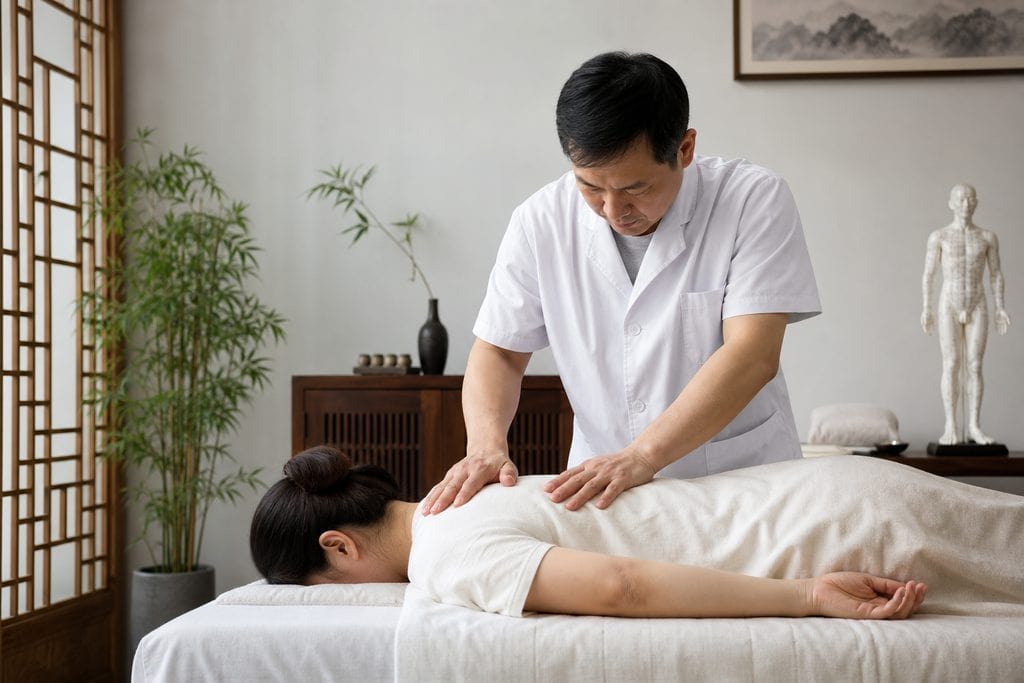
When 54-year-old Daniel from Manchester booked his flight to Beijing, he had already spent three years cycling through physiotherapy, corticosteroid injections, and two orthopedic consultations for chronic lower back pain. Nothing held. His last MRI showed a mild disc bulge at L4-L5, but the surgeon told him surgery was not indicated. The pain persisted. A colleague who had worked in Shanghai mentioned tui na — not as a spa treatment, but as a structured, hospital-based manual therapy. Daniel’s first question was practical: what does tui na massage cost China compared to what he was already paying for private physio at £65 per session? The answer surprised him. A full 30-minute therapeutic tui na session at a top-tier Chinese hospital typically runs between $25 and $60. That is less than a single physiotherapy co-pay in the UK or the US. And the coordination piece — booking, translation, understanding what you are actually getting — is where most international patients need real help.
Key Takeaways
- Tui na is a structured medical therapy in China, practiced in hospital rehabilitation and TCM departments — not a relaxation massage. It is regulated under China’s Traditional Chinese Medicine Law of 2017.
- Hospital-based tui na sessions cost roughly $25–$60 per 30-minute treatment. A typical course is 5–10 sessions, meaning most international patients spend $150–$600 for a full treatment series.
- China’s top TCM hospitals, including institutions in Beijing and Shanghai, treat thousands of musculoskeletal cases annually with tui na as a first-line conservative therapy for back pain, cervical spondylosis, and joint disorders.
- Language barriers are real. Most public hospital tui na departments do not have English-speaking front desks. Without coordination, booking a session and understanding your treatment plan can take days of trial and error.
- Tui na is generally safe for mechanical back pain, but it is not appropriate for fractures, acute disc herniation with neurological deficits, tumors, or infectious conditions. A proper evaluation should precede treatment.
The Problem: Chronic Pain Costs More Than Money
Low back pain affects approximately 619 million people globally, according to the Global Burden of Disease Study 2020 published in The Lancet. It is the single leading cause of years lived with disability worldwide. In the United States alone, the total cost of low back pain — including direct medical spending and lost productivity — exceeds $100 billion annually. For many patients, the standard care pathway looks like this: primary care visit, imaging, physical therapy, pain medication, possibly injections. Then repeat. The American College of Physicians now recommends non-pharmacologic therapies, including manual therapy, as first-line treatment for chronic low back pain before considering medication. But access to high-quality manual therapy in Western systems is expensive and fragmented.
In the UK, NHS wait times for musculoskeletal physiotherapy can stretch to 18 weeks or more in some trusts. Private physiotherapy costs £50–£90 per session in London. In the US, a single physical therapy session without insurance runs $100–$200. A full course of 10 sessions becomes a significant financial decision. And here is the uncomfortable truth: many patients complete those courses without lasting relief. They are left asking whether there is another approach — one that treats the body as an integrated system rather than a collection of isolated joints.
That search leads some to China, where tui na has been practiced as a formal medical discipline for over 2,000 years. Not as an alternative therapy. As a core component of hospital-based rehabilitation and pain management.
Why Tui Na in China Delivers Different Results
Clinical Volume Creates Practitioner Expertise
A senior tui na physician at a large Chinese TCM hospital treats 30–50 patients per day. That is not an exaggeration. Departments like the Tuina Department at Shanghai‘s Yueyang Hospital of Integrated Traditional Chinese and Western Medicine — one of China’s most respected tui na centers — process hundreds of outpatient visits daily. A typical Western manual therapist might see 8–12 patients per day. The volume difference is structural, not incidental. Chinese hospital tui na departments operate like high-throughput clinical units, with treatment rooms, assessment protocols, and integrated imaging services under one roof. A practitioner with 15 years of experience in such a department has performed tens of thousands of treatment sessions. That repetition shapes diagnostic touch in ways that no weekend course can replicate.
Integration With Hospital Diagnostics
Here is what most international patients do not realize: in China, tui na is not a standalone service. It sits inside hospitals that also house MRI, CT, ultrasound, and orthopedic surgery departments. A patient presenting with back pain at a hospital like Guang’anmen Hospital in Beijing can receive imaging, a neurological assessment, and a tui na treatment plan in the same building — often within the same day. That integration matters. In Western settings, a massage therapist cannot order an MRI. In a Chinese hospital, the tui na physician works alongside radiologists and orthopedists. If your back pain has a structural cause that requires different intervention, the system catches it. That is a safety net most standalone manual therapy clinics simply do not have.
Cost Structure Without the Western Premium
Let us address the elephant in the room directly. Lower cost does not mean lower quality. The structural reasons tui na costs less in China are straightforward: lower labor costs for hospital staff, high patient volume that spreads fixed costs, and a healthcare system where hospital departments are not profit centers in the same way Western private clinics are. A 30-minute hospital tui na session in Beijing or Shanghai costs $25–$60. A comparable manual therapy session with a licensed therapist in the US costs $100–$200. The gap is not about skill. It is about economics. And for international patients, that gap means a full 10-session treatment course in China can cost less than two sessions back home.
What Conditions Does Tui Na Treat: A Practical Guide
The question what conditions does tui na treat deserves a precise answer, not a vague list of “pain and stress.” Tui na is used in Chinese hospitals for a defined set of musculoskeletal and neurological conditions. The most common applications include cervical spondylosis (chronic neck pain with stiffness), lumbar disc herniation without progressive neurological deficit, frozen shoulder, tennis elbow, knee osteoarthritis, tension headaches, and certain cases of sciatica. Some TCM hospitals also use tui na for pediatric conditions like torticollis and digestive complaints, though international patients typically seek it for adult musculoskeletal issues.
But here is the line that matters: tui na is not appropriate for everything. Acute fractures, spinal instability, active infections, tumors, and progressive neurological symptoms like foot drop or loss of bladder control require conventional medical or surgical intervention — not manual therapy. A responsible tui na physician will screen for these red flags before treatment. That screening is exactly why hospital-based tui na differs from a walk-in massage parlor. The evaluation comes first.
What Tui Na Massage Cost China Actually Means for International Patients
Let us break down the numbers with real figures, because “it is cheaper” is not enough. You need to know what you are actually paying for. The table below compares typical costs for a single manual therapy session and a full 10-session course across three settings: a Chinese public hospital tui na department, a Chinese private international clinic, and a Western private physical therapy clinic.
| Setting | Single Session (30 min) | 10-Session Course | Notes |
|---|---|---|---|
| Chinese Public Hospital Tui Na Department | $25–$60 | $250–$600 | Highest clinical volume; limited English support; imaging available on-site |
| Chinese Private International Clinic | $80–$150 | $800–$1,500 | English-speaking staff; more personalized scheduling; often insurance-direct billing |
| US/UK Private Physical Therapy or Manual Therapy | $100–$200 | $1,000–$2,000 | Familiar system; typically no hospital integration; insurance may cover partially |
Prices vary by hospital and case complexity. A senior specialist at a top-ranked TCM hospital may charge at the higher end of the public hospital range. A private international clinic in Beijing or Shanghai will charge more for the English-language service and scheduling convenience. But even the private clinic rate undercuts Western private therapy costs by 30–50%. For patients considering a longer treatment course — which is how tui na is typically prescribed — the savings compound quickly.
Now, about tui na massage price Shanghai specifically. Shanghai is home to some of China’s strongest TCM hospitals, including Yueyang Hospital and Longhua Hospital, both affiliated with Shanghai University of Traditional Chinese Medicine. Public hospital tui na sessions at these institutions generally run $30–$60. The city also has a dense network of private TCM clinics where prices range from $60–$120 per session. The trade-off is the same as anywhere: public hospitals give you clinical depth and volume; private clinics give you language support and scheduling flexibility.
Best Tui Na Massage Clinic Beijing: How to Evaluate Your Options
If you search for the best tui na massage clinic Beijing, you will find dozens of results. Many are spa-style massage centers that happen to use the term “tui na” loosely. That distinction matters enormously. A tui na treatment at a spa is not the same as a medical tui na session at a hospital. The former is relaxation-focused and performed by therapists with variable training. The latter is therapeutic, performed by physicians or licensed medical practitioners with formal TCM education, and preceded by a clinical assessment.
So how do you evaluate options in Beijing? Three criteria. First, check the institution. Hospitals like Guang’anmen Hospital, Dongzhimen Hospital (affiliated with Beijing University of Chinese Medicine), and Wangjing Hospital have dedicated tui na departments with strong reputations. These are not clinics; they are full hospitals with imaging, labs, and integrated care. Second, check the practitioner’s credentials. In China, tui na practitioners in hospitals are typically graduates of five-year TCM university programs with additional clinical training. Ask about their education and years of practice. Third, check whether the facility can provide an English-language intake and treatment explanation. Most public hospitals cannot. That is where coordination becomes essential.
Is Tui Na Massage Safe for Back Pain: What the Evidence Shows
The question is tui na massage safe for back pain is the right question to ask. The honest answer: yes, for mechanical low back pain without red flags, tui na has a favorable safety profile. A 2021 systematic review published in BMJ Open examined randomized controlled trials of tui na for chronic low back pain and found that adverse events were generally mild and transient — temporary soreness, mild bruising, or brief fatigue. No serious adverse events were reported across the included studies. That aligns with the broader manual therapy literature: serious complications are rare when treatment is delivered by trained practitioners who screen patients properly.
But safety is not automatic. It depends on the screening. A 40-year-old with mechanical back pain and no neurological symptoms is a very different patient from a 70-year-old with osteoporosis, a history of spinal fractures, and leg weakness. The first can safely receive tui na. The second should not — or at least not without a thorough medical evaluation and possibly modified techniques. This is why hospital-based tui na matters. The practitioner has access to your imaging and can consult with orthopedic colleagues if something looks wrong. A standalone massage clinic cannot do that.
There is also the question of technique intensity. Tui na is not a single technique. It encompasses a range of manipulations, from gentle rolling and kneading (gun fa and rou fa) to more forceful spinal adjustments (ban fa). A skilled practitioner tailors the technique to the patient’s condition, age, and tolerance. If you have osteoporosis, bleeding disorders, or are taking anticoagulants, you must disclose this before treatment. Those conditions change the risk calculus significantly.
Book Tui Na Therapy Package China: What Full Service Coordination Actually Involves
If you want to book tui na therapy package China as an international patient, here is what the process looks like in practice. It is not like booking a massage online. Public hospital tui na departments in China generally do not accept overseas online bookings directly. You cannot simply reserve a slot from London or New York. The standard pathway is: register at the hospital, create a medical card, see a physician for an initial assessment, then receive a treatment plan and schedule sessions. For someone who does not speak Mandarin, that first visit alone can take hours of navigating queues, forms, and payment systems.
There are two realistic approaches. The first is the do-it-yourself route: arrive in China, go to the hospital, and work through the process with translation apps and patience. It is possible. Many determined travelers have done it. But expect a full day for the initial assessment and registration, and be prepared for communication gaps during treatment planning. The second is using a coordination service that handles registration, arranges an English-speaking companion for the hospital visit, and communicates your medical history to the treating physician in advance. That service costs from $300 per day for bilingual medical companionship, with hospital appointment coordination starting at $300.
What does a typical treatment package look like? Most hospital tui na physicians recommend 5–10 sessions, scheduled 2–3 times per week. A 10-session course over three weeks is common for chronic conditions. Some hospitals offer package pricing, but many bill per session. Your total treatment cost — excluding flights and accommodation — typically lands between $250 and $600 at a public hospital. Add coordination services and you are looking at roughly $1,000–$1,500 all-in for a three-week treatment visit. Compare that to three weeks of private manual therapy and physiotherapy in the US, which could easily reach $3,000–$5,000 without insurance.
Practical tip: If you are considering tui na for a chronic condition, bring your existing imaging — MRI, X-ray, or CT reports — on a USB drive or in printed form. Chinese hospital physicians can read international imaging formats, and having your prior studies saves time and avoids duplicate imaging costs.
Practical Considerations: Visa, Payment, and Follow-Up for Tui Na Treatment in China
Let us talk logistics, because the treatment itself is only half the picture. If you are traveling to China specifically for medical treatment, the applicable visa category is the S2 visa, which covers short-term private affairs including medical treatment. The S2 visa is issued for stays of up to 180 days. For treatment courses longer than 180 days, the S1 visa applies. To apply, you will need an invitation letter or supporting documentation from the treating hospital, along with your passport and application forms. Requirements vary by embassy and consulate, so check with the Chinese diplomatic mission in your country before booking flights. A family member accompanying you would also apply for an S2 visa.
Payment is the next hurdle. Chinese public hospitals generally require prepayment for outpatient services. You will load money onto a hospital medical card and pay per session. International credit cards are not universally accepted at public hospital cashiers. Bring a UnionPay card if you have one, or be prepared to withdraw cash from ATMs. Private international clinics in Beijing and Shanghai, by contrast, typically accept major international credit cards and often bill insurance directly. If you have international health insurance, check whether it covers treatment in China and whether the specific hospital or clinic is in-network. Most public hospital tui na departments are not in-network with Western insurers, which means you pay out of pocket and seek reimbursement later. Keep every receipt.
Language is the third consideration. Public hospital tui na departments operate almost entirely in Mandarin. Signage, forms, physician instructions, and treatment explanations will be in Chinese. If you do not have Mandarin proficiency, you will need either a bilingual companion or a translation app — and the app will not help you understand nuanced clinical questions about your medical history. This is not a reason to avoid treatment. It is a reason to plan for it.
Finally, think about follow-up after you return home. Tui na is not a one-time fix. For chronic conditions, the benefits of a 10-session course typically last weeks to months, after which maintenance may be needed. Before you leave China, ask your tui na physician for a written summary of your treatment, including techniques used, areas treated, and recommendations for ongoing care. That document helps your home physiotherapist or physician understand what you received and integrate it into your ongoing management. Some patients also arrange periodic video consultations with their Chinese physician after returning home, which typically cost $100–$300 per session.
Frequently Asked Questions
No. Tui na is a formal medical discipline within Traditional Chinese Medicine, practiced in Chinese hospitals by physicians with five-year university degrees and clinical training. A regular massage is a relaxation service. Tui na involves assessment, diagnosis, and therapeutic manipulation targeted at specific musculoskeletal or neurological conditions. The training, setting, and purpose are fundamentally different.
How many tui na sessions will I need for chronic back pain?
Most hospital-based tui na physicians in China recommend 5–10
For more medical information and treatment options in China, visit chinamedservices.com (China Medical Services).
