Varicocele Surgery for Fertility: Does Repair Actually Improve Sperm Count?
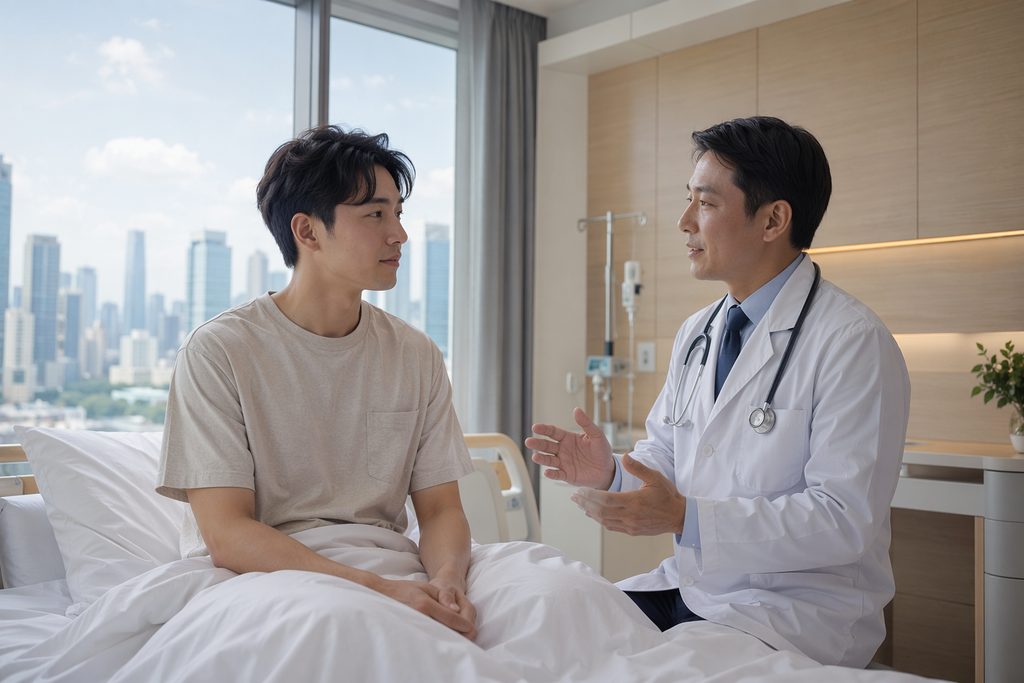
When 34-year-old Daniel and his wife sat in a Toronto fertility clinic, the urologist delivered two pieces of news. First, Daniel’s semen analysis showed below-average motility. Second, a physical exam and scrotal ultrasound revealed a left-sided varicocele — enlarged veins in the scrotum, present in roughly 15% of all men but found in up to 40% of men evaluated for infertility. The doctor offered surgery, but the wait time stretched to nine months. Daniel started searching for alternatives. His question was simple: should I fix this, and if so, where?
That question drives thousands of searches every month. And for a growing number of men, the answer leads them to compare options across borders — including varicocele surgery cost China, where top-tier urology departments perform the procedure at a fraction of Western prices. This article walks through the evidence, the surgical options, the recovery timeline, and what international patients should know before booking anything.
Key Takeaways
- Varicocele repair improves semen parameters in 60–70% of infertile men with a palpable varicocele and abnormal semen analysis, according to the American Urological Association.
- Microsurgical subinguinal varicocelectomy has the lowest recurrence rate (under 2%) and the fewest complications compared to laparoscopic or embolization approaches.
- Varicocele surgery cost China typically ranges from $2,500 to $5,500 at top public hospitals, versus $8,000–$15,000 in the US — a 60–70% savings.
- Surgery is not for everyone. Men with a subclinical varicocele, normal semen parameters, or no desire for fertility should think carefully before proceeding.
The Problem: A Silent Contributor to Male Infertility
Varicoceles affect approximately 15% of the general male population. That jumps to 35–40% among men presenting with primary infertility, and up to 80% among men with secondary infertility — those who previously fathered a child but now struggle. The mechanism is still debated, but the leading theory points to elevated scrotal temperature caused by pooled venous blood, which impairs spermatogenesis and damages sperm DNA integrity.
Many men never notice symptoms. Some report a dull ache that worsens after standing or physical exertion. Others only discover the condition during a fertility workup, like Daniel. The diagnostic standard is a physical exam with Valsalva maneuver, confirmed by color Doppler ultrasound showing vein diameter over 3 mm and reflux.
But here’s what complicates the decision. Not every varicocele harms fertility. A 2021 Cochrane review analyzed 48 randomized controlled trials involving over 5,000 men and concluded that varicocele treatment may improve pregnancy rates, but the evidence quality remains moderate. The benefit appears strongest in men with a clinically palpable varicocele, documented infertility, and at least one abnormal semen parameter. For men with a subclinical varicocele found only on ultrasound — no palpable abnormality — surgery offers little proven benefit.
So the real question is not “should I fix my varicocele?” It’s “does MY varicocele meet the criteria where repair has a reasonable chance of helping?” That distinction matters enormously.
Why Varicocele Surgery Cost China Has Become a Serious Option
China’s urology departments handle enormous surgical volumes. Fudan University‘s hospital ranking system places several Chinese urology programs among the country’s elite specialties, and the sheer case numbers are striking. A senior urologist at a major Chinese teaching hospital may perform 300–500 microsurgical varicocelectomies annually. Compare that to a typical Western urologist, who might complete 30–50 per year. Volume builds technical proficiency — and in microsurgery, technical proficiency directly affects recurrence and complication rates.
Clinical Volume and Surgical Precision
Microsurgical varicocelectomy uses an operating microscope to identify and ligate dilated spermatic veins while sparing the testicular artery and lymphatics. The difference between a good outcome and a hydrocele or recurrence often comes down to how many of these procedures the surgeon has done. Chinese teaching hospitals affiliated with major universities — the same institutions listed in our top-ranked hospitals directory — run urology departments that operate six days a week. That repetition matters.
Cost Structure Without Quality Compromise
The price gap is structural, not a reflection of quality. Chinese public hospitals benefit from lower labor costs, streamlined procurement, and enormous patient volumes that spread fixed costs across thousands of procedures. A microsurgical varicocelectomy at a top-tier Chinese public hospital typically runs $2,500–$5,500, including surgeon fees, anesthesia, operating room time, and a short hospital stay. The same procedure in the United States averages $8,000–$15,000, and can exceed $20,000 at academic centers. That is why searches for varicocele surgery cost China have grown steadily — men are doing the math.
Is Varicocele Surgery Safe in China?
Safety depends on hospital selection, not nationality. China’s top 100 hospitals, ranked by Fudan University’s hospital management institute, meet rigorous clinical standards. Many also hold JCI accreditation. The key is choosing a hospital from that tier — not an unaccredited private clinic. For international patients, the public hospital international medical departments or JCI-accredited private hospitals offer English-speaking coordination and Western-style administrative processes. The question “is varicocele surgery safe in China” deserves a nuanced answer: at accredited, high-volume centers, complication rates mirror international benchmarks. At unvetted facilities, risk rises. Hospital selection is everything.
How the Decision Actually Works: Criteria That Matter
You cannot shortcut this decision with a quick Google search. The American Society for Reproductive Medicine and the European Association of Urology both publish clear guidelines, and they align on three criteria that justify surgical repair:
- Palpable varicocele on physical exam — grade 2 or 3, confirmed by ultrasound
- Documented infertility — typically 12 months of unprotected intercourse without conception
- Abnormal semen analysis — low sperm concentration, reduced motility, or abnormal morphology
If all three boxes are checked, surgery offers a real chance of improvement. A 2022 meta-analysis in the Asian Journal of Andrology pooled data from 35 studies and found that varicocelectomy improved sperm concentration by an average of 12.3 million per mL and motility by 11.7 percentage points. Pregnancy rates improved from roughly 20% without treatment to 35–40% after repair in couples with no other identified fertility factors.
But here’s the hard truth. Surgery helps about two-thirds of properly selected men. That means one-third see no meaningful improvement. No surgeon can guarantee a pregnancy. Anyone who promises otherwise is selling something, not practicing medicine.
Surgical Options Compared: Microsurgery, Laparoscopy, and Embolization
Three main approaches exist, and they are not interchangeable. The table below summarizes the key differences.
| Approach | Recurrence Rate | Complication Rate | Typical Cost (China) | Recovery Time |
|---|---|---|---|---|
| Microsurgical subinguinal | 1–2% | Lowest (hydrocele under 1%) | $2,500–$5,500 | 3–7 days to normal activity |
| Laparoscopic | 5–10% | Higher (bowel and vascular risk) | $3,000–$6,000 | 5–10 days |
| Percutaneous embolization | 10–15% | Low, but radiation exposure | $2,000–$4,500 | 2–3 days |
The microsurgical approach dominates in China’s top urology departments, and for good reason. The operating microscope allows the surgeon to preserve the testicular artery — critical for maintaining blood supply — while ligating all spermatic veins. The subinguinal incision avoids opening the abdominal wall, reducing pain and recovery time. Patients searching for best hospital for varicocele repair China should prioritize centers where microsurgery is the default, not an exception.
Varicocele embolization price abroad often looks attractive at first glance — typically $2,000–$4,500 in China and $3,000–$7,000 in Western Europe. But the recurrence rate of 10–15% means roughly one in eight men needs a second procedure. When you factor in the cost and hassle of re-treatment, embolization’s initial savings often evaporate. That said, embolization avoids an incision entirely and may suit men who cannot take time off for surgical recovery.
Recovery Timeline: What to Expect Week by Week
How long to recover from varicocele surgery depends on the approach, but most men follow a predictable arc. Here is what a typical microsurgical recovery looks like:
Days 1–3: Scrotal swelling and mild discomfort are normal. Ice packs and over-the-counter pain relief usually suffice. Prescription opioids are rarely needed. Most men rest at home.
Days 4–7: Swelling subsides. Walking is comfortable. Many men return to desk work within a week. Strenuous activity remains off-limits.
Weeks 2–4: Light exercise resumes. The incision heals. Some men still feel a firm knot under the skin where veins were tied — this is normal and fades over months.
Month 3: The first follow-up semen analysis. Sperm production takes roughly 74 days, so meaningful changes only show up now. Some men see improvement at 3 months; others need 6.
Month 6: Second semen analysis. Most studies measure outcomes at 6 months. If parameters have not improved by now, the surgery likely will not help.
One caveat for international patients: if you fly home a week after surgery, you need a plan for follow-up. Semen analysis can be done at any accredited lab. A telehealth consult with your original surgeon can review results remotely. Our team has seen this work smoothly, but it requires coordination before you leave.
Practical Considerations for International Patients
If you are considering book varicocele treatment medical tourism China, several logistics deserve attention before you commit.
Visa: Foreign nationals traveling to China for medical treatment typically apply for an S2 visa, which covers short-term private affairs including medical care. You will need a supporting letter from the hospital confirming your appointment. Family members accompanying you also apply for S2 visas. The M visa is for commercial and trade activities — it is not appropriate for medical travel. Processing times vary by embassy, so start early.
Medical records: Bring your complete file — semen analysis results, scrotal ultrasound images and reports, any prior treatment records, and a referral letter from your urologist if available. Chinese hospitals will want to conduct their own confirmatory ultrasound, but your history guides the consultation.
Payment: Chinese public hospitals require prepayment for surgical procedures. International medical departments accept major credit cards and sometimes bank transfers. Private international hospitals may offer direct insurance billing. Check with your insurer before traveling — most Western insurers reimburse out-of-network care, but pre-authorization is wise.
Language: Top-tier Chinese hospitals employ English-speaking staff in their international departments, but the moment you leave that bubble, signage and communication shift to Mandarin. A bilingual medical companion — available from $300 per day through our coordination service — handles registration, payment, navigation, and interpretation. This is not a luxury; it is the difference between a smooth visit and a stressful one.
Frequently Asked Questions
For properly selected men — palpable varicocele, abnormal semen analysis, documented infertility — yes. Studies show 60–70% see improved semen parameters, and pregnancy rates rise from roughly 20% to 35–40%. For men with a subclinical varicocele or normal semen parameters, the evidence is weak. Selection is everything.
Microsurgical varicocelectomy at a top Chinese public hospital typically costs $2,500–$5,500 all-inclusive. The same procedure in the US averages $8,000–$15,000. That is a 60–70% savings, even after factoring in flights and accommodation. Prices vary by hospital tier and case complexity.
About one-third of men see no improvement. If semen parameters remain abnormal six months after surgery, assisted reproductive technologies such as IVF or ICSI become the next step. Having the surgery does not preclude these options — and some evidence suggests repair may improve IVF outcomes even when natural conception does not occur.
Most men can fly within 5–7 days after microsurgical varicocelectomy. Long-haul flights increase the risk of blood clots, so wear compression stockings, stay hydrated, and walk the cabin periodically. Your surgeon should clear you for travel before discharge. Arrange a telehealth follow-up before you leave.
Public hospitals generally require an in-person consultation before scheduling surgery. However, international medical departments and VIP channels can often arrange a consultation and surgery within the same trip. A written second opinion — typically $300–$500 — lets a Chinese specialist review your records and confirm you are a suitable candidate before you commit to travel. Any consultation fee is credited in full toward on-the-ground coordination if you proceed within 90 days.
Your Next Step
Varicocele repair is one of the few male infertility treatments where surgery offers a genuine chance of natural conception. But only when the criteria are met and the surgeon is skilled. If you are weighing your options, start by confirming your diagnosis and semen parameters with a local urologist. Then, if you want to explore treatment in China, our team at China Medical Services can connect you with accredited, high-volume urology departments and handle the logistics — from hospital selection to visa guidance to bilingual accompaniment. We are not a hospital and we do not provide medical advice. We help you navigate the system so you can make an informed decision. Request a free consultation when you are ready to take the next step.
The decision to fix a varicocele is deeply personal. The evidence supports surgery for the right candidate. The question is whether you are that candidate — and whether you choose a surgeon who does this procedure often enough to do it well. Get the facts first. Then decide.
For more medical information and treatment options in China, visit chinamedservices.com (China Medical Services).
