Verify the Address Matches the Hospital Name: Avoid Fake Listings in China
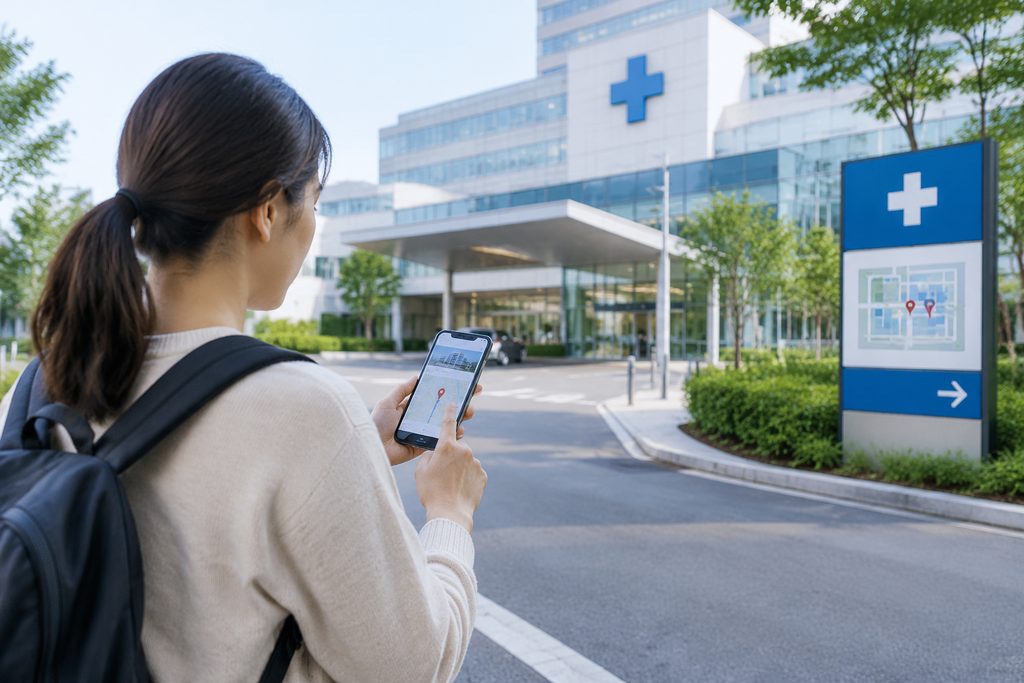
Verify the Address Matches the Hospital Name: How to Find the Best Hospital for Heart Surgery in China Without Falling for Fake Listings
According to China’s National Health Commission, the country hosts more than 35,000 hospitals. Only about 1,000 of those are rated as top-tier Grade A tertiary facilities. When you are searching for the best hospital for heart surgery in China, the gap between a genuine Fuwai Hospital address and a fake listing can be the difference between a successful procedure and a ruined trip. Our team has spent years mapping verified hospital locations across 37 cities. We have seen the scams. We have also seen the legitimate confusion that comes from Chinese hospital naming conventions.
Here is the core problem. Hospital names in China often repeat across cities. “Zhongshan Hospital” exists in Shanghai, Guangzhou, and Xiamen. “Renji Hospital” has multiple campuses. A patient searching for “what is the actual address of Shanghai Renji Hospital” might find three different addresses on three different websites. Two might be outdated. One might be a broker’s office, not a hospital. This article will show you how to verify any address against official Chinese hospital records, how to spot red flags, and how to evaluate whether a hospital is genuinely among the best for cardiac surgery.
Key Takeaways
- China has 35,000+ hospitals; only the top 5% appear in the Fudan rankings or hold JCI accreditation.
- Fake or outdated hospital addresses are common on third-party booking sites and social media.
- Official verification requires cross-checking the hospital’s Chinese name, address, and license number on government databases.
- Never wire money to an overseas account before physically confirming the hospital’s location through official channels.
The Problem: Fake Addresses and Outdated Listings Are Everywhere
A 2023 report from the China Consumers Association found that complaints about medical tourism intermediaries rose 47% year over year. Many involved patients who arrived at an address that was not a hospital at all. Some found a clinic that shared a similar English name. Others found a building that had been demolished five years earlier. The financial damage is real. One patient from the UK reported losing £8,000 in “deposit fees” to a broker who used the address of a well-known hospital in Beijing. The broker had no relationship with the hospital.
This problem hits cardiac patients especially hard. Heart surgery is expensive, time-sensitive, and emotionally charged. A patient who needs a coronary artery bypass graft cannot afford to spend a week untangling a fake address. The urgency makes them vulnerable. Brokers know this. They exploit the fact that Western patients rarely read Chinese and cannot easily verify what they are being told. The result is a market where false listings flourish and patients pay the price.
But the deeper issue is not just fraud. It is the structural reality of Chinese hospital naming. A single hospital may operate four or five campuses across a city. The official English name may differ from the name on Google Maps. The address on an old brochure may refer to a campus that has since moved. Even legitimate hospitals can appear “fake” when their information is outdated. That is why address verification is not just about avoiding scams. It is about building a reliable foundation for one of the most important decisions you will ever make.
Why the Best Hospital for Heart Surgery in China Deserves a Verified Address
Cardiac surgery in China is not a niche service. It is a high-volume, high-outcome sector. The numbers tell the story. Fuwai Hospital in Beijing performs more than 14,000 cardiac surgeries annually. That is more than any other hospital in the world. Zhongshan Hospital affiliated with Fudan University in Shanghai is another heavyweight. Both appear consistently in the Fudan University Hospital Rankings for cardiac surgery, a list that evaluates hospitals across 45 specialties.
Clinical Volume Drives Better Outcomes
Volume matters in cardiac surgery. A surgeon who performs 300 bypass procedures a year has better outcomes than one who performs 30. That is not opinion. A 2021 study in The Annals of Thoracic Surgery found that hospitals performing more than 200 coronary artery bypass grafts annually had significantly lower mortality rates than lower-volume centers. Chinese top-tier cardiac hospitals routinely exceed that threshold by a wide margin. Fuwai’s 14,000 annual surgeries include thousands of complex procedures. The repetition builds expertise that is hard to match anywhere else.
Technology and Efficiency at Scale
Chinese cardiac centers have invested heavily in minimally invasive techniques. Robotic-assisted mitral valve repair, transcatheter aortic valve replacement, and hybrid coronary revascularization are performed daily at major centers. The operational workflow is also different from Western hospitals. A patient can often complete preoperative testing, imaging, and specialist consultations in two to three days. That speed is a function of scale. These hospitals see thousands of patients daily. Their systems are built for throughput.
Cost Advantage Without Quality Compromise
Let us address the obvious question. Why is the best hospital for heart surgery in China so much cheaper than a US hospital? A coronary artery bypass graft at a top Chinese public hospital costs $12,000 to $20,000. The same procedure in the United States costs $120,000 or more. The cost difference is not because Chinese surgeons are less skilled. It is because Chinese hospitals operate with lower labor costs, lower administrative overhead, and higher patient volumes. The clinical outcomes are comparable. Multiple international studies have shown that Chinese cardiac surgery centers achieve outcomes on par with Western benchmarks for common procedures.
How to Verify Hospital Address in Shanghai, Beijing, and Any Other Chinese City
Let us get practical. You have found a hospital name. You have an address. How do you verify that the address matches the hospital name? This section gives you the exact steps. No shortcuts. No vague advice.
Start with the hospital’s official website. Every top-tier Chinese hospital has a website with an English version. The official address is always listed in the footer or on the “Contact Us” page. Copy that address exactly. Now go to the National Health Commission of China’s official hospital query platform. You will need the hospital’s Chinese name. If you do not have it, search the English name on Baidu or Bing and find the Chinese characters. Enter the Chinese name into the official database. The database will show the hospital’s registered address, license number, and level. Compare that address to the one you were given.
But here is the catch. Many international patients cannot read Chinese and cannot navigate the official database. That is a real barrier. Some patients use Google Maps. Google Maps has decent coverage of Chinese cities, but its hospital data is often incomplete or outdated. Baidu Maps is more reliable for Chinese addresses. If you can use Baidu Maps, search the hospital’s Chinese name and compare the result to the address you were given.
Is Beijing United Family Hospital address real? Yes, and this is a good case study. Beijing United Family Hospital is a well-known private international hospital. Its main campus is at 2 Jiangtai Road, Chaoyang District, Beijing. That address appears on its official website, on the JCI accreditation directory, and on the Beijing Municipal Health Commission’s list of licensed medical institutions. If you see a different address for “Beijing United Family Hospital” on a third-party site, treat it with suspicion. The official address is consistent across all authoritative sources. That is the standard you should apply to any hospital.
Medical Tourism Packages China Verified Hospitals: What to Check Before You Pay
Many international patients are drawn to medical tourism packages China verified hospitals offer. These packages often bundle treatment, accommodation, airport transfers, and interpretation. Some are legitimate. Others are not. The key question is always the same: who is verifying the hospital, and what does “verified” actually mean?
Here is a hard truth. There is no official Chinese government “verification” for medical tourism packages. The phrase “verified hospital” is a marketing term. It can mean anything from “we checked the address” to “we have a contract with the hospital.” You need to know which one it is. Ask the broker for the hospital’s license number. Ask for the exact legal name of the hospital in Chinese. Ask for the address of the specific campus where your procedure will take place. Then verify all three independently.
If the broker refuses to provide the license number or the Chinese name, walk away. Legitimate brokers have no reason to hide this information. Our team provides it as a matter of course. We also encourage patients to contact the hospital’s international department directly. Most top-tier hospitals in China have an international department that handles foreign patients. You can call or email them to confirm that a particular broker or package is legitimate. If the hospital has never heard of the broker, that is your answer.
Red flag: Any broker who asks you to wire money to a personal bank account or an overseas account before you have confirmed the hospital’s address and license number is almost certainly running a scam. Legitimate payments go to the hospital directly or to a registered corporate account.
What Is the Actual Address of Shanghai Renji Hospital? A Case Study in Campus Confusion
Renji Hospital is one of the oldest and most respected hospitals in Shanghai. It is affiliated with Shanghai Jiao Tong University School of Medicine. But “Renji Hospital” is not one building. It is a network. The main campus is at 160 Pujian Road, Pudong New Area, Shanghai. There is also a West Campus at 145 Shandong Middle Road, Huangpu District. And a North Campus at 2000 Lingyan Road, Pudong. If a patient searches for “what is the actual address of Shanghai Renji Hospital” and receives only one address, that address may be incomplete rather than wrong.
This is a common source of confusion. The same hospital name can refer to multiple physical locations. The department you need may be at a different campus from the one you found. Cardiac surgery at Renji is concentrated at the main campus on Pujian Road. But outpatient consultations may happen at other locations. Before you book travel, confirm not just the hospital address but the specific campus and building where your consultation or procedure will take place.
This applies to almost every major Chinese hospital. Peking Union Medical College Hospital has two main campuses. West China Hospital in Chengdu has multiple buildings spread across a large area. The “best hospital for heart surgery in China” is not a single address. It is a specific department within a specific campus. Verification requires that level of detail.
Practical Considerations: Documentation, Visas, and Payment for Verified Hospital Care
Once you have verified the address and the hospital, the logistical work begins. Here is what you need to handle before you travel.
Medical records. Chinese cardiac surgeons will want your complete medical history: echocardiograms, angiograms, stress test results, medication list, and any prior surgical reports. Have these translated into Chinese or English. Most top hospitals accept English records, but a professional translation helps. Our team handles this step for patients who work with us.
Visa. For medical treatment in China, you apply for an S2 visa. This is a short-stay visa for private affairs, including medical treatment. The S2 visa requires supporting documents from the Chinese hospital, including an invitation letter or treatment confirmation. Your accompanying family members also apply for S2 visas. Plan for at least two to three weeks for visa processing. Some consulates take longer. Do not book non-refundable flights until your visa is approved.
Payment. Chinese public hospitals generally require prepayment for major procedures. The hospital will give you an estimate and ask you to deposit funds before surgery. Payment is typically made by bank transfer or credit card at the hospital. Private international hospitals like United Family often accept direct insurance billing. If you have international health insurance, contact your insurer before you travel. Ask for a pre-authorization letter and confirm what documentation you will need for reimbursement.
Language. Even at top hospitals with international departments, not every staff member speaks English. You will encounter Chinese at registration, payment, pharmacy, and imaging. A bilingual companion can handle these interactions. If you are traveling alone, prepare key phrases in Chinese and carry a translation app. The language barrier is manageable, but it is real.
Follow-up. Cardiac surgery requires follow-up. Before you leave China, ask your surgeon for a written follow-up plan. This should include medication instructions, activity restrictions, warning signs, and a timeline for follow-up testing. Most hospitals will provide this in English if you ask. You will need to share it with your cardiologist back home.
Frequently Asked Questions
Cross-check the address against three independent sources: the hospital’s official website, the National Health Commission’s hospital database, and a map service like Baidu Maps. If all three agree, the address is almost certainly real. If any one of them conflicts, investigate before you proceed.
It can be, but only if you are paying the hospital directly. Never pay a deposit to a broker’s personal account. Legitimate hospitals issue official invoices and receipts. If someone asks you to wire money to an account in a different country, that is a red flag.
This happens more often than it should. It usually means the intermediary never actually booked the appointment. Always ask for a written confirmation from the hospital itself, not just from the broker. Call the hospital’s international department directly to confirm your appointment before you travel.
Yes. The Fudan University Hospital Rankings are published annually and have an English version. The rankings list top hospitals by specialty, including cardiac surgery. You can also check JCI accreditation status on the JCI website. Both are independent, authoritative sources.
No. You can contact the hospital’s international department directly. But the process is easier with help. A legitimate service can translate your records, coordinate with the hospital, arrange a bilingual companion, and help with visa documents. The key is to choose a service that is transparent about what it does and does not do. We are not a hospital. We do not diagnose or treat. We bridge the gap between you and the medical team.
Your Next Step
Verifying a hospital address is not the most exciting part of planning cardiac surgery in China. But it is the foundation. Get it right, and everything else becomes easier. Get it wrong, and you risk losing money, time, and trust. Our team has spent years building a database of verified hospitals across 37 Chinese cities. We handle address verification, appointment coordination, and bilingual support so you can focus on your health. If you are considering heart surgery in China, start by exploring our cardiac surgery department rankings or request a free consultation. We will help you verify everything before you commit. That is the only responsible way to plan medical travel.
For more medical information and treatment options in China, visit chinamedservices.com (China Medical Services).
