Verifying a Visa Agent’s Address Actually Exists: A Practical Pre-Travel Check
Verifying a Visa Agent’s Address: The Short Answer
You verify a visa agent’s address by cross-referencing their claimed office location against independent, third-party sources. Start with the company’s business registration number, then check it against China’s National Enterprise Credit Information Publicity System. A physical address alone proves little. A registered legal entity at that address proves more. This article explains how to verify medical tourism agent address China without flying there first.
But here’s the catch: a registered address is not the same as an operating office. Some agents register in one district and work from another. Others use virtual offices. The verification process has layers, and each layer filters out a different type of risk.
Who This Is Right For — and Who It Isn’t
If you are considering treatment at one of China’s 340+ top-ranked hospitals and need help with the S2 visa process, hospital registration, or bilingual accompaniment, verifying your agent is a necessary step. The right candidate for this process is someone who has already identified a specific medical need, received a preliminary diagnosis at home, and is now evaluating facilitators.
Who should not bother with agent verification? If you are still deciding whether China is the right destination, or if your condition is not yet diagnosed, verification is premature. Similarly, if you are working directly with a hospital’s official international department, you do not need an independent agent at all. And if you are not comfortable sharing medical records with a third party, you should reconsider using a facilitator entirely.
Verification also matters more for certain visa categories. The S2 visa for short-term medical treatment requires supporting documents from a Chinese hospital. An agent who cannot name the specific hospital they work with is a red flag.
The Options, Compared
There are three main ways to check whether a Chinese visa agent’s address actually exists. Each has different costs, time requirements, and reliability levels.
| Verification Method | Cost | Time Required | Reliability | Limitations |
|---|---|---|---|---|
| Self-check via public registries | Free | 1–2 hours | Moderate | Chinese-language interface; confirms registration, not daily operations |
| Video call with agent at their office | Free | 30–60 minutes | High for physical presence | Does not verify legal registration; agent could rent a desk temporarily |
| Third-party address verification service | $50–300 | 2–5 business days | High | Cost varies by city and depth; results may be in Chinese |
Which method suits you depends on your risk tolerance and timeline. If you are three months out from travel, a self-check plus a video call is usually enough. If you are two weeks out and transferring a deposit, a paid verification service may be worth the money.
How to Verify Medical Tourism Agent Address China: The Step-by-Step Check
This section walks through the exact process our team recommends to international patients. It is specific to China’s regulatory environment and applies whether you are checking an agent in Shanghai, Beijing, or Guangzhou.
First, ask the agent for their Unified Social Credit Code. This is an 18-character identifier issued to every legally registered business in China. Any legitimate agent should provide it without hesitation. If they refuse or claim they do not have one, end the conversation.
Second, enter that code into the National Enterprise Credit Information Publicity System. The interface is in Chinese, but browser translation works adequately. Look for three things: the registered address, the legal representative’s name, and the business scope. The business scope should mention consulting, medical coordination, or similar services. If it says “catering” or “textile manufacturing,” something is wrong.
Third, compare the registered address with the address on the agent’s website and email signature. Minor differences — like Suite 801 versus Room 802 — are normal. A completely different district or city is not.
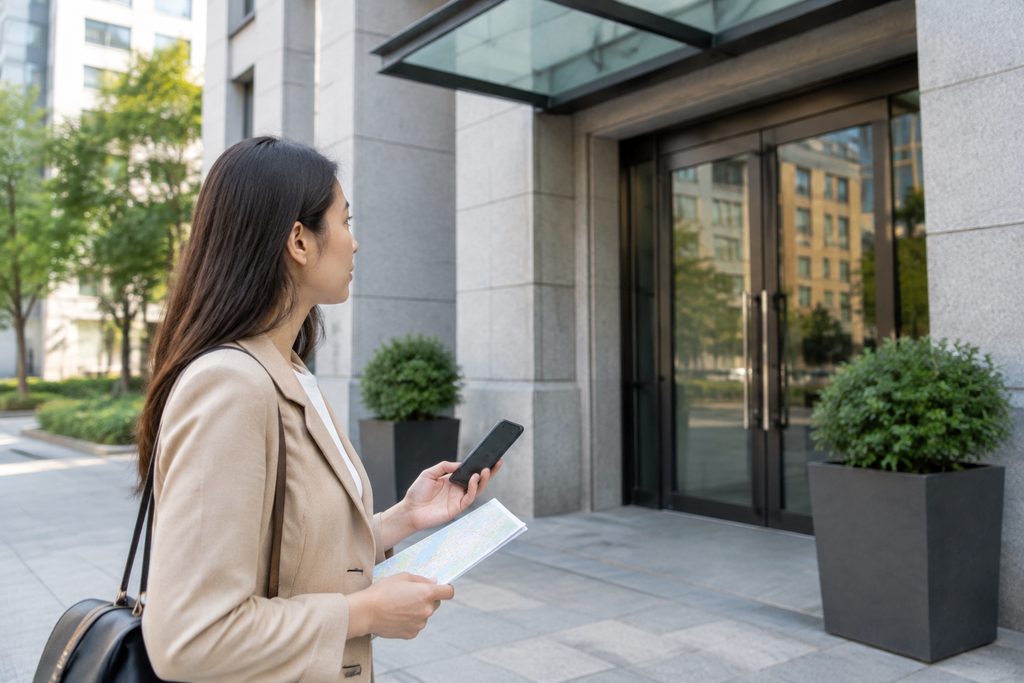
And fourth, request a live video walkthrough. Ask the agent to step outside their office and show you the building entrance, the street sign, and the surrounding area. This is the single most effective way to check visa agent office real Shanghai or any other city without being there yourself.
What Verification Costs — and What It Does Not
Self-verification is free. A one-hour video call costs nothing but time. Third-party address verification services in China typically charge between $50 and $300, depending on whether you need a simple address confirmation or a full background report including litigation history and ownership structure.
What drives the variance? City tier matters. Checking an address in Beijing or Shanghai is faster and cheaper than a smaller city because verification firms already have local staff there. Depth matters too. A basic “does this address exist and is this company registered there” check costs less than a report that includes tax records, import-export history, and past legal disputes.
None of these checks confirm the quality of the agent’s medical network. Verification answers one question: is this agent real and are they where they say they are. It does not tell you whether they can actually secure an appointment at Fuwai Hospital or coordinate a bilingual companion. That requires references, case history, and direct contact with the hospitals they claim to work with.
Practical Considerations: Documents, Timing, and Red Flags
Request the agent’s business license scan before sending any medical records. A legitimate facilitator will provide it. Cross-check the license number against the public registry. Keep a copy for your own records.
Timing matters. Start verification at least four weeks before you plan to submit your S2 visa application. That gives you room to switch agents if something does not check out. Rushing verification because your flight is booked is how people get scammed.
Watch for these specific red flags. An agent who only communicates through WhatsApp and has no company email domain. An address that is a P.O. box or a coworking space with no permanent signage. A website registered less than six months ago. A request for payment via Western Union or cryptocurrency. A promise to “guarantee” visa approval — no agent can guarantee that, because the decision rests with the Chinese embassy or consulate.
Also consider the question from the other direction. If an agent claims to work with a specific hospital, call that hospital’s international department directly and ask. Most major Chinese hospitals have English-speaking staff who can confirm whether they have a relationship with a given facilitator. This is one of the strongest ways to answer the question: is my China medical agent legitimate?
Frequently Asked Questions
Yes, partially. The National Enterprise Credit Information Publicity System works with browser translation. A video walkthrough requires no language skills at all — you are looking at the physical environment, not reading documents. For deeper verification, you may need a bilingual assistant or a paid service. Most third-party verification firms in China offer English-language reports for an additional fee.
This is common and not automatically fraudulent. Chinese companies sometimes register in one district for tax or licensing reasons and operate in another. However, the distance matters. A registered address in Shanghai and an operating address in Suzhou is plausible. A registered address in Beijing and a claimed office in Guangzhou deserves scrutiny. Ask for an explanation and verify both addresses independently.
No single check is foolproof. The strongest approach combines multiple methods: public registry verification, a live video walkthrough, direct contact with the hospital the agent claims to work with, and references from past patients. If an agent resists any two of these, that is a pattern. Walk away.
No. Address verification confirms the agent exists and is where they say they are. It does not confirm they will deliver the service they promise. A real office with a real business license can still overcharge, underdeliver, or misrepresent their hospital relationships. Verification is one layer of due diligence, not a substitute for references and written agreements.
Yes, if the agent provides hospital documents. When an agent sends you an invitation letter or appointment confirmation, verify the hospital’s address and contact information independently. Call the hospital’s international department using the number on their official website, not the number on the document the agent sent. This is how you confirm a Chinese visa agent is real — by checking both ends of the chain.
Your Next Step
Verifying an agent’s address is not paranoia. It is basic due diligence before you send medical records and money across borders. The process takes a few hours and costs little or nothing. The alternative — discovering the office does not exist after you have paid a deposit — costs far more.
Our team at China Medical Services works directly with hospital international departments across 37 cities. We are not a hospital, and we do not provide diagnoses or treatment. What we do is help you confirm which hospitals and facilitators are legitimate, coordinate bilingual support, and navigate the S2 visa documentation process. If you would like help verifying an agent or understanding your options, request a free consultation. No pressure, no obligation — just answers.
Verify first. Travel second. It is the order that keeps you safe.
For more medical information and treatment options in China, visit chinamedservices.com (China Medical Services).
