Virtual Colonoscopy in China: Costs, Top Hospitals, and How to Book
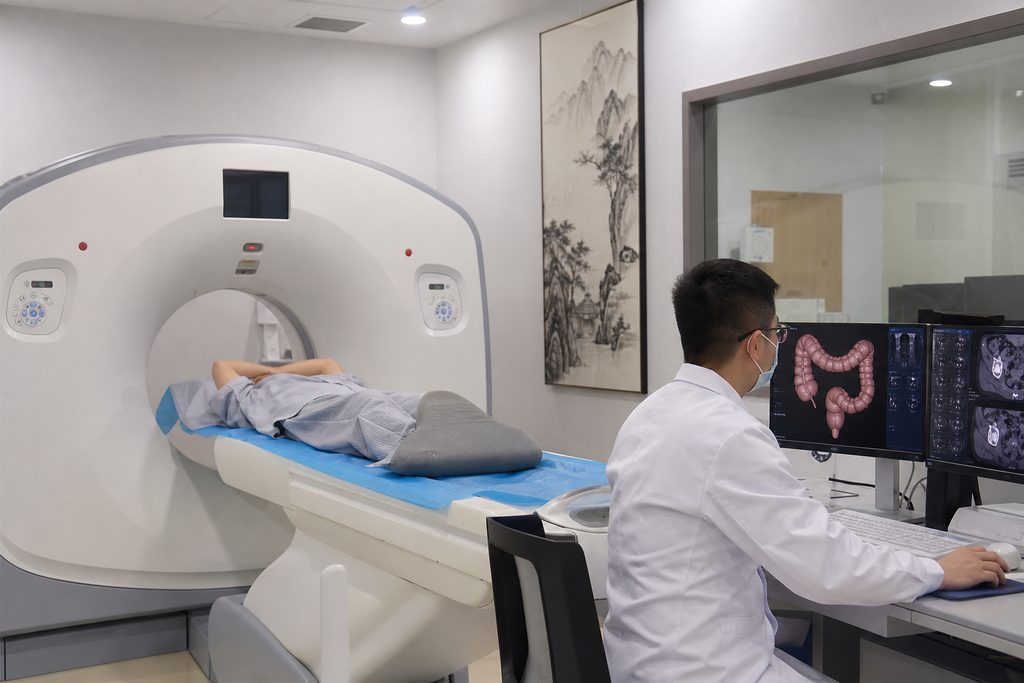
When 54-year-old Robert from Manchester started researching colorectal screening options, his GP had recommended a traditional colonoscopy. But the thought of sedation, the invasive prep, and missing two days of work made him hesitate. Then he stumbled across something called CT colonography. His first search? “Can I get a virtual colonoscopy?” The answer is yes — and in China, the virtual colonoscopy cost China is a fraction of what he’d pay back home.
Colorectal cancer is the third most common cancer worldwide, with approximately 1.9 million new cases diagnosed each year according to the World Health Organization. Screening works. It catches polyps before they turn malignant. But screening only helps if people actually do it. And millions avoid traditional colonoscopy because of fear, discomfort, or cost.
That’s where virtual colonoscopy — properly called CT colonography — enters the picture. This article explains what it is, how it compares to the regular version, what it costs in China, where to get it in Beijing and Shanghai, and how international patients can actually book one.
Key Takeaways
- Virtual colonoscopy (CT colonography) uses low-dose CT scanning to examine the colon — no sedation, no scope, and a typical scan takes 10 to 15 minutes.
- The virtual colonoscopy cost China typically ranges from $150 to $400 at top-tier public hospitals, compared to $1,000 to $3,000 in the United States.
- CT colonography detects approximately 90% of polyps 10 mm or larger — comparable to optical colonoscopy for clinically significant findings.
- If a polyp is found, you will still need a traditional colonoscopy to remove it. Virtual colonoscopy is diagnostic, not therapeutic.
The Problem: Colonoscopy Avoidance Is a Silent Killer
Colorectal cancer kills roughly 935,000 people globally every year. In the United States alone, the American Cancer Society projected about 152,810 new cases for 2024. Screening rates remain stubbornly low. Only about 59% of eligible American adults are up to date with colorectal cancer screening. In the UK, uptake of the NHS bowel screening programme hovers around 70% for the initial stool test but drops sharply when follow-up colonoscopy is required.
Why? The reasons are consistent across countries. Fear of sedation. Embarrassment. The bowel prep. Time off work. The cost — a screening colonoscopy in the US without insurance runs $2,000 to $4,000. Even with insurance, deductibles and copays leave many patients paying hundreds out of pocket.
So people delay. They skip the test. And early-stage colorectal cancer, which has a 91% five-year survival rate, gets discovered late, when survival drops to 14%.
Why CT Colonography Delivers Results
Virtual colonoscopy is not new. The American Cancer Society has included CT colonography in its colorectal screening guidelines since 2008. The American College of Radiology supports it as a validated screening tool for average-risk adults. But adoption has been uneven — partly because of cost and partly because of insurance coverage gaps in Western systems.
China has taken a different path. The country’s massive hospital infrastructure, heavy investment in imaging technology, and high patient throughput have made CT colonography widely available at prices that feel almost unreal to Western patients.
Clinical Accuracy Comparable to Optical Colonoscopy
The landmark ACRIN National CT Colonography Trial, published in the New England Journal of Medicine in 2008, showed that CT colonography detected 90% of polyps 10 mm or larger. That’s essentially the same detection rate as traditional colonoscopy for clinically significant lesions. For polyps 6 mm to 9 mm, sensitivity drops to around 78%. Smaller polyps — under 5 mm — are often not reported because their cancer risk is negligible.
What does this mean in practice? If your virtual colonoscopy is clean, you can be very confident you don’t have clinically significant polyps. If it shows something, you proceed to optical colonoscopy for removal.
Technology and Efficiency at Scale
Chinese top-tier hospitals operate on a scale that most Western institutions can’t match. A major public hospital in Beijing or Shanghai might perform 50 to 100 CT scans per day across multiple scanners. That volume drives efficiency. The radiologists reading colonography studies have seen thousands of cases.
The hardware matters too. Many Chinese tertiary hospitals use 64-slice, 128-slice, or even 256-slice CT scanners from Siemens, GE, and Canon. These machines produce high-resolution 3D reconstructions of the colon in minutes. The software used for “fly-through” viewing — where the radiologist virtually navigates the colon lumen — is the same technology used in leading US and European centers.
Cost Advantage Without Quality Compromise
Why is the virtual colonoscopy cost China so much lower? It’s structural, not a quality issue. Chinese radiologists and technicians earn less than their Western counterparts. Hospitals operate at higher volume, spreading fixed equipment costs across more patients. Real estate and administrative overhead are lower. The result: a CT colonography that costs $1,500 in New York might cost $250 in Shanghai.
This is not “cheap healthcare.” It’s the same scanner models, the same imaging protocols, and the same diagnostic standards — delivered in a system with fundamentally different economics.
How a Virtual Colonoscopy Actually Works: Step by Step
If you’re wondering how does virtual colonoscopy work vs regular, here’s the honest comparison. A traditional colonoscopy inserts a flexible scope through the rectum and into the entire colon. You need sedation, a driver to take you home, and typically a day of recovery. A virtual colonoscopy uses a CT scanner to image the colon from outside the body. No scope. No sedation. No recovery time.
The prep is similar but not identical. Both procedures require a clean colon. For CT colonography, you follow a clear liquid diet the day before and take a bowel-cleansing agent. The difference is that CT colonography also requires a contrast agent — either a small amount of barium or iodine-based oral contrast — to “tag” residual stool so the radiologist can distinguish it from polyps.
On the day of the scan, the process looks like this:
- You arrive at the radiology department and change into a hospital gown.
- A technician inserts a thin, flexible tube into the rectum. This tube inflates the colon with carbon dioxide — much gentler than the air used in older techniques.
- You lie on your back for one CT scan, then roll onto your stomach for a second scan. Each takes about 10 to 15 seconds.
- The entire procedure takes 10 to 15 minutes. You walk out immediately afterward.
- A radiologist reviews the images and issues a written report, usually within 24 to 48 hours.
That’s it. No IV line. No anesthesia. No grogginess. You can go back to your hotel, eat normally, and fly home the same day if you need to.
Who Should NOT Get a Virtual Colonoscopy
CT colonography is not for everyone. If you have a personal history of colorectal cancer, inflammatory bowel disease (Crohn’s or ulcerative colitis), or a strong family history of colorectal cancer, optical colonoscopy is the standard of care. The same applies if you have symptoms — rectal bleeding, unexplained weight loss, persistent changes in bowel habits. Those are red flags that require direct visualization and possible biopsy.
Virtual colonoscopy is best suited for average-risk adults who are due for routine screening but want to avoid the invasiveness of traditional colonoscopy. It’s also useful when a previous optical colonoscopy was incomplete — for example, when the scope couldn’t reach the cecum due to a tortuous colon.
One more hard truth: CT colonography uses ionizing radiation. The dose is low — typically 4 to 8 mSv, comparable to one to two years of background radiation. For most adults over 45, the benefit of screening outweighs this small risk. But it’s a factor worth discussing with your doctor.
Virtual Colonoscopy Cost China: What You’ll Actually Pay
The virtual colonoscopy cost China varies by city, hospital tier, and whether you go through the public system or an international department. Here’s a realistic breakdown based on published hospital pricing and patient reports:
| Location | Hospital Type | Typical Cost (USD) |
|---|---|---|
| Beijing | Top-tier public hospital (international dept.) | $200 – $400 |
| Shanghai | Top-tier public hospital (international dept.) | $200 – $400 |
| Shanghai | Private international hospital | $350 – $600 |
| Guangzhou | Top-tier public hospital | $150 – $300 |
| United States (for comparison) | Outpatient imaging center | $1,000 – $3,000 |
The CT colonography price Shanghai at a public hospital’s international department typically lands between $200 and $400, including the radiologist’s written report. A private international hospital in Shanghai — such as United Family or Jiahui — charges $350 to $600 but offers fully English-speaking staff and direct insurance billing.
These prices are for the scan itself. They don’t include the bowel prep kit (usually $10 to $30), consultation fees if you see a gastroenterologist first, or any follow-up procedures. Always confirm what’s included before you book.
Is Virtual Colonoscopy Available in China at Top Hospitals?
The short answer: is virtual colonoscopy available in China at the level you’d want? Yes — at major tertiary hospitals in every large city. But there’s a nuance. CT colonography is not as commonly promoted as a standalone screening service in China as it is in the US. It’s typically ordered by a gastroenterologist or a health screening center as part of a broader checkup package.
If you’re looking for the best hospital for CT colonography Beijing, start with the city’s top-tier comprehensive hospitals. Peking Union Medical College Hospital (PUMCH) has one of the most advanced radiology departments in the country. China-Japan Friendship Hospital and Beijing Friendship Hospital are also strong options, particularly the latter for gastroenterology. All three have international departments that handle foreign patients.
In Shanghai, Zhongshan Hospital (Fudan University) and Ruijin Hospital are the heavyweight names. Both operate high-volume radiology departments with modern multi-slice CT scanners. Their international medical centers can coordinate the entire process — referral, scan, report, and translation.
If you prefer a Western-style experience from start to finish, the private international hospitals are worth considering. Jiahui International Hospital in Shanghai and Beijing United Family Hospital both offer CT colonography with English-speaking radiologists and same-week availability. You’ll pay more, but the convenience is real.
For a broader look at hospital rankings and specialties, see our guide to China’s top-ranked public hospitals and our directory of private international hospitals.
Practical Considerations: Book Virtual Colonoscopy Medical Tourism China
If you’re seriously exploring how to book virtual colonoscopy medical tourism China, here’s what the logistics actually look like.
Visa: Foreign nationals traveling to China for medical treatment use the S2 visa. This is the short-stay category for private affairs, including medical treatment. You’ll need supporting documents from the hospital — typically a treatment invitation letter or appointment confirmation. The S2 visa allows stays of up to 180 days. For anything longer, you’d apply for S1. Do not apply for an M visa; that’s for commercial and trade activities, not medical care. Requirements change, so check with your local Chinese embassy or consulate before applying.
Documentation: Bring any prior colonoscopy reports, pathology results, and imaging if you have them. If this is your first screening, bring a list of your medications and any relevant family history. The hospital will need your passport for registration.
Payment: Public hospitals in China require prepayment at the time of service. Cash, UnionPay, and major international credit cards are generally accepted at international departments, but confirm in advance. Private international hospitals often bill insurance directly — check with your insurer before you travel.
Language: The international departments at major Chinese hospitals have English-speaking staff, but the level varies. Radiology technicians in particular may not speak English. A bilingual medical companion can handle registration, payment, and translation during the scan itself — services like this typically start from $300 per day.
Timing: A virtual colonoscopy requires one day of prep and one day for the scan. You can realistically fly in, complete the test, receive your report, and fly home within three to four days. If you’re combining it with a broader health screening package, allow five to seven days.
Frequently Asked Questions
For polyps 10 mm or larger, CT colonography detects about 90% — essentially the same as optical colonoscopy. For smaller polyps (6–9 mm), sensitivity drops to roughly 78%. A clean virtual colonoscopy means you very likely have no clinically significant polyps. If polyps are found, you’ll need a traditional colonoscopy to remove them.
It depends on your insurer. Many international health insurance plans — including Cigna Global, Allianz, and Bupa — cover CT colonography when it’s medically indicated, but you may need to pay upfront at Chinese public hospitals and file for reimbursement. Private international hospitals in China often have direct billing arrangements with major insurers. Check with your provider before booking.
If a polyp 6 mm or larger is found, the standard recommendation is follow-up optical colonoscopy for removal. This can often be arranged at the same hospital, sometimes within days. If you prefer to return home for the procedure, the written report and images can be shared with your local gastroenterologist. The report from a Chinese tertiary hospital is typically accepted internationally, though your home physician may want to review the images themselves.
A typical CT colonography delivers 4 to 8 mSv of radiation. For context, background radiation from natural sources averages about 3 mSv per year. The radiation dose from a single CT colonography is roughly equivalent to one to two years of background exposure. For adults over 45, the screening benefit generally outweighs this risk — but it’s a conversation worth having with your doctor.
Your Next Step
A virtual colonoscopy is a legitimate, evidence-backed alternative to traditional screening — and China offers it at a price point that makes proactive health care accessible. China Medical Services helps international patients navigate the process: we identify the right hospital for your needs, coordinate appointments, and provide bilingual support on the ground. We are not a hospital and we do not provide diagnoses. If you’re ready to explore whether CT colonography in China makes sense for you, start with a conversation.
Learn more about how we help international patients access medical care in China, or explore our specialty hospital rankings to see which institutions lead in gastroenterology and radiology.
For more medical information and treatment options in China, visit chinamedservices.com (China Medical Services).
