Will Weather Affect My Joint Replacement Pain? The Data Behind the Ache
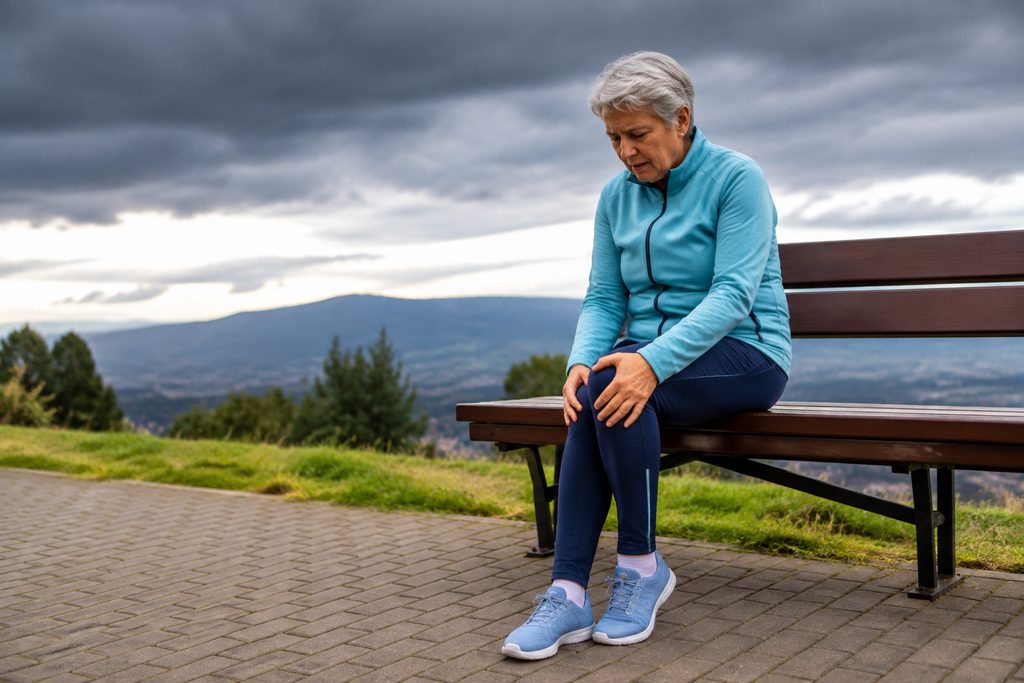
Have you ever felt a storm rolling in through your knee or hip before the first raindrop fell? You are not imagining it. Patients across the globe report that cold fronts and damp conditions amplify stiffness around their implants. But does the science back up what your body is telling you? We reviewed the clinical literature and spoke with orthopedic coordinators to separate meteorological myth from musculoskeletal reality. This guide also addresses a practical question many patients ask us: how does joint replacement cost China compare when planning surgery around seasonal windows?
How This Actually Works, Step by Step
If you are considering surgery abroad and worried about post-operative pain management, understanding the sequence helps. Here is what happens when a patient pursues joint replacement through a medical coordination service.
First, you send existing imaging and reports. X-rays, MRI scans, blood work, and any prior surgical notes. Our team translates these documents into English for the reviewing orthopedic department. The hospital’s joint replacement specialists then assess whether you are a surgical candidate based on bone quality, alignment, and overall health status.
Second, you receive a written assessment. This typically includes a recommended procedure type — total knee arthroplasty, total hip arthroplasty, or partial replacement — along with a proposed implant system. No prescription, no guarantee of outcome. Just an expert read on your situation.
Third, you decide on a consultation format. A video consultation lets you speak directly with the surgical team. A written second opinion costs less and gives you a document to discuss with your home physician. Some patients choose proxy consultation, where our coordinator visits the hospital in person with your files.
Fourth, if you proceed, we coordinate the S2 visa documentation, hospital admission paperwork, and a bilingual medical companion for your stay. The companion handles registration, queueing, payment, and translation. You focus on recovery.
What the Research Says About Weather and Joint Pain
The question “does cold weather affect hip replacement pain” has produced surprisingly mixed findings. A 2019 study published in BMC Musculoskeletal Disorders analyzed data from over 2,600 participants and found that 67% of patients with osteoarthritis reported weather sensitivity. But here is the nuance: patients with total joint replacements reported less weather-related pain than those with native arthritic joints.
Barometric pressure drops appear to be the primary trigger. When atmospheric pressure falls before a storm, tissues can expand slightly. Around a metal implant, that micro-expansion may irritate nerve endings in the surrounding capsule. Temperature alone seems less important than pressure changes. Humidity plays a secondary role, particularly in patients with residual soft-tissue inflammation.
But not every patient experiences this. Roughly one-third of joint replacement recipients report no weather sensitivity at all. The implant itself is inert metal or ceramic — it does not feel cold or pressure. What you feel is the living tissue around it. If your surgical recovery was clean and your soft tissues healed without excessive scarring, you are less likely to notice weather shifts.
So the honest answer? Weather can affect joint replacement pain, but the effect is highly individual and tends to diminish as you move further from the surgery date.
A Realistic Timeline
Planning joint replacement surgery in China involves several steps that patients often underestimate. Here is a realistic sequence with time ranges.
| Stage | What Happens | Typical Duration |
|---|---|---|
| Day 1–7 | Collect and upload imaging, reports, medical history | 1 week |
| Day 8–21 | Document translation and hospital department review | 2 weeks |
| Week 4 | Written second opinion or video consultation delivered | 1–2 weeks after review |
| Week 5–8 | S2 visa application with hospital invitation letter | 2–4 weeks depending on embassy |
| Week 9 | Travel to China, in-person surgical evaluation | 3–5 days |
| Week 10 | Surgery (if cleared by the in-person exam) | 1 day procedure, 5–7 days inpatient |
| Month 3 | Initial rehabilitation and mobility milestones | 6–12 weeks |
| Month 6 | Return for follow-up imaging or remote review | Optional |
The part people forget is the document translation step. Chinese hospitals require complete, accurate records before any surgical evaluation. Rushing this leads to delays. Budget at least two weeks for translation and departmental review before you even book a flight.
What Can Go Wrong — and What Happens Then
Honest talk: not every patient who travels for surgery gets cleared on arrival. The in-person evaluation exists precisely because remote imaging cannot capture everything. A patient with undiagnosed osteoporosis, poor vascular status, or an active infection may be declined for surgery.
What happens then? The hospital issues a written explanation. Our coordination team discusses alternatives: a staged procedure, pre-operative optimization (bone density treatment, weight management, infection control), or a different surgical approach. You are not stranded. But you may need to return home and prepare for several months before a second attempt.
Another failure mode: insurance reimbursement. Chinese public hospitals require prepayment. Private international hospitals may bill your insurer directly, but many public top-tier hospitals do not. You pay upfront, then claim reimbursement from your home insurer. If your policy excludes overseas elective surgery, you bear the full cost. We always recommend confirming coverage in writing before committing.
Weather-related pain flare-ups after surgery are also possible. If you live in a cold, damp climate and return home during winter, expect some stiffness. This is not implant failure. It is soft-tissue response. The fix is usually movement, warmth, and time — not revision surgery.
How to Manage Winter Pain After Joint Replacement
The practical question “how do I manage joint pain after surgery in winter” deserves a direct answer. Start with movement. Stiffness from cold is stiffness from inactivity. A 10-minute indoor walk or stationary bike session warms the joint capsule and reduces that tight, achy feeling better than any supplement.
Layer warmth over the joint. Neoprene sleeves or thermal leggings help for knees. For hips, a heated blanket over the thigh and buttock area for 15 minutes before activity loosens the surrounding muscles. Avoid direct heat on the incision for the first 6 weeks — the skin is still healing.
Stay hydrated. Winter air is dry, and dehydrated connective tissue is less elastic. Aim for consistent fluid intake throughout the day, not just at meals.
And track your pain pattern. If weather-related aches resolve within 24–48 hours of a pressure shift, that is typical. If pain persists for a week or worsens with weight-bearing, contact your surgeon. Persistent pain around an implant warrants imaging to rule out loosening or infection — both rare but real.
Why Patients Look at Joint Replacement Cost China
Cost drives many decisions. A total knee replacement in the United States averages $35,000 to $70,000 depending on the facility and implant. In China, top-tier public hospitals typically charge $8,000 to $15,000 for the same procedure. That is a 70–85% reduction for comparable implant systems and surgical expertise.
But the joint replacement cost China figure only tells part of the story. Add international flights, visa fees, accommodation for a companion, and post-operative rehabilitation. A realistic total budget for a two-week surgical stay plus one month of local recovery ranges from $18,000 to $30,000. Still significantly below US prices, but not the bare hospital bill.
Patients searching for “knee replacement surgery packages Shanghai” should understand that package pricing varies by hospital tier. Public hospital international departments offer the most competitive rates but require prepayment and may have limited English-speaking staff outside the international wing. Private international hospitals like Jiahui or United Family provide Western-style care with direct insurance billing, but their surgical fees run 1.5 to 2 times the public hospital rate.
Shanghai hosts several hospitals with strong orthopedic departments. Zhongshan Hospital Fudan University and Shanghai Sixth People’s Hospital both rank among China’s top programs for joint replacement volume and outcomes. You can explore our specialty rankings for orthopedics to compare programs across cities.
Beijing offers another strong option. Patients asking about the “best orthopedic hospital Beijing for foreigners” often look at Peking Union Medical College Hospital, which runs a dedicated international medical services department. English-speaking coordinators, streamlined registration, and access to senior joint replacement surgeons. The trade-off is higher coordination fees — typically $800 to $1,200 for in-person specialist consultation coordination.
Practical Considerations: Records, Visa, Payment, and Follow-Up
You cannot book surgery in China without a face-to-face evaluation. That is non-negotiable at public hospitals. The remote written second opinion or video consultation is a screening step, not a surgical booking. Plan for at least one pre-surgical trip or an extended stay that includes evaluation, surgery, and early recovery.
The visa category for medical treatment is S2, not M. M visas are for commercial and trade activities. S2 covers private affairs including medical treatment, provided you have a hospital invitation letter and supporting documents. Processing times vary by embassy, but budget four weeks.
Payment at public hospitals is upfront. Bring a credit card with a high limit or arrange a wire transfer. Private international hospitals in Shanghai and Beijing often bill insurers directly — check with your provider before choosing a facility.
Language is the barrier most patients underestimate. Even in international departments, you will encounter Chinese-language forms, pharmacy instructions, and nursing shift handovers. A bilingual medical companion from our coordination team handles these moments so you are not stranded at a payment window or misreading a discharge order.
Follow-up after you return home matters. Most Chinese surgeons offer remote review of follow-up X-rays at no charge for the first year. You send images, they respond with a written note. If a complication arises, you may need to return for revision — rare, but budget for that possibility.
Frequently Asked Questions
For many patients, yes. Barometric pressure drops appear to trigger soft-tissue expansion around the implant, causing stiffness and aching. But about one-third of patients report no weather sensitivity. The effect tends to fade over the first year as tissues fully heal.
No. The implant sits deep inside your body at core temperature. What you feel is the surrounding muscle, capsule, and scar tissue responding to pressure and temperature changes. Warming the area and moving the joint usually resolves the sensation.
Safe, yes. But consider your home recovery environment. If you return to a cold, damp climate immediately after surgery, expect more stiffness during the first winter. Some patients choose to recover in China for an extra month before flying home. Discuss timing with your surgeon.
Public top-tier hospitals charge roughly $8,000 to $15,000 for a total knee or hip replacement. US prices typically run $35,000 to $70,000. Add travel, accommodation, and coordination fees, and a realistic total is $18,000 to $30,000 — still a substantial saving.
No. Public hospitals require an in-person evaluation before scheduling surgery. You can complete a remote written second opinion or video consultation first, then travel for the surgical assessment. The remote step helps you avoid a wasted trip if you are not a candidate.
Your Next Step
Weather-related joint pain after replacement is real for many patients, manageable for nearly all, and rarely a sign of implant failure. If you are weighing surgery abroad, the numbers matter — and joint replacement cost China remains one of the strongest arguments for crossing the Pacific. Our team at China Medical Services coordinates written second opinions, video consultations, and on-the-ground support with bilingual companions. We do not perform surgery and we do not promise outcomes. We handle the logistics so you can focus on the decision that matters. When you are ready to explore your options, request a free consultation and we will map out a realistic plan for your case.
For more medical information and treatment options in China, visit chinamedservices.com (China Medical Services).
