WeChat Maps in China: A Foreigner’s Guide to Getting Around Hospitals
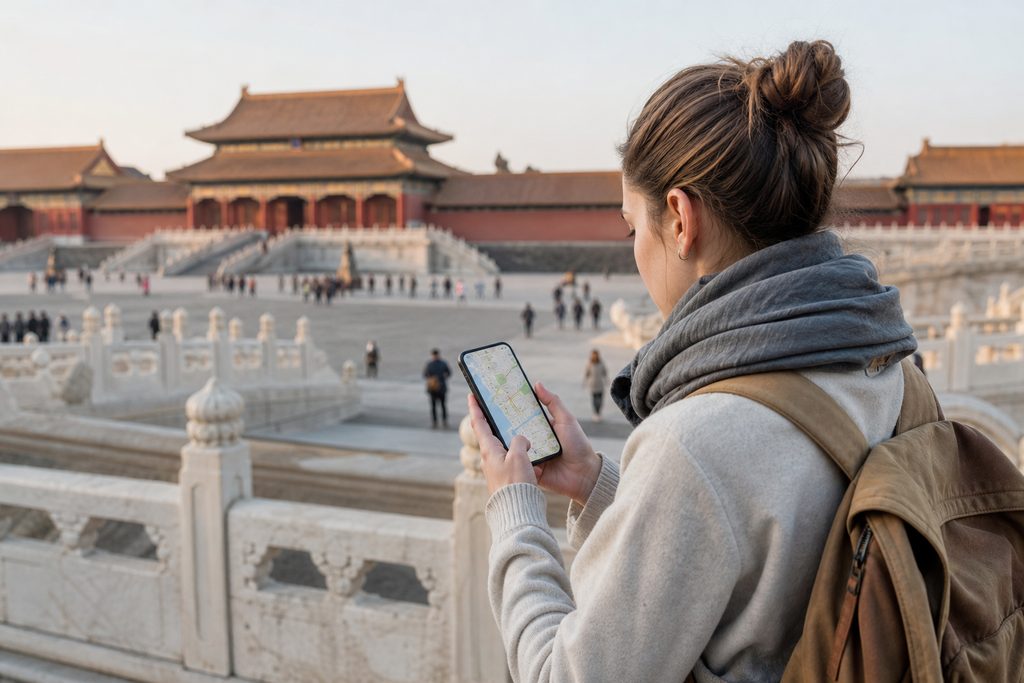
Have you ever landed in a Chinese city, opened Google Maps, and watched the blue dot refuse to move? You are not alone. Every year, millions of international visitors discover that the map app they trust at home simply does not work here the way they expect.
For anyone traveling to China for medical care, this is more than an inconvenience. Getting from a hotel to a hospital entrance, finding the right building on a sprawling campus, or locating a pharmacy at 11 p.m. all depend on reliable navigation. That is why understanding how to use WeChat Maps in China matters far more than most travel guides admit.
This WeChat Maps for foreigners guide walks through what the app does well, where it falls short, and how it fits into a larger medical trip. We cover the language question, the comparison with Google Maps, and the practical realities that nobody mentions until you are standing on the wrong side of a hospital gate.
Key Takeaways
- WeChat Maps works inside mainland China where Google Maps is blocked or badly outdated, making it the most practical default for short medical trips.
- The app supports English labels for many major hospitals, metro stations, and landmarks, but smaller clinics and street addresses often appear in Chinese only.
- China’s top hospitals see tens of thousands of outpatients daily, and their campuses can span multiple blocks — navigation errors cost real time on appointment day.
- No map app replaces human help. For a first medical visit, a bilingual companion who knows the hospital layout saves hours.
Why Navigation Becomes a Real Problem for Medical Travelers
Google Maps has been effectively unusable in mainland China since around 2010, when the service was disrupted for users inside the country. The app may load a cached map, but live positioning, traffic data, and business listings are frequently wrong or missing. For a tourist, that means a frustrating walk. For a patient heading to a cardiology appointment, it can mean missing a slot that took weeks to arrange.
The scale of Chinese hospitals makes this worse. A single top-tier facility like West China Hospital in Chengdu handles tens of thousands of outpatient visits per day. These are not single buildings. They are campuses with numbered gates, separate towers for different specialties, and internal roads that confuse first-time visitors — including Chinese ones.
Now add a language barrier. Most signage is in Chinese, and hospital staff at general clinics rarely speak English. A map app that renders everything in characters you cannot read offers limited comfort. This is the gap where preparation, and sometimes a human guide, makes the difference between a smooth visit and a lost morning.
What WeChat Maps Actually Is — and How It Differs From Baidu or Amap
WeChat is China’s dominant messaging and services app, used by well over a billion people. Inside it, the built-in map function pulls data from one of China’s domestic mapping providers. You do not need a separate download. If you already use WeChat for payments or messaging, the map is right there.
The main alternatives are Baidu Maps and Amap (Gaode). Both are excellent, both are Chinese-first, and both have limited English interfaces. WeChat Maps wins for most foreign visitors because it lives inside an app they are already installing. Fewer apps, fewer logins, fewer surprises.
One caveat: accuracy depends on the underlying data provider, and listings for small businesses can lag. For hospitals, metro stations, and major hotels, the coverage is generally solid.
Does WeChat Maps Work in English? The Honest Answer
Partly. This is the question every foreigner asks, and the answer deserves nuance rather than a simple yes or no.
Major landmarks, metro stations, and many large hospitals display English names alongside Chinese ones. If you search for “Peking Union Medical College Hospital,” you will often find it. Streets and districts in Tier 1 cities like Beijing, Shanghai, and Guangzhou frequently carry English labels too.
But the deeper you go, the more Chinese-only the map becomes. Small clinics, specific building entrances, pharmacy counters inside hospital complexes, and residential addresses usually appear in characters alone. Search results sometimes return the Chinese name even when an English one exists.
So the practical rule is this: WeChat Maps is usable in English for big-picture navigation, but not reliable in English for the last 200 meters. That final stretch — the one that actually gets you to the right door — is where preparation or local help matters most.
WeChat Maps vs Google Maps in China: A Direct Comparison
Readers often ask which app to trust. The table below lays out the practical differences for a medical traveler.
| Feature | WeChat Maps | Google Maps |
|---|---|---|
| Works inside mainland China | Yes, reliably | No, blocked or badly outdated |
| Live GPS positioning | Accurate | Often frozen or offset |
| English interface | Partial | Full, but data is stale |
| Public transit directions | Detailed, current | Unreliable |
| Hospital and clinic listings | Mostly current | Frequently missing |
| Works outside China | Limited | Yes, fully |
The takeaway is straightforward. Use Google Maps to plan before you fly. Switch to WeChat Maps the moment you land. Treat them as tools for different phases of the same trip, not competitors.
WeChat Maps Navigation for Medical Tourists: A Step-by-Step Walkthrough
Here is how a typical hospital trip unfolds using the app.
Step one: set up before you arrive. Download WeChat, complete verification, and add a payment method if possible. Some map features and linked services work more smoothly with a verified account.
Step two: search your destination in English first. Type the hospital’s official English name. If nothing appears, try the Chinese name — your hospital’s international department can provide it, and so can a coordination service.
Step three: save the location. Pin the hospital before your appointment day. On the morning of, you will not want to be typing while navigating a subway transfer.
Step four: check the specific entrance. Large hospitals often have multiple gates. The main gate may be a 15-minute walk from the international department. If your appointment letter specifies a building or gate number, search for that, not just the hospital name.
Step five: use transit directions, not driving. Traffic in Chinese cities can turn a 20-minute drive into 70 minutes. The metro is usually faster and the map’s transit guidance is accurate.
Step six: screenshot everything. Connectivity can drop inside large concrete hospital buildings. A saved screenshot of the route and the Chinese address gets you through dead zones.
Where Map Apps Fall Short — and What Actually Helps
No app solves the human side of a Chinese hospital visit. Registration queues, payment windows, lab locations, and department transfers are organized in ways that assume local knowledge. A map gets you to the building. It does not tell you that the blood draw is on floor three of a different tower, or that you need a queue number from a kiosk before you can pay.
This is precisely the gap that bilingual medical companions fill. At our patient services page, we describe how a companion handles registration, queueing, payment, wayfinding, and translation for the entire visit — not just the journey there.
For readers still deciding which hospital to target, our directory of top-ranked Chinese hospitals groups facilities by city so you can match a destination to your treatment needs before you ever open a map.
Practical Considerations Before You Rely on Any Map App
A few realities are worth stating plainly.
Data and connectivity. Buy a local SIM or eSIM with a data plan on arrival. WeChat Maps needs a connection. Hotel Wi-Fi works, but you will not have it on the street.
Visa category. If you are traveling for medical treatment, the applicable short-stay category is the S2 visa, used for medical treatment and private affairs, subject to the latest embassy or consulate requirements and supporting hospital documents. Accompanying family members typically apply under the same category. Note that the M visa is for commercial and trade activities and is not a medical visa. Always confirm current rules with your nearest Chinese embassy or consulate.
Payment inside the app. WeChat Pay is widely accepted, but foreign cards do not always link smoothly. Carry a backup payment method.
Offline fallback. Keep a screenshot of your destination’s Chinese name and address. If the app fails, you can show it to a taxi driver.
VPN expectations. Some travelers use a VPN to reach services blocked in China. Reliability varies, and rules around VPN use are subject to change. Do not build your navigation plan around one.
Frequently Asked Questions
For most short-term visitors, yes — mainly because it lives inside an app you are already installing and it works reliably where Google Maps does not. Baidu Maps and Amap are strong alternatives, but their English support is thinner. If you only want one app, WeChat Maps is the practical choice.
No. Google Maps is blocked or badly outdated inside mainland China, and its live positioning often fails. You can use it to plan before you fly, but once you land, switch to a domestic app. Relying on Google Maps alone for a hospital appointment is a genuine risk.
This happens often at the street level. Two workarounds help: search using the hospital’s official English name where available, and keep a screenshot of the Chinese name and address provided by your hospital’s international department. If navigating a large hospital campus feels overwhelming, a bilingual companion can handle wayfinding alongside translation and registration support.
Not strictly, but a local number makes verification and in-app payments far smoother. Many travelers manage with an international number plus a data eSIM. Set up your account before departure, since verification can be harder once you are inside China.
No. Navigation and appointment booking are separate problems. General outpatient registration at Chinese public hospitals typically happens on the day, and surgery requires an in-person consultation first. If you want to lock in a specialist visit or hospital admission in advance, that usually runs through a hospital’s international or VIP department. Our team can explain how appointment coordination works and what is realistic for your case.
Your Next Step
WeChat Maps is a genuinely useful tool, and with the right preparation it will get you to most major hospitals without drama. The honest limitation is the last stretch — the entrance, the queue, the counter — where language and local knowledge matter more than any blue dot.
China Medical Services is not a hospital and does not provide diagnoses. We are a coordination service that helps international patients match with appropriate Chinese hospitals, arrange appointments through official international departments, and navigate the practical side of a medical trip. If you are planning treatment in China and want to understand your options before committing to travel, start with a free consultation and we will walk you through what is realistic for your situation.
This article is for general information only and does not constitute medical advice. Treatment decisions should always be made with a qualified physician. Visa rules, app features, and hospital policies change — verify current details with official sources before you travel.
For more medical information and treatment options in China, visit chinamedservices.com (China Medical Services).
