Weight Loss Surgery Under BMI 40 China: Your Real Options in 2026
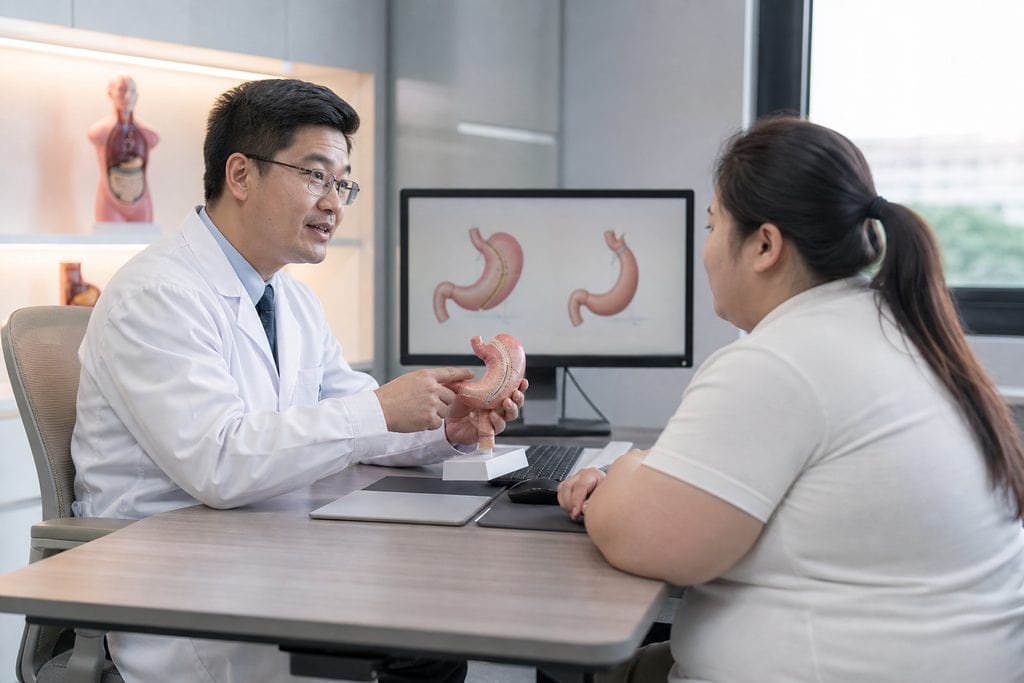
You have probably been told that weight loss surgery is only for people with a BMI of 40 or higher. That is the standard line in many countries. But it is not the whole story. Weight loss surgery under BMI 40 China is available at accredited bariatric centers, and for many international patients, it is the first time a surgeon has actually said yes.
The reason comes down to how Chinese bariatric teams interpret international guidelines. Most follow the 2022 ASMBS/IFSO joint statement, which lowered the threshold for metabolic and bariatric surgery. That statement, published in *Surgery for Obesity and Related Diseases*, recommends considering surgery for patients with BMI 35 or higher regardless of obesity-related complications, and for patients with BMI 30–34.9 who have type 2 diabetes that is poorly controlled. Chinese hospitals that treat international patients tend to apply these updated criteria more readily than some Western insurance-driven systems.
That does not mean everyone qualifies. It does mean the conversation is more nuanced than a single number.
Key Takeaways
- Weight loss surgery under BMI 40 China is clinically available for patients with BMI 35–39.9 at major bariatric centers, especially those following the 2022 ASMBS/IFSO guidelines.
- Gastric sleeve surgery in China typically costs $8,000–$15,000 for international patients, roughly 40–60% less than comparable private-pay rates in the US, UK, or Australia.
- You will need documented evidence of prior weight loss attempts, metabolic health data, and a psychological evaluation before any reputable Chinese surgeon will approve surgery.
- BMI is not the only gate. Waist circumference, HbA1c, sleep apnea severity, and joint disease all factor into eligibility decisions at Chinese bariatric centers.
The Problem: A BMI of 38 Feels Like a Dead End
Around 42% of American adults have obesity, according to CDC data from 2020. A significant portion sit in the 35–39.9 BMI range — heavy enough to suffer real health consequences, but often below the traditional insurance cutoff for bariatric surgery. In the United States, many private insurers still require either a BMI of 40, or a BMI of 35 with at least one major comorbidity like type 2 diabetes or severe sleep apnea. Even then, patients face 6–12 months of documented medically supervised weight loss attempts before approval.
In the UK, NHS criteria are stricter. Most clinical commissioning groups require BMI 40+, or BMI 35+ with a serious comorbidity, plus a tier 3 weight management program that can take a year or longer. Waiting lists of 18–24 months are common. In Australia, private health insurance often imposes similar BMI thresholds, and out-of-pocket costs for self-funded patients routinely exceed $20,000 AUD.
So a patient with a BMI of 37, struggling with prediabetes, joint pain, and sleep apnea, can find themselves rejected by every door they knock on. They are not sick enough by the old standards, but they are clearly getting sicker. That is the frustration that drives people to search for alternatives abroad.
Why China Has Become a Serious Option for Lower-BMI Bariatric Surgery
Clinical Volume That Western Surgeons Rarely Match
Chinese bariatric surgeons operate at volumes that are difficult to find elsewhere. A single high-volume center in Shanghai or Beijing may perform 500–800 sleeve gastrectomies annually. The surgeon leading that team might have completed over 3,000 procedures in a decade. Compare that to the average US bariatric surgeon, who performs roughly 50–100 cases per year. Volume matters in bariatric surgery. Studies, including one published in *JAMA Surgery*, have linked higher surgeon and hospital volume to lower complication rates and shorter operative times.
That volume also means Chinese teams see a wider range of patient profiles. A surgeon who has treated hundreds of patients with BMI 35–39.9 has better judgment about who will benefit than one who rarely operates below BMI 40.
Updated Guidelines Are Applied More Flexibly
The 2022 ASMBS/IFSO guidelines are not Chinese — they are international. But Chinese bariatric centers that serve international patients have been quick to adopt them. Why? Because these centers are competing for medical travelers from Southeast Asia, the Middle East, and Europe, and they know that outdated BMI cutoffs are a major barrier. A patient asking about bariatric surgery with BMI 35 in China will often find that the clinical team evaluates metabolic health first and BMI second.
That is not a loosening of safety standards. It is a shift toward treating the disease, not the number. The same guidelines are endorsed by the International Federation for the Surgery of Obesity and Metabolic Disorders, which represents bariatric societies in over 70 countries.
Gastric Sleeve Cost China BMI 35: The Numbers
Cost is the other major driver. A self-pay sleeve gastrectomy in the United States runs $15,000–$25,000. In the UK, private sleeve surgery costs £10,000–£15,000. In Australia, $18,000–$25,000 AUD. In China, international patients at top-tier public hospital international departments or accredited private hospitals typically pay $8,000–$15,000 for the same procedure. That range includes surgeon fees, hospital stay, anesthesia, and basic post-operative follow-up during your stay.
The lower cost is not because the care is inferior. It reflects structural economics: lower labor costs for nurses and support staff, high patient throughput that spreads fixed costs, and a medical system where hospital construction and equipment amortize differently. The surgeons are often trained in Japan, South Korea, or the United States, and many publish in international peer-reviewed journals.
Eligibility Rules: Can I Get Weight Loss Surgery With BMI 38 Abroad?
Yes — at select centers. But you need to understand the full picture before booking a flight.
Chinese bariatric teams that accept international patients generally follow a two-tier evaluation. The first tier is metabolic. They will look at your HbA1c, fasting glucose, lipid profile, liver function, and inflammatory markers. If you have type 2 diabetes with an HbA1c above 7.0% despite medication, a BMI of 32–34.9 may be enough. If you do not have diabetes but have significant obstructive sleep apnea (AHI above 15), hypertension, or severe joint disease, a BMI of 35–39.9 is usually acceptable.
The second tier is behavioral. You will need documentation of prior weight loss attempts — diet programs, medication, supervised exercise. A psychological evaluation is standard. If you have untreated binge eating disorder, active substance abuse, or uncontrolled major depression, any responsible surgeon will defer surgery until those are addressed.
One important difference: Chinese centers rarely require the 6–12 months of insurance-mandated diet documentation that US insurers demand. They want evidence that you have tried, not a bureaucratic timeline. A detailed letter from your primary care physician, plus records from any commercial weight loss program, is usually sufficient.
Do not interpret lower BMI eligibility as a guarantee. A BMI of 35 with no metabolic disease, no sleep apnea, and no joint problems is a much harder case to justify clinically. The best surgeons will tell you that surgery at that profile carries more risk than benefit. That honesty is a sign of quality, not an obstacle.
How to Qualify for Weight Loss Surgery in China With Low BMI: The Process
The pathway for an international patient is more structured than many expect. Here is what actually happens, step by step.
First, you submit your medical records for remote review. This is where the written second opinion service comes in. You send your recent labs (within 3 months), sleep study results if available, medication list, weight history, and any imaging. A Chinese bariatric specialist reviews everything and gives you a written assessment: are you a candidate, what procedure is appropriate, and what additional testing you need before traveling.
Second, if the remote review is positive, you schedule a video consultation. This is your chance to speak directly with the surgical team — usually the lead surgeon or a senior bariatric physician. You discuss your goals, your medical history in detail, and the risks specific to your profile. The team will also explain what happens after surgery: diet progression, vitamin supplementation, follow-up endoscopy schedule.
Third, you travel to China for the in-person evaluation and surgery. Most international patients arrive 3–5 days before the scheduled procedure. You will complete any outstanding tests — often a repeat endoscopy, cardiac clearance, and a final anesthesia assessment. Surgery typically requires a 3–5 day hospital stay for a sleeve gastrectomy.
Fourth, you remain in China for post-operative monitoring. Most centers want you to stay 10–14 days after discharge before flying home. This allows them to check wound healing, manage any early complications, and transition you to the liquid and puree diet phases under supervision.
Lower BMI Bariatric Surgery Shanghai Price: What You Actually Pay
Shanghai is home to several of China’s busiest bariatric programs, and it is the most common destination for international patients seeking lower BMI bariatric surgery. The price structure is more transparent than many expect, but it is not uniform.
| Cost Component | Typical Range (USD) | Notes |
|---|---|---|
| Sleeve gastrectomy (hospital + surgeon + anesthesia) | $8,000 – $15,000 | Varies by hospital tier and room type |
| Pre-operative testing (labs, endoscopy, cardiac clearance) | $500 – $1,200 | Some centers bundle this into the package |
| Post-operative hospital stay (3–5 days) | Included | Standard ward; private room adds $100–$200/day |
| Written second opinion (remote) | $300 – $500 | Credited toward coordination if you proceed within 90 days |
| Video consultation with bariatric specialist | $100 – $300 | Often waived if you book surgery |
| Bilingual medical companion (per day) | from $300 | Optional but recommended for first-time visitors |
| Airport transfer (round-trip) | $200 | Private car service |
Compare that to the US self-pay rate of $15,000–$25,000 for the surgery alone, plus $2,000–$4,000 in pre-operative testing and consultation fees. The total savings often cover the cost of flights, accommodation, and a two-week stay in Shanghai, with money left over.
One thing to be clear about: the price you are quoted is for the hospital and surgical team. It does not include your visa, flights, hotel, meals, or the services of any coordination agency. Those are separate line items.
Ask for a written, itemized quote before you travel. Reputable centers will provide this. If a hospital or agent gives you only a vague verbal number, that is a red flag.
Practical Considerations: Visa, Payments, and Follow-Up
You will need an S2 visa for medical treatment in China. The S2 is the short-stay visa category used for private affairs, including medical treatment. You will need a letter from the Chinese hospital confirming your scheduled treatment, along with the standard visa application materials. S2 visas are typically issued for 30–90 days, which is enough for the surgery and initial recovery. If you need to stay longer than 180 days, an S1 visa applies, but that is rarely necessary for bariatric surgery.
Payment is almost always required in advance or at admission. Chinese public hospitals operate on a prepayment model — you deposit funds, and the hospital deducts charges as they occur. International departments at major hospitals often accept international credit cards and bank transfers. Private international hospitals may offer direct billing arrangements with some insurers, but this is less common for bariatric surgery specifically. Check with your insurer before assuming anything.
Language is a real barrier. Even at international departments, not every nurse or technician speaks English. A bilingual medical companion — someone who handles registration, translates during consultations, and helps you navigate the hospital campus — costs from $300 per day. For a surgery that requires multiple pre-operative visits and a hospital stay, most international patients find this worth the cost.
Follow-up after you return home is the most overlooked part of international bariatric surgery. You will need vitamin and mineral supplementation for life — typically a high-dose multivitamin, calcium, vitamin D, iron, and B12. You will need blood work at 3, 6, and 12 months post-op. Your local GP can order these tests, but you should confirm they are willing to manage a bariatric patient before you travel. Some Chinese centers offer remote follow-up via video consultation for the first year, which is a meaningful advantage.
Frequently Asked Questions
It is possible, but it depends on the center. Some surgeons will consider a BMI of 35 alone, especially if you have a long documented history of failed weight loss attempts. Others will want at least one metabolic comorbidity — prediabetes, sleep apnea, or hypertension. The honest answer is that you should submit your records for a remote review and see what the clinical team says. No reputable center will approve you based on BMI alone without reviewing your full history.
Most Western insurance plans will not cover elective bariatric surgery performed abroad. Some international health insurance policies — those designed for expatriates or frequent travelers — may offer partial reimbursement, but this is uncommon for weight loss surgery specifically. You should assume you are self-paying unless your insurer confirms coverage in writing before you travel. The good news is that the total cost in China, even without insurance, is often less than the out-of-pocket deductible and co-insurance you would pay at home.
Serious complications after sleeve gastrectomy are rare — the 30-day mortality rate is below 0.1% at high-volume centers — but they are not zero. Leaks, bleeding, and strictures can occur. Before you travel, identify a local bariatric surgeon or gastroenterologist who is willing to see you if a problem arises. Many Chinese centers will provide your complete operative report and imaging on a USB drive so any local doctor can understand exactly what was done. Remote video follow-up with the Chinese team is also standard for the first 3–6 months.
Look for three things. First, the hospital should be a public tertiary hospital with an international department, or a JCI-accredited private hospital. Second, the surgeon should be willing to provide their credentials — training background, years of experience, and case volume. Third, the center should require a full pre-operative evaluation, including psychological screening. If a center promises surgery without reviewing your records, or guarantees a specific outcome, walk away. Legitimate programs are thorough, not fast.
Your Next Step
Weight loss surgery under BMI 40 China is not a loophole — it is a clinically supported option that many Western patients never hear about because their local system filters it out. The decision to pursue surgery abroad requires careful evaluation of your metabolic health, your psychological readiness, and your practical ability to travel and recover away from home. China Medical Services maintains a database of 340+ top-ranked hospitals across 37 cities, including bariatric centers that follow current international guidelines. We are not a hospital and we do not provide diagnoses. What we do is help you understand whether a Chinese bariatric program is a realistic option for your specific situation, and if it is, we can coordinate the remote evaluation, hospital appointment coordination, and on-the-ground support. Start with a written second opinion — it costs $300–$500 and gives you a clear clinical answer before you spend a dollar on travel. That is the smart first move.
For more medical information and treatment options in China, visit chinamedservices.com (China Medical Services).
