Wuhan Union Hospital Cardiology for International Patients: A Practical Guide to Costs, Booking, and What to Expect
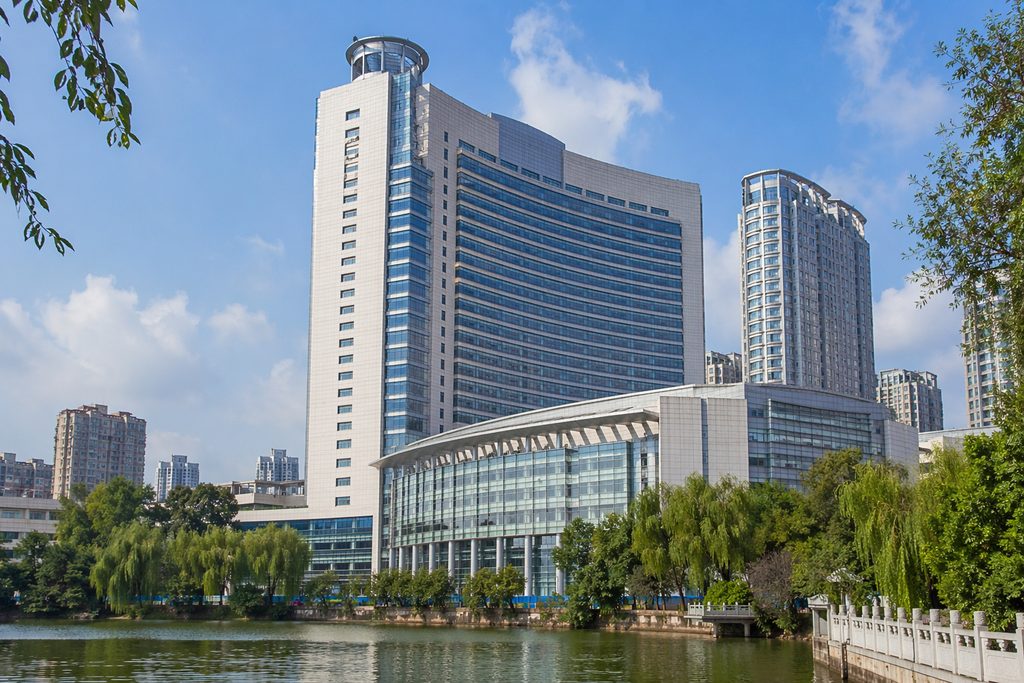
Wuhan Union Hospital Cardiology for International Patients: A Practical Guide to Costs, Booking, and What to Expect
Wuhan Union Hospital cardiology cost is a question we hear constantly from patients across North America, Europe, and the Middle East. The short answer: a coronary artery bypass graft (CABG) at this center typically runs between $12,000 and $20,000, depending on case complexity. That compares to $120,000 or more in the United States. But cost is only one piece of the puzzle. This guide walks through what the cardiology and cardiac surgery departments actually offer, how international patients can realistically access care, and what the booking process looks like when you are navigating it from abroad.
Key Takeaways
- Wuhan Union Hospital performs over 4,000 cardiac surgical procedures annually, placing it among China’s highest-volume heart centers.
- Total cardiac surgery costs run roughly 1/5 to 1/10 of comparable procedures in the US, with CABG starting around $12,000.
- The hospital’s international department handles foreign patients, but you cannot book surgery remotely without a prior in-person or video consultation.
- S2 visa is the correct category for medical travel to China — not the M visa, which is strictly for commercial and trade activities.
The Problem: Cardiac Care Costs Are Pushing Patients Into Impossible Choices
Heart disease remains the leading cause of death globally. In the United States alone, approximately 697,000 people died from heart disease in 2020, according to the CDC. For patients who need surgical intervention — bypass surgery, valve replacement, complex arrhythmia ablation — the financial burden is staggering. A single CABG procedure in the US averages $120,000 to $150,000 without complications. Even with insurance, out-of-pocket maximums, deductibles, and coverage gaps leave many patients facing $20,000 to $40,000 in personal costs.
Uninsured patients face the full bill. And those in countries with long public wait times — Canada, the UK, Australia — wait months for procedures that should happen in weeks. A 2023 report from the Canadian Institute for Health Information found that only 66% of Canadians received their priority cardiac bypass surgery within the recommended benchmark time. The rest waited longer. Sometimes much longer.
So patients start looking elsewhere. Thailand, India, Singapore, South Korea — and increasingly, China. The question is whether a Chinese public hospital can match the clinical quality of a Western center while delivering care at a fraction of the price. That is exactly what we need to examine.
Why Wuhan Union Hospital Cardiology Delivers Results
Wuhan Union Hospital, officially Union Hospital Tongji Medical College of Huazhong University of Science and Technology, is consistently ranked among China’s top hospitals by the Fudan University hospital rankings. Its cardiovascular division is a national clinical research center. That designation is not honorary — it means the department receives dedicated state funding for clinical trials, technology acquisition, and specialist training.
Clinical Volume Drives Procedural Competence
Volume matters in cardiac surgery. Surgeons who perform more procedures have lower complication rates and better long-term outcomes. A 2017 study published in the New England Journal of Medicine found that hospitals performing more than 200 CABG procedures annually had significantly lower mortality rates than low-volume centers. Wuhan Union Hospital’s cardiac surgery team operates well above that threshold. The department performs over 4,000 cardiac operations each year, including CABG, valve repair and replacement, congenital heart defect correction, and aortic surgery.
Compare that to a typical US community hospital, which might perform 100 to 200 CABG procedures annually. The surgical teams at Wuhan Union see more complex cases in a single month than many Western surgeons see in a year. That repetition builds a level of procedural fluency that is hard to replicate in lower-volume settings.
Technology and Infrastructure at Scale
The cardiology department at Wuhan Union operates multiple cardiac catheterization labs, hybrid operating rooms, and dedicated cardiac intensive care units. The hospital adopted robotic-assisted cardiac surgery in selected cases and routinely performs minimally invasive valve procedures that many Western centers only began offering recently.
One structural advantage: Chinese top-tier public hospitals consolidate resources at an extraordinary scale. Wuhan Union sees over 10,000 outpatient visits per day across all departments. That patient flow supports investment in imaging equipment, ECMO circuits, and 24/7 interventional teams that smaller Western hospitals simply cannot justify financially.
Cost Advantage Without Quality Compromise
Let us address the obvious objection. Lower cost does not mean lower quality. The structural reasons for the price difference are straightforward. Chinese physician salaries are lower than American ones. Hospital construction costs are lower. Malpractice insurance premiums are a fraction of US rates. Administrative overhead — the billing, coding, and insurance negotiation apparatus that consumes roughly 25% of US hospital spending — is dramatically smaller in China’s public system.
The result: a CABG that costs $120,000 in the US costs $12,000 to $20,000 at Wuhan Union. A mitral valve repair that runs $80,000 to $100,000 in the US costs $15,000 to $25,000 here. These are real numbers patients have shared with our coordination team, and they align with published price surveys for Chinese top-tier cardiac centers.
How to Book Heart Surgery at Wuhan Union Hospital: The Real Process
Here is where most international patient guides fall apart. They describe an idealized process that does not match how Chinese public hospitals actually operate. Let us be precise.
You cannot email the hospital, pay a deposit, and show up for surgery the following week. Chinese public hospitals require an in-person or video consultation before any surgical booking. The surgeon must review your imaging, assess your case, and confirm that surgery is indicated. Only then can a surgical date be discussed.
The practical pathway for an international patient looks like this:
- Step 1 — Records review. You send your existing echocardiograms, coronary angiograms, CT scans, stress test results, and current medication list. Our team translates these into Chinese and submits them to the cardiology department for preliminary review.
- Step 2 — Video consultation. A cardiologist or cardiac surgeon from Wuhan Union reviews your case via video call. This costs between $100 and $300 for a standard consultation or $500 to $800 for a top-specialist consultation. The doctor assesses whether surgery is appropriate and what procedure fits your anatomy.
- Step 3 — In-person evaluation. If the video consultation confirms surgical candidacy, you travel to Wuhan. The hospital repeats key imaging — this is standard practice and not optional. Expect 2 to 3 days of pre-operative testing.
- Step 4 — Surgical scheduling. After the in-person evaluation, the surgical team schedules your procedure. Wait times vary by surgeon and urgency, but typically range from a few days to two weeks.
- Step 5 — Admission and procedure. You are admitted through the hospital’s international department or VIP ward. Surgery proceeds. Post-operative recovery in the cardiac ICU runs 1 to 3 days, followed by 5 to 10 days on the regular ward.
The entire process, from first contact to discharge, typically spans 3 to 6 weeks. Patients who need complex redo surgery or combined procedures should plan for longer.
Is Wuhan Union Hospital Good for Heart Bypass? Evaluating the Evidence
Short answer: yes, with qualifications. The cardiac surgery department performs a high volume of CABG procedures annually, and its outcomes are consistent with other top-tier Chinese cardiac centers. The hospital participates in national quality registries and reports its surgical mortality rates to the National Health Commission. While detailed public outcome data is less granular than what the Society of Thoracic Surgeons publishes in the US, the volume alone places Wuhan Union in the top tier of Chinese heart centers.
Where the hospital genuinely excels is in complex and redo cardiac surgery. Many international patients who contact us have been told their anatomy is too difficult for a standard community hospital. Wuhan Union’s surgeons see these cases routinely. The combination of high volume, experienced surgical teams, and a well-equipped cardiac ICU makes this center a reasonable option for patients who need straightforward CABG and for those with more complicated presentations.
But there are trade-offs. The international department is smaller than what you would find at a Western private hospital. English-speaking staff are available, but the broader hospital environment operates in Chinese. You will need interpretation support for many interactions — from the blood draw technician to the ward nurse to the pharmacist. That is not a criticism; it is the reality of receiving care in a Chinese public hospital.
| Procedure | Wuhan Union Hospital (USD) | United States (USD) | United Kingdom Private (USD) |
|---|---|---|---|
| Coronary Artery Bypass Graft (CABG) | $12,000 – $20,000 | $120,000 – $150,000 | $35,000 – $50,000 |
| Mitral Valve Repair | $15,000 – $25,000 | $80,000 – $100,000 | $30,000 – $45,000 |
| Aortic Valve Replacement | $18,000 – $28,000 | $90,000 – $120,000 | $32,000 – $48,000 |
| Complex Arrhythmia Ablation | $8,000 – $15,000 | $40,000 – $70,000 | $20,000 – $30,000 |
Prices vary by hospital and case complexity. These ranges reflect what our coordination team has observed for international patients using the hospital’s VIP or international department channels. Standard public ward pricing is lower, but international patients are generally routed through the international department, which carries a premium of roughly 1.5 to 2 times the standard rate.
International Patient Coordinator Wuhan Union Hospital Cardiology: What Support Actually Exists
The hospital has an international medical services office that handles foreign patients. Staff there can arrange appointments, coordinate with departments, and provide basic interpretation. But their capacity is limited. They are hospital employees, not patient advocates. They will not help you find accommodation, arrange airport transfers, manage your visa paperwork, or coordinate post-discharge rehabilitation.
That is where a third-party coordinator adds value. An international patient coordinator for Wuhan Union Hospital cardiology handles the logistics that the hospital itself does not: translating medical records before submission, scheduling video consultations, booking hotels near the hospital, arranging airport pickup, providing a bilingual companion during hospital visits, and managing follow-up communication after you return home.
Cost for a bilingual medical companion runs from $300 per day. Hospital appointment coordination starts from $300. Video consultations range from $100 to $800 depending on the specialist’s seniority. These are coordination fees — they are separate from hospital charges and do not guarantee access to any specific surgeon or surgical date.
Practical tip: Any consultation fee you pay for a video consult or written second opinion is credited in full toward on-the-ground coordination if you proceed with treatment in China within 90 days. That credit applies to coordination services only, never to hospital treatment charges.
Best Heart Hospital in China for Foreigners: Where Wuhan Union Fits
China has several world-class cardiac centers. Fuwai Hospital in Beijing performs over 14,000 cardiac surgeries annually — the highest volume in the world. Zhongshan Hospital in Shanghai is another top contender. West China Hospital in Chengdu and the First Affiliated Hospital of Zhejiang University in Hangzhou also run strong cardiac programs.
So why consider Wuhan Union? Three reasons. First, cost. Wuhan is a second-tier city with lower living costs than Beijing or Shanghai, and hospital pricing reflects that. Second, clinical depth. The cardiovascular division is a national clinical research center, which means it attracts complex cases from across central China. Third, accessibility. Wuhan is a major transportation hub with direct international flights to several Asian and European cities, and the hospital is centrally located.
For patients asking about the best heart hospital in China for foreigners, the honest answer is that several centers are clinically excellent. The right choice depends on your specific condition, budget, and logistical preferences. Wuhan Union is a strong candidate for patients who want high-volume cardiac surgery at lower cost than Beijing or Shanghai, and who are comfortable with a less Westernized hospital environment. You can explore our ranked list of China’s top hospitals to compare options across cities.
Cardiac Surgery Price China International Patients: Understanding the Full Bill
When we quote cardiac surgery prices in China for international patients, the surgical fee is only part of the total. You also need to account for pre-operative testing, anesthesia, ICU stay, ward stay, medications, and consumables like stents or valves. A mechanical valve or bioprosthetic valve adds $3,000 to $8,000 to the total. Drug-eluting stents for PCI procedures cost $500 to $1,500 each in China — far less than the $3,000 to $5,000 per stent charged in the US.
Payment is required upfront. Chinese public hospitals do not bill insurance companies directly. You pay the hospital, receive itemized receipts, and submit a claim to your insurer for reimbursement. Some international insurance plans have direct billing arrangements with private international hospitals in China, but public hospitals like Wuhan Union generally operate on a prepayment model.
Total out-of-pocket for a CABG, including all hospital charges but excluding travel and accommodation, typically lands between $15,000 and $25,000. That is the all-in figure for the international department. Patients using the standard public ward channel pay less, but they lose English-language support and priority scheduling.
Practical Considerations: Visa, Records, and Recovery Logistics
Medical travel to China requires the S2 visa, which is the short-stay category used for medical treatment and private affairs. Your accompanying family member applies for the same S2 visa. The hospital must provide a medical treatment invitation letter confirming your scheduled consultation or procedure. Chinese embassies and consulates review these applications individually, and approval is never guaranteed. Apply at least 4 to 6 weeks before your planned travel date.
Bring every cardiac record you have. Coronary angiogram images on CD or USB, echocardiogram videos, CT scans, stress test reports, current medication list, and a summary letter from your cardiologist. The more complete your records, the faster the Chinese team can assess your case. Incomplete records mean repeat testing in Wuhan, which adds time and cost.
Language is the biggest practical barrier. Very few ward nurses and technicians speak English. The international department has some English-speaking coordinators, but they are stretched thin. A bilingual companion who can translate during consultations, explain medication instructions, and handle payment counters makes the experience dramatically smoother. Expect to pay from $300 per day for this service.
After discharge, plan for at least 1 to 2 weeks of recovery in Wuhan before flying home. Long-haul flights immediately after cardiac surgery increase the risk of deep vein thrombosis and other complications. Your surgical team will provide a discharge summary and medication plan. Follow-up is typically handled via video consultation, with your local cardiologist performing physical exams and imaging.
Frequently Asked Questions
No. The hospital requires a video consultation or in-person evaluation before any surgical booking. You can complete a video consultation remotely, but the surgical team will not confirm a date until they have reviewed your imaging and assessed your case directly. This is standard practice across Chinese public hospitals.
Your local cardiologist handles post-operative complications. The surgical team at Wuhan Union provides a detailed discharge summary and is available for follow-up video consultations, but they cannot physically manage complications abroad. This is a real limitation of any medical travel arrangement, not just China. Patients with unstable post-operative courses or complex comorbidities should think carefully before traveling for surgery.
Wuhan Union Hospital does not bill international insurers directly. You pay upfront and submit for reimbursement. Some insurers will pre-authorize treatment at specific overseas hospitals — check with your insurer before committing. The hospital can provide itemized receipts and medical documentation to support your claim.
Wuhan Union’s cardiac surgery department is part of a national clinical research center for cardiovascular disease. Surgeons are board-certified in cardiac surgery through the Chinese medical system, and the department performs over 4,000 cardiac operations annually. The hospital is consistently ranked among China’s top hospitals by the Fudan University rankings. While individual surgeon outcome data is not published in the same format as US registries, the institutional volume and national ranking are meaningful signals of competence.
Wuhan is a major Chinese city with modern infrastructure and a well-developed medical system. The hospital itself meets international standards for cardiac care. The main risks are the same as any medical travel: being far from your support network, language barriers, and the physical stress of long-haul travel before and after surgery. Patients with stable cardiac disease who plan carefully generally tolerate the process well. Those with unstable angina, recent myocardial infarction, or decompensated heart failure should not travel until stabilized.
Your Next Step
Wuhan Union Hospital cardiology offers genuinely high-volume cardiac surgery at a fraction of Western prices. The trade-offs are real: language barriers, upfront payment, and a system that requires in-person evaluation before surgery. We help international patients navigate these logistics — from records translation and video consultation scheduling to on-the-ground bilingual support in Wuhan. We are not a hospital and do not provide diagnoses or treatment recommendations. But if you want to understand whether this option fits your situation, a conversation is the right starting point. Request a free consultation and we will walk through your case, your records, and your options without pressure.
Understanding your cardiac surgery options abroad is the first step. The decision belongs to you — and the more you know, the better that decision will be.
For more medical information and treatment options in China, visit chinamedservices.com (China Medical Services).
