X-Ray in China: Cost and How to Book as a Foreigner
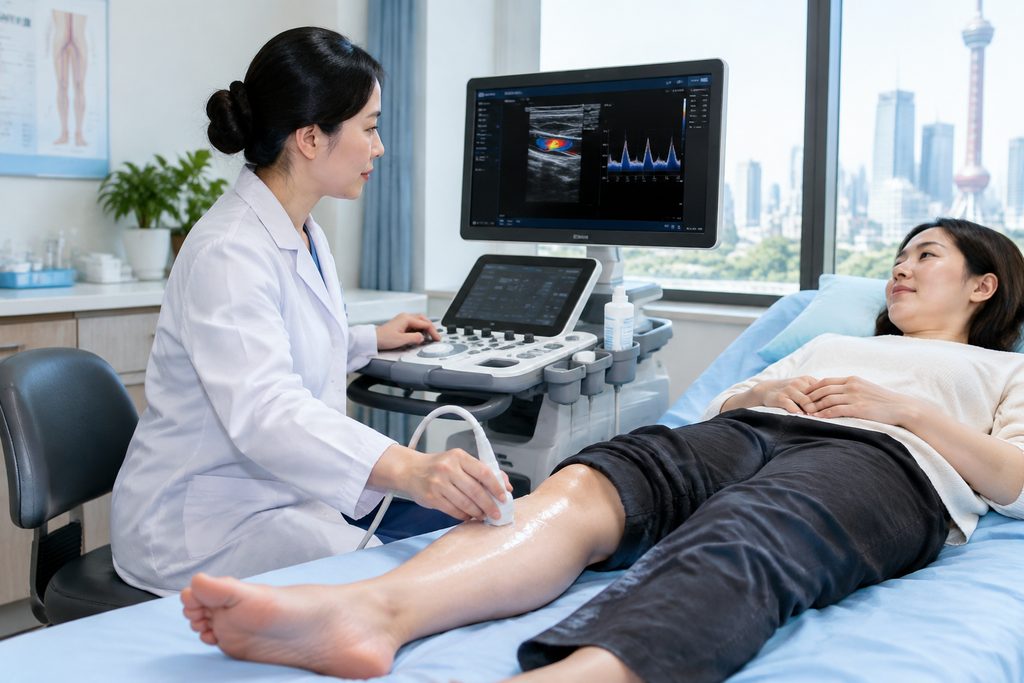
When 54-year-old Margaret from Oregon slipped on a wet hotel floor in Shanghai, her first thought wasn’t the pain in her wrist. It was the paperwork. She had travel insurance, a passport, and zero idea what an x-ray cost China hospitals would charge her as a foreigner, or whether she could even walk into a clinic without an appointment. Two hours later she was sitting in the international department of a top-tier hospital, wrist wrapped, waiting for imaging that cost less than her airport taxi.
That gap between panic and resolution is smaller than most visitors expect. China’s medical imaging system is fast, heavily regulated, and dramatically cheaper than what Americans and Europeans are used to paying. But the booking process works differently here, and walking in blind can cost you hours.
This guide covers what x-rays actually cost, how to book one, whether they’re safe, and how to avoid the most common mistakes foreigners make.
How This Actually Works, Step by Step
Here’s the real sequence, from the moment you decide you need imaging to the moment you hold the results.
Step one: decide which type of facility fits your situation. China has three tiers that matter to foreigners. Public tertiary hospitals (the famous “Grade 3A” institutions) are where the volume, expertise, and lowest prices live. Private international hospitals — United Family, Jiahui, Parkway, Raffles — offer English-speaking staff, JCI accreditation, and direct insurance billing. Traditional Chinese Medicine hospitals round out the picture for rehabilitation and chronic care. For a simple x-ray, all three work. For anything complex, the public tertiary route gives you access to equipment and radiologists that rank among the best in the world.
Step two: understand how appointments work. This is where most visitors get surprised. At public hospitals, routine outpatient registration typically happens on the day of your visit — you queue, take a number, and see a doctor who then writes the imaging order. You cannot usually book a standard outpatient slot from overseas weeks in advance. Surgery and advanced imaging require an in-person consultation first. That’s the standard rule, not a policy aimed at foreigners.
If you need to lock something in before you fly, the international or VIP department is the channel that allows it. Expect to pay roughly 1.5 to 2 times the standard rate for that convenience, English service, and senior specialists.
Step three: the doctor orders the scan. You pay at a cashier window or via mobile payment, then proceed to the radiology department with your receipt and order slip.
Step four: imaging happens, usually the same day. A chest x-ray at a busy hospital might take fifteen minutes of actual machine time. The wait is in the queue.
Step five: results come back. Simple films are often ready within a few hours. A radiologist’s written report may take longer, sometimes until the next day at large public hospitals.
What an X-Ray Actually Costs in China
Now the number you came for. A standard x-ray at a Chinese public hospital typically runs between $15 and $60 depending on the body part, the hospital’s tier, and whether contrast is used. A chest x-ray at a mid-tier public hospital in Shanghai or Beijing often lands in the $20 to $40 range. Private international hospitals charge more — usually $80 to $250 for the same study, because you’re paying for English-language service, shorter waits, and insurance paperwork handling.
Compare that to the United States, where a single chest x-ray without insurance can bill at $200 to $500, and the gap becomes obvious. Even with insurance, American patients frequently see $50 to $150 in cost-sharing for a basic film.
| Imaging Type | China Public Hospital | China Private International | Typical US Price |
|---|---|---|---|
| Chest x-ray | $20–$45 | $80–$180 | $200–$500 |
| Extremity x-ray (wrist, ankle) | $15–$40 | $70–$160 | $150–$400 |
| CT scan (single region, no contrast) | $80–$250 | $400–$900 | $1,200–$3,500 |
| MRI (single region) | $150–$500 | $700–$1,800 | $1,500–$4,000 |
| Ultrasound | $30–$100 | $150–$400 | $400–$1,200 |
These figures vary by hospital and case complexity. A teaching hospital in a Tier 1 city with newer equipment will sit at the higher end. A provincial hospital may undercut them significantly. And if you’re considering a broader diagnostic workup rather than a single film, some facilities offer bundled health screening packages that fold imaging, bloodwork, and a physician review into one price — often $300 to $800 total, which is worth asking about if you’re already planning a check-up.
Currency matters too. You’ll pay in renminbi, and the exchange rate shifts. Budget a little cushion.
A Realistic Timeline
How long does the whole thing take? Here’s what to expect, assuming you’re already in China.
| Stage | Typical Duration | Notes |
|---|---|---|
| Hospital registration and queue | 30–90 minutes | Longer at peak morning hours; VIP channel cuts this sharply |
| Physician consultation | 10–20 minutes | Required before imaging is ordered |
| Payment | 10–20 minutes | Cashier window or mobile pay |
| Radiology queue and scan | 20–60 minutes | Simple films are quick once you’re called |
| Film pickup | 1–4 hours | Same day is common |
| Written radiologist report | 4–24 hours | May require a return visit or app download |
If you’re planning ahead from abroad, add time for the parts people forget. Document translation, if you want your home physician to review Chinese reports, takes two to five business days through a professional service. Visa processing for an S2 visa — the correct category for medical treatment and private affairs — typically runs four to ten business days depending on your consulate, and you’ll want supporting hospital documents in hand first. Appointment lead time at a private international hospital can be as short as 48 hours. At a top public hospital’s international department, give it one to two weeks.
For a straightforward x-ray during an existing trip, the realistic answer is: same day, start to finish, if you arrive in the morning.
What Can Go Wrong — and What Happens Then
Honest failure modes, because you deserve to know them before you’re standing in a hallway holding a slip you can’t read.
The language wall is real. China’s top hospitals handle enormous daily patient volumes — some see over ten thousand outpatient visits a day. Signage, forms, and staff conversations are overwhelmingly in Chinese. Without a Chinese speaker beside you, finding the right window, understanding which queue you’re in, and reading your own report becomes genuinely difficult. The fix is a bilingual medical companion who handles registration, queuing, payment, wayfinding, and translation. That service typically starts around $300 per day.
You may be told imaging isn’t necessary. Chinese physicians are often conservative about radiation exposure and may decline to order a scan they consider clinically unjustified. That’s a feature, not a bug — but it can frustrate visitors who expected to dictate the test.
Payment friction. Public hospitals require prepayment. International insurance is usually reimbursed after the fact, not billed directly. Private international hospitals frequently do bill insurers directly, which is a real advantage if you’re covered by a plan with China networks. Check your policy before you choose a facility.
Report interpretation. A Chinese-language radiology report is not something you want to guess at. If you need a second read, or want a specialist at a top hospital to review your films and give you a written opinion before you commit to treatment, that’s a separate service — a written second opinion from a top-hospital specialist typically runs $300 to $500 and is for reference only, not a prescription.
Is X-Ray Safe in Chinese Hospitals?
Yes, and the regulatory framework is stricter than many visitors assume. Chinese hospitals operate under national radiation protection standards that govern equipment calibration, shielding, operator certification, and dose limits. Tertiary hospitals maintain licensed radiology departments with quality-control protocols, and JCI-accredited private hospitals meet international benchmarks on top of that.
The clinical reality is the same everywhere: diagnostic x-rays use low doses, and the benefit of an accurate diagnosis almost always outweighs the small risk. A chest x-ray delivers roughly the radiation you’d absorb from a few days of natural background exposure. Pregnant patients should always inform staff before any imaging, and that instruction is universal.
What you should verify is simpler: that you’re in a licensed facility, that the technologist confirms your identity and the body part being imaged, and that you receive a written report alongside the images. Any reputable hospital does all three.
If you want to understand how Chinese hospitals are ranked and which ones lead in specific specialties, our department-by-department rankings break down the top ten hospitals across 45 specialties, from radiology-adjacent fields like oncology to orthopedics.
Practical Considerations: Booking, Records, and Follow-Up
Booking channels. Private international hospitals accept email and phone bookings in English, often with 24 to 48 hours’ notice. Public hospitals increasingly use mobile apps and WeChat mini-programs, but these are Chinese-language and typically require a Chinese phone number and national ID — which is exactly where foreign visitors hit a wall. The international department bypasses this. So does a coordination service.
Records to bring. Any prior imaging, your medication list, allergy history, and a summary of your medical history in Chinese if possible. If you have a chronic condition, bring recent labs. Radiologists read better with context.
Visa timing. If imaging is part of a broader treatment plan, the S2 visa is the category used for short-stay medical treatment and private affairs, and accompanying family members apply under the same category. Requirements vary by consulate, so confirm with your local Chinese embassy or consulate and have your hospital’s supporting documents ready. Don’t book flights before the visa is in hand.
Insurance. Call your insurer before you go. Ask specifically whether they reimburse overseas outpatient imaging, what documentation they need, and whether they have direct-billing arrangements with any Chinese hospital. Getting this in writing saves arguments later.
Follow-up at home. Request your images on a CD or USB drive, plus the written report. If you need it translated for your home physician, arrange that before you leave — it’s cheaper and faster in-country.
For a wider view of how the whole system fits together for international patients, our main resource hub walks through hospital selection, city-by-city options, and the logistics of treatment in China.
Frequently Asked Questions
At a public hospital, expect $15 to $60 for a standard film. Private international hospitals charge $80 to $250. The price depends on the body part, the hospital’s tier, and whether contrast is used. You’ll pay upfront in renminbi and seek reimbursement from your insurer afterward.
At private international hospitals, yes — usually by email, with 24 to 48 hours’ notice. At public hospitals, routine outpatient registration generally happens on the day of your visit, and you need a physician consultation before imaging is ordered. The international or VIP department is the channel that allows advance booking, at roughly 1.5 to 2 times the standard fee.
Licensed Chinese hospitals operate under national radiation protection standards covering equipment calibration, shielding, and operator certification. JCI-accredited private hospitals add international quality benchmarks. Diagnostic doses are low and comparable to what you’d receive anywhere. Always tell staff if you might be pregnant.
If you’re already in China on a tourist or business visa, no separate visa is needed for outpatient imaging. If you’re traveling specifically for medical treatment, the S2 visa is the applicable short-stay category for medical treatment and private affairs, subject to your consulate’s current requirements and supporting hospital documents. The M visa is for commercial and trade activities and is not a medical visa.
At private international hospitals, generally yes. At public tertiary hospitals, English proficiency among frontline staff is limited, and the volume of patients makes navigation genuinely challenging without a Chinese speaker. A bilingual medical companion handles registration, queuing, payment, wayfinding, and translation for the duration of your visit.
Your Next Step
An x-ray in China is fast, affordable, and safe — the hard part is the navigation, not the medicine. Know the price range, understand that public hospitals work on same-day registration, and decide in advance whether you want the English-language comfort of a private facility or the depth of a top public institution.
We’re China Medical Services. Our team connects international patients with more than 340 top-ranked hospitals across 37 cities, handles appointment coordination, and provides bilingual medical companions who stay beside you from registration to report pickup. We don’t practice medicine and we don’t promise outcomes — we remove the friction between you and good care. If you’d like help figuring out which hospital fits your situation, start with a free consultation. No pressure, no obligation.
This article is for general information only and does not constitute medical advice. Imaging decisions should always be made with a qualified physician who can assess your individual circumstances.
For more medical information and treatment options in China, visit chinamedservices.com (China Medical Services).
