New Zealand Patients Treatment in China: Complete Companion Guide
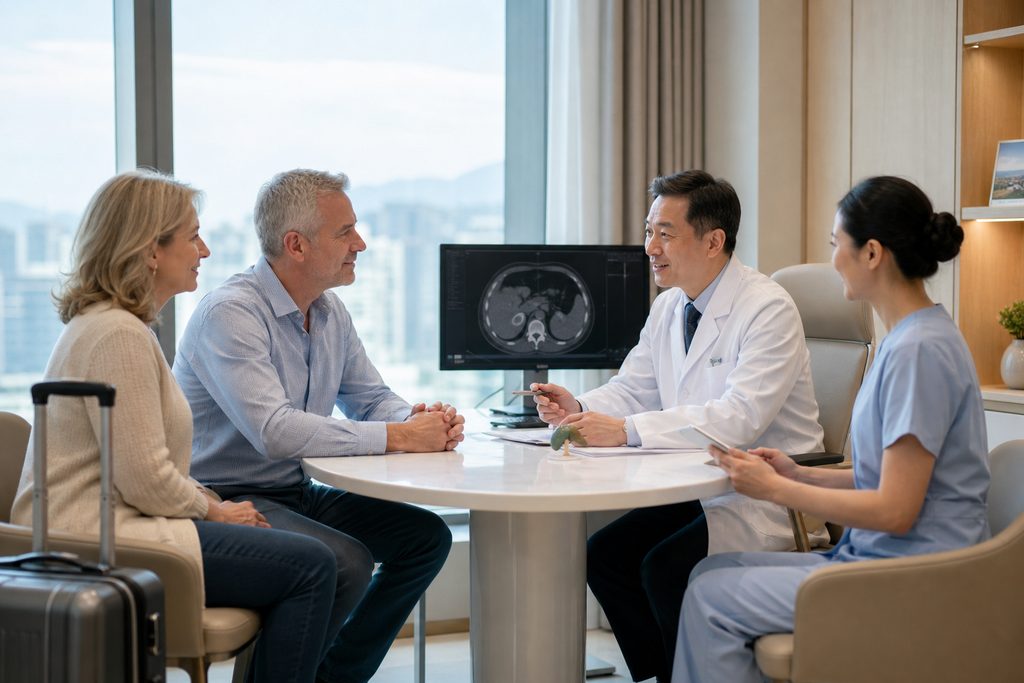
When 54-year-old Sarah from Christchurch got her second oncology opinion, the numbers hit harder than the diagnosis. Her recommended immunotherapy regimen in Auckland was quoted at NZ$9,200 per cycle. The same drug, same protocol, at a top-tier Shanghai hospital? NZ$2,100 per cycle. She had never considered leaving New Zealand for care. Six weeks later, she was sitting in a consultation room at Zhongshan Hospital with a bilingual coordinator beside her. This guide walks through exactly what New Zealand patients need to know before making that same call — from real cancer treatment cost China for New Zealanders to visa paperwork, hospital selection, and the honest risks.
Key Takeaways
- Top Chinese hospitals charge 60-80% less than New Zealand private providers for comparable procedures, with oncology being the most dramatic gap.
- China’s Fudan-ranked top 100 hospitals perform surgical volumes that dwarf most Australasian centers — Fuwai Hospital alone completes 14,000+ cardiac surgeries yearly.
- Public hospital outpatient clinics cannot be pre-booked from overseas; international departments and VIP channels are the practical route, costing 1.5-2x standard rates.
- You will need an S2 visa with medical treatment annotation — not an M visa, which is strictly for commercial trade activities.
The Problem: Wait Times and Costs at Home
New Zealand’s public health system delivered a median wait of 103 days for a first specialist assessment in 2023, according to Health New Zealand data. For elective surgery, the median post-assessment wait stretched to 94 days. For oncology, the picture is better — urgent cancer referrals are seen within 31 days in most DHBs. But “seen” is not “treated.”
Private care closes the speed gap but opens a financial one. A private hip replacement in Auckland runs NZ$28,000-35,000. A coronary artery bypass graft in a New Zealand private hospital can exceed NZ$50,000. Many New Zealanders simply cannot afford private care and cannot wait for public. That is the squeeze pushing a growing number to look north.
And the gap is widening. Surgical waitlists have grown every year since 2020. For non-urgent orthopedic procedures, some patients wait 12 months or more.
Why China Delivers Results for New Zealand Patients
China’s top-tier hospital system operates on a fundamentally different scale. The question “is it safe to have surgery in China” deserves a data-backed answer, not a reassurance. Let’s look at the evidence.
Clinical Volume Drives Better Outcomes
Chinese surgeons at Fudan-ranked hospitals operate at volumes that would be statistically impossible in New Zealand’s system. A senior orthopedic surgeon at a top Chinese hospital performs 200-500 joint replacements annually. The average New Zealand orthopedic surgeon performs roughly 50-80 per year. Volume correlates with complication rates in joint replacement surgery — the relationship is well documented in registry data from multiple countries.
Fuwai Hospital in Beijing completes over 14,000 cardiac surgeries per year, making it the highest-volume cardiac center globally. By comparison, all New Zealand public hospitals combined perform approximately 7,000 cardiac surgeries annually. When a surgical team does something thousands of times, the workflow becomes refined in ways that occasional exposure cannot match.
Technology and Efficiency at Scale
Chinese hospitals adopted digital hospital management systems years ahead of many Western counterparts. A patient at a top Shanghai hospital can complete registration, payment, lab result retrieval, and prescription pickup through a single mobile app. Imaging turnaround times at major centers run 30-60 minutes for standard CT scans. Same-day MRI slots are available at most international departments.
This operational efficiency extends to surgical scheduling. Once a patient has been seen in consultation and a procedure is approved, surgery at an international department can often be scheduled within 2-4 weeks. The bottleneck is not operating room availability — it is the required pre-operative workup and specialist review.
Cost Advantage Without Quality Compromise
The structural reasons Chinese care costs less are straightforward: lower labor costs, higher patient throughput, and state-subsidized hospital infrastructure. A surgeon’s salary in China is a fraction of a New Zealand specialist’s. Hospital buildings are publicly funded. These savings pass through to patient bills without touching clinical protocols.
For New Zealanders specifically, the math is stark. A hip replacement at a top Chinese public hospital international department runs US$12,000-18,000. The same procedure privately in Auckland costs NZ$28,000-35,000 (US$17,000-21,000). The gap widens for complex procedures: cardiac bypass in China runs US$12,000-20,000 versus US$120,000+ in the United States and NZ$50,000+ privately in New Zealand.
Cancer Treatment Cost China for New Zealanders: The Real Numbers
Oncology is where New Zealand patients see the most dramatic savings. Immunotherapy drugs that cost NZ$9,000-12,000 per cycle in Auckland are typically billed at NZ$2,000-3,500 per cycle in Chinese top-tier hospitals. Targeted therapies show similar gaps. The reason is pharmaceutical pricing: China’s national drug procurement program negotiates prices that are among the lowest globally for many oncology agents.
| Treatment | New Zealand Private Cost (NZD) | China Top Hospital Cost (NZD) | Savings |
|---|---|---|---|
| Immunotherapy (per cycle) | $9,200-$12,000 | $2,100-$3,500 | 65-77% |
| Hip Replacement | $28,000-$35,000 | $19,000-$28,000 | 20-32% |
| Coronary Bypass | $50,000+ | $19,000-$31,000 | 38-62% |
| Dental Implants (full arch) | $25,000-$40,000 | $12,000-$20,000 | 40-52% |
| Knee Replacement | $25,000-$32,000 | $16,000-$24,000 | 25-36% |
These figures vary by hospital tier, case complexity, and whether treatment runs through the standard public channel or the international department. The international department typically adds 50-100% to standard public rates — but still lands far below New Zealand private pricing. For medical tourism packages China from NZ, the total cost including flights, accommodation, and coordination services often still comes in under the New Zealand private bill alone.
Best Hospitals in Shanghai for Foreigners: Where NZ Patients Actually Go
Shanghai hosts 18 of China’s Fudan-ranked top 100 hospitals — second only to Beijing. For New Zealand patients, Shanghai is the most common entry point: direct flights from Auckland, a large English-speaking expatriate community, and hospital international departments accustomed to Western patients.
Zhongshan Hospital (Fudan University) leads in cardiology and cardiac surgery. Ruijin Hospital excels in endocrinology and hematology. Renji Hospital is the go-to for urology and reproductive medicine. Each runs a dedicated international medical center with English-speaking coordinators, direct insurance billing for major international insurers, and streamlined admission for foreign passport holders.
For families considering private international hospitals, Shanghai offers United Family, Jiahui, and Parkway — all JCI-accredited with Western-trained physicians and direct billing. These cost more than public international departments but less than New Zealand private care for most procedures.
How Much Is a Hip Replacement in China? The Orthopedic Pathway
The short answer: US$12,000-18,000 at a top public hospital international department, or US$20,000-28,000 at a private international hospital. That includes the implant, surgeon fees, hospital stay (typically 4-7 days), and initial rehabilitation. Compare with US$17,000-21,000 privately in New Zealand — the savings are real but not dramatic for straightforward cases.
Where China pulls ahead is speed and implant choice. New Zealand public patients wait months for a hip replacement. Chinese international departments can typically schedule surgery within 3-4 weeks of consultation. And Chinese hospitals stock the full range of Western implant brands — Zimmer, Stryker, DePuy — alongside domestic options that cost 30-40% less with equivalent clinical track records.
Recovery protocols are aggressive and effective. Most patients are walking with assistance within 24 hours post-op. Discharge happens at day 5-7. Full rehabilitation runs 6-12 weeks, which many New Zealand patients complete at home after returning.
Book Dental Implants China Fast Track: What the Process Actually Looks Like
Dental care is the most streamlined entry point for New Zealand patients considering China. The demand is high enough that dedicated dental coordination services now exist to handle scheduling, translation, and follow-up. A full-arch implant restoration (All-on-4 or All-on-6) in Shanghai or Shenzhen runs NZ$12,000-20,000 — roughly half the New Zealand private price.
The fast-track process works like this: you send panoramic X-rays and a dental history for remote review. The Chinese implant team confirms candidacy and provides a written treatment plan with pricing. You book flights and accommodation. Treatment typically requires two trips: the first for implant placement (5-7 days on the ground), the second 3-6 months later for final prosthesis fitting (7-10 days). Some clinics offer same-day temporary teeth so you never go without.
Chinese implant centers in Shenzhen and Guangzhou handle international patients daily. Many have English-speaking dental coordinators on staff. The implant brands are the same ones used in New Zealand — Straumann, Nobel Biocare, Osstem. The lab work is done in-house at a fraction of New Zealand lab costs.
Practical Considerations: Visas, Payments, and the Hard Truths
The S2 visa is the correct category for medical treatment in China. It covers short-term private affairs, including medical treatment, and is typically issued for 30-90 days with possible extension. Your accompanying family member applies for their own S2 visa. The M visa is for commercial and trade activities only — using it for medical treatment is incorrect and can cause problems at the border or hospital registration.
Documentation for the S2 medical visa application includes: a letter of invitation or medical treatment confirmation from the Chinese hospital, your passport, a completed visa application form, and proof of sufficient funds. Processing time at the Chinese Embassy in Wellington or Consulate in Auckland runs 4-10 working days. Requirements change — check the Chinese Ministry of Foreign Affairs website for current rules before applying.
Payment is the second practical hurdle. Chinese public hospitals require pre-payment for inpatient care — typically a deposit of US$5,000-15,000 depending on the procedure. International departments accept major credit cards and international bank transfers. Private international hospitals bill insurers directly if you have coverage. New Zealand insurers vary widely on overseas treatment coverage — check your policy before committing.
Language is the third hurdle. Even at top hospitals, most nurses and many junior doctors speak limited English. The international departments provide interpreter services, but the quality varies. A bilingual medical companion — whether hired independently or through a coordination service — makes the difference between a smooth experience and a stressful one. Expect to pay from US$300 per day for a qualified companion.
Honest caveat: Public hospital outpatient clinics in China cannot be pre-booked from overseas. You cannot email a top surgeon’s office and reserve a slot. The practical route for international patients is the hospital’s international department or VIP channel, which costs 1.5-2x standard rates but gives you confirmed appointments and English-language coordination. Anyone promising you a specific surgeon’s time without going through the hospital’s official international department is not being straight with you.
Frequently Asked Questions
At Fudan-ranked top 100 hospitals, surgical safety metrics are comparable to Western benchmarks. Infection rates, complication rates, and mortality for common procedures are published in peer-reviewed Chinese medical journals and align with international standards. The key is hospital selection: a top-ranked public hospital or JCI-accredited private hospital is a different world from an unranked provincial facility. Verify any hospital’s credentials before committing.
Chinese law requires hospitals to carry medical liability insurance, and patients have legal recourse through the Chinese court system. In practice, international patients should have their own medical travel insurance that covers complications, extended stays, and medical evacuation. No system is risk-free. The practical safeguard is choosing a hospital with an established international department that has handled foreign patients before — they have protocols for complications, including coordination with overseas insurers and embassies.
Most New Zealand private health insurers will reimburse overseas treatment only if it is pre-approved and the treatment is not available in New Zealand within a clinically appropriate timeframe. Some policies exclude overseas treatment entirely. Contact your insurer before booking anything. Private international hospitals in China (United Family, Jiahui, Parkway) offer direct billing with major international insurers, but New Zealand domestic insurers are rarely on those lists. Expect to pay upfront and claim reimbursement.
For a surgical procedure, plan for 2-4 weeks on the ground: initial consultation and pre-operative workup (2-3 days), surgery and hospital stay (3-10 days depending on procedure), and initial post-operative follow-up (3-7 days). For oncology treatment, the timeline depends on the protocol — some patients stay for a full treatment cycle, others return for each cycle. Dental implants require two separate trips as described above. Your hospital’s international department will give you a specific timeline once your case is reviewed.
You need an S2 visa annotated for medical treatment. Entering on a tourist (L) visa for the purpose of hospital treatment is technically a violation of visa conditions and can cause problems with hospital registration, insurance claims, and visa extensions. The S2 application is straightforward once you have a hospital confirmation letter. China Medical Services has detailed visa guidance for medical travelers that covers current requirements.
Your Next Step
If you are weighing treatment options in China, start by getting your medical records in order and requesting a written second opinion from a top Chinese hospital. That single step costs US$300-500 and gives you a concrete treatment plan with real pricing — before you spend a dollar on flights. We at China Medical Services help New Zealand patients navigate hospital selection, visa paperwork, appointment coordination, and on-the-ground bilingual support. We are not a hospital and we do not provide diagnoses — we are the bridge between you and the medical expertise you need.
Send us your existing reports. We will connect you with the right specialist team and give you honest answers about whether China is the right call for your case. No pressure, no obligation. Just clarity.
For more medical information and treatment options in China, visit chinamedservices.com (China Medical Services).
