Zhejiang Cancer Hospital Breast Surgery: Costs & Access for International Patients
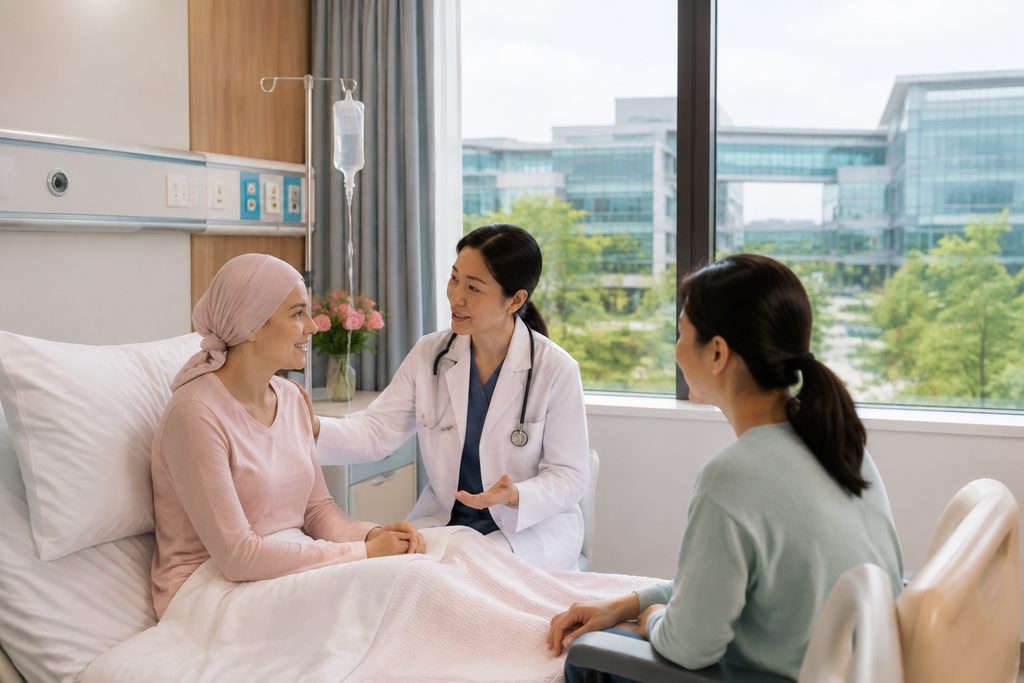
While a woman in the United States might wait three to five weeks just to schedule an initial surgical oncology consultation, patients at Zhejiang Cancer Hospital in Hangzhou are often seen within days. The price gap is just as stark: a lumpectomy or mastectomy at a top American hospital routinely exceeds $35,000–$60,000 before reconstruction, while comparable procedures at this Chinese comprehensive cancer center typically run between $8,000 and $18,000. That disparity is why hundreds of international patients now look to Hangzhou for breast surgery each year. But the real story — the one that determines whether this is actually a good idea for you — lives in the details of how access works, what the hospital can and cannot offer, and how you navigate a system built for a million local patients before it ever thinks about you.
We are China Medical Services, a team that has spent years helping foreign patients coordinate care at top-tier Chinese hospitals. This guide covers the Zhejiang Cancer Hospital breast surgery cost for foreigners, the realistic process of getting treated there, safety considerations, and how to decide if this path fits your situation. No fluff. No promises we cannot keep. Just what you need to know before you book a flight.
Zhejiang Cancer Hospital Breast Surgery for International Patients: The Short Answer
Yes, Zhejiang Cancer Hospital (ZCH) treats international patients for breast surgery. The hospital is one of China’s leading oncology centers, and its breast surgery department performs thousands of procedures annually. Costs for foreigners are roughly 1/5 to 1/3 of equivalent care in the US or Western Europe. But here is the catch that surprises almost everyone: you cannot simply email the hospital and book a surgery date. Public Chinese hospitals operate on a walk-in, queue-based system for routine care. Foreign patients who want a confirmed surgical slot before traveling must go through the hospital’s international department or a coordination service — and that changes both the price and the timeline.
Which brings us to the second reality: the “international patient” experience at ZCH is not the same as the local patient experience. It is better in some ways — English-speaking staff, expedited registration, private rooms in some wards. It is also more expensive, typically 1.5 to 2 times the standard public rate. Still far below Western prices. Still requires patience and paperwork.
Who This Is Right For — and Who It Isn’t
Let’s be direct about fit. This option works well for a specific profile of patient, and poorly for others.
Typically a good candidate:
- You have a confirmed breast cancer diagnosis with biopsy results and imaging (mammogram, ultrasound, MRI) already completed in your home country.
- Your case is clinically stable enough to travel — no active infection, no uncontrolled cardiac or pulmonary issues that would make a long flight dangerous.
- You are paying out of pocket or have an insurance plan that reimburses international care after the fact.
- You need surgery but not an immediate, same-week emergency intervention.
- You are comfortable with a different cultural approach to bedside manner — Chinese surgeons are excellent, but they tend to be direct and less emotionally expressive than some Western patients expect.
Who should probably not pursue this:
- Patients with advanced-stage disease requiring immediate initiation of systemic therapy before surgery. Neoadjuvant chemotherapy in China is excellent, but coordinating it remotely adds complexity you may not want during a crisis.
- Anyone whose insurance requires in-network care and will not reimburse overseas treatment.
- Patients who need complex microsurgical reconstruction (DIEP flap, for instance) and want the same surgeon to do both the oncologic resection and the reconstruction. At ZCH these are typically separate teams, and coordinating two surgical teams as a foreign patient multiplies your planning burden.
- People who cannot travel with a companion. You will need someone with you for at least the first week post-operatively. Full stop.
If you fall in the second list, staying home or choosing a private international hospital in China might serve you better. We say this because we have seen the alternative go wrong.
The Options, Compared
You have three realistic pathways if you want breast surgery in China. Each has different trade-offs. Here is how they actually compare:
| Factor | ZCH Public Route (Self-Navigated) | ZCH International/VIP Route | Private International Hospital (e.g., United Family, Jiahui) |
|---|---|---|---|
| Estimated total surgery cost | $8,000–$15,000 | $12,000–$20,000 | $25,000–$45,000 |
| English-speaking staff | Limited; you need a translator | Available in international department | Standard throughout |
| Advance booking before travel | Not possible for routine outpatient registration | Yes, through coordination | Yes, direct booking |
| Surgeon seniority | Varies; assigned at triage | Senior attending or chief physician typically | Senior surgeons, often Western-trained |
| Insurance direct billing | No; pay upfront, claim later | No; pay upfront, claim later | Yes, with major international insurers |
| Wait time after arrival | Days to 1-2 weeks for surgery scheduling | Often within 3-7 days | Usually within 1-2 weeks |
The self-navigated public route is cheapest but nearly impossible without Mandarin fluency. The international route at ZCH balances cost and access — you get the hospital’s clinical quality with a coordination layer that makes it workable. The private route trades clinical prestige for seamlessness and insurance convenience. For most foreign patients we work with, the ZCH international route is the sweet spot.
What “International Patient” Actually Means at ZCH
Zhejiang Cancer Hospital is a public institution first. Its primary mission is serving the population of Zhejiang province and surrounding regions. The international patient program exists, but it is not a sprawling department with dozens of coordinators. It is a focused service line that handles foreign patients through a dedicated office, arranging English-language support, expedited registration, and coordination with the breast surgery department.
What does that get you in practice? A few concrete things. First, you skip the chaotic general registration hall where thousands of local patients queue daily. Second, your medical records get translated and reviewed by the surgical team before you arrive, so your first in-person consultation is substantive rather than administrative. Third, you typically get assigned to a senior attending or chief physician rather than a junior resident. That matters for breast surgery, where surgical judgment about margins and axillary node management directly affects recurrence risk.
But it does not mean you get a private hospital experience. The building is still a busy public facility. Wards may be shared unless you pay for a private room. Food is Chinese hospital food unless you arrange otherwise. Your family cannot camp out in your room the way they might in a Western private hospital. These are not dealbreakers for most patients, but they are real.
And one more thing: ZCH is not JCI-accredited. That certification matters to some Western patients. What ZCH has instead is a reputation built on volume and outcomes — the hospital treats over 400,000 outpatients and 80,000 inpatients annually, and its breast surgery department is among the most experienced in eastern China. Volume creates competence. JCI creates process standardization. Both have value; they are not the same thing.
Zhejiang Cancer Hospital Breast Surgery Cost for Foreigners: What You Actually Pay
Let’s put numbers on the table. The Zhejiang Cancer Hospital breast surgery cost for foreigners through the international route typically falls in this range:
- Lumpectomy (breast-conserving surgery): $8,000–$12,000, including hospital stay, operating room fees, anesthesia, and basic pathology.
- Simple mastectomy: $10,000–$15,000.
- Modified radical mastectomy: $12,000–$18,000.
- Sentinel lymph node biopsy: $1,500–$3,000 as an add-on procedure.
- Immediate implant-based reconstruction: $8,000–$15,000 additional, depending on implant type and whether a single or dual surgeon is involved.
What drives the variance? Tumor size and location, whether you need axillary dissection, your age and comorbidities, the specific surgeon’s seniority, and whether you choose a private room. Also, whether you need neoadjuvant chemotherapy before surgery — that adds $6,000–$15,000 per cycle depending on the regimen, and most protocols run 4 to 8 cycles.
For context: how much is breast cancer surgery in Hangzhou China compared to elsewhere? A modified radical mastectomy in the US averages $35,000–$60,000 for the surgery alone, not counting reconstruction, anesthesia, or post-operative care. In Germany or the UK private sector, expect $25,000–$40,000. Even with international route markups, ZCH comes in at roughly one-third of Western prices. That is the appeal. It is not charity — it is structural cost differences in labor, facilities, and pharmaceutical pricing.
What is not included in the surgical quote: your flights, visa fees, accommodation before and after hospitalization, meals for companions, post-discharge medications (though these are cheap in China), and any revision surgery if complications arise. Budget an additional $3,000–$6,000 for a two-to-three-week stay in Hangzhou, depending on your hotel standards.
Safety, Quality, and the Question Everyone Asks
Is breast surgery at Zhejiang Cancer Hospital safe for foreigners? The short answer is yes, with qualifiers. The hospital performs breast cancer surgeries at a volume that most Western centers cannot match. High-volume surgical teams have lower complication rates — this is one of the most consistent findings in surgical outcomes research. ZCH’s breast surgeons operate daily, not twice a week. That repetition builds a level of technical fluency that is hard to replicate in lower-volume settings.
Infection control standards at top Chinese public hospitals are rigorous, though the physical environment may look more worn than a Western private facility. Do not confuse aesthetics with sterility. The operating rooms at ZCH meet national standards that are comparable to international norms.
The qualifiers: communication gaps can create risk if not managed properly. You need someone fluent in both languages who understands medical terminology — not just a bilingual friend. You need your pathology slides and imaging reviewed by the ZCH team before surgery, because they will want to confirm the diagnosis themselves. And you need realistic expectations about post-operative follow-up. Once you return home, your local oncologist takes over. ZCH will provide discharge summaries and recommendations, but they cannot manage your long-term care remotely in any meaningful way.
One more point on the “best breast cancer surgeon Zhejiang Cancer Hospital international patients” question. We cannot name individual surgeons here, and honestly, chasing a specific name is less useful than you think. What matters more is that your case gets assigned to a surgeon who performs breast procedures as their primary specialty — which at ZCH is the norm, not the exception. The department is structured so that breast surgery is all these surgeons do.
Practical Considerations: Records, Visas, and the Paper Trail
Here is what the logistics actually look like.
Medical records. Before anything else, you need to assemble a complete file: biopsy pathology report, hormone receptor status (ER/PR/HER2), imaging studies on CD or via secure link, surgical history, current medication list, and a letter from your treating physician summarizing your case. These must be translated into Chinese. ZCH’s international office will review them, typically within 3–7 business days, and tell you whether they will accept your case and what additional tests you will need on arrival.
Visa. Foreign nationals coming to China for medical treatment apply for an S2 visa, which covers short-term private affairs including medical care. Your companion applies for the same category. You will need an invitation letter or treatment confirmation from the hospital, which the international office can provide once your case is accepted. Processing times vary by country — figure 1 to 4 weeks. Do not book non-refundable flights until the visa is in your passport.
Payment. Public hospitals in China require prepayment. You will deposit an estimated treatment amount upfront, often via bank transfer or card at the hospital’s international payment window. Bring a credit card with a high limit and notify your bank about international charges. Cash is also accepted but carrying large amounts is unwise. Private international hospitals in China can often bill your insurer directly; ZCH generally cannot.
Language. Even in the international department, English proficiency varies. The senior surgeons may speak some English, but nurses, anesthesiologists, and administrative staff often do not. A bilingual medical companion — someone who understands both the language and the hospital workflow — is the single most valuable thing you can arrange. This is not a luxury. It is the difference between a smooth process and a stressful mess.
Follow-up care. Plan for 10–14 days in Hangzhou after discharge if your surgery is uncomplicated. You will have at least one post-operative visit for wound check and drain removal. After that, your care transfers back to your home oncologist. Get a detailed discharge summary in English before you leave — do not assume it will be provided automatically.
Frequently Asked Questions
Yes, but understand what “package” means here. You cannot buy a fixed-price bundle that includes surgery, hotel, and airport pickup from the hospital itself. What coordination services like ours do is assemble the pieces: hospital acceptance, visa documentation, appointment scheduling, interpreter support, accommodation recommendations, and airport transfers. The hospital bill is always separate and always paid to the hospital directly. Any service that claims to sell you a turnkey surgical package including the procedure itself — be skeptical. That is not how Chinese public hospitals operate.
For JCI-accredited private hospitals in China, breast cancer surgery typically costs $25,000–$45,000 — still below US prices but significantly above what ZCH charges. The JCI accreditation adds process consistency and English-language infrastructure, but it does not necessarily mean better surgical outcomes. If insurance direct billing matters to you, JCI-accredited private hospitals are the better fit. If you are paying out of pocket and want maximum cost efficiency with strong clinical quality, ZCH’s international route wins.
Complication rates for breast surgery are low — wound infection, seroma, and hematoma are the most common issues, and all are manageable at ZCH. But if a serious complication arises, you are in a Chinese hospital, far from your support network, dealing with a system where you do not speak the language. This is a real risk. Mitigate it by choosing a hospital with a strong track record (which ZCH has), ensuring you have a competent translator present during all clinical interactions, and purchasing medical travel insurance that covers complication-related extended stays. Also, have a plan for who makes decisions if you cannot — and put that in writing.
Usually yes, but the handoff is your responsibility. Bring back complete records: operative notes, pathology reports, imaging, and discharge summaries — all translated into English. Some Western oncologists are unfamiliar with Chinese hospital documentation, so having a professionally translated, well-organized file makes a significant difference. Expect your home team to want to repeat some tests. That is normal and not a sign that they distrust the Chinese results.
Your Next Step
Zhejiang Cancer Hospital offers genuinely excellent breast surgery at prices that make Western patients do a double-take. The clinical quality is real. The challenge is entirely logistical: getting your case accepted, navigating the visa, managing the language barrier, and coordinating a smooth handoff back to your home medical team. That is where we come in. China Medical Services is not a hospital, and we do not diagnose or treat anything. What we do is handle the coordination — records review, hospital communication, appointment scheduling, bilingual accompaniment, and all the unglamorous logistics that determine whether your trip goes smoothly or falls apart.
If you are seriously considering breast surgery at ZCH, start with a conversation. Tell us about your diagnosis, your records, and your timeline. We will give you an honest read on whether this path makes sense for you, and what it would cost to coordinate. No pressure. No obligation. Just clarity from people who have done this many times before. Request a free consultation and let’s talk through your situation.
For more medical information and treatment options in China, visit chinamedservices.com (China Medical Services).
