Zhejiang Cancer Hospital Gynecologic Oncology: A Guide for International Patients
When 46-year-old Sofia from Manila received her stage II cervical cancer diagnosis, her local oncologist recommended a radical hysterectomy followed by chemoradiation. The quoted cost at a private facility in Manila: $38,000. She started researching alternatives that same week. Her search history included phrases like “cervical cancer treatment cost China” and “Zhejiang Cancer Hospital gynecologic oncology for international patients.” What she found surprised her — a top-tier Chinese cancer center with gynecologic oncology outcomes comparable to Western benchmarks, at a fraction of the price. But the process of getting there, booking a consultation, and navigating the system raised more questions than answers.
This guide addresses those questions directly.
Zhejiang Cancer Hospital Gynecologic Oncology: The Short Answer
Zhejiang Cancer Hospital (ZCH), located in Hangzhou, is one of China’s leading cancer centers. Its gynecologic oncology department handles over 3,000 new gynecologic cancer cases annually, including cervical, ovarian, endometrial, and vulvar cancers. For international patients, the hospital offers treatment through its international outpatient and VIP wards. A radical hysterectomy for early-stage cervical cancer typically costs between $8,000 and $15,000 — roughly one-third to one-fifth of the U.S. price. That is the headline number.
But the real answer is more nuanced. Getting to that operating table requires navigating a system that was not designed for foreign patients. You cannot simply email the hospital and book a surgery date. You need a structured approach — and that is where the process gets complicated.
Who This Is Right For — and Who It Isn’t
Traveling to China for gynecologic cancer surgery makes sense for a specific profile of patient. It is not for everyone.
Good candidates typically include:
– Patients with a confirmed diagnosis and complete medical records (pathology reports, imaging, prior treatment summaries)
– Those with early to mid-stage disease where surgery is the primary treatment modality
– Patients who are medically stable enough to fly and undergo treatment abroad
– Individuals paying out-of-pocket or with insurance that reimburses international care
– Patients from regions where advanced gynecologic oncology is unavailable or prohibitively expensive
Who should think twice:
– Patients with advanced metastatic disease requiring complex, multi-line therapy where continuity of care with a local team is critical
– Those who cannot be away from home for 4–8 weeks
– Patients without a family member or companion to travel with them
– Anyone expecting Western-style hospital amenities in a standard public ward — the VIP international wards exist, but they cost more
If you fall into the “think twice” category, that does not mean China is off the table. It means your planning needs to be more careful, and remote consultation before travel becomes essential.
The Options, Compared
When evaluating gynecologic cancer care abroad, patients typically weigh three destinations: the United States, Thailand or India, and China. Here is how they stack up for a standard radical hysterectomy with lymph node dissection.
| Factor | United States | Thailand / India | Zhejiang Cancer Hospital, China |
|---|---|---|---|
| Surgery cost (radical hysterectomy) | $45,000–$70,000 | $12,000–$20,000 | $8,000–$15,000 |
| Hospital ranking context | NCI-designated centers | JCI-accredited private hospitals | Fudan-ranked oncology hospital; gynecologic oncology ranked among China’s top 10 |
| Annual gynecologic cancer case volume | Varies by center; 200–800 | 300–1,000 | 3,000+ |
| Language support for international patients | Native English | English widely available | English available through international department; bilingual companion recommended |
| Visa category for medical travel | B-2 visa | Medical visa (varies by country) | S2 visa with treatment purpose annotation |
| Typical wait time for surgery after consultation | 2–6 weeks | 1–4 weeks | 1–3 weeks via VIP/international channel |
For patients who prioritize cost and case volume, Zhejiang Cancer Hospital presents a compelling option. For those who prioritize flawless English communication and familiar legal frameworks, the U.S. remains unmatched. Thailand and India offer a middle ground but often lack the sheer surgical volume of a dedicated Chinese cancer center.
How to Book Gynecologic Cancer Treatment in China
The booking process is the single biggest source of confusion for international patients. Here is the reality: public hospitals in China, including Zhejiang Cancer Hospital, do not allow overseas patients to book surgery remotely through a standard outpatient channel. You cannot email the gynecologic oncology department and secure a surgery date. The standard pathway requires an in-person outpatient visit first, where a specialist reviews your records and determines whether surgery is indicated.
For international patients, there are two practical routes:
The first is the hospital’s international outpatient department or VIP ward. These channels do allow advance coordination, English-speaking staff, and priority scheduling — but they cost 1.5 to 2 times the standard rate. A radical hysterectomy through the VIP channel might run $12,000 to $20,000 instead of $8,000 to $12,000.
The second route is working with a coordination service that handles record translation, appointment scheduling, and on-the-ground support. This does not change the hospital’s clinical rules. It simply means someone who knows the system is managing the logistics for you.
Is Zhejiang Cancer Hospital Good for International Patients?
This question deserves an honest answer. Zhejiang Cancer Hospital is an excellent cancer center by any objective measure. It is consistently ranked among China’s top 10 hospitals for oncology in the Fudan University hospital rankings — the most authoritative hospital ranking system in China. Its gynecologic oncology department performs a high volume of radical surgeries and has adopted minimally invasive techniques including laparoscopic and robotic-assisted procedures.
But “good for international patients” is a different question from “good hospital.” The clinical quality is not the issue. The friction points are administrative and linguistic.
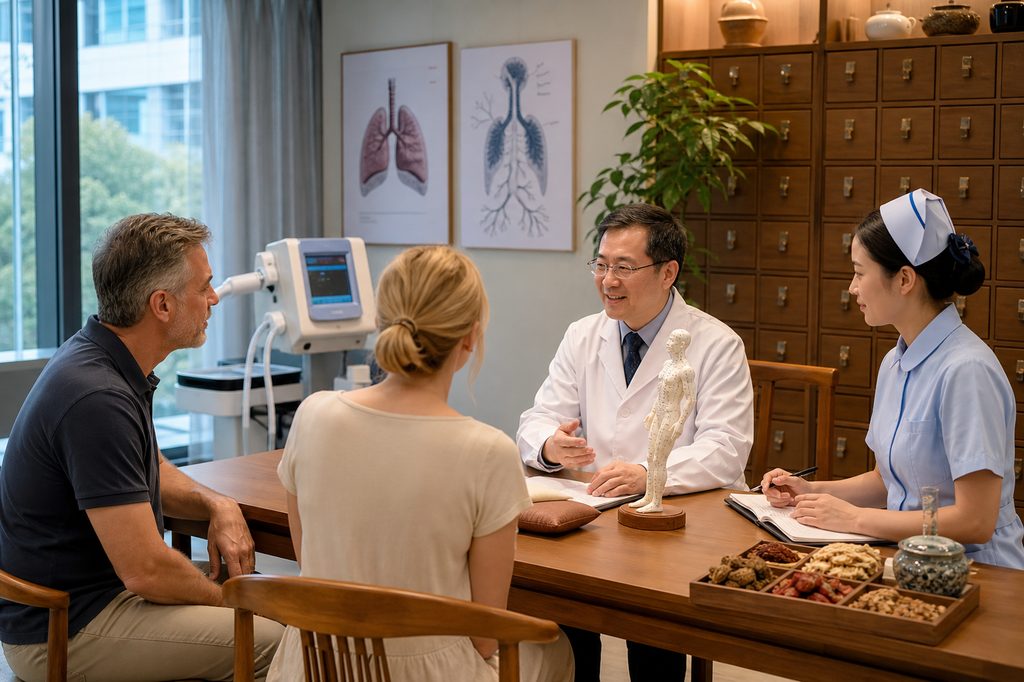
The hospital’s international department exists and handles foreign patients. English-speaking staff are available, but not everywhere. Signage, forms, and discharge instructions are primarily in Chinese. Payment is typically required upfront, with reimbursement claimed from your insurer afterward. Follow-up after you return home requires coordination with your local oncologist, because the hospital’s electronic records system is not designed for cross-border continuity.
A bilingual medical companion changes this experience materially. Someone who can translate during consultations, manage registration and payment queues, and explain what is happening at each step reduces the cognitive load dramatically. It does not change the medicine. It changes how much energy you spend navigating the system.
Cervical Cancer Treatment Cost China: What the Numbers Actually Include
The published figures for cervical cancer treatment cost China are starting points, not final bills. Here is what a typical radical hysterectomy package at a top-tier Chinese cancer hospital includes and excludes.
Included in the surgical fee:
– Operating room charges and anesthesia
– Surgeon and assistant surgeon fees
– Standard hospitalization (typically 7–14 days)
– Routine pathology on removed tissue
– Basic post-operative medications
Not included:
– Pre-operative imaging (MRI, CT, PET-CT if needed) — $500 to $1,500
– Molecular testing or specialized pathology — $300 to $1,000
– Chemoradiation if indicated post-operatively — $5,000 to $15,000 depending on regimen
– VIP ward upgrade — adds 50–100% to the hospitalization cost
– Travel, accommodation, and visa expenses
– Bilingual companion or coordination services — from $300/day
The total cost for a patient requiring surgery plus adjuvant chemoradiation typically lands between $15,000 and $30,000. That is still dramatically lower than the $80,000 to $120,000 the same treatment path would cost in the United States. But it is not the $8,000 figure that appears in search results.
Ovarian Cancer Surgery Price Shanghai: A Comparison Point
Patients researching gynecologic oncology in China often compare Zhejiang Cancer Hospital with Shanghai’s leading cancer centers. The ovarian cancer surgery price Shanghai hospitals quote — specifically at Fudan University Shanghai Cancer Center — runs similar to Hangzhou: $10,000 to $18,000 for a debulking procedure with omentectomy, depending on complexity. Shanghai has more international infrastructure, more English-speaking medical staff, and more direct flights. Hangzhou, where Zhejiang Cancer Hospital is located, is a 45-minute high-speed train ride from Shanghai and offers a lower cost base.
Which should you choose? If your case is straightforward and you want the highest-volume gynecologic oncology department in the region, Zhejiang Cancer Hospital is hard to beat. If you need a city with more robust international amenities and are willing to pay 20–30% more, Shanghai makes sense. Both are legitimate choices. The best gynecologic oncologist Zhejiang Cancer Hospital has on staff may be exactly the right surgeon for your case — but you will not know until your records are reviewed.
Practical Considerations: Records, Visa, Payment, and Follow-Up
Before you book anything, get your documents in order. Chinese oncologists will not make treatment decisions without complete records.
You will need:
– Pathology report with histologic type and grade
– Imaging studies (CT, MRI, PET-CT) on CD or via secure link
– Surgical history and prior treatment summaries
– Current medication list
– A referral letter from your treating oncologist, if available
Visa: medical travel to China uses the S2 visa, annotated for treatment purposes. Family members accompanying you also apply for S2 visas. You will need an invitation letter or supporting documentation from the hospital. The hospital’s international department issues these after you have a confirmed consultation.
Payment: Chinese public hospitals require prepayment. You will deposit funds at admission and settle the balance at discharge. International credit cards are not always accepted; bank transfer or cash deposit through the hospital’s designated bank is common. Private international hospitals in China accept major credit cards and sometimes bill insurers directly — but Zhejiang Cancer Hospital is a public institution.
Follow-up: after you return home, your local oncologist manages ongoing care. Request a complete discharge summary, pathology report, and operative note in English before you leave. The hospital can provide translated documents through its international department. Do not leave without them.
Frequently Asked Questions
Can I book surgery at Zhejiang Cancer Hospital before I arrive in China?
No. You can book a consultation through the international department or a coordination service. Surgery is scheduled only after an in-person evaluation by the treating specialist. The consultation can sometimes be arranged as a video call first, which helps determine whether travel is worthwhile.
What happens if the Chinese oncologist disagrees with my local treatment plan?
That is a real possibility, and it is one reason patients seek a second opinion in the first place. Chinese gynecologic oncologists may recommend a different surgical approach, a different chemoradiation sequence, or additional molecular testing. You are not obligated to follow their recommendation. You take the written assessment back to your local team and decide together.
Is it safe to have major gynecologic surgery in China?
At a Fudan-ranked cancer hospital with a dedicated gynecologic oncology department performing thousands of procedures annually, the surgical safety record is comparable to major Western centers. The hospital adheres to national clinical practice guidelines that align closely with NCCN and ESMO standards. The risks are the same risks you would face anywhere: bleeding, infection, anesthesia complications, and the inherent uncertainty of cancer surgery.
How long will I need to stay in China?
Plan for 4 to 8 weeks. That includes the initial consultation, pre-operative testing, surgery, post-operative recovery in the hospital, and a follow-up visit before you fly home. If adjuvant chemoradiation is recommended, you may need to stay longer or arrange to complete it at home.
Do I need a medical tourism package for Zhejiang Cancer Hospital?
No. Some agencies market “Zhejiang Cancer Hospital medical tourism packages” that bundle flights, hotels, and hospital arrangements. These can be convenient, but they add a markup. You can arrange the medical component directly through the hospital’s international department and handle travel separately. A coordination service can help with the hospital-facing logistics without selling you a bundled package.
Your Next Step
Choosing where to receive cancer treatment is one of the most consequential decisions you will ever make. The data on Zhejiang Cancer Hospital is clear: high surgical volume, top-tier oncology ranking, and costs that are a fraction of Western prices. The friction is real, but it is manageable with the right preparation and support.
Our team at China Medical Services helps international patients navigate exactly this process. We are not a hospital. We do not diagnose, treat, or promise outcomes. What we do is handle the logistics — record translation, appointment coordination with the hospital’s international department, bilingual companionship on the ground, and visa guidance. If you are considering gynecologic cancer treatment in China, start with a conversation. A written second opinion from a top Chinese gynecologic oncologist costs $300–500 and gives you a concrete basis for deciding whether travel is worthwhile. That fee is credited in full toward coordination services if you proceed with treatment in China within 90 days.
Get the facts first. Then decide.
For more medical information and treatment options in China, visit chinamedservices.com (China Medical Services).
