First Affiliated Hospital of Zhejiang University Respiratory Medicine: A Guide for International Patients
Key Takeaways
- The First Affiliated Hospital of Zhejiang University (FAHZU) runs one of China’s highest-volume respiratory medicine departments, handling over 250,000 outpatient respiratory visits annually.
- International patients access FAHZU through its designated international clinic, where English-speaking coordination and expedited specialist appointments are standard — not an afterthought.
- Expect to pay roughly one-fifth to one-tenth of US or UK prices for equivalent respiratory diagnostics and treatment. A comprehensive lung function panel and specialist consultation typically runs $150–$400.
- The biggest barrier is not clinical quality — it is logistics. Hospital registration, payment, and navigating a massive public facility without Chinese language support is genuinely difficult. Plan for this honestly.
The Problem: Waiting Months for Lung Care That Should Happen in Weeks
In Canada, the median wait time between a general practitioner referral and a respiratory specialist consultation reached 11.6 weeks in 2023, according to the Fraser Institute. In the United Kingdom, the NHS reported in early 2024 that over 30% of patients referred for a first outpatient respiratory appointment waited more than 18 weeks. For a patient with unexplained breathlessness, a persistent cough, or a suspicious lung nodule, those numbers are not abstract. They are months of anxiety.
Now consider what happens next. After the specialist visit, a CT scan might take another few weeks. A bronchoscopy? Possibly another month. For someone with rapidly progressive interstitial lung disease or suspected lung cancer, the gap between symptom onset and diagnosis can stretch to half a year or longer. That is the reality for thousands of patients across Western Europe and North America. And then there is the cost question. In the United States, a diagnostic bronchoscopy without insurance routinely bills between $3,000 and $8,000. A chest CT with contrast averages $1,200 to $2,500. For uninsured or underinsured patients — or those with high-deductible plans — respiratory care becomes a financial crisis.
So patients start searching for alternatives. That search often leads to a specific question: is lung disease treatment safe in China? And behind that question is a deeper one — can I actually get high-quality respiratory care, quickly, at a price I can afford, in a hospital I can trust?
Why FAHZU Respiratory Medicine Delivers Results
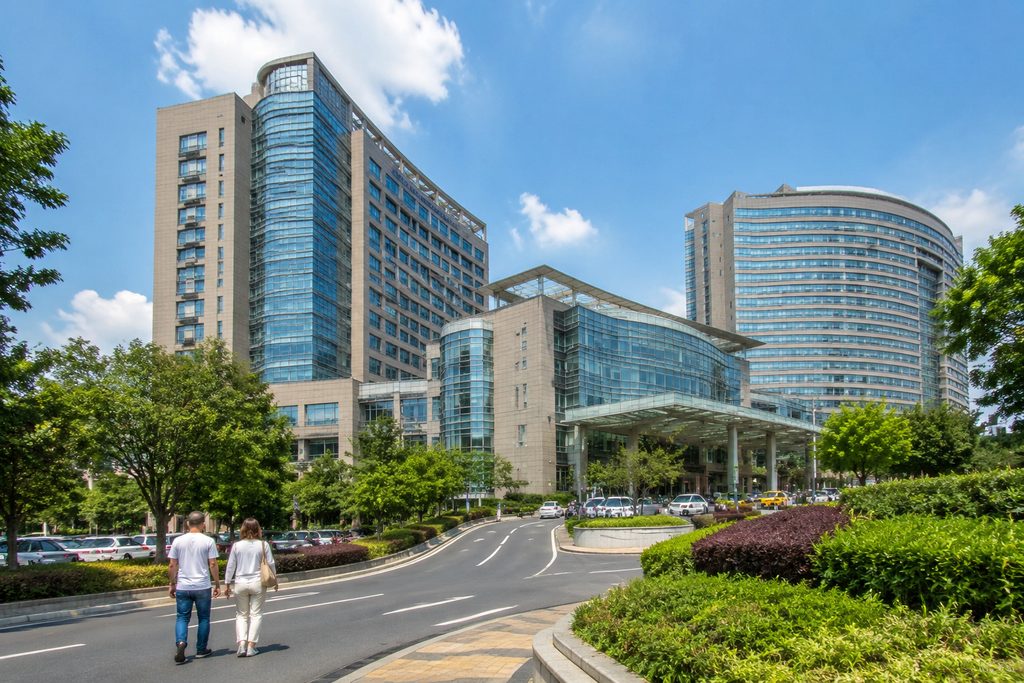
The First Affiliated Hospital of Zhejiang University, located in Hangzhou, is not a small regional clinic. It is one of China’s largest and most academically rigorous teaching hospitals, affiliated with Zhejiang University School of Medicine. Its respiratory medicine department consistently ranks among the top respiratory medicine departments in China for expats and domestic patients alike. The hospital sits inside the top tier of China’s 35,000+ hospitals, a group that includes only about 1,700 facilities. FAHZU is among the top 5% nationally, a distinction reflected in Fudan University’s hospital rankings and its international accreditations.
Clinical Volume Drives Diagnostic Speed
Volume matters in respiratory medicine. A department that performs 8,000 bronchoscopies a year simply has more procedural muscle memory than one that performs 800. FAHZU’s respiratory team handles complex cases daily — multidrug-resistant tuberculosis, pulmonary fibrosis, lung cancer staging, severe asthma, COPD exacerbations. The hospital’s pulmonology division runs dedicated subspecialty clinics for interstitial lung disease, sleep-disordered breathing, and interventional pulmonology. For an international patient, that means a suspected diagnosis can move from first consultation to bronchoscopy to pathology report in days, not months. The bottleneck is not the machine or the specialist. It is the queue. And the queue at a high-volume Chinese academic center moves faster because the system is built for throughput.
Technology and Infrastructure at Scale
FAHZU operates advanced bronchoscopy suites equipped with endobronchial ultrasound (EBUS), navigational bronchoscopy, and cryobiopsy capability. Its imaging infrastructure includes multiple high-resolution CT scanners and PET-CT. What does that mean in practice? A patient with a peripheral lung nodule can often undergo EBUS-guided biopsy in a single visit, with same-week pathology review. The hospital’s laboratory processes thousands of sputum, pleural fluid, and tissue samples daily. This is not a boutique facility. It is an industrial-scale diagnostic engine.
For international patients, the hospital maintains a dedicated international medical center. That center handles foreign patient registration, provides English-language interpretation during consultations, and coordinates specialist referrals within the hospital. It is not the same as walking into a public outpatient hall at 7 a.m. and hoping for the best.
Respiratory Specialist Hospital China Cost: The Structural Advantage
Let us address the obvious question directly: why is the respiratory specialist hospital China cost so much lower than in the US or Europe? Because Chinese hospital economics are structurally different. Physician salaries are lower. Malpractice insurance is a fraction of US costs. Hospitals operate at enormous scale, spreading fixed costs across far more patients. A chest CT at FAHZU’s international clinic typically costs $150–$300. A specialist consultation runs $50–$150. A full pulmonary function test panel costs $80–$200. A diagnostic bronchoscopy with EBUS might bill $800–$2,000. Compare that to US prices, where the same procedures often cost three to ten times more. Lower cost does not mean lower quality. It means a different cost structure.
What to Expect From the First Visit: A Step-by-Step Walkthrough
You cannot simply email FAHZU and book a specialist appointment for next Tuesday. Chinese public hospitals, including their international clinics, operate on a registration-based system. Here is what the process actually looks like for an international patient seeking respiratory care.
First, you need your medical records in order. Bring every relevant document: prior chest X-rays and CT scans (on CD or USB, ideally with radiology reports), pulmonary function test results, bronchoscopy reports, pathology slides if a biopsy was done, and a summary of your current medications. If your records are not in English or Chinese, have them translated. The international clinic staff can help with basic interpretation, but they are not document translators.
Second, you need a hospital medical card. This is a physical card with a unique patient ID number. You cannot see any doctor without one. The international clinic staff can help you create this card using your passport. Expect to pay a small registration fee, typically under $10.
Third, you see the specialist. At FAHZU’s international clinic, you will typically be assigned a senior respiratory physician. The consultation will be conducted in Chinese with an English interpreter present, or in English if the physician is comfortable. Bring a written list of questions. The doctor will review your records, examine you, and order any additional tests. Blood work and basic imaging can often be completed the same day. Advanced procedures like bronchoscopy are usually scheduled within a few days, depending on the specific indication.
Fourth, you pay. Chinese public hospitals operate on a prepayment model. You deposit money onto your medical card, and tests and procedures are deducted as you go. The international clinic accepts credit cards, which is not always the case in standard outpatient departments. Keep every receipt. Your home insurance may reimburse you, but the hospital will not bill them directly.
Who Should Consider This — and Who Should Not
For outpatient COPD management — consultation, spirometry, medication adjustment, and a written treatment plan — expect to pay $150–$400 at FAHZU’s international clinic. If your COPD is severe and requires hospitalization for an exacerbation, a typical 7–10 day inpatient stay with oxygen therapy, nebulized bronchodilators, and IV corticosteroids might cost $3,000–$8,000. These figures vary significantly based on the specific ward, the medications used, and whether any complications arise. Always request a written cost estimate before admission.
At a top-tier academic center like FAHZU, the clinical safety standards for respiratory procedures are comparable to those in Western teaching hospitals. The hospital follows international infection control protocols, uses modern equipment, and its physicians publish in peer-reviewed international journals. The main safety risks for international patients are not clinical — they are logistical and communication-related. Misunderstandings about medication instructions, missed test appointments, or confusion about payment can create problems. Working with a bilingual coordinator mitigates these risks substantially.
Yes. FAHZU’s international clinic and many other top Chinese hospitals offer remote second opinion services. You submit your existing medical records — imaging, lab results, biopsy reports — and a respiratory specialist reviews them and provides a written analysis with treatment recommendations. This typically costs $300–$500 and takes one to two weeks. The written opinion is for reference only, not a prescription. It can help you decide whether traveling to China is worthwhile before you commit to the trip.
Your Next Step
Choosing to pursue respiratory care at the First Affiliated Hospital of Zhejiang University is a significant decision. The clinical quality is real. The cost advantage is real. The logistical complexity is also real — and it is the part most patients underestimate. Our team at China Medical Services helps international patients navigate exactly this process: hospital matching, appointment coordination, bilingual accompaniment, and visa guidance. We are not a hospital and we do not provide diagnoses or medical advice. What we do is make the path to care clearer and less stressful. When you are ready to explore whether FAHZU is the right fit for your respiratory condition, request a free consultation and we will walk you through the options honestly.
Frequently Asked Questions
Yes. The hospitals used for international patients are JCI-accredited and follow the same international safety standards as top hospitals in the US and Europe. Surgical teams perform high volumes of procedures — often more than their Western counterparts — which studies show leads to better outcomes.
Costs vary by procedure and hospital, but international patients typically save 40-80% compared to US prices — even when factoring in travel and accommodation. A consultation with our team will give you an exact, all-inclusive quote with no hidden fees.
Send us your existing medical reports to get started. We handle everything from hospital selection and appointment scheduling to visa assistance and post-operative recovery planning. Your medical records are reviewed by the specialist before you even book a flight.
For more medical information and treatment options in China, visit chinamedservices.com (China Medical Services).
