First Affiliated Hospital of Zhejiang University Thoracic Surgery: A Guide for International Patients
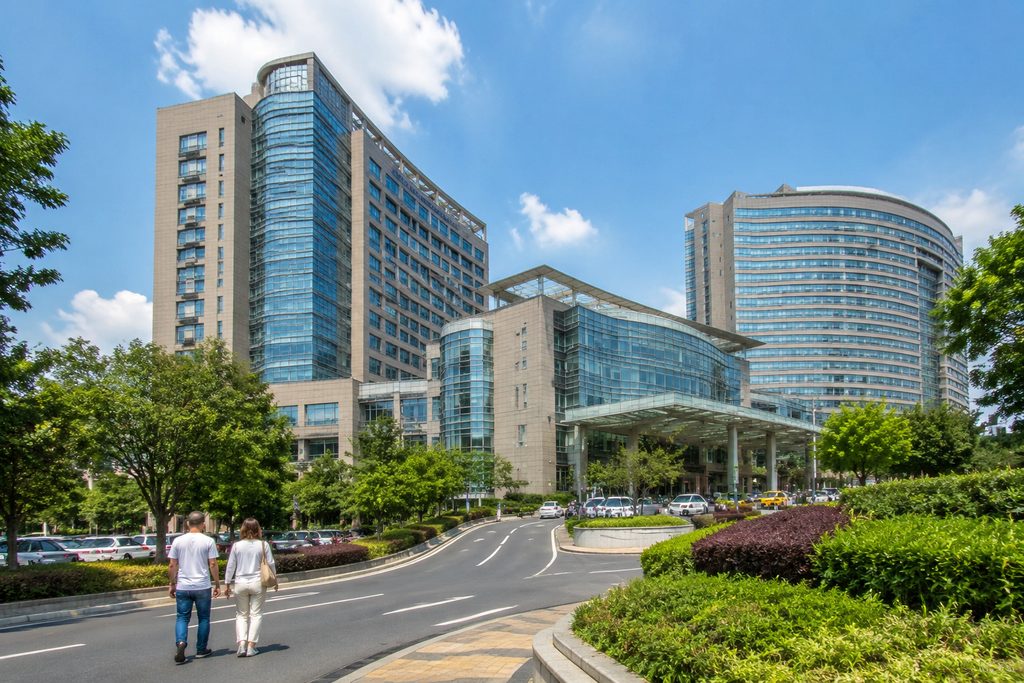
First Affiliated Hospital of Zhejiang University Thoracic Surgery for International Patients: Cost, Quality, and How to Book
Key Takeaways
- The First Affiliated Hospital of Zhejiang University (FAHZU) performs over 4,000 thoracic procedures annually, placing it among China’s highest-volume chest surgery centers.
- Thoracic surgery cost China international patients typically pay at FAHZU runs 60–80% below comparable US or UK private hospital rates, even through the international VIP channel.
- Foreign patients cannot book surgery directly from abroad through standard outpatient registration. You need the hospital’s international department or a coordination service to arrange a pre-surgical consultation.
- Medical travel to China for treatment uses an S2 visa, not an M visa. Approval depends on hospital documentation and your home country’s Chinese embassy requirements.
You have probably heard that getting surgery in China means accepting lower standards, outdated equipment, or a language barrier you cannot overcome. The data tells a different story. Thoracic surgery cost China international patients face is a fraction of Western prices, but the clinical volume at the First Affiliated Hospital of Zhejiang University rivals any major European center. The real challenge is not quality. It is navigation.
That is where most foreign patients stall. They read about excellent outcomes, then hit a wall of Chinese-language registration systems, unfamiliar visa categories, and no clear path to a surgical consultation. This guide breaks down what FAHZU actually offers, what it costs, how safe it is, and the exact steps to book lung or chest surgery there as an international patient.
The Problem: Chest Surgery in the West Often Means Long Waits and Crushing Bills
A lung lobectomy in the United States carries a hospital charge frequently exceeding $60,000, and that is before surgeon fees, anesthesia, and pathology. In the United Kingdom, NHS waiting times for thoracic surgical consultation have stretched past 18 weeks for non-urgent referrals, with some patients waiting over a year from diagnosis to resection. For a disease where tumor doubling time can be measured in months, that delay is not merely inconvenient. It changes the treatment plan.
Private alternatives move faster but at a price that excludes most families. A self-pay VATS lobectomy in London or New York can exceed $80,000 all-in. Meanwhile, the same procedure at a top Chinese thoracic center — performed by surgeons who do hundreds of these operations every year — costs a fraction of that. The gap is structural, not cosmetic. Chinese public hospitals operate at enormous scale, with streamlined procurement and lower labor costs. That is why the economics work.
But cost savings mean nothing if you cannot get in the door. And getting in the door at FAHZU is exactly where most international patients need help.
Why the First Affiliated Hospital of Zhejiang University Delivers Results in Thoracic Surgery
Clinical Volume That Western Surgeons Rarely See
FAHZU is not a boutique clinic. It is one of China’s largest academic medical centers, with over 5,000 beds and a thoracic surgery department that operates at a scale most Western hospitals cannot match. The department handles more than 4,000 thoracic procedures each year, spanning lung cancer resections, mediastinal tumor removals, esophageal surgery, and complex chest wall reconstructions. A surgeon who performs 300 lobectomies annually develops a tactile familiarity with anatomy that no textbook provides.
Compare that to the average thoracic surgeon in the US, who completes roughly 50–70 major lung resections per year. Volume is not everything. But for VATS and robotic-assisted procedures, repetition correlates with shorter operative times, fewer conversions to open surgery, and lower complication rates. That matters when you are the patient on the table.
Technology Without the Marketing Markup
FAHZU’s thoracic team uses uniportal VATS as a default approach for early-stage lung cancer, not as a premium add-on. Uniportal video-assisted thoracoscopic surgery means one small incision instead of three or four. Patients leave the hospital in three to five days instead of seven to ten. The hospital also operates Da Vinci robotic systems for select cases, with surgeons trained at high-volume robotic centers.
The difference is not the equipment. Western hospitals have the same machines. The difference is that FAHZU runs these technologies at full capacity, amortizing costs across thousands of cases. That efficiency translates directly into lower per-case charges without any reduction in technical quality.
How Thoracic Surgery Cost China International Patients Pay Compares
Lower cost does not mean lower quality. It means a different cost structure. Chinese public hospitals pay surgeons a fixed salary, not a per-case fee. Device procurement happens through centralized tenders that drive down prices. Hospital construction and operating costs are lower. None of that touches the clinical outcome.
Here is what international patients can expect to pay at FAHZU through the international VIP channel, compared to typical Western private hospital rates:
| Procedure | FAHZU International Channel (USD) | US Private Hospital (USD) | UK Private Hospital (USD) |
|---|---|---|---|
| VATS Lobectomy (lung cancer) | $12,000 – $18,000 | $60,000 – $90,000 | $45,000 – $70,000 |
| Mediastinal Tumor Resection | $10,000 – $15,000 | $45,000 – $70,000 | $35,000 – $55,000 |
| Esophagectomy | $15,000 – $22,000 | $80,000 – $120,000 | $60,000 – $90,000 |
| Diagnostic Thoracoscopy + Biopsy | $4,000 – $7,000 | $20,000 – $35,000 | $15,000 – $25,000 |
These FAHZU figures are estimates for the international department channel, which includes English-speaking coordination and priority scheduling. Standard public-channel pricing runs lower, but foreign patients without Chinese language skills will struggle to access it independently. Final quotes vary by hospital and case complexity, so treat these as planning ranges, not binding offers.
Is Thoracic Surgery Safe in China? What the Evidence Shows
This is the question every patient asks, and it deserves a straight answer. Is thoracic surgery safe in China? At a top-tier academic center like FAHZU, the short answer is yes — with qualifications.
China’s top hospitals operate under a tiered accreditation system. FAHZU is a Grade 3A hospital, the highest classification, and it ranks among the top 5% of China’s 35,000+ hospitals in national evaluations. The thoracic surgery department participates in international clinical research and publishes in peer-reviewed journals. Its surgeons train at domestic and international centers, and many hold fellowships from US or European institutions.
The safety gap in China is not at the top. It is between the top and the average. A patient choosing a random county hospital will face different risks than one choosing Fudan-ranked academic centers. That is why hospital selection matters more than country selection. FAHZU sits in the top tier. It is not a gamble. It is a calculated choice based on volume, accreditation, and published outcomes.
What to verify before booking: Ask for the specific surgeon’s annual case volume for your procedure, the department’s conversion rate from VATS to open surgery, and the hospital’s rate of major complications for your surgery type. Any reputable center will provide these numbers. If they will not, walk away.
How to Book Lung Surgery at First Affiliated Hospital Zhejiang: The Step-by-Step Path
Booking surgery at FAHZU from outside China is not like calling a private clinic in Bangkok or Istanbul. Chinese public hospitals do not accept international patients for direct surgical booking through their standard outpatient system. You cannot email the thoracic department and reserve an operating room slot. The system does not work that way.
Here is the actual path for international patients:
Step 1: Gather Complete Medical Records
You need imaging (CT, PET-CT if done), pathology reports, pulmonary function tests, and any prior surgical notes. These must be in English or translated into Chinese. Incomplete records mean the thoracic team cannot assess your case, and the consultation will be wasted.
Step 2: Submit for Remote Evaluation
FAHZU’s international department accepts overseas cases for preliminary review. A thoracic specialist reviews your records and determines whether you are a surgical candidate and what procedure is indicated. This step typically costs $300–500 for a written second opinion, or $500–800 for a video consultation with the specialist. The written opinion is for reference only, not a prescription.
Step 3: Travel to Hangzhou for In-Person Consultation
No reputable Chinese hospital will schedule surgery without an in-person preoperative assessment. You fly to Hangzhou, meet the surgical team, complete any missing tests, and receive a surgical plan. The international department handles scheduling, so you skip the standard queue. Expect this phase to take three to five days before a surgery date is confirmed.
Step 4: Surgery and Hospital Stay
For VATS lobectomy, plan on three to five hospital days. The international ward provides English-speaking nursing staff and Western-standard amenities. Your family member can stay nearby; FAHZU is in central Hangzhou with hotels within walking distance.
Step 5: Post-Discharge Follow-Up
Most international patients stay in Hangzhou for one to two weeks after discharge for wound checks and a final consultation before flying home. Your home physician receives a complete discharge summary and imaging in English.
Medical Tourism Package Thoracic Surgery Hangzhou: What You Actually Need
The phrase “medical tourism package thoracic surgery Hangzhou” suggests an all-inclusive product with a fixed price and a tidy itinerary. That is not how Chinese academic hospitals work. You will not find a bundled package with a set price for surgery, hotel, and airport pickup from FAHZU directly. The hospital charges for medical services. Everything else is separate.
What you actually need is a coordination layer. That means someone who translates your records, communicates with the international department, schedules your consultation, and meets you at the hospital to handle registration, payment, and navigation. Without that layer, a foreign patient with no Mandarin skills will find even basic tasks — paying a deposit, finding the CT suite, understanding preoperative instructions — genuinely difficult.
Practical tip: Budget for the coordination service separately from medical costs. Expect to pay from $300 per day for a bilingual medical companion in Hangzhou, plus $300–500 for hospital appointment coordination. These are service fees, not hospital charges, and they are not covered by insurance.
Practical Considerations: Visas, Payment, and Insurance for Thoracic Surgery in China
Getting the logistics right before you travel prevents expensive mistakes. Here is what applies specifically to thoracic surgery at FAHZU.
Visa: Medical treatment in China falls under the S2 visa category, which covers short-term private affairs including medical visits. Your accompanying family member also needs an S2 visa. The M visa is for commercial and trade activities and is not appropriate for medical travel. To apply, you need an invitation letter from FAHZU’s international department confirming your consultation or treatment schedule, plus your medical records and proof of funds. Processing times vary by embassy, so start at least six to eight weeks before your intended travel date. Approval is never guaranteed.
Payment: Chinese public hospitals require prepayment. Expect to deposit the estimated surgery cost in full before admission, with reconciliation at discharge. FAHZU’s international department accepts major credit cards and international bank transfers. Cash is also accepted but is impractical for large amounts.
Insurance: Most Western insurers do not have direct billing agreements with Chinese public hospitals. You pay out of pocket, then submit for reimbursement. Check with your insurer before committing. Some international insurers do cover treatment at JCI-accredited facilities in China, but FAHZU is a Chinese public hospital, not JCI-accredited, so coverage depends entirely on your policy’s terms.
Language: The international department at FAHZU has English-speaking coordinators, but they are not available around the clock. Floor nurses on the international ward generally speak basic medical English. For anything beyond basic communication, bring your own interpreter or hire a bilingual medical companion.
Follow-up after returning home: Your home oncologist or thoracic surgeon should receive all operative notes, pathology, and imaging before you leave Hangzhou. Arrange a follow-up appointment at home within two to four weeks of discharge. FAHZU’s team can provide remote follow-up consultations if your home physician has questions about the surgical approach.
Frequently Asked Questions
No. You can complete a remote evaluation and receive a preliminary surgical recommendation, but the hospital will not schedule an operation without an in-person preoperative consultation. You must travel to Hangzhou first, meet the surgical team, and complete any required testing before a surgery date is confirmed.
Plan on $12,000 to $18,000 for the hospital and surgical fees through the international channel. Add $2,000 to $4,000 for flights, accommodation, and local transport. Add $1,500 to $3,000 for coordination and interpretation services. A realistic total is $16,000 to $25,000 depending on case complexity and length of stay.
FAHZU is a full-service academic hospital with intensive care, interventional radiology, and every subspecialty available on-site. A complication that would require transfer to another facility at a smaller hospital is managed in-house. Your international coordinator should be prepared to communicate with your family and your home physician throughout any extended stay.
Generally, yes. FAHZU’s pathology department follows international reporting standards, and the international department provides English translations of all key documents. Some Western oncologists may request a second pathology review at their own institution, which is standard practice and not a reflection on the quality of the Chinese report.
Your Next Step
The decision to travel to China for thoracic surgery is significant, and it should be made with complete information. We help international patients navigate Chinese hospitals like FAHZU — from record translation and remote consultations to on-the-ground coordination in Hangzhou. We are not a hospital and we do not provide diagnoses or medical advice. What we offer is the operational layer that makes treatment at a top Chinese thoracic center accessible to someone without Chinese language skills or local knowledge. If you want to explore whether FAHZU is right for your case, start with a free consultation to discuss your situation and options.
Learn more about China’s top-ranked hospitals for international patients or explore specialty rankings across 45 clinical departments. For a deeper look at how we help foreign patients access Chinese hospitals, visit our patient coordination services.
For more medical information and treatment options in China, visit chinamedservices.com (China Medical Services).
