First Affiliated Hospital of Zhengzhou University Orthopedics: A Guide for International Patients
When 54-year-old Daniel from Manchester was told he needed a total knee replacement, the NHS waitlist stretched past 18 months. His pain made stairs impossible. He started searching for alternatives outside the UK. That search led him to China. Daniel’s question was straightforward: can a foreigner actually get orthopedic surgery at a top Chinese hospital without getting lost in the system? The answer surprised him. Yes — but the path looks different than most people expect.
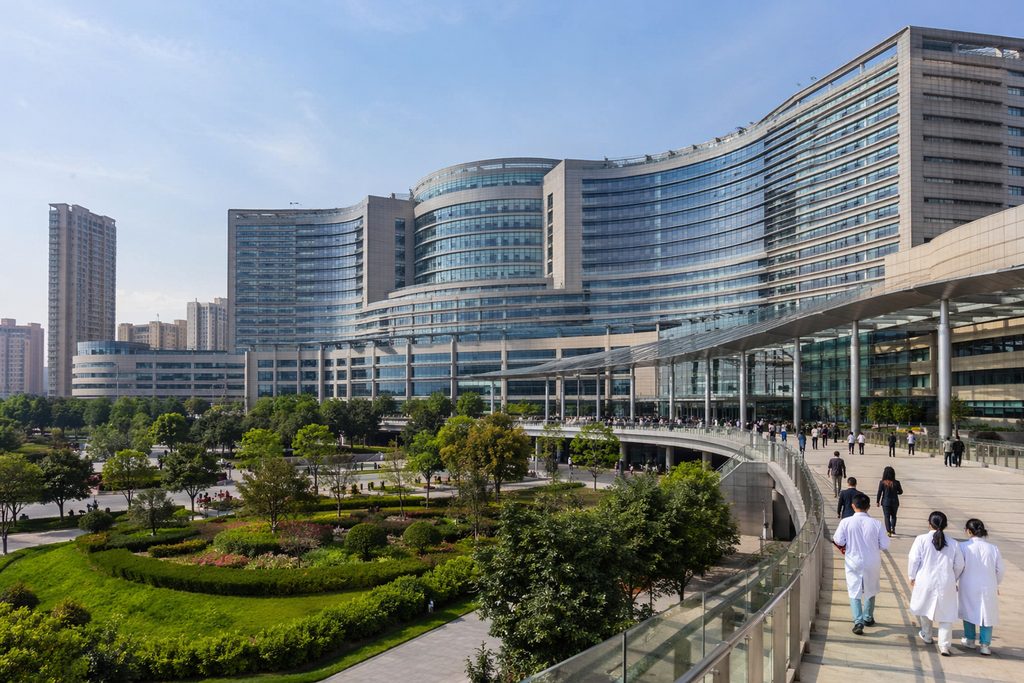
The First Affiliated Hospital of Zhengzhou University is one of China’s largest medical institutions, with over 10,000 beds and a daily outpatient volume that rivals a small city. Its orthopedics department performs thousands of joint replacements annually. For international patients, the orthopedic surgery cost at First Affiliated Hospital Zhengzhou typically runs 60-80% lower than comparable procedures in the United States or Western Europe. But cost is only one piece of the puzzle. Getting there, communicating, and navigating the hospital’s internal processes require planning that most first-time visitors underestimate.
Orthopedic Surgery at First Affiliated Hospital of Zhengzhou University: The Short Answer
A total knee replacement at this hospital costs between $8,000 and $14,000 for international patients using the hospital’s international or VIP channel. A total hip replacement falls in a similar range, typically $9,000 to $15,000. These figures cover the hospital stay, surgeon fees, standard implant, and basic rehabilitation during admission. They do not include flights, visa fees, accommodation, or the services of a bilingual medical companion.
The honest caveat: you cannot simply email the hospital and book a surgery date. Public hospitals in China — including this one — require an in-person outpatient consultation before any surgical admission is arranged. That means at least one preliminary trip, or a proxy consultation using your existing medical records. The hospital does have an international department, but its capacity for English-language coordination varies. Most international patients work with a local coordinator who handles registration, translation, and scheduling.
Who This Is Right For — and Who It Isn’t
Orthopedic surgery in Zhengzhou makes sense for a specific profile of patient. Not everyone should pursue it.
Typically a good candidate:
- You have confirmed imaging (MRI, X-ray) and a clear surgical indication from a doctor in your home country
- You are mobile enough to handle international travel and a hospital stay of 5-10 days
- You have a caregiver or companion who can travel with you, or you are willing to hire local support
- You are paying out of pocket or have insurance that reimburses overseas treatment
- You need a high-volume surgeon but cannot wait 12+ months in your home system
Who should not pursue this:
- Patients with unstable cardiovascular or respiratory conditions that make long-haul flights risky
- Anyone requiring emergency surgery — this pathway is for planned, elective procedures
- Patients who need complex revision surgery with custom implants that require extended pre-operative planning
- Those who cannot be away from home for at least 3-4 weeks, including post-operative recovery before flying back
- People who expect a Western-style private hospital experience — this is a large public institution
The last point matters. The First Affiliated Hospital of Zhengzhou University is an excellent medical center. It is also enormous, crowded, and built for volume. If you need a boutique experience with English-speaking nurses at every turn, a private international hospital in China may suit you better. If you want high-volume surgical expertise at a fraction of Western prices, this hospital delivers.
The Options, Compared
If you are considering Zhengzhou for joint replacement, you are probably also weighing other destinations. Here is how the realistic options compare for a total knee replacement in 2025.
| Destination | Approximate Total Cost (USD) | Wait Time | Language Barrier | Implant Quality |
|---|---|---|---|---|
| First Affiliated Hospital of Zhengzhou University (international channel) | $8,000 – $14,000 | 2-6 weeks after consultation | High — bilingual support recommended | International brands (Zimmer, DePuy, Stryker) or domestic equivalents |
| Private international hospital in Beijing or Shanghai | $25,000 – $45,000 | 1-3 weeks | Low — English-speaking staff | International brands standard |
| Thailand (Bangkok Hospital, Bumrungrad) | $15,000 – $22,000 | 2-4 weeks | Low — established medical tourism infrastructure | International brands standard |
| India (Apollo, Fortis) | $7,000 – $12,000 | 1-3 weeks | Low to moderate | International brands standard |
| United States (self-pay) | $35,000 – $70,000+ | 1-4 weeks if self-pay | None | International brands standard |
| United Kingdom (private) | $18,000 – $28,000 | 2-8 weeks | None | International brands standard |
Zhengzhou’s value proposition is clear: you get a top-tier Chinese public hospital surgeon at a price comparable to India, but with China’s stricter regulatory environment for medical devices and hospital accreditation. The trade-off is language and navigation complexity. Thailand offers a smoother experience but at roughly double the price. The United States offers the smoothest experience but at four to five times the cost.
Is First Affiliated Hospital Zhengzhou Good for Foreigners? The Real Answer
The question “is First Affiliated Hospital Zhengzhou good for foreigners” deserves an honest, nuanced answer. Medically, yes. Logistically, it depends entirely on your preparation.
The hospital’s orthopedic department is a designated national key clinical specialty in Henan Province. Its surgeons perform a volume of joint replacements that most Western surgeons would find staggering. Volume correlates with outcomes in joint replacement surgery — studies consistently show that surgeons performing more than 50 knee replacements annually have significantly lower complication rates than low-volume surgeons. At this hospital, individual senior surgeons may perform several hundred per year.
But “good for foreigners” is about more than surgical skill. The hospital’s international department exists, but it is not a polished medical tourism operation. English signage is limited. Front-line registration staff speak Mandarin. Payment requires a Chinese bank card, cash, or Alipay/WeChat Pay — international credit cards are not consistently accepted. The hospital pharmacy and imaging departments operate on a queue system that assumes local knowledge.
None of this is insurmountable. It simply means you should not arrive expecting to navigate independently. A bilingual medical companion — someone who handles registration, translates during consultations, and guides you through each department — transforms the experience. This is the single highest-value service for international patients at this hospital. Without it, a simple pre-operative blood test can become a three-hour ordeal.
How to Book Knee Replacement at Zhengzhou University Hospital: The Step-by-Step Reality
The process for booking a knee replacement at this hospital is not like booking a hotel. There is no online surgery scheduler. Here is how it actually works.
Step 1: Remote evaluation. Before you book any flight, send your existing medical records — X-rays, MRI reports, blood work, and your doctor’s notes — for review. The orthopedic team needs to confirm you are a surgical candidate before anything else happens. This can be done through a written second opinion or a video consultation with the department.
Step 2: In-person consultation. Chinese public hospital rules require a face-to-face outpatient visit before surgical admission. You have two options: fly to Zhengzhou for this consultation yourself, or use a proxy consultation service where a local representative attends with your complete medical file. The proxy route saves you a preliminary trip but may not be accepted for complex cases.
Step 3: Pre-operative testing. Once the surgeon agrees to proceed, you will complete blood tests, ECG, chest X-ray, and any additional imaging the anesthesiology team requires. This typically takes 1-2 days.
Step 4: Admission and surgery. With tests cleared, admission is arranged. For a standard knee replacement, expect 3-5 days in hospital after surgery. The surgery itself takes 60-90 minutes.
Step 5: Post-operative recovery. You will need to stay in Zhengzhou for at least 10-14 days after discharge before flying home. This allows for suture removal, initial physiotherapy, and a follow-up X-ray. Some patients choose to stay 3 weeks for more intensive rehabilitation.
Hip Replacement Price in China for Expats: What the Numbers Actually Include
Expats and international patients often ask about hip replacement price in China because the headline figures look almost too good. A total hip replacement at First Affiliated Hospital of Zhengzhou University ranges from $9,000 to $15,000 through the international channel. That is roughly one-fifth to one-tenth of the US self-pay price.
What drives the variance? Three factors. First, the implant. International brands (Zimmer, DePuy, Stryker) cost more than domestic Chinese implants, which are themselves manufactured to international standards and used widely across Asia. Second, the surgical approach. A standard posterior approach costs less than a direct anterior approach, which requires specialized instruments and often a longer operative time. Third, your length of stay and any additional medical needs.
What is included in the quoted price: surgeon fees, anesthesiologist fees, operating room costs, standard implant, hospital bed for 3-7 days, basic medications, and routine post-operative X-rays.
What is not included: international flights, visa fees, accommodation for family members, extended physiotherapy after discharge, premium implant upgrades, and any treatment for complications unrelated to the surgery. You should also budget $300-$500 per day for a bilingual medical companion if you choose to use one, and $100-$200 per night for a hotel near the hospital.
Zhengzhou Orthopedic Medical Tourism Package: What a Realistic “Package” Looks Like
If you search for a “Zhengzhou orthopedic medical tourism package,” you may find glossy websites promising all-inclusive deals. Be cautious. Chinese public hospitals do not sell medical tourism packages. The hospital provides medical care. Everything else — visa support, airport pickup, accommodation, translation, scheduling — comes from independent service providers.
A realistic, transparent arrangement looks like this: a coordination service handles your S2 visa documentation (the correct visa category for medical treatment in China), books your initial consultation, provides a bilingual companion for hospital visits, arranges a nearby hotel, and coordinates your follow-up appointments. The hospital bill itself is paid directly to the hospital, not to the coordinator. No legitimate service bundles hospital fees into a single package price, because hospital charges vary based on your actual clinical course.
This separation is actually a good thing. It means you are not paying a markup on medical care. You pay the hospital’s standard international-channel rates, and you pay separately for coordination services. Anyone offering a single “all-inclusive surgery package” that includes hospital fees should be scrutinized carefully.
Practical Considerations: Visas, Payment, Records, and Follow-Up
Visa. Medical treatment in China falls under the S2 visa category, which covers short-term private affairs including medical treatment. Your accompanying family member also applies for an S2. The hospital or your coordination service will provide an invitation letter and treatment confirmation to support your application. Do not apply for an M visa — that is for commercial and trade activities and is not appropriate for medical travel. Processing typically takes 1-2 weeks at your local Chinese embassy or consulate.
Medical records. Bring everything: original imaging (not just reports), blood work from the last 3 months, your doctor’s referral letter, a list of current medications, and any prior surgical records. Chinese orthopedic surgeons want to see the actual X-ray and MRI images, not just written summaries. Digital copies on a USB drive are acceptable, but bring printed copies as backup.
Payment. The hospital requires pre-payment before admission. International credit cards are not reliably accepted. You will need to arrange payment via bank transfer, Alipay, WeChat Pay, or cash. Many international patients transfer funds to a coordinator who handles hospital payments on their behalf — but this requires trust and clear documentation. Insurance reimbursement is your responsibility; the hospital provides itemized receipts in Chinese, which most insurers accept with a certified translation.
Language. Do not assume any hospital staff speak English. Some senior orthopedic surgeons have international training and speak some English, but nursing staff, pharmacy staff, and administrative personnel generally do not. A bilingual companion is not a luxury at this hospital — it is the difference between a smooth process and a stressful one.
Follow-up after returning home. Your surgeon will want to see follow-up X-rays at 6 weeks, 3 months, and 12 months. You can send these digitally for review. If complications arise, you will need to see a local orthopedic surgeon — the hospital in Zhengzhou cannot manage post-operative issues remotely. This is a standard limitation of any overseas surgery and should factor into your decision.
Frequently Asked Questions
Can I book surgery at First Affiliated Hospital of Zhengzhou University before I arrive in China?
No. The hospital requires an in-person outpatient consultation before any surgical admission. You can complete a remote evaluation first to confirm you are a surgical candidate, which reduces the risk of traveling for nothing. But the final decision and admission happen after you are physically present for a consultation, or after a proxy consultation using your complete medical records.
What is the orthopedic surgery cost at First Affiliated Hospital Zhengzhou for a knee replacement?
Expect $8,000 to $14,000 for a total knee replacement through the international channel. This includes surgeon fees, standard implant, hospital stay, and basic rehabilitation during admission. The final figure depends on implant choice, surgical complexity, and your length of stay. Additional costs like flights, accommodation, and bilingual support typically add $4,000 to $8,000.
Is the First Affiliated Hospital of Zhengzhou University accredited internationally?
The hospital is a Grade A tertiary hospital (the highest level in China’s hospital classification system) and is affiliated with Zhengzhou University, a major national university. It is not JCI-accredited. That does not mean lower quality — many of China’s top public hospitals, including those in the Fudan rankings, are not JCI-accredited because JCI accreditation is expensive and primarily pursued by private hospitals targeting international patients. The hospital’s volume and clinical outcomes speak for themselves.
What happens if something goes wrong during or after surgery?
Complication rates for joint replacement at high-volume Chinese hospitals are comparable to international benchmarks. But complications do happen. If a complication occurs during your hospital stay, the hospital manages it as part of your care. If it occurs after you return home, you will need to see a local orthopedic surgeon. Your travel insurance or medical insurance may cover some costs, but this is not guaranteed. This risk is inherent to any overseas surgery and is not unique to China.
Do I really need a bilingual medical companion, or can I manage alone?
You can manage alone if you speak Mandarin or have a Mandarin-speaking companion. If you do not, attempting to navigate registration, pre-operative testing, pharmacy, and discharge without language support will be extremely difficult. The hospital is enormous and operates entirely in Chinese. A bilingual companion costs from $300 per day and is, for most international patients, the best money spent on the entire trip.
Your Next Step
The First Affiliated Hospital of Zhengzhou University offers genuinely excellent orthopedic care at prices that make Western patients do a double-take. The catch is not the quality of surgery — it is the complexity of getting there, communicating, and coordinating the process. That is where preparation makes the difference between a smooth experience and a frustrating one.
We are China Medical Services, a coordination team that helps international patients access top-ranked Chinese hospitals. We are not a hospital and we do not provide medical advice or diagnoses. What we do is handle the logistics: remote evaluation with the orthopedic department, S2 visa documentation, bilingual accompaniment, and follow-up coordination. If you are considering joint replacement in Zhengzhou, start with a conversation. Send us your records and we will help you understand whether this hospital is the right fit for your case. No pressure, no obligation — just a clear picture of what is possible.
For more medical information and treatment options in China, visit chinamedservices.com (China Medical Services).
