ZJU Second Hospital Hangzhou: Cardiac & Emergency Care for International Patients
Key Takeaways
- ZJU Second Hospital performs over 1,000 cardiac surgeries annually and runs a chest pain center with a door-to-balloon time under 60 minutes, meeting international benchmarks.
- Cardiac procedure costs at this hospital typically range from $12,000 to $22,000, a fraction of what the same care costs in the United States, where a bypass can exceed $120,000.
- Navigating the system alone is the biggest risk. The hospital’s public-facing system is Mandarin-only, and international patients cannot pre-book surgeries through standard channels without an on-site consultation.
- A successful treatment journey requires understanding visa rules, payment structures, and the critical difference between the hospital’s standard public pathway and its accessible international VIP channel.
The Problem: When Every Minute and Every Dollar Counts
A heart attack does not wait for a convenient moment. For the expatriate living in Hangzhou or the medical tourist weighing their options, the question is brutally simple. Where do you go when the pressure in your chest is unmistakable? And if you need a planned procedure—a valve replacement, a bypass—how do you afford it without draining a lifetime of savings? The status quo for many Western patients is grim. In the United States, a coronary artery bypass graft (CABG) carries an average sticker price north of $120,000. Even with insurance, out-of-pocket costs can be crippling. Wait times in Canada or the UK can stretch for months, during which a condition silently worsens. The fear is not just the diagnosis. It is the financial ruin. It is the waiting list.
Zhejiang University School of Medicine Second Affiliated Hospital, known widely as ZJU Second Hospital Hangzhou, has emerged on the radar of international patients precisely because it confronts both problems. It is not a boutique international clinic. It is a high-volume, research-driven powerhouse where the cardiac team handles complex cases daily. But raw clinical capability is only half the story. For a foreigner, the distance between knowing the hospital exists and actually receiving care there is filled with logistical landmines. Language barriers, opaque billing, and a registration system designed for local citizens can turn a search for a cardiac surgery cost China for foreigners into a dead end. You need more than a hospital name. You need a working map of the system.
Who We Are
We are not a hospital. We do not provide medical treatment or clinical diagnoses. Our team functions as your logistical architects, bridging the gap between you and the physicians at institutions like ZJU Second Hospital. We handle the architecture of your trip: translating medical records into clinical Chinese, securing appointments through the official international department channel, arranging bilingual escorts, and advising on the correct visa pathway. We work inside the system so you do not have to decode it alone.
Why ZJU Second Hospital Hangzhou Delivers Results
There is a reason this specific hospital attracts international attention, particularly for cardiac and emergency medicine. It is not about luxury. It is about volume, speed, and a specific structural efficiency that is hard to replicate in lower-volume Western centers. The hospital is the flagship of a system that serves as a regional anchor for complex care. For the patient asking “is emergency cardiac care good in China,” the data from this institution provides a concrete answer.
Clinical Volume Drives Better Outcomes
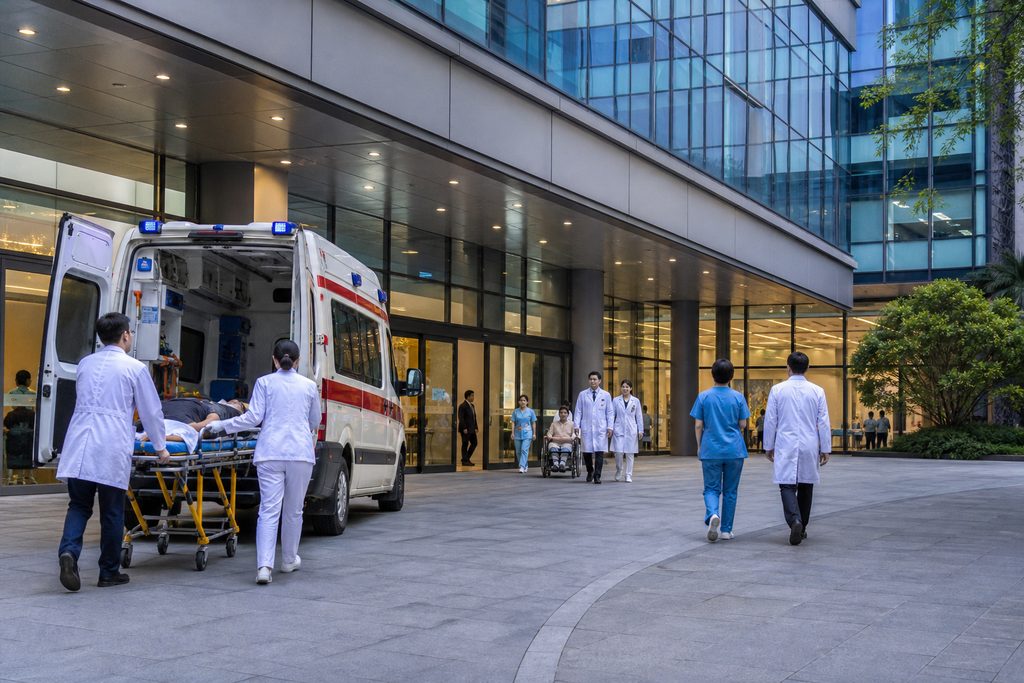
In cardiac surgery, the correlation between volume and mortality is well-documented. Surgeons and teams that perform high volumes of specific procedures tend to have lower complication rates. ZJU Second Hospital’s cardiovascular center completes well over 1,000 cardiac surgeries each year. That includes not just routine cases but complex aortic dissections and multi-valve procedures. A surgeon here might see more unique presentations in a quarter than a regional US hospital sees in a year. For the patient, that translates to a team that has seen your complication before and has a drilled protocol for handling it. The hospital’s emergency department operates on a similar scale, managing a staggering volume of acute cases. Their chest pain center is not a triage tent. It is a fully integrated unit designed to move a STEMI patient from the ambulance bay to the catheterization lab with minimal friction. They consistently achieve door-to-balloon times that meet the 90-minute guideline set by the American College of Cardiology, often completing the process in under 60 minutes.
Technology and Efficiency at Scale
Walk into the cardiovascular wing and you will find technology that mirrors any top-tier Western university hospital. Robotic-assisted surgical systems are in active use. Hybrid operating rooms allow for combined surgical and catheter-based interventions in a single session, reducing the trauma of multiple procedures. But the real differentiator is the operational tempo. The diagnostic pipeline—from a 256-slice CT angiogram to a cardiologist’s review—moves fast. This speed is not about cutting corners. It is a function of a system where imaging suites run extended hours and specialists are on-site, not on call from a distant private practice. For an international patient, this changes the calculus. You can fly in for a comprehensive cardiac workup and have a surgical plan in days, not weeks.
Cost Advantage Without Quality Compromise
The most striking number for any foreigner is the price. The ZJU Second Hospital Hangzhou international patient price for a CABG typically falls between $15,000 and $22,000. A single valve replacement often ranges from $12,000 to $18,000. These figures are not a sign of inferior materials or outdated techniques. They reflect structural economic differences: lower physician labor costs, hospital operational efficiency, and a medical device market that is increasingly dominated by high-quality domestic manufacturers alongside imported brands. The same St. Jude mechanical valve or Medtronic tissue valve used in a US operating room is available here, often at a lower procurement cost. You are paying for the clinical work, not for the administrative overhead of a multi-layered insurance billing system. The quality markers—infection rates, readmission statistics—are closely tracked and published in Chinese medical journals, and for top-tier centers like this one, they are comparable to international benchmarks.
What You Need to Know Before Going Alone
We have seen intelligent, resourceful people hit a wall when they attempt to access this hospital directly. The clinical excellence is real. So are the barriers. Going in blind can waste time you do not have.
- The Registration Labyrinth: The hospital’s standard outpatient system is a Mandarin-only digital platform. It requires a Chinese ID number or a local phone number to register. Foreign passports are not recognized in the public queue. You cannot simply walk up to the general cardiac surgery window and book a bypass. The specialists you need are behind a system that was not designed for you.
- Payment and Deposits: This is not a swipe-your-credit-card-and-go environment. International patients are typically routed through the hospital’s VIP or International Medical Center, where a substantial deposit is required upfront before major surgery. We are talking about a bank transfer or a cashier’s order, often in the range of 50% to 100% of the estimated procedure cost. Your US or European private insurance plan likely will not directly bill this hospital. You pay first, then seek reimbursement. Navigating this cash flow without a local guarantor is a genuine obstacle.
- Visa Pitfalls: Medical treatment in China requires an S2 visa, with the specific purpose of medical treatment noted. A business visa, the M category, is strictly for commercial activities and is not valid for receiving inpatient care. Applying for the wrong visa can result in denial of entry or complications during hospital admission. The invitation letter must come from the hospital itself, and obtaining that letter requires a confirmed appointment—a circular problem if you cannot book the appointment without the right documents.
How We Help You Navigate This
These barriers exist because the Chinese public hospital system is built to serve a domestic population of 1.4 billion people. It was never architected for walk-in international traffic. That is where we step in. We do not change the hospital’s rules. We work through the official channels that do accept foreign patients, specifically the hospital’s International Medical Center or VIP department.
The process starts with your clinical history. Before you ever book a flight, our team arranges for a structured translation of your medical records, echocardiograms, and angiogram films into a format that a Chinese cardiac surgeon can immediately interpret. We submit this dossier through the proper liaison office at ZJU Second Hospital to secure a preliminary treatment plan and a cost estimate. This is how you get a real, binding ZJU Second Hospital Hangzhou international patient price before you commit to travel. Only after the hospital confirms they can treat you do we move to logistics. We guide you through the S2 visa application, using the hospital’s official invitation documentation. On the ground in Hangzhou, a bilingual medical companion meets you at the airport, accompanies you to the hospital, handles registration, translates every question you have for the surgeon, and sits with you during the payment and deposit process. After discharge, we coordinate follow-up appointments and medication instructions in English. We are the continuity that a busy public hospital alone cannot provide.
Frequently Asked Questions
You cannot book it through the hospital’s public website or by calling the general switchboard. The pathway is through the hospital’s International Medical Center. You need a representative on the ground or a coordinating service to present your translated medical records and secure a consultation slot with the specific cardiac surgeon. The surgeon must evaluate you in person before any surgery is scheduled. There is no remote booking for a major procedure.
For a true emergency, the system is protocol-driven and fast. If you are in Hangzhou and experiencing chest pain, calling 120 will route you to the nearest capable emergency department, potentially ZJU Second Hospital’s chest pain center. The acute intervention—stenting for a heart attack—is world-class. The challenge for an expat is the post-acute phase. Once stabilized, you will face the same language and payment barriers in the inpatient ward. This is why many expats keep a bilingual emergency card with their medical history and insurance details, along with a contact for a local coordinator.
There is no fixed “package” price in the way a cosmetic surgery clinic might advertise. The total cost is built from the hospital’s line-item quote: surgeon’s fee, anesthesiologist, operating room time, ICU stay, ward bed, medications, and the prosthetic valve or grafts. For a foreigner, this typically totals between $12,000 and $22,000 for a major cardiac surgery. To this, you must add the cost of a coordinating service, visa fees, flights, and accommodation. The coordination service fee is separate from the hospital bill and covers the logistical work of making the treatment possible. Any consultation fee you pay for a preliminary assessment is typically credited in full toward the on-the-ground coordination service if you proceed with treatment within 90 days.
ZJU Second Hospital is a strong candidate for cardiac and complex emergencies due to its high-volume chest pain center and comprehensive specialty backup. However, for a non-cardiac emergency, other hospitals like Sir Run Run Shaw Hospital, which has a well-established international clinic and a large English-speaking staff, might offer a smoother post-emergency experience. The “best” hospital depends on the specific emergency. A severe trauma might be better served at a different center. We help match the acute need to the right institution in real time.
Your Next Step
Deciding to pursue cardiac care in China is a significant move, driven by a calculation of cost, quality, and timing. ZJU Second Hospital Hangzhou offers a combination of high clinical volume and accessible pricing that is difficult to find elsewhere. But the gap between reading about the hospital and walking through its doors for a pre-scheduled appointment is filled with logistical hurdles that can derail the entire process. Understanding the system is the first treatment. If you want to move from research to a concrete plan, we can help you build the bridge.
For more medical information and treatment options in China, visit chinamedservices.com (China Medical Services).
