All-on-4 for Missing Teeth: Candidacy, Costs, and China Options
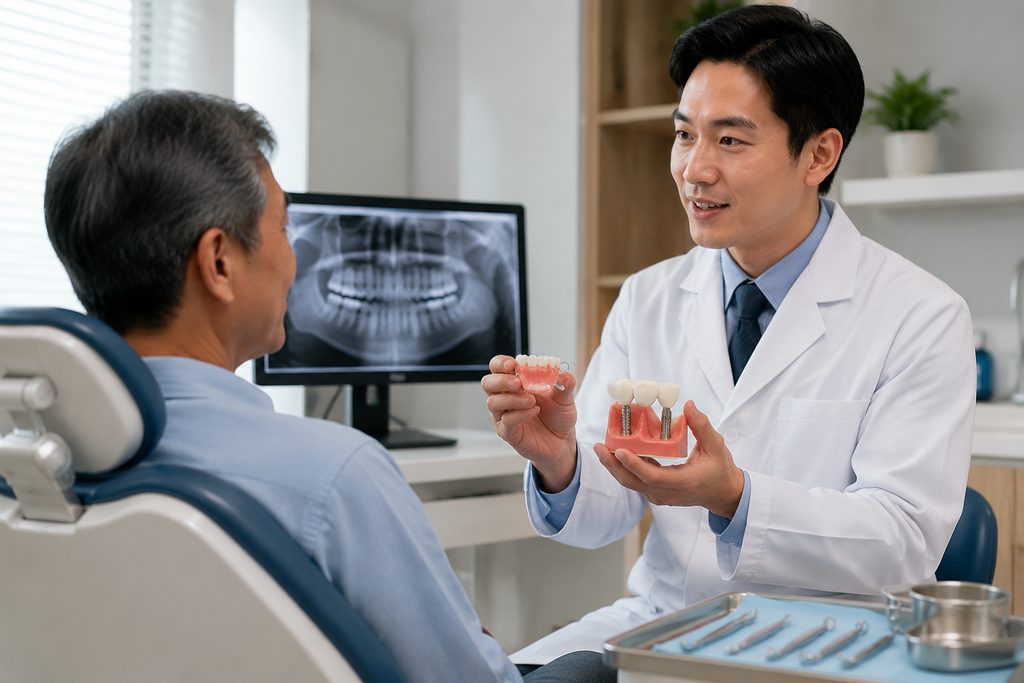
When 54-year-old Daniel from Manchester lost his third molar in five years, his dentist handed him a brochure for removable dentures. Daniel pushed it back across the desk. He had already spent two years researching fixed solutions, and one term kept surfacing in every forum, every YouTube explainer, every late-night Google session: All-on-4. The question he typed most often was simple. Is All-on-4 right for my missing teeth? He wasn’t alone. Tens of thousands of patients search that exact phrase each month, and the answer is rarely a clean yes or no. It depends on bone volume, budget, and how quickly you need teeth that stay put.
All-on-4 for Missing Teeth: The Short Answer
For most adults with a full arch of failing or missing teeth, All-on-4 is a legitimate and durable alternative to traditional dentures. The technique uses four titanium implants per jaw to support a fixed bridge of replacement teeth. Two implants go in vertically at the front, where bone is denser. Two angle back at up to 45 degrees to avoid the sinus cavity in the upper jaw and the nerve canal in the lower jaw. That angled placement is what often eliminates the need for bone grafting, which is the expensive and painful step that delays many full-arch cases by months.
The caveat: All-on-4 is not a universal fix. Patients with active gum disease, uncontrolled diabetes, heavy smoking habits, or severe bone loss in the posterior jaw may not qualify without additional procedures. And while the prosthetic teeth look and function like natural teeth, they require the same hygiene discipline as real ones. Skip that, and the implants can fail just like neglected natural teeth did.
Who This Is Right For — and Who It Isn’t
Candidacy is not about age. It’s about bone, biology, and behavior. A 70-year-old with good bone density and no systemic disease can be a better candidate than a 45-year-old smoker with untreated periodontitis.
Typically good candidates include:
- Patients missing all or most teeth in one or both arches
- Denture wearers who are tired of slippage, adhesive, and sore spots
- People with enough anterior jawbone to anchor two front implants
- Non-smokers or those willing to quit for at least two months before and after surgery
- Patients who want a fixed solution but want to avoid bone grafting
Who should think twice:
- Patients with uncontrolled diabetes (HbA1c above 8.0) — healing is compromised
- Heavy smokers — failure rates double or triple in some studies
- Those with active periodontal disease — infection must be treated first
- Patients taking bisphosphonates for osteoporosis — risk of osteonecrosis
- People with severe bruxism who grind teeth at night — excessive force can overload implants
If you fall into the second list, that doesn’t mean never. It means the treating surgeon needs to address those issues before placing implants. Some international patients seek treatment in China precisely because large public dental departments handle high volumes of complex cases and can coordinate oral surgery, periodontics, and prosthodontics under one roof.
The Options, Compared
All-on-4 sits in a middle ground between cheap removable dentures and expensive full-arch implant bridges with six or eight implants. Here is how the main options stack up for a single arch.
| Option | Implants per Arch | Typical Cost (Single Arch) | Fixation | Bone Grafting Needed | Treatment Timeline |
|---|---|---|---|---|---|
| Traditional Removable Denture | 0 | $300 – $1,500 | Removable | No | 2–4 weeks |
| Implant-Retained Overdenture | 2 | $4,000 – $8,000 | Snap-on, removable | Sometimes | 3–6 months |
| All-on-4 | 4 | $8,000 – $18,000 | Fixed, screw-retained | Rarely | 1–3 days for temporary teeth, 4–6 months for final |
| Full-Arch Bridge (6–8 implants) | 6–8 | $18,000 – $35,000 | Fixed | Often | 6–12 months |
Which column fits you? If you want the cheapest option and can tolerate movement and palate coverage, a denture works. If you want fixed teeth but have significant posterior bone loss, All-on-4 often avoids grafting that a six-implant bridge would require. The six-to-eight-implant route offers more load distribution and may be preferable for patients with very strong bite forces, but it costs more and takes longer.
How Long Does All-on-4 Implant Last?
Published long-term data gives a realistic picture. A frequently cited 10-year study by Maló et al. reported cumulative implant survival rates of 94.8% for the maxilla and 96.7% for the mandible. Another systematic review in the Journal of Oral Implantology found 5-year survival rates consistently above 95% across multiple studies. The prosthetic teeth themselves typically need replacement or relining after 10 to 15 years due to normal wear.
What shortens lifespan? Smoking, poor oral hygiene, and undiagnosed bite problems. What extends it? Annual check-ups, professional cleanings every six months, and a night guard if you grind. The implants can last decades. The teeth on top of them will not. Plan for that replacement cost.
Book All-on-4 Treatment China Package: What That Actually Means
Many international patients search for a package because the all on 4 dental implants cost China is substantially lower than in Western Europe or North America. In Shanghai, Beijing, and Guangzhou, top-tier public hospital dental departments and JCI-accredited private dental clinics quote from $8,000 to $15,000 per arch. The same procedure in the United States commonly runs $24,000 to $30,000 per arch. In the UK, private quotes frequently land between £12,000 and £18,000. That’s a meaningful gap.
But a package is not a product you drop into a cart. Chinese hospitals do not sell All-on-4 as a fixed-price tourist bundle. What some international clinics and facilitators offer is a coordinated treatment plan: initial video consultation, CT scan and records review, implant surgery, temporary fixed bridge, follow-up visits, and final prosthesis delivery. The price varies by hospital and case complexity. A patient needing extractions, sinus lift, or soft tissue grafting will pay more. A straightforward case with healthy bone pays less.
What a package typically includes:
- Pre-arrival records review and surgical planning
- Implant surgery and anesthesia fees
- Acrylic temporary fixed bridge placed within 24–72 hours
- Final zirconia or porcelain bridge after osseointegration
- Post-operative check-ups during the stay
What it usually does not include:
- Flights and accommodation
- Extractions of remaining teeth (often itemized separately)
- Bone or soft tissue grafting
- Treatment of pre-existing infections or gum disease
- Complications requiring additional surgery
All-on-4 vs Dentures Price Abroad: The Real Math
Let’s compare the all on 4 vs dentures price abroad with a concrete scenario. A patient needs a full upper arch restoration.
In London, a private All-on-4 case with extractions and a fixed zirconia bridge typically costs £14,000 to £16,000. That’s roughly $17,500 to $20,000. In the United States, expect $24,000 to $28,000. In Shanghai at a top public hospital’s international dental department, the same scope often lands between $9,000 and $13,000. The savings can cover round-trip business-class flights, a three-week hotel stay, and still leave thousands on the table.
But price is not the only variable. Time is another. In many Western systems, the surgical phase and the final prosthesis are separated by four to six months. That means two long trips or one very long stay. In China, some high-volume dental centers complete the entire sequence — surgery, temporary bridge, osseointegration period, final bridge — within a single trip of five to eight weeks. Not every patient can take that much time off work. But for retirees or those on extended leave, it works.
Dentures remain far cheaper upfront. A quality removable denture in any country costs under $2,000. But over ten years, with relines, adhesives, replacements, and the daily frustration, many patients conclude the fixed solution is worth the premium. You are not just buying teeth. You are buying the ability to eat an apple, laugh without covering your mouth, and speak without clicking sounds.
Practical Considerations: Records, Visa, and Follow-Up
If you are considering China for All-on-4, prepare for the logistics before you book a flight.
Records you will need:
- Panoramic X-ray or cone-beam CT (CBCT) taken within the last six months
- Medical history summary, including medications and allergies
- Recent blood work if you have diabetes, hypertension, or clotting issues
- List of current prescriptions, especially anticoagulants
Visa category: Foreigners traveling to China for medical treatment apply for an S2 visa with the purpose of treatment noted. Family members accompanying you apply under the same category. The hospital or clinic should provide an invitation letter and treatment confirmation to support the application. Requirements vary by embassy and current policy, so check with the Chinese consulate in your home country before booking.
Payment: Chinese public hospitals generally require prepayment for surgical procedures. International departments accept major credit cards and sometimes bank transfer. Private international clinics like JCI-accredited dental centers may bill your insurer directly, but most international patients pay out of pocket and seek reimbursement afterward.
Language: Top-tier public hospitals in Shanghai and Beijing have international departments with English-speaking coordinators. But once you step outside that department for imaging, lab work, or pharmacy pickup, signage and staff switch to Mandarin. A bilingual medical companion can bridge that gap — handling registration, queueing, payment, and translation during each visit.
Follow-up after returning home: Your local dentist can perform annual check-ups and cleanings. The implant system used in China is typically a globally recognized brand — Straumann, Nobel Biocare, or Osstem — so parts and tools are available in most countries. Ask for a detailed treatment summary and implant passport before you leave.
Do not book surgery without a recent CBCT reviewed by the treating surgeon. Panoramic X-rays alone cannot show bone width. A responsible clinic will request 3D imaging before confirming candidacy or quoting a final price.
Frequently Asked Questions
Yes, when performed by an experienced oral surgeon or periodontist on a properly screened patient. The technique has been used globally for over two decades, and published survival rates exceed 94% at 10 years. Safety depends on three things: the surgeon’s volume, your bone quality, and your post-operative hygiene. Ask how many All-on-4 cases the surgeon completes per year. A high-volume surgeon does at least 50 annually.
Shanghai has two credible options. The first is the stomatology department of a top public hospital — often affiliated with Fudan University or Shanghai Jiao Tong University. These departments handle high case volumes and complex reconstructions, and their international divisions provide English coordination. The second is a private international dental clinic with JCI accreditation and Western-trained implantologists. Public hospitals tend to cost less. Private clinics offer more flexible scheduling and direct insurance billing. The best choice depends on your case complexity and whether you need same-week surgery.
Implant failure is rare but real. Early failure, within the first few months, usually relates to infection or poor bone integration. Late failure, after years, often stems from overload or peri-implantitis. If a failure occurs, you may need the implant removed and replaced. Ask the treating clinic before you leave what their policy is for complications — some international dental departments in China offer a warranty period on the implant fixture itself, typically five to ten years from the manufacturer. The surgical placement warranty is separate and varies by clinic. Get it in writing.
In most All-on-4 protocols, yes. A provisional fixed bridge is attached to the four implants within 24 to 72 hours after surgery. It is made of acrylic and is designed to be slightly softer than the final bridge to protect the healing implants. You will eat a soft diet for the first two to three months. The final zirconia or porcelain bridge is delivered after osseointegration, usually at the four-to-six-month mark.
Your Next Step
All-on-4 is a proven solution for many people with missing teeth, but it is not a decision to make from a brochure. Start with a current CBCT and an honest conversation with a surgeon who does this procedure regularly. If you are considering treatment in China, our team at China Medical Services can help you identify suitable dental departments, coordinate records review, and arrange bilingual support during your stay. We are not a hospital and we do not provide medical advice or diagnoses. What we do is make a complex cross-border process easier to navigate.
Your next step is simple: gather your recent X-rays and medical history, then request a records review. That one step will tell you more about your candidacy than any article can.
For more medical information and treatment options in China, visit chinamedservices.com (China Medical Services).
