Video Follow-Up with Chinese Surgeon from Home: How To Do It Right
Key Takeaways
- A post-operative video consultation with a Chinese surgeon typically costs between $100 and $800, depending on the specialist’s seniority and hospital tier — a fraction of what an in-person return visit would cost in travel alone.
- Remote follow-up is not an informal Skype call. It requires structured medical record translation, a pre-arranged clinical agenda, and a hospital willing to engage through official international channels.
- Not every Chinese hospital offers virtual follow-up as a standard service. Many top-tier public hospitals still require an in-person visit for post-surgical assessment, making advance coordination essential.
- Understanding the difference between a casual check-in and a medicolegally valid consultation is the single most important factor in getting real clinical value from a remote appointment.
The Problem: You Had Surgery in China. Now You’re 6,000 Miles from Your Surgeon.
Imagine this. A 54-year-old patient from London underwent a complex spinal fusion at a major teaching hospital in Shanghai. The surgery went well. Recovery at home is progressing. But at the three-month mark, a dull ache develops near the surgical site. Is it normal post-operative healing or the first sign of hardware loosening? The local orthopedist back in the UK has never seen this specific implant system. The surgeon who placed it is in Shanghai. A transcontinental flight for a 20-minute consultation would cost thousands and risk aggravating the spine. The patient needs a video consultation with their Chinese surgeon — and they need it from their living room sofa.
This is not a hypothetical. As medical travel to China grows — the country now hosts over 340 top-ranked hospitals across 37 cities — a quiet but urgent question is emerging: what happens after you fly home? Post-operative continuity of care is where the promise of affordable, high-volume Chinese surgical expertise either solidifies into trust or fractures into anxiety. The solution exists. But it is not as simple as opening Zoom.
Why a Structured Video Follow-Up with a Chinese Surgeon Delivers Real Clinical Value
A remote follow-up is not a downgrade from an in-person visit. For specific post-operative questions, it can be superior. It eliminates travel stress, allows the patient to be in their own environment, and forces both parties to prepare thoroughly — relying on imaging and lab data rather than rushed physical exams. The key is the structure behind the call.
Continuity with the Surgeon Who Knows Your Anatomy
The surgeon who performed your procedure has tactile memory of your tissues, your bone quality, your unique anatomical variations. A 2023 study in the Journal of the American College of Surgeons examined post-operative complication detection and found that the operating surgeon, reviewing post-discharge imaging remotely, identified clinically significant findings that were missed by local radiologists in 11% of cases. This is not a reflection on local radiologists. It reflects the irreplaceable value of the surgeon who was inside the operative field. When that surgeon is in China and you are not, a video consultation becomes the only way to access that specific clinical knowledge.
Imaging Review, Not Just Conversation
A proper remote follow-up is imaging-centric. Before the call, you will send recent X-rays, CT scans, or MRIs in DICOM format. The Chinese surgeon reviews these on a diagnostic-grade monitor, not a phone screen. During the video consultation, they share their screen, walk you through the images, and point to exactly what they see. This is fundamentally different from a phone call where someone says “the scan looks fine.” You see the fusion mass. You see the implant position. You understand the evidence.
Cost Structure That Makes Sense
The video consultation Chinese surgeon cost varies by hospital tier and specialist seniority. A standard consultation with a department director at a public hospital’s international wing typically ranges from $300 to $500. A top-specialist video consultation — with a surgeon whose name appears on the Fudan Hospital Ranking specialty list — runs $500 to $800. Compare that to a round-trip international flight, hotel, and ground transport, which easily exceeds $3,000 before you pay a single hospital fee. The economic logic is straightforward. What is less obvious is that many hospitals will credit this consultation fee toward future on-the-ground coordination if you later return for a follow-up procedure — a structure that removes the financial risk of “paying twice.”
How to Schedule an Online Follow-Up with a Surgeon in China: The Step-by-Step Reality
Not all Chinese hospitals offer virtual follow-up. Public hospitals that treat a high volume of international patients — particularly those with dedicated international medical departments — are far more likely to have established telemedicine protocols. Hospitals like Peking Union Medical College Hospital, West China Hospital, and Shanghai’s Zhongshan Hospital have invested in secure video platforms and have English-speaking coordinators. A smaller provincial hospital may lack both. Before you do anything else, confirm the channel exists. If your surgeon operates at a hospital listed in our top-ranked hospitals database, the probability is higher — but still not guaranteed.
You cannot simply email your surgeon and ask for a video call. You need a structured submission: recent imaging reports, current lab results, a concise written description of your symptoms since surgery, and a list of specific questions. This packet gets translated into Chinese by a medical translator — not Google Translate, which will mangle drug names and anatomical terms. The surgeon reviews this packet before agreeing to the consultation. If the packet is incomplete, the hospital may decline the request or delay it by weeks.
This is the step where most patients hit a wall. Chinese public hospitals do not typically allow surgeons to schedule personal video calls with former patients. The consultation must go through the hospital’s international department, which handles scheduling, payment, and platform logistics. The department confirms the surgeon’s availability, sets the appointment time (always in China Standard Time — UTC+8), and sends you a secure link, usually to a platform like Tencent Meeting or a hospital-specific telemedicine portal. The coordination fee for this booking — the service that makes the appointment happen — starts from $300. The consultation fee itself is separate and paid to the hospital.
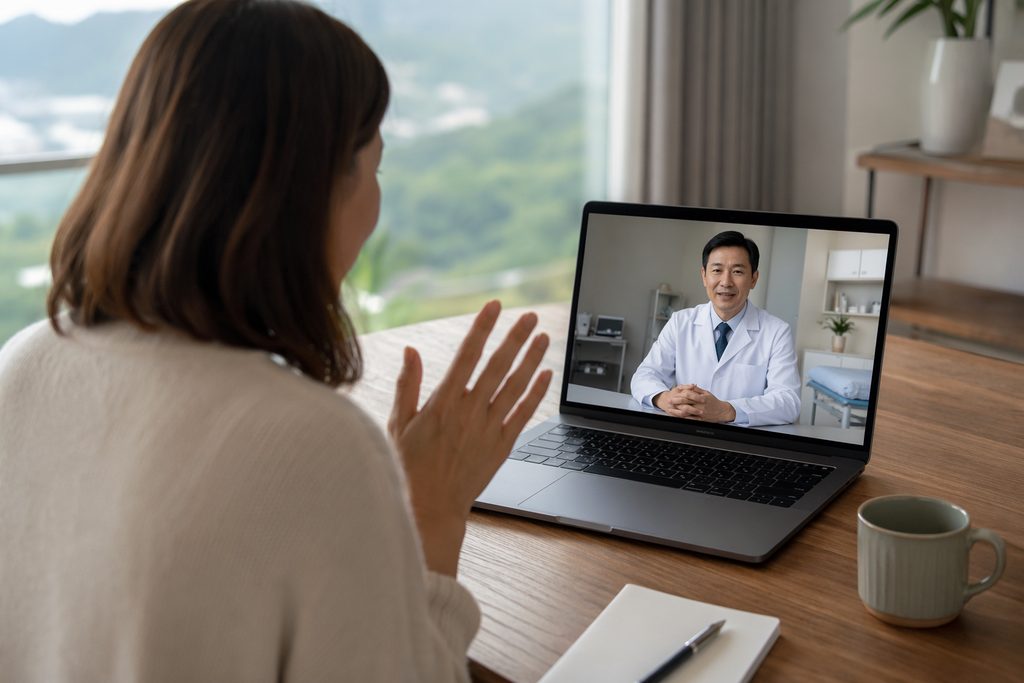
The call typically lasts 20 to 40 minutes. A bilingual coordinator is often present for the first few minutes to handle introductions and technical issues, then steps back unless interpretation is needed. The surgeon will have your imaging on screen. They will ask targeted questions. You will have your prepared list. The output is not just verbal advice — you should receive a written summary in both Chinese and English, documenting the clinical findings and recommendations. This document is critical for your local physician back home.
What a Post-Surgery Video Call in China Actually Costs: Real Price Ranges
Patients searching “post-surgery video call China price” want a number. The honest answer is that prices are not standardized nationally. They depend on the hospital, the surgeon’s rank, and whether you need interpretation. Here is what our team sees in practice for international patients booking through official hospital channels.
| Consultation Type | Typical Price Range (USD) | What It Includes |
|---|---|---|
| Standard Video Consultation (Public Hospital International Wing) | $100 – $300 | 20-30 minute call, imaging review, brief written summary |
| Written Second Opinion (Top-Tier Specialist) | $300 – $500 | Detailed written analysis of records and imaging; no live call |
| Top-Specialist Video Consultation | $500 – $800 | 30-40 minute call with a Fudan-ranked specialist, comprehensive written report |
| Multidisciplinary Team (MDT) Video Consultation | $1,500 – $2,000 | 2-3 specialists from different departments, joint assessment, integrated report |
These figures reflect the consultation fee paid to the hospital. They do not include the coordination service that arranges the appointment, translates your records, and ensures the technology works — that typically starts from $300. Also, a critical detail that many patients overlook: if you later decide to return to China for an in-person follow-up or additional treatment, most coordination providers will credit your remote consultation fees toward the on-the-ground service package. You do not pay twice for the same clinical pathway.
Can You Do a Virtual Follow-Up with Your Doctor in Shanghai? It Depends on Three Factors
The question “can I do a virtual follow-up with my doctor in Shanghai” does not have a universal yes or no answer. Three conditions must align.
First, the hospital’s policy. Some hospitals, particularly those with JCI accreditation or established international patient centers, have formal telemedicine programs. Others operate on an ad hoc basis — the surgeon might agree to a video call if asked, but there is no standard process, no official billing code, and no medicolegal framework. An ad hoc call might feel convenient, but it carries risk. If there is no official record, your local physician cannot rely on it for treatment decisions.
Second, the surgeon’s schedule. A top Chinese surgeon may perform 15 to 20 major procedures per week and oversee hundreds of post-operative patients. A 30-minute video consultation is not a trivial time commitment. Surgeons are more likely to agree when the clinical question is specific — “is this imaging finding concerning?” — rather than open-ended — “how am I doing?”
Third, your clinical documentation. A surgeon cannot assess you through a screen without current imaging and lab work. If you cannot provide a recent CT scan or blood panel, the consultation has limited value. The hospital will typically require imaging taken within the past 30 days.
Booking a Telemedicine Appointment with a Chinese Hospital: What International Patients Need to Know
When you set out to book a telemedicine appointment with a Chinese hospital, you are navigating a system designed primarily for domestic patients. The international layer adds complexity — but also, paradoxically, creates a more structured experience because it forces everyone to follow a formal protocol.
Language is the first barrier. The hospital’s telemedicine platform may have a Chinese-only interface. The appointment confirmation, the pre-call instructions, the payment portal — all may default to Chinese. A bilingual coordinator who can handle these logistics is not a luxury; it is the difference between a 20-minute setup and a multi-day email chain that ends in frustration.
Payment is the second barrier. Chinese hospitals typically require pre-payment via bank transfer or WeChat Pay / Alipay, neither of which are straightforward for someone without a Chinese bank account. Some international departments accept wire transfers or credit cards, but the process can take days. Budget for this lag time when scheduling.
Time zones are the third barrier. China Standard Time is UTC+8. A 9:00 AM appointment in Shanghai is 9:00 PM the previous day in New York, or 2:00 AM in London. The hospital will not shift its schedule for you — you adapt to theirs. This is not negotiable.
International Patient Remote Follow-Up China Packages: What They Include
An international patient remote follow-up China package is more than a video link. It is a coordinated sequence that begins weeks before the call and extends beyond it. Here is what a comprehensive package typically covers.
Pre-consultation preparation: your recent medical records and imaging are collected, reviewed for completeness, translated into medical Chinese, and submitted to the surgeon’s department. The surgeon confirms that the clinical question is appropriate for a remote consultation and that sufficient data exists to provide a meaningful opinion. This gatekeeping step prevents wasted consultations where the surgeon simply says “I need to see you in person.”
The consultation itself: a secure, recorded video session with the surgeon. A medical interpreter is present if needed — not a general translator, but someone who understands surgical terminology in both languages. The surgeon reviews imaging, answers your prepared questions, and provides a clinical assessment.
Post-consultation documentation: a written report in Chinese and English, summarizing findings and recommendations. This document is designed to be shared with your local physician. It is not a prescription — Chinese surgeons cannot prescribe medications across international borders — but it is a clinical opinion that your local doctor can use to guide treatment.
These packages vary in scope and price, but the common thread is structure. A video consultation Chinese surgeon cost that seems high in isolation often reflects the invisible labor — translation, coordination, documentation — that makes the 30-minute call clinically useful.
Frequently Asked Questions
Will my local doctor accept the Chinese surgeon’s remote assessment?
This depends entirely on the documentation. A verbal summary from you — “the surgeon said everything looks fine” — carries zero weight. A formal written report in English, with the hospital’s letterhead and the surgeon’s signature, is a different matter. Most local physicians will accept a documented specialist opinion as a valid clinical input, particularly when it addresses a specific question about a procedure the local physician did not perform. Ask the hospital in advance whether they provide a formal written report in English. If they do not, factor in the cost of having the Chinese report professionally translated.
What if the surgeon finds a problem during the video consultation?
This is the scenario everyone hopes to avoid but must prepare for. If the surgeon identifies a concern — a non-union on imaging, a possible infection, implant migration — the consultation shifts from reassurance to planning. The surgeon will typically recommend one of three paths: continued monitoring with a repeat scan in a defined timeframe, a return visit to China for further evaluation, or, in some cases, a referral to a local specialist who can perform the necessary intervention. You are never obligated to return to China. The surgeon’s role is to provide a clinical opinion, not to bind you to a single course of action. A written report documenting the concern and the recommendation gives you the information you need to make your own decision.
Is a video consultation as good as an in-person follow-up?
For some clinical questions, yes. For others, no. A video consultation is excellent for reviewing imaging, discussing symptoms, and answering specific post-operative questions. It is poor for physical examination — the surgeon cannot palpate your surgical site, test your range of motion, or assess wound healing directly. A responsible surgeon will tell you if the limitations of a remote assessment prevent them from giving a definitive opinion. If they say “I need to examine you in person,” that is not a failure of the telemedicine format — it is a recognition of its appropriate boundaries.
How long does it take to schedule a remote follow-up?
Plan for two to four weeks from initial inquiry to consultation. The timeline breaks down roughly as follows: one week to gather and translate your records, one week for the hospital to process the submission and confirm the surgeon’s availability, and up to two weeks to find a mutually workable appointment slot. Expedited scheduling is sometimes possible but should not be assumed. If you know you will need a follow-up at a specific post-operative milestone, initiate the process early.
Your Next Step
A remote follow-up with the surgeon who operated on you is one of the most underutilized tools in international medical care. It keeps you connected to the clinical expertise that matters most for your specific case, without the cost and physical toll of another long-haul flight. The key is doing it through official channels — with proper documentation, a structured agenda, and a written report you can share with your doctor back home.
Our team at China Medical Services helps international patients coordinate these remote consultations with top-ranked Chinese hospitals. We handle the record translation, the hospital liaison, and the scheduling logistics — so that when you sit down in front of your screen, you are talking to the right surgeon, with the right imaging, and a clear clinical agenda. We do not provide medical advice or diagnoses. We provide the bridge. If a remote follow-up is on your mind, reach out for a free consultation and we will help you understand your options.
For more medical information and treatment options in China, visit chinamedservices.com (China Medical Services).
