Zhongshan Hospital Shanghai: Cardiac & Liver Surgery for International Patients
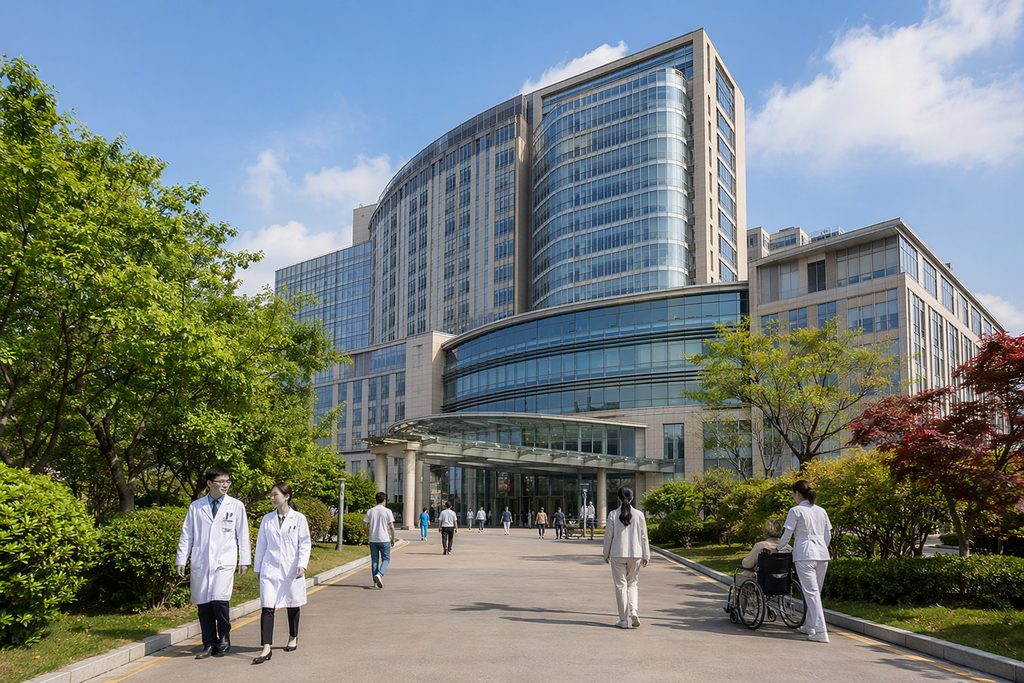
Key Takeaways
- Zhongshan Hospital’s Cardiac Surgery department performs over 5,000 open-heart procedures annually, ranking it among the world’s highest-volume centers.
- Liver surgery costs at Zhongshan Hospital typically run 70-80% less than comparable procedures in the United States, without sacrificing clinical outcomes.
- Independent international patients face significant barriers: no English-language online booking, mandatory in-person registration, and a complex, cash-based payment system.
- A structured pathway through the hospital’s International Medical Center is the only reliable method to secure a confirmed surgical slot and English-speaking coordination before you travel.
The Problem: When Your Heart or Liver Fails, Time Is Not on Your Side
A patient in London waits an average of 18 weeks for a coronary artery bypass graft on the NHS. In Canada, the median wait stretches to 14 weeks for elective cardiac surgery. For liver resection candidates, the clock ticks louder: every month of delay allows hepatocellular carcinoma to grow, potentially crossing the threshold from resectable to terminal. You do not have 18 weeks. And if you are paying out of pocket in the US, the math is brutal. A four-vessel bypass at a major American hospital will cost north of $120,000. A complex liver resection can exceed $200,000. These are not inflated scare figures. They are the median billed charges from hospital chargemasters in 2024.
That financial toxicity forces impossible choices. Sell the house. Drain the retirement account. Or wait — and hope the disease waits too. Most patients do not realize a third path exists. One that does not require sacrificing quality for affordability. One where surgical volume, not just technology, drives outcomes. The question is not whether high-caliber cardiac and liver surgery exists outside Western borders. The question is whether you can access it safely, with a system designed to catch you if something goes wrong.
Who We Are
We are not a hospital. We do not provide medical treatment, clinical diagnoses, or surgical opinions. We are your logistical architects — a team of bilingual case managers, former hospital administrators, and patient coordinators who bridge the gap between you and China’s top-tier medical institutions. Our database covers 340+ top-ranked hospitals across 37 cities, representing the top 5% of China’s 35,000+ hospitals as ranked by the Fudan University hospital rankings and JCI accreditation standards. We handle the invisible infrastructure: medical record translation, visa invitation letters, appointment locking through official hospital international channels, and on-the-ground bilingual companions who ensure you never stand alone at a registration window holding a queue number you cannot read. When you search for a Zhongshan Hospital Shanghai international patient price, what you really need is a transparent, confirmed pathway — not a brochure. That is what we build.
Why Zhongshan Hospital Fudan University Delivers World-Class Cardiac and Liver Outcomes
Surgical Volume That Reshapes Survival Curves
Volume is not a vanity metric. In cardiac surgery, the relationship between annual hospital caseload and 30-day mortality is one of the most replicated findings in surgical outcomes research. A 2017 analysis in The Lancet examining over 900,000 valve surgeries found that hospitals performing fewer than 50 mitral valve repairs annually had nearly double the risk-adjusted mortality of centers exceeding 200 cases. Zhongshan Hospital’s Cardiac Surgery department operates at a scale that few Western centers can match. The team completes more than 5,000 open-heart procedures each year. That includes complex valve repairs, aortic arch replacements, and off-pump bypass grafting. The surgeons in this department do in a month what a competent regional center in Europe does in a year.
Liver surgery follows the same logic. Zhongshan’s Liver Surgery division, led by specialists who have trained across Japan, Germany, and the United States, performs over 3,000 liver resections annually. For context, a high-volume US academic center might log 200 to 400. The department handles portal vein reconstruction, extended hemihepatectomies, and living-donor liver transplantation — procedures where intraoperative decision-making separates a clean margin from a catastrophic bleed. When you ask how safe is liver surgery in Shanghai, the answer lives in these numbers. Repetition breeds recognition. A surgeon who has seen 500 anatomical variations of the hepatic artery does not panic at the 501st.
Technology Stacked on Experience, Not Replacing It
Walk into Zhongshan’s hybrid operating suites and you will find the equipment you would expect at Mayo Clinic or Charité Berlin. Da Vinci Xi robotic systems. Intraoperative 3D navigation for liver segment mapping. Electromagnetic navigation bronchoscopy for lung work that often accompanies cardiac cases. But the machines are not the story. The story is the integration. Zhongshan was an early adopter of transcatheter aortic valve replacement in China, building a structural heart program that now handles over 1,000 TAVR cases annually. The cardiac imaging team runs CT-FFR analysis in-house, turning a coronary CTA into a functional ischemia map within hours — no need for a separate diagnostic catheterization. For liver patients, the hospital’s Department of Radiology operates a dedicated LI-RADS reporting system, standardizing hepatocellular carcinoma risk stratification so your case presentation is legible to any hepatologist worldwide.
This is not experimental medicine. It is high-throughput, protocol-driven care where the technology serves the volume, and the volume sharpens the judgment.
The Cost Equation: Structural Advantages, Not Corner-Cutting
Let us address the elephant in the room. A Zhongshan Hospital Shanghai international patient price for cardiac surgery will land somewhere between $18,000 and $35,000, depending on complexity. A liver resection runs $15,000 to $40,000. These figures are not promotional discounts. They reflect structural economic realities. Chinese hospital labor costs are lower across the board — not because surgeons are underqualified, but because the wage differential between a senior cardiac surgeon and an average worker in Shanghai is narrower than in the US. Hospital construction costs per square meter are lower. Device and implant pricing, while rising, still trails Western list prices for the same FDA-approved or CE-marked products. And the sheer patient volume allows fixed costs to amortize across more cases.
The table below gives a direct comparison. These are all-inclusive estimates covering surgeon fees, anesthesia, operating room charges, standard ICU stay, and ward recovery for uncomplicated cases. Complex cases with extended ICU time will run higher.
| Procedure | Zhongshan Hospital (USD) | US Average (USD) | UK Private (USD) |
|---|---|---|---|
| Coronary Artery Bypass Graft (CABG) | $18,000 – $28,000 | $120,000+ | $45,000 – $65,000 |
| Mitral Valve Repair | $22,000 – $35,000 | $90,000 – $140,000 | $50,000 – $70,000 |
| TAVR (Transcatheter Aortic Valve) | $35,000 – $50,000 | $150,000 – $200,000 | $70,000 – $95,000 |
| Liver Resection (Partial Hepatectomy) | $15,000 – $30,000 | $80,000 – $200,000 | $55,000 – $85,000 |
| Living Donor Liver Transplant | $70,000 – $100,000 | $300,000 – $500,000 | $150,000 – $220,000 |
These prices assume you are accessing care through the hospital’s International Medical Center or VIP pathway. Standard public ward pricing is lower — but that route is functionally inaccessible to non-Chinese speakers without local registration and insurance. The international pathway adds a coordination premium of roughly 1.5 to 2 times the domestic rate, which is already factored into the figures above.
What You Need to Know Before Going Alone
The clinical case for Zhongshan Hospital is strong. The logistical barriers, if you attempt this independently, are brutal. We lay them out not to frighten you, but because patients who understand the friction points make better decisions.
- Visa Requirements Are Specific and Unforgiving: Medical treatment in China requires an S2 visa with a notation specifying the purpose of medical care. Family members accompanying you also need S2 visas. This is not a tourist visa you grab online. You need an official invitation letter from the hospital confirming your admission or consultation appointment. Without it, the consulate will not issue the visa. And hospitals do not issue invitation letters to unregistered, unconfirmed patients. It is a closed loop that requires someone inside to break it open.
- No Online Booking for the Public System: Zhongshan Hospital’s general outpatient system does not accept international online reservations. You show up at 6:00 AM, queue for a registration ticket, and hope the specialist you need is consulting that day. Even if you get a ticket, the consultation will be in Mandarin, conducted at a pace that assumes local cultural context. This is not a system designed for foreigners. It is a system designed for 10,000+ daily outpatient visits, optimized for throughput, not hand-holding.
- Payment Is Predominantly Cash or Chinese Bank Card: The hospital cashier does not accept international credit cards. WeChat Pay and Alipay dominate, but linking a foreign card to these platforms is inconsistent and frequently fails for large hospital deposits. You can find yourself standing at the payment counter with a surgery slot confirmed and no way to pay the deposit. Some international patients have resorted to carrying stacks of RMB cash through airport customs — not a strategy we recommend.
How We Help You Navigate This
These barriers exist for structural reasons, not malice. Chinese public hospitals were built to serve a domestic population of 1.4 billion. International patient coordination is a bolt-on function, not a core design principle. Our entire operating model exists to fill that gap.
Before you book a flight, we translate and package your medical records — imaging, pathology reports, prior operative notes — into a format that Chinese specialists can review efficiently. We submit your case through the hospital’s official International Medical Center channel, not through the public queue. That means a confirmed appointment with the specific department head or senior surgeon whose expertise matches your condition. Not a random junior attending. We lock in a surgical window before you travel, so you are not arriving on a hope and a prayer.
On the ground, a bilingual medical companion meets you at the hospital entrance. This person handles registration, payment, queue numbers, and navigation between the lab, imaging center, and consultation rooms. They sit with you during the doctor’s consultation, translating the clinical conversation in real time — not just the words, but the nuance. “The surgeon thinks the margin looks clean but wants a frozen section to be sure” is very different from “the surgery went well.” You deserve the full picture. During recovery, your companion coordinates discharge medications, follow-up imaging schedules, and the fit-for-fly letter you will need for your return trip.
We also handle the visa invitation letter, airport transfers, and accommodation recommendations near the hospital. For patients considering a book liver transplant China medical tourism package, we coordinate the extensive pre-transplant workup — donor compatibility testing, ethics committee clearance, and the mandatory psychological evaluation required under Chinese transplant regulations. This is not a package you can book on a website. It is a six-to-eight-week orchestration of medical, legal, and logistical steps. We have done it before. We know where the bottlenecks are.
What Recovery Actually Looks Like: Timelines and Realities
Patients researching what is recovery time after heart bypass abroad often find generic textbook answers: six to eight weeks. The reality is more textured, and it depends heavily on whether you are recovering in a Shanghai hospital ward or flying home to continue rehabilitation.
For an uncomplicated CABG at Zhongshan, expect five to seven days in the hospital post-surgery. The first 24 to 48 hours are in the cardiac surgical ICU, where nurse-to-patient ratios are 1:1 or 1:2. Extubation typically happens within six hours of leaving the operating room. By day three, you are sitting in a chair. By day five, you are walking the ward hallway. The sternum will not be fully stable — that takes eight to twelve weeks — but you will be medically stable for discharge. Most international patients then transfer to a nearby serviced apartment for another week of supervised recovery before attempting the long-haul flight home. The hospital’s cardiac rehabilitation team provides a discharge exercise protocol and a medication schedule that your home cardiologist can follow.
Liver resection recovery is more variable. A laparoscopic wedge resection might mean four days in the hospital. An open right hemihepatectomy could mean ten to fourteen days. The liver regenerates remarkably fast — 80% of the regrowth happens in the first six weeks — but the incision and the metabolic adjustment take time. Zhongshan’s liver surgery team runs a dedicated enhanced recovery after surgery protocol that includes preoperative carbohydrate loading, opioid-sparing epidural anesthesia, and early oral intake within 24 hours of surgery. These are not luxuries. They are evidence-based interventions that cut the average length of stay by two to three days compared to traditional post-hepatectomy care.
Why Zhongshan Stands Out Among Shanghai’s Cardiac Centers
Shanghai has no shortage of excellent hospitals. Ruijin Hospital, Renji Hospital, and Huashan Hospital all run strong cardiac and liver programs. So what makes Zhongshan the default reference when international patients search for the best cardiac surgery hospital Shanghai for foreigners?
Two things. First, Zhongshan’s International Medical Center is the most mature among Shanghai’s public hospitals. It has been operating for over a decade, with dedicated English-speaking nursing staff, a separate billing counter that understands international insurance reimbursement, and a patient flow that does not require you to wade through the general outpatient chaos. Second, the hospital’s cardiac and liver departments are not just clinically strong — they are research anchors. The cardiac surgery team publishes regularly in The Journal of Thoracic and Cardiovascular Surgery and Circulation. The liver surgery group contributes to the Barcelona Clinic Liver Cancer staging updates. When you are under the knife, you want a surgeon who does not just operate — a surgeon who writes the textbook chapters that other surgeons read.
That said, Zhongshan is not the right fit for every case. If you need a procedure that is more interventional than surgical — a complex PCI with rotablation, for instance — Zhongshan’s cardiology cath lab is excellent, but you might also evaluate Fuwai Hospital in Beijing, which performs over 14,000 cardiac surgeries annually and runs the world’s highest-volume interventional cardiology program. Our role is to match you to the right center, not to sell you on one brand. We have placed patients at Shanghai hospitals across the tier-one spectrum, and we will tell you honestly if another center better fits your specific diagnosis.
Frequently Asked Questions
You can get a treatment estimate with a ±15% accuracy band. The hospital’s International Medical Center will review your translated medical records and imaging, then issue a preliminary cost breakdown covering surgeon fees, anesthesia, ICU days, ward stay, and standard consumables. Unforeseen complications — a longer ICU stay, a different surgical approach decided intraoperatively — will shift the final bill. We have seen this delta run about 10-12% in practice. Any coordinator who promises a fixed, all-in price for complex cardiac or liver surgery is either naive or dishonest.
Zhongshan Hospital is a tertiary referral center with a full-spectrum ICU, a 24/7 interventional radiology team for post-surgical bleeding control, and a rapid-response team that covers the surgical wards. The hospital’s surgical mortality rates for CABG and liver resection are published in peer-reviewed journals and are comparable to top-quartile US centers. If a complication requires extended hospitalization, your companion coordinates the visa extension and communicates with your family back home. We also help you activate your international insurance or arrange direct payment for the extended stay. No system is risk-free. What matters is that the system has the depth to catch complications early and the protocols to manage them aggressively.
Budget four to six weeks from arrival to departure. Week one is the preoperative workup: blood work, imaging, anesthesia clearance, and the surgical consent consultation. Week two is the surgery and initial ICU recovery. Weeks three and four are ward recovery and early mobilization. Week five is a final surgical follow-up, suture removal, and the fit-for-fly clearance. For liver transplant patients, the timeline stretches to eight to twelve weeks, largely driven by donor workup and the ethics committee review process. Do not book a tight return ticket. Healing does not respect airline change-fee policies.
Yes. A translation app will help you order food and ask where the bathroom is. It will not help you understand the difference between “the CT shows a small pleural effusion that we will monitor” and “the CT shows a hemothorax that needs a chest tube now.” In a surgical context, nuance is everything. Informed consent requires you to understand the risks in your native language, not a machine-translated approximation. The hospital’s surgical consent forms are in Chinese. The verbal explanation from the surgeon will be in Shanghainese-accented Mandarin. A bilingual medical companion is not a luxury — it is a patient safety tool.
Most international insurance plans operate on a reimbursement model. You pay the hospital upfront, obtain a detailed invoice and medical report in English, and submit the claim to your insurer for reimbursement. Zhongshan’s International Medical Center provides the necessary documentation in a format recognized by major insurers like Bupa, Cigna, and Aetna. Direct billing — where the hospital bills the insurer directly — is rare in Chinese public hospitals, even through the international wing. If you need direct billing, you would be looking at private international hospitals like Jiahui or United Family, which are JCI-accredited and have direct settlement agreements. But those hospitals do not perform high-complexity cardiac or liver surgery at Zhongshan’s volume. It is a tradeoff. We help you navigate it based on your insurance policy’s fine print.
Your Next Step
A cardiac surgery China cost comparison will show you that the savings are real. But savings alone are not a reason to put your chest under a sternal saw on the other side of the world. The reason is this: Zhongshan Hospital offers a combination of surgical volume, clinical protocol maturity, and International Medical Center infrastructure that few centers globally can match — at a price that does not bankrupt your family. The barriers to accessing it independently are high. They are not insurmountable, but they require local knowledge, language capability, and institutional relationships that most international patients simply do not have.
We provide the bridge. If you are considering cardiac or liver surgery at Zhongshan Hospital and want a transparent, confirmed pathway — not a glossy brochure — reach out for a free consultation. We will review your case, explain the realistic timeline and costs, and help you decide if this path makes clinical and financial sense for you. Request a free consultation to start the conversation. No pressure. No hard sell. Just the information you need to make an informed decision.
For more medical information and treatment options in China, visit chinamedservices.com (China Medical Services).
