China Medical Technology: CAR-T, Proton Therapy, Robotics — Costs & Access
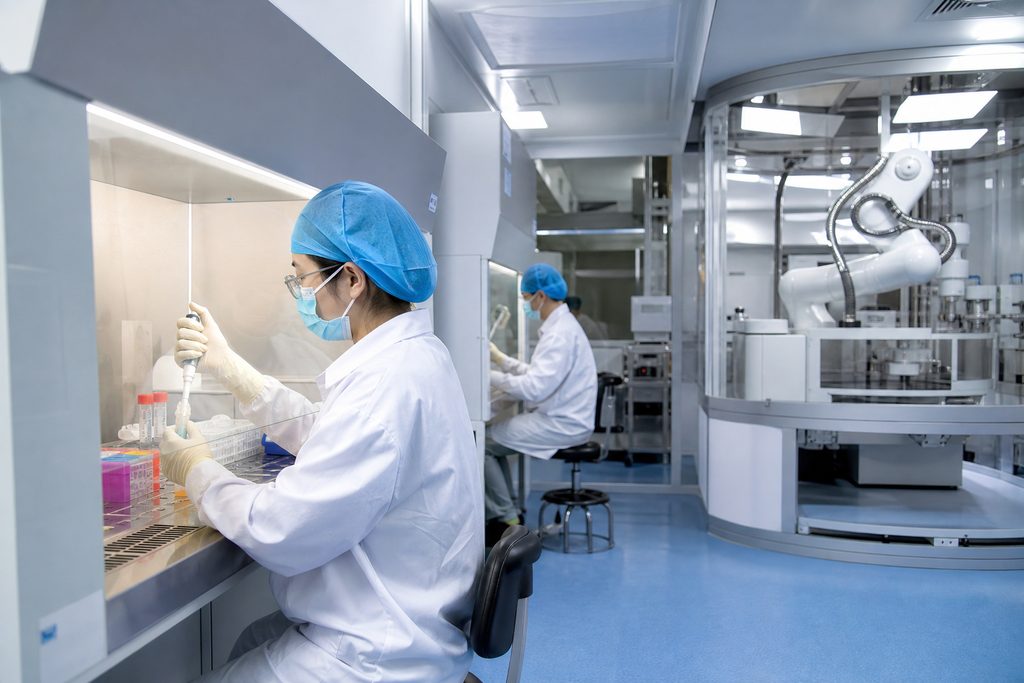
China Medical Technology: CAR-T, Proton Therapy, and Robotic Surgery Explained
When you hear “China medical technology,” you might picture crowded hospital corridors. The reality is different. Within China’s 35,000+ hospitals, a top tier of roughly 340 institutions now rivals leading Western centers for complex cancer care and precision surgery. The CAR-T therapy cost China offers — often 50% to 70% below US list prices — has drawn serious attention from international patients. So has access to proton beam centers and a rapidly expanding robotic surgery fleet.
This article breaks down what these technologies actually do, what they cost, where to find them, and the real barriers you will face. No hype. No vague promises. Just the facts a patient or family member needs before making a decision that involves travel, significant money, and trust in an unfamiliar system.
Key Takeaways
- China has over 340 top-ranked hospitals, including centers performing more than 14,000 cardiac surgeries annually and running multiple CAR-T clinical programs.
- CAR-T therapy in China typically costs between $80,000 and $150,000 for the drug alone, compared to $400,000–$500,000 in the US for comparable products.
- Proton therapy in Shanghai is available at internationally accredited centers, with treatment courses often priced at $40,000–$70,000 versus $150,000+ in Western Europe.
- You cannot simply book surgery online from abroad. A face-to-face outpatient consultation is mandatory at public hospitals before any procedure can be scheduled.
The Problem: Cutting-Edge Cancer Care Is Priced Out of Reach
In the United States, a single CAR-T infusion can cost over $500,000 when hospitalization and management of side effects are included. Insurance may cover part of it — if you qualify, if you are in-network, if prior authorization clears. Many patients wait months for approval. Some never get it. In the UK, NHS access to CAR-T is rationed by strict eligibility criteria, and wait times for proton therapy often stretch beyond what an aggressive tumor will tolerate.
And that is the core issue. The technologies exist. They are proven. But the system around them moves slowly and charges aggressively. A 2023 analysis published in Blood Advances found that the total cost of CAR-T care in the US — including managing cytokine release syndrome and neurotoxicity — frequently exceeds $700,000 per patient. For proton therapy, the American Society of Clinical Oncology has noted that geographic access remains a major barrier: fewer than 50 proton centers operated in the entire US as of 2024, concentrated in coastal metro areas.
So patients start looking elsewhere. That search often leads to Asia.
Why China Delivers Results in Advanced Medical Technology
China has compressed two decades of hospital modernization into roughly ten years. The result is a system where top-tier public hospitals combine very high patient volume with modern equipment and, critically, much lower operating costs. That combination changes the economics of advanced care.
Clinical Volume That Builds Unmatched Experience
Volume matters in complex medicine. A surgeon who performs 300 robotic prostatectomies a year simply sees more anatomical variation, more complications, and more edge cases than one who performs 40. Chinese top-tier hospitals operate at a scale that is difficult to comprehend from a Western perspective. A single major oncology department in Shanghai may see more new cancer patients in a month than a mid-sized European hospital sees in a year.
That volume translates into procedural competence. Fuwai Hospital in Beijing performs over 14,000 cardiac surgeries annually — the highest volume of any cardiac center in the world. For robotic surgery, Chinese hospitals have deployed hundreds of da Vinci systems, with domestic systems like the Toumai robot adding further capacity. This is not experimental medicine. It is high-volume, standardized, protocol-driven care.
Technology Adoption Without Legacy Constraints
Western hospitals often move slowly because they are locked into existing infrastructure, reimbursement codes, and unionized staffing models. China built much of its current hospital infrastructure after 2005. That means newer buildings, newer imaging suites, and fewer legacy systems to work around. A hospital that opened a proton center in 2015 did not have to retrofit a 1970s radiation oncology wing. It designed the facility around the technology from day one.
China also runs one of the world’s largest clinical trial ecosystems. As of 2024, China ranked second globally in active CAR-T clinical trials, with over 300 studies registered. That trial density means Chinese oncologists have deep, current experience managing the specific toxicities of these therapies — cytokine release syndrome, neurotoxicity, prolonged cytopenia. They see these complications weekly, not quarterly.
Cost Advantage Without Quality Compromise
The obvious question: is it cheaper because it is worse? The structural answer is no. Chinese hospital costs are lower for three reasons. First, labor economics — a senior oncologist’s salary in Shanghai is a fraction of a US equivalent. Second, hospital construction and land costs, while rising, remain below Western levels. Third, volume spreads fixed costs across far more patients.
None of those factors degrade clinical quality. What they do is lower the price. For international patients, the savings on a single CAR-T course or proton therapy regimen can exceed $200,000 — even after flights, accommodation, and coordination fees. That is not a marginal discount. It is a different financial category entirely.
CAR-T Therapy Cost China: What the Numbers Actually Look Like
Let us get specific. CAR-T therapy involves extracting a patient’s T cells, genetically engineering them to recognize cancer cells, and reinfusing them. The process takes roughly three to four weeks from cell collection to infusion, followed by at least two to four weeks of close monitoring for side effects.
China has approved multiple domestically developed CAR-T products. The first, Yescarta (axicabtagene ciloleucel), was approved in 2021. Domestic products include relmacabtagene autoleucel and equecabtagene autoleucel. The list price for these therapies in China ranges from approximately $80,000 to $150,000 for the drug product itself. Hospitalization, conditioning chemotherapy, and complication management add $20,000 to $50,000 depending on the patient’s response.
| Cost Component | China (USD) | United States (USD) |
|---|---|---|
| CAR-T drug product | $80,000 – $150,000 | $373,000 – $475,000 |
| Hospitalization & monitoring | $20,000 – $50,000 | $50,000 – $150,000 |
| Conditioning chemotherapy | $5,000 – $10,000 | $10,000 – $25,000 |
| Total estimated cost | $105,000 – $210,000 | $433,000 – $650,000 |
These figures vary by hospital and case complexity. A patient who develops severe cytokine release syndrome requiring ICU care will pay more. A patient with an uncomplicated course will pay less. But the structural gap is clear: the same biological therapy, using the same scientific principles, costs roughly one-third to one-half as much in China.
Not every patient qualifies for CAR-T. It is currently approved for certain B-cell lymphomas, multiple myeloma, and acute lymphoblastic leukemia. A thorough evaluation of your disease subtype, prior treatments, and organ function is mandatory before any Chinese center will accept you for CAR-T. This is not a therapy you can self-refer for.
Proton Therapy Price Shanghai: Accessing Precision Radiation
Proton therapy delivers radiation with far greater precision than conventional photon radiation. The proton beam stops at a precise depth, depositing its energy in the tumor and sparing healthy tissue behind it. This matters enormously for tumors near the brainstem, spinal cord, optic nerves, or in pediatric patients where avoiding radiation damage to developing tissue is critical.
Shanghai is home to one of China’s most advanced proton and heavy ion centers — the Shanghai Proton and Heavy Ion Center (SPHIC), which opened in 2015. It has treated thousands of patients with head and neck cancers, skull base tumors, prostate cancer, and certain pediatric malignancies. The proton therapy price Shanghai centers charge typically falls between $40,000 and $70,000 for a full course of treatment, which usually spans 20 to 35 fractions over four to seven weeks.
Compare that to the United States, where a proton course routinely costs $150,000 to $200,000, or to Germany and Japan, where prices run $80,000 to $120,000. The gap is smaller than for CAR-T, but still significant — especially when you consider that Shanghai’s proton center uses equipment from the same manufacturers (Siemens, Varian, IBA) that supply Western facilities.
Is proton beam therapy safe in China? The short answer: at accredited centers, yes. SPHIC follows international quality assurance protocols and publishes clinical outcomes in peer-reviewed journals. The technology itself is mature. What varies is the experience of the physics and clinical team. At top Chinese centers, those teams have now accumulated nearly a decade of proton-specific experience. That matters. Proton therapy is as much about treatment planning and quality assurance as it is about the machine itself.
Patients considering proton therapy should verify that the center holds relevant accreditations, ask about the number of patients treated with your specific tumor type, and request a written treatment plan before committing. A remote second opinion or video consultation with the proton center’s radiation oncologist is a reasonable first step — and far cheaper than flying to Shanghai on speculation.
Robotic Surgery Hospitals China: Where the Robots Are
Robotic surgery uses a surgeon-controlled console to manipulate instruments with greater precision, tremor filtration, and 3D visualization than traditional laparoscopy. It is used for prostatectomy, gynecologic oncology, colorectal surgery, thoracic surgery, and increasingly for complex hepatobiliary and pancreatic procedures.
China now operates one of the largest installed bases of surgical robots in the world. Hundreds of da Vinci systems are distributed across major cities, and domestic platforms like the Toumai and MicroPort MedBot systems are adding capacity rapidly. The hospitals that matter for robotic surgery are concentrated in Beijing, Shanghai, Guangzhou, and a handful of other cities.
How does CAR-T treatment work in China? It follows the same protocol as anywhere else: leukapheresis to collect T cells, genetic modification in a certified laboratory, lymphodepleting chemotherapy, then infusion and monitoring. The difference is scale and cost. Chinese centers run multiple CAR-T patients simultaneously, which builds nursing and ICU expertise in managing the specific complications these patients develop.
If you want to book robotic surgery package China, understand what that actually means. You cannot email a hospital and reserve an operating slot. The process is: send your medical records for review, schedule a video or in-person consultation with the surgical team, receive a treatment plan and cost estimate, then arrange your visa and travel. The surgery itself is scheduled only after the surgeon has met you and confirmed the plan. Any service that promises otherwise is not being honest with you.
For hospital selection, consult the Fudan University hospital rankings, which evaluate Chinese hospitals by specialty reputation. The department-level rankings cover 45 specialties, including oncology, cardiac surgery, orthopedics, and urology. A hospital ranked among China’s top 10 for your specific condition is a reasonable starting point. You can also review top-ranked hospitals by city to understand geographic distribution.
Practical Considerations: Visa, Records, Payment, and Follow-Up
Let us address the logistics directly. These are the things that actually determine whether a treatment trip succeeds or collapses.
Visa. Foreign nationals traveling to China for medical treatment apply for an S2 visa, which covers short-term private affairs including medical care. Your accompanying family members also apply for S2 visas. Stays exceeding 180 days require an S1 visa. The M visa is for commercial and trade activities — it is not appropriate for medical travel. You will need a formal invitation or supporting letter from the hospital confirming your treatment plan. Visa approval is never guaranteed, so build buffer time into your planning.
Medical records. Chinese hospitals require comprehensive documentation before accepting an international patient. This means pathology reports, imaging studies (preferably in DICOM format), treatment summaries, and a detailed history from your current oncologist or surgeon. All documents must be translated into Chinese. Professional medical translation is worth the cost — errors in a pathology translation can change a treatment decision.
Payment. Public hospitals in China require prepayment. You will typically deposit funds before admission, with the hospital drawing down against that deposit as services are delivered. International credit cards are accepted at international departments, but wire transfer is often more practical for large amounts. Private international hospitals like United Family or Jiahui may offer direct insurance billing, but for CAR-T or proton therapy at major public centers, expect to pay out of pocket and seek reimbursement from your insurer afterward.
Language. Even at top hospitals, most staff do not speak English fluently. The international department or VIP clinic is your interface — these units have English-speaking coordinators and are accustomed to foreign patients. Outside those units, you will need interpretation. This is not a minor inconvenience. A miscommunication about medication timing or post-operative restrictions can have real clinical consequences.
Follow-up. After you return home, you will need a plan for continued monitoring. CAR-T patients require long-term follow-up for immune recovery and late toxicities. Proton therapy patients need imaging at regular intervals. Chinese hospitals will provide discharge summaries and treatment records, but your home oncologist must be willing to take over care. Discuss this before you leave, not after you return.
Frequently Asked Questions
The biological mechanism is identical. The difference lies in the specific product used and the experience of the treating team. Chinese centers use both internationally approved products and domestically developed CAR-T therapies with published clinical trial data. Top-tier Chinese oncology departments manage CAR-T toxicities at high volume, which is a genuine advantage. But the therapy itself is not a guarantee of response — roughly 40% to 60% of eligible patients achieve durable remission depending on disease type and prior treatments.
No. Public hospital rules require a face-to-face outpatient consultation before any surgery can be scheduled. You can complete the preliminary steps remotely — record review, video consultation, treatment planning — but the surgeon must see you in person before booking an operating room. Some private international hospitals may offer more flexibility, but even they generally require an in-person evaluation for major procedures.
Chinese top-tier hospitals have robust complication management capabilities, including ICU care, interventional radiology, and multidisciplinary teams. The question is not whether complications can be handled — they can. The question is communication. Having a bilingual medical companion who can advocate for you during a complication is genuinely valuable. You should also understand that medical malpractice litigation in China is a different system from what you may be used to, and outcomes are not comparable to Western legal remedies.
It depends entirely on your policy. Some international health insurance plans cover treatment in China if the hospital is accredited and the treatment is medically necessary. Most US domestic plans do not. You will likely need to pay upfront and submit for reimbursement. Contact your insurer before committing to anything, and get any pre-authorization in writing.
For CAR-T, plan for a minimum of six to eight weeks: cell collection, manufacturing time, conditioning chemotherapy, infusion, and acute monitoring. Some patients stay longer if complications arise. For proton therapy, expect four to seven weeks of daily treatment sessions, plus time for initial simulation and treatment planning. Neither of these is a short trip.
Your Next Step
China’s top hospitals now offer internationally competitive CAR-T, proton therapy, and robotic surgery at prices that can be dramatically lower than Western equivalents. The technology is real, the volume is real, and the savings are real. But none of that matters if you cannot navigate the system effectively. We help international patients understand their options, connect with appropriate hospitals, and coordinate the logistics of treatment in China. We are not a hospital and we do not provide medical advice or diagnoses. If you want to understand whether treatment in China is a realistic option for your specific case, start with a free consultation to discuss your situation and goals.
For more medical information and treatment options in China, visit chinamedservices.com (China Medical Services).
