Treatment in China: Same-Day Scans and Short Waits Explained
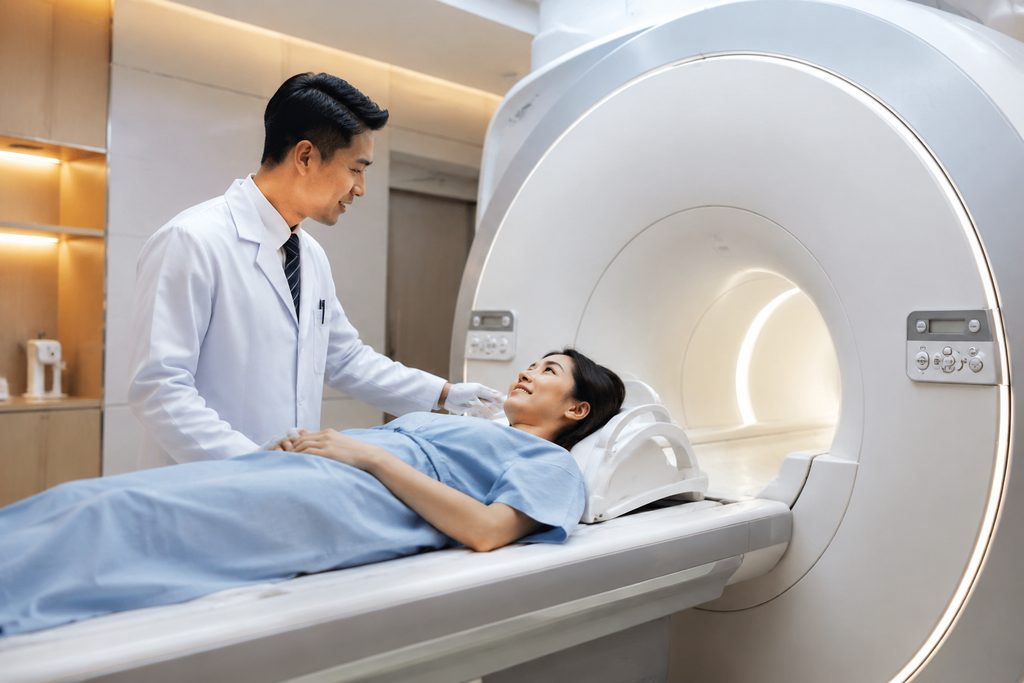
Treatment in China: Same-Day Scans and Short Waits — The Short Answer
Yes, in most major Chinese cities, a foreign patient can walk into a top-tier hospital’s international department, complete an MRI or CT scan the same day, and receive a preliminary radiologist report within 2 to 4 hours. The MRI scan cost China same day typically ranges from $150 to $450 depending on the body region, contrast use, and hospital tier. That compares to $1,200 to $3,500 for a same-week MRI at many U.S. imaging centers. But the real story is not just price. It is the structural difference in how Chinese hospitals handle imaging volume.
One caveat matters. Same-day scans are standard at private international hospitals and the VIP or international departments of large public hospitals. At a standard public outpatient clinic, you may still wait 3 to 7 days for a non-urgent MRI slot. The speed you get depends on the channel you enter through.
Who This Is Right For — and Who It Isn’t
Same-day imaging in China works well for a specific profile of international patient. It is not a universal solution.
Good candidates include:
- Patients with a known condition who need a follow-up MRI or CT before deciding on surgery.
- Travelers or expats already in China who want a full-body screening without a multi-week wait.
- Patients whose home-country scan wait is 6 weeks or longer and who need answers faster.
- People comparing second opinions who need fresh imaging on a tight timeline.
Who should not pursue this:
- Patients with unstable cardiovascular or neurological symptoms who should not fly long distances.
- Anyone requiring emergency intervention — an imaging scan abroad does not replace local emergency care.
- Patients whose referring physician requires a specific scanner model or protocol that Chinese hospitals may not match exactly.
- People who need the scan for a legal or insurance claim with strict jurisdiction requirements.
Being honest about who should stay home is part of how we advise. A cheap scan is worthless if the images cannot be read by your doctor back home.
The Options, Compared
Not all imaging pathways in China are equal. Here is how the three main routes compare for a foreign patient seeking a same-day scan.
| Pathway | MRI Scan Cost (USD) | Time to Scan | Report Turnaround | English Support |
|---|---|---|---|---|
| Public hospital — standard outpatient | $80–$180 | 3–7 days | 24–72 hours | Limited |
| Public hospital — international/VIP department | $200–$450 | Same day to 48 hours | 2–4 hours | Yes, dedicated staff |
| Private international hospital (e.g., United Family, Jiahui) | $300–$600 | Same day | 1–2 hours | Fully English-speaking |
The standard outpatient route is cheapest but slowest and linguistically challenging without a bilingual companion. The VIP public hospital route offers the best balance of clinical authority and speed. Private international hospitals are the most convenient but carry a premium. Which column fits you depends on whether you prioritize cost, speed, or the prestige of the reading radiologist.
Can I Get a Scan Without Waiting in China? The Reality Behind the Promise
The phrase “no waiting” needs translation into Chinese hospital logistics. Public hospital imaging departments run from 7:30 AM to late evening, often processing 800 to 1,500 imaging studies per day at major centers like Peking Union Medical College Hospital or West China Hospital. That volume is why standard slots fill up. But the international department maintains a separate scheduling pool. So the answer to can I get a scan without waiting in China is yes — if you book through the right channel and arrive with a clear referral note.
Here is what actually happens when a foreign patient requests a same-day MRI in Shanghai or Beijing. The international coordinator calls the radiology desk at 8 AM. A slot opens at 2 PM because of a cancellation. The patient arrives at 1:30 PM, completes registration, changes into a gown, and is on the table by 2:15 PM. The scan takes 25 to 40 minutes. The preliminary report is ready by 5 PM. That is not a marketing story. It is how same-day imaging works when someone who knows the system handles the coordination.
But there is a hard limit. PET-CT, cardiac MRI with stress protocols, and some specialized neuroimaging sequences still require advance booking even in VIP channels. And if you need a radiologist with subspecialty certification in, say, musculoskeletal imaging, that report may take an extra day. Same-day is common. Same-hour is rare.
How Long for CT Scan Results in Shanghai — and What Drives the Variance
Shanghai is the most efficient city in China for foreign-patient imaging. The question how long for CT scan results in Shanghai deserves a precise answer. At Zhongshan Hospital‘s international medical center, a non-contrast chest CT report is typically available within 2 hours. A contrast-enhanced abdominal CT with multiplanar reconstruction takes 3 to 4 hours. At Jiahui International Hospital in Xuhui, the same studies often come back in 60 to 90 minutes because the radiologist team is smaller and the queue is shorter.
What drives the variance:
- Contrast vs. non-contrast — contrast studies require post-processing time.
- Body region — head and chest read faster than abdomen or pelvis.
- Radiologist subspecialty — a neuroradiologist reading a brain MRI may batch reads at set times.
- Hospital tier — top Fudan-ranked hospitals have more complex cases ahead of you.
If you need results the same day for a surgical decision, say so when booking. The radiology department can flag your study as “stat” within the international channel. That changes the queue priority without any informal payment — it is a clinical triage designation, not a bribe.
Best Hospital for Immediate Imaging Beijing: Where to Go
Beijing has the highest concentration of Fudan-ranked hospitals in China — 21 of the Top 100. For a foreign patient needing immediate imaging, the choice narrows quickly. The best hospital for immediate imaging Beijing depends on what you are scanning.
For neuroimaging, Peking Union Medical College Hospital (PUMCH) International Medical Services is the default choice. Their 3T MRI fleet is among the most advanced in northern China, and their neuroradiology team reads thousands of cases monthly. Same-day brain MRI with contrast is routinely available through their international department.
For cardiac or chest imaging, Fuwai Hospital runs the largest cardiac imaging program in the world. A cardiac CT angiography can often be completed same-day with a report within 3 hours. But Fuwai is a specialty hospital — they do not handle general orthopedic or abdominal imaging well.
For full-body screening, United Family Beijing and Beijing United Family Rehabilitation Hospital offer full body scan package China price options starting around $1,800 for a comprehensive MRI-based screening with same-day preliminary results. That package includes brain, spine, chest, abdomen, and pelvis sequences plus a physician consultation.
Our Beijing hospital guide breaks down which institution fits which imaging need. And our Fudan Top 100 hospital directory shows the full landscape of accredited centers.
Full Body Scan Package China Price and What It Actually Includes
The full body scan package China price varies more than any other imaging category because the definition of “full body” is not standardized. A basic package — brain MRI, chest CT, abdominal ultrasound — runs $600 to $900. A comprehensive MRI-dominant package covering brain, whole spine, chest, abdomen, pelvis, and both knees runs $1,800 to $3,200 at private international hospitals. At a public hospital VIP department, the same comprehensive package costs $1,200 to $2,000.
What is included:
- All imaging sequences and contrast agents.
- Preliminary written report in English.
- A consultation with a physician to review findings.
- Digital copies of all images on a USB drive or cloud link.
What is not included:
- Pathology or biopsy if a suspicious lesion is found.
- Follow-up imaging at shorter intervals.
- Treatment of anything discovered.
- Translation of the report into languages other than English or Chinese.
If you are coming specifically for a full-body scan, budget for an extra day in case the radiologist recommends a targeted follow-up sequence. That happens in roughly 15 to 20 percent of screening scans.
Fast MRI Appointment for Foreigners China: The Booking Mechanics
A fast MRI appointment for foreigners China does not happen by walking into a public hospital lobby and taking a number. The standard public registration system requires a Chinese ID or a local phone number, and the queue is designed for domestic patients. Foreign patients need a different entry point.
The mechanics:
- A referral note or clinical summary from your home physician — even a brief email describing the clinical question helps.
- Your passport and current visa. For medical travel, the S2 visa is the applicable short-stay category, issued for private affairs including medical treatment. We never call the M visa a medical visa because it is not one — M is for commercial and trade activities.
- A booking through the hospital’s international department or a coordination service that handles registration, payment, and scheduling on your behalf.
- Pre-authorization or upfront payment. Public hospitals require prepayment before the scan. Private international hospitals may bill your insurer directly.
You can handle this alone if you speak Mandarin and understand hospital workflow. Most foreign patients do not. That is not a criticism — it is the reality of a system built for 1.4 billion domestic patients. A bilingual medical companion costs from $300 per day and handles queue tickets, payment counters, and translation so you spend your energy on the scan, not the logistics.
What It Costs: MRI Scan Cost China Same Day in Context
Let us put the MRI scan cost China same day into a global frame. A brain MRI without contrast at a U.S. hospital outpatient department averages $1,600 to $2,800 before insurance. The same study at a Chinese public hospital international department costs $180 to $320. With contrast, add $50 to $80 in China versus $300 to $600 in the U.S.
A cardiac MRI, one of the most expensive imaging studies anywhere, runs $2,500 to $5,000 in the U.S. In China, the same study at Fuwai Hospital’s international department costs $600 to $1,100. The price difference is structural — lower labor costs, higher volume, and a reimbursement system that does not inflate imaging fees the way U.S. chargemasters do.
What drives variance within China:
- Hospital tier — Fudan Top 100 hospitals charge 30 to 50 percent more than lower-tier public hospitals.
- City — Shanghai and Beijing are pricier than Chengdu or Wuhan.
- Contrast agent — imported gadolinium costs more than domestic equivalents.
- Report language — English reports sometimes carry a $20 to $50 translation fee.
Prices vary by hospital and case complexity. Always confirm the total before you fly.
Practical Considerations: Records, Visa, Payment, and Follow-Up
Bring everything. Not just the referral note — bring the actual images and reports from any prior scans. Chinese radiologists compare against priors, and a missing CD from six months ago can delay your report. Digital files on a USB drive are ideal. Cloud links work too, but hospital networks sometimes block foreign cloud services.
Visa timing matters. The S2 visa application for medical treatment requires supporting documents from the receiving hospital — usually an invitation letter or a booking confirmation from the international department. Processing time is typically 5 to 10 business days at most embassies, but consulates in some countries take longer. Apply before you book flights. We never guarantee visa approval; we provide the documents the consulate asks for.
Payment is straightforward. Public hospitals accept UnionPay, major credit cards at international counters, and sometimes cash. Wire transfers are possible but slow. Private international hospitals accept Visa, Mastercard, and direct insurance billing with major international insurers.
Follow-up after you return home is the part most patients forget. Your Chinese scan images are in DICOM format. Most home-country radiologists can read them, but some institutions require their own repeat scan for medicolegal reasons. Ask your home physician before you leave whether a Chinese scan will be accepted for surgical planning. If not, the trip may still be valuable for a second opinion — but know that going in.
Frequently Asked Questions
At a private international hospital or a public hospital’s VIP department, yes — if you have booked in advance and your clinical situation allows it. At a standard public outpatient clinic, no. Expect 3 to 7 days. The channel you enter through determines the speed.
Some international insurers reimburse Chinese hospital imaging directly, especially at JCI-accredited private hospitals. Others require you to pay upfront and submit a claim. Public hospital VIP departments provide itemized invoices in English, which most insurers accept. Check with your insurer before booking. We do not process insurance claims, but we provide the documentation your insurer will ask for.
You will receive a written report and a physician consultation. If the finding requires urgent attention, the hospital can coordinate immediate specialist referral. If it is non-urgent, you take the images home to your treating physician. We do not diagnose, and we do not push treatment — the scan is information, and what you do with it is between you and your doctors.
The hardware is equivalent — top Chinese hospitals use the same Siemens, GE, and Philips scanners as Western centers. The variable is the reading radiologist. At Fudan-ranked hospitals, subspecialist radiologists read thousands of cases annually. At lower-tier hospitals, the reading quality is more variable. Choose the hospital carefully, not just the scanner.
Your Next Step
Same-day imaging in China is real, affordable, and clinically credible — if you enter through the right door. The wrong door costs you days of waiting and a language barrier. The right door costs a bit more and gets you a report before dinner.
China Medical Services helps international patients navigate Chinese hospital imaging — from booking a fast MRI appointment to coordinating bilingual support on the day of your scan. We are not a hospital, we do not diagnose, and we do not sell treatments. We connect you with the right imaging center and handle the logistics so you can focus on the results.
If you are considering a scan in China, start with a conversation. Visit our patient services page to tell us what you need, and we will tell you honestly whether it makes sense. No pressure, no obligation — just a clear answer about what is possible.
For more medical information and treatment options in China, visit chinamedservices.com (China Medical Services).
