Craniofacial Surgery Worth It: Shanghai Ninth Hospital Cost & Results
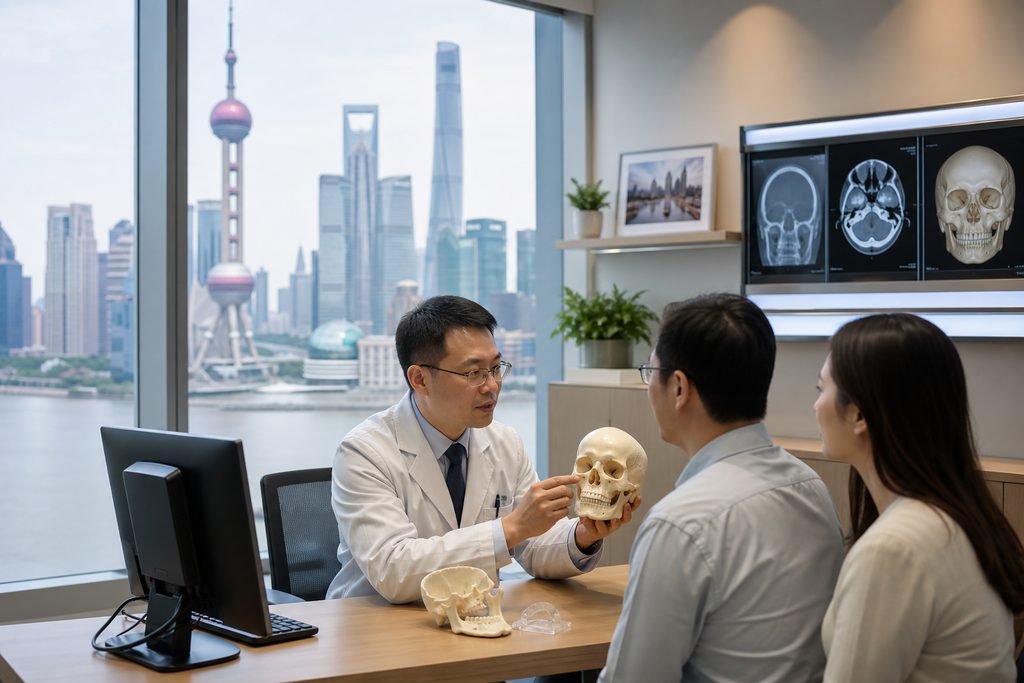
When 34-year-old Daniel from Manchester started researching options for his complex jaw reconstruction, the quotes he received from private clinics in London made his stomach drop. £45,000. Then £52,000. And that was before the hospital stay. A colleague mentioned China. Daniel laughed. Then he started reading. Six months later, he was sitting in a consultation room in Shanghai, reviewing a 3D-printed model of his own skull with a surgeon who had performed over 2,000 similar procedures. His total cost, including flights, accommodation, surgery, and follow-up imaging, came to just under $19,000. He went home with money left in his savings account and a result his UK surgeon later described as “textbook.”
Stories like Daniel’s are why people search for craniofacial surgery cost Shanghai Ninth Hospital in the first place. The numbers are genuinely different here. But cost is only one piece of the decision. The real question underneath the search is harder: is this actually worth it? Will the quality hold up? What happens if something goes wrong when I’m 9,000 kilometers from home?
We work with international patients navigating exactly these questions. Our team has coordinated care at Shanghai Ninth People’s Hospital for patients from 14 countries. This article walks through what we’ve learned — the honest version, including the parts that are difficult.
How This Actually Works, Step by Step
Let’s be concrete. You don’t just book a flight and show up. Here’s the real sequence for an international patient considering craniofacial surgery at Shanghai Ninth Hospital.
Step 1: You send your existing records. CT scans, X-rays, clinical photos, previous surgical reports, your current diagnosis. We translate these into Chinese and submit them to the craniofacial department for preliminary review. This usually takes 3 to 7 working days. The department head or a senior attending surgeon reviews your case and gives an initial assessment: is this surgically addressable, what approach would they recommend, and what additional imaging they need.
Step 2: You get a written second opinion. For $300–500, the reviewing specialist provides a written analysis of your case. This is not a prescription. It’s a professional evaluation of what they see, what they’d recommend, and what outcomes are realistic given your specific anatomy and history. Many patients stop here — the written opinion alone often clarifies whether traveling is justified. If it is, you move forward.
Step 3: Video consultation. You speak directly with the surgical team. This is where you ask the hard questions: How many of these specific procedures have you done? What complications do you see most often? What would you do differently from my previous surgeon? The video consultation costs $500–800 for a top specialist. That fee is credited in full toward on-the-ground coordination if you decide to proceed within 90 days.
Step 4: Travel and in-person evaluation. You apply for an S2 visa — this is the short-stay category used for medical treatment and private affairs in China. You’ll need an invitation letter and supporting documents from the hospital. Processing typically takes 1 to 3 weeks depending on your home country’s Chinese consulate. Once in Shanghai, you attend the outpatient clinic for a face-to-face examination. The surgeon takes new imaging, confirms the surgical plan, and you receive a definitive quote.
Step 5: Admission and surgery. Public hospitals in China do not allow overseas patients to pre-book surgery without an in-person outpatient visit. This is a hard rule. Once the surgeon confirms the plan, admission is scheduled — usually within 1 to 3 weeks for international patients using the hospital’s designated international coordination channel. Surgery happens. You stay in the hospital for the prescribed recovery period.
Step 6: Follow-up and return home. You’ll have at least one post-operative review before flying home. Your surgeon provides a complete discharge summary in English, including imaging. You coordinate with your home physician for ongoing monitoring.
Is Shanghai Ninth Hospital Good for Craniofacial Surgery?
Reviews from international patients — on platforms like Reddit, Facebook expat groups, and medical tourism forums — generally highlight the surgeons’ technical skill and the hospital’s efficiency. Common criticisms include crowded outpatient clinics, limited English on the wards, and the need to be proactive about asking questions. The pattern is consistent: patients who use a bilingual companion report significantly smoother experiences than those who go alone. The surgical outcomes themselves are rarely the complaint.
Revision policy varies by case. If the revision is directly related to the original procedure and clinically indicated, Shanghai Ninth will often perform it at reduced cost or no cost for the surgical fee — but you still bear travel and accommodation expenses. Discuss revision policy explicitly during your video consultation. Get the answer in writing. Don’t assume goodwill; confirm it.
No. The cost difference reflects structural economics: lower labor costs, lower facility overhead, and a healthcare system that doesn’t carry the same administrative and insurance burden as the US system. The surgeons at Shanghai Ninth train for the same duration as their Western counterparts, and the department publishes in peer-reviewed international journals. Lower cost is not a proxy for lower quality here. But it does mean you need to do your own due diligence — verify the surgeon’s experience, ask about complication rates, and get everything in writing.
Your Next Step
Craniofacial surgery is a serious decision. The cost savings at Shanghai Ninth Hospital are real, but they only matter if the clinical fit is right for your specific case. Our team at China Medical Services coordinates the entire process — records translation, specialist review, video consultation scheduling, visa documentation, and on-the-ground bilingual support. We don’t perform surgery. We don’t guarantee outcomes. We make the logistics manageable so you can focus on the medical decision. If you’re considering this path, start with a free consultation. Tell us about your case, and we’ll tell you honestly whether Shanghai Ninth is a realistic option for you. Request a free consultation and get a clear-eyed assessment before you commit to anything.
Frequently Asked Questions
Yes. The hospitals used for international patients are JCI-accredited and follow the same international safety standards as top hospitals in the US and Europe. Surgical teams perform high volumes of procedures — often more than their Western counterparts — which studies show leads to better outcomes.
Costs vary by procedure and hospital, but international patients typically save 40-80% compared to US prices — even when factoring in travel and accommodation. A consultation with our team will give you an exact, all-inclusive quote with no hidden fees.
Send us your existing medical reports to get started. We handle everything from hospital selection and appointment scheduling to visa assistance and post-operative recovery planning. Your medical records are reviewed by the specialist before you even book a flight.
For more medical information and treatment options in China, visit chinamedservices.com (China Medical Services).
