Top Pediatric Leukemia Hospital: Children’s Hospital Options in China
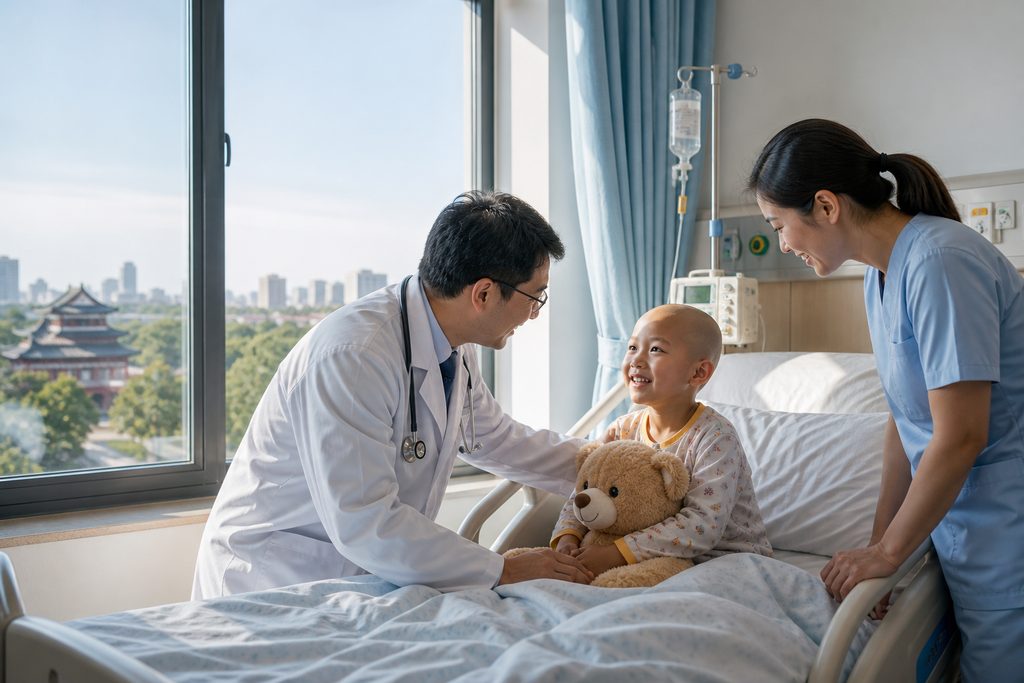
When 38-year-old Daniel from Manchester heard the words “acute lymphoblastic leukemia” about his five-year-old daughter, the floor dropped out from under him. His first question was not about survival rates. It was about where to go. His second was about money. The NHS oncologist was excellent, but Daniel had read about treatment protocols in Asia and wondered whether a different system might offer something more. That search led him to a simple query: what is the pediatric leukemia treatment cost China, and which children’s hospital actually ranks at the top?
This guide answers both questions with the same directness we would give Daniel on a phone call. We work with families like his every week. The information below reflects how the Chinese pediatric oncology system actually operates for international patients in 2026 — not how it is marketed. No inflated promises. No hidden gaps.
How This Actually Works, Step by Step
Most families assume they need to fly to China first and then figure out the hospital. That is backwards. The process that consistently works for international patients follows a staged, remote-first sequence.
You send us the child’s existing medical records — diagnosis report, bone marrow biopsy results, cytogenetic and molecular markers, current treatment protocol, and imaging. We translate them into medical Chinese. A pediatric hematology-oncology team at a top-tier children’s hospital reviews the file and returns a written assessment. This is the written second opinion step. It costs between $300 and $500 and usually takes five to seven working days.
If the assessment confirms that treatment in China offers a meaningful option — a specific clinical trial, a targeted therapy unavailable at home, or a significantly lower-cost protocol with equivalent outcomes — the next step is a video consultation. You speak directly with the specialist. The child does not need to travel yet. This costs $500 to $800 for a top-specialist video session.
Only after both steps do we coordinate the actual visit. That means the S2 visa application, hospital international department registration, appointment scheduling, and on-the-ground support. Families who skip the remote phase often arrive in Beijing or Shanghai with incomplete records and waste two weeks just getting a proper evaluation.
Which Children’s Hospitals Actually Treat Pediatric Leukemia
The search term “best children’s cancer hospital Shanghai” points to a real concentration of expertise. Shanghai Children’s Medical Center, affiliated with Shanghai Jiao Tong University School of Medicine, runs one of the largest pediatric hematology-oncology programs in the country. Its leukemia service treats several thousand new cases annually across all subtypes — ALL, AML, and rarer forms like JMML.
Beijing has its own heavyweight. Beijing Children’s Hospital, affiliated with Capital Medical University, operates a dedicated hematology-oncology center. Families asking about Children’s Hospital leukemia success rates Beijing are usually referring to this institution or to the pediatric service at Peking University People’s Hospital. Both publish outcome data in peer-reviewed journals. Five-year overall survival for standard-risk ALL now exceeds 85% in these centers, a figure that matches results from major Western pediatric oncology groups.
Guangzhou and Chengdu also run strong programs. The point for international families is not to pick a city first. It is to pick the protocol and the team, then let the city follow. Our hospital database covers 340+ top-ranked hospitals across 37 cities, including the pediatric oncology departments that consistently appear in the Fudan specialty rankings.
Pediatric Leukemia Treatment Cost China: What the Numbers Actually Look Like
Cost is the reason most families contact us. Let us be precise about what the pediatric leukemia treatment cost China actually includes, because the sticker price and the real price diverge quickly.
A full standard-risk ALL treatment course in a top Chinese children’s hospital — induction, consolidation, and maintenance over roughly 2.5 years — typically ranges from $40,000 to $80,000 for the entire protocol at public hospital international department rates. The same protocol in the United States commonly runs $300,000 to $600,000 before insurance. In the UK or Germany, the figure sits between $150,000 and $250,000. These are broad ranges. They vary by hospital, by risk stratification, and by whether complications arise.
High-risk or relapsed disease changes the picture. CAR-T therapy in China for pediatric B-ALL costs between $60,000 and $120,000, depending on the product and the hospital. That is one-tenth to one-fifth of the U.S. list price. Allogeneic stem cell transplant for pediatric leukemia in China ranges from $50,000 to $100,000. Again — ranges, not quotes.
| Treatment Component | China (Top Public Hospital, International Dept.) | United States | United Kingdom |
|---|---|---|---|
| Standard-risk ALL full protocol (2.5 years) | $40,000–$80,000 | $300,000–$600,000 | $150,000–$250,000 |
| CAR-T therapy (pediatric B-ALL) | $60,000–$120,000 | $400,000–$500,000+ | $350,000–$450,000 |
| Allogeneic stem cell transplant | $50,000–$100,000 | $250,000–$500,000 | $120,000–$200,000 |
| Written second opinion | $300–$500 | $800–$2,500 | $500–$1,500 |
These figures come from published hospital price lists and our own coordination experience. They are not guarantees. Every case is different.
Is Childhood Leukemia Treatment Safe in China?
The short answer is yes — at the right hospitals. The longer answer requires honesty about variation.
China has roughly 35,000 hospitals. The pediatric oncology outcomes that match Western benchmarks come from perhaps 15 to 20 centers. Those centers use protocols adapted from the same international cooperative groups that guide treatment in the U.S. and Europe — the Chinese Children’s Cancer Group protocols closely mirror COG and BFM frameworks. Infection control, supportive care, and blood product availability in these departments are rigorous.
But a mid-tier provincial hospital is not the same as Beijing Children’s Hospital. Families sometimes assume any large hospital will deliver the same results. It will not. This is exactly why we built our hospital database around the top 5% of Chinese institutions, ranked by Fudan specialty reputation and JCI accreditation where applicable. You can browse the pediatric oncology rankings on our department pages to see which hospitals actually appear in the top tier.
Safety also depends on communication. A parent who cannot read a consent form or ask a nurse about fever management is not in a safe position, no matter how good the hospital is. Bilingual support is not a luxury in pediatric oncology. It is part of the treatment.
A Realistic Timeline
Parents want to know how long this takes. Here is the honest sequence, including the steps people forget.
| Stage | What Happens | Typical Duration |
|---|---|---|
| Week 1 | Medical record collection, translation into Chinese, submission to hospital international department | 3–7 days |
| Week 2 | Written second opinion prepared by pediatric hematology-oncology team | 5–10 working days |
| Week 3 | Video consultation with specialist; discussion of protocol options | 30–60 minutes, scheduled within 1–2 weeks |
| Week 4–6 | S2 visa application for patient and accompanying parent (if decision is to travel) | 2–4 weeks, varies by embassy |
| Week 6–8 | Arrival in China, hospital registration, in-person evaluation, treatment plan confirmation | 1–2 weeks on the ground |
| Month 2 onward | Treatment begins, staged according to protocol | 2.5 years for standard ALL, shorter for AML consolidation |
The waiting steps most families underestimate: document translation and authentication, embassy appointment availability for the S2 visa, and the hospital’s internal scheduling for the international department. None of these can be skipped. And none of them should be rushed.
What Can Go Wrong — and What Happens Then
We would rather tell you now than have you discover it in a hospital corridor in Shanghai.
The most common failure is incomplete medical records. A diagnosis letter is not enough. Chinese pediatric oncology teams need the full cytogenetic report, MRD results, and treatment history with exact drug doses and dates. If records are missing, the hospital will not proceed. The fix is simple but time-consuming: request the complete file from your home hospital before you travel. We help families do this properly.
The second failure is unrealistic expectations about booking. Some parents hope to book pediatric leukemia treatment China with a specific professor on a specific date, the way they would book a hotel. That is not how public Chinese hospitals work, even in the international department. You cannot lock a surgery or admission date before the in-person evaluation. What you can do is secure a consultation slot and have the team review your child’s case in advance. Anyone promising a guaranteed admission date before the doctor has seen the child is not being honest with you.
The third failure is cost surprise. The treatment protocol price does not include complications, extended hospitalization, or supportive medications outside the standard formulary. Ask for a written cost breakdown before committing. A good international department will provide one.
And if the remote evaluation concludes that China offers no meaningful advantage over your home hospital, we will tell you that directly. That is the point of the staged approach. You lose the cost of a second opinion, not the cost of an international move.
Medical Tourism Packages China for Child Cancer: What to Look For
You may have searched for “medical tourism packages China for child cancer” and found glossy brochures promising airport pickup, luxury accommodation, and “world-class treatment” in a single bundle. Be careful.
A legitimate package for pediatric oncology should separate medical fees from coordination fees. The hospital charges for treatment. A coordination service charges for translation, appointment scheduling, accompaniment, and logistics. Those two should never be blurred into one opaque price. If a package includes “guaranteed specialist access” or “priority admission,” walk away. That language describes something that does not exist in China’s public hospital system and suggests either a scam or a bribe.
What a reasonable package includes: document translation, hospital registration assistance, bilingual medical companion for clinic visits, airport transfer, and help with the S2 visa application documents. Our bilingual companion service starts from $300 per day. Airport transfer is $200 round-trip. Hospital appointment coordination starts from $300, with a full refund if the confirmed appointment cannot be secured. Those are coordination fees — separate from any hospital charges, which you pay directly to the hospital.
Never pay a large upfront sum to a third party that claims it will “handle everything” including treatment fees. Reputable coordination services bill for their own labor only. Hospital fees are paid to the hospital, with receipts.
Practical Considerations: Records, Visa, Payment, and Follow-Up
Let us cover the unglamorous logistics that actually determine whether this works.
Medical records. You need the complete file, translated into Chinese by a medical translator. Not a general translator. A mistake in a drug dosage or a cytogenetic marker can change the treatment plan. We handle this translation as part of our coordination service.
Visa. The child and the accompanying parent both apply for S2 visas, with the hospital’s invitation letter and treatment confirmation as supporting documents. The S2 is the short-stay category used for private affairs and medical treatment. Processing time depends on the embassy. Plan for two to four weeks. We provide guidance on the documentation package but cannot guarantee approval — no legitimate service can.
Payment. Public Chinese hospitals, including their international departments, generally require prepayment or staged deposits. International health insurance is reimbursed after the fact, not directly billed, at most public institutions. Private international hospitals like United Family or Jiahui offer direct insurance billing, but their pediatric oncology services are more limited than the top public centers. For leukemia, the public top-tier hospitals are where the real expertise sits.
Language. Even in an international department, not every nurse, pharmacist, or lab technician speaks English. A bilingual companion who can explain a fever protocol at 2 a.m. or clarify a pharmacy instruction is not optional. This is the single most underrated factor in treatment safety for foreign families.
Follow-up at home. If your child returns to the UK, the U.S., or elsewhere after treatment in China, you need a clean handoff. That means a complete discharge summary in English, a treatment roadmap for the home oncologist, and ideally a direct line to the Chinese team for questions. Ask about this before you leave. Good hospitals provide it. We help families arrange it.
Frequently Asked Questions
A full standard-risk ALL protocol at a top public children’s hospital typically ranges from $40,000 to $80,000 for the entire course. High-risk or relapsed cases requiring CAR-T or transplant cost more. These figures vary by hospital and case complexity, and they exclude complications or extended supportive care.
You can book a remote evaluation and a consultation slot. You cannot book an admission date or a specific surgery before the in-person evaluation. That is the rule at public Chinese hospitals, including international departments. Any service claiming otherwise is misleading you.
At the top 15 to 20 pediatric oncology centers, yes. Five-year survival for standard-risk ALL exceeds 85% at leading centers like Beijing Children’s Hospital and Shanghai Children’s Medical Center. The protocols are based on the same international frameworks used in the U.S. and Europe. The gap is not in the medicine. It is in the logistics and language support, which is where coordination matters.
The S2 visa, which covers short stays for medical treatment and private affairs. The accompanying parent also applies for an S2. You will need an invitation letter and treatment confirmation from the hospital. Processing takes two to four weeks depending on the embassy.
No. We coordinate access to the hospital’s international department and specialist team, and we refund the coordination fee if the confirmed appointment cannot be secured. We do not promise a specific specialist or a clinical outcome. No reputable service does.
Your Next Step
If you are considering pediatric leukemia treatment in China, the first move is not a plane ticket. It is a written second opinion from a top children’s hospital team. China Medical Services helps families navigate that process — from record translation to hospital matching to on-the-ground accompaniment. We do not treat children. We do not promise outcomes. We make the system legible and the logistics manageable, so you can focus on your child.
Start with a conversation. Tell us what you have, what you are weighing, and what you need to know. We will tell you honestly whether China makes sense for your family. If it does, we will walk you through every step. If it does not, we will say so.
Get a free consultation at our patient services page. No pressure. Just answers.
Medical disclaimer: This article is for informational purposes only and does not constitute medical advice. Treatment decisions for pediatric leukemia should be made in consultation with qualified pediatric oncologists. Costs, timelines, and outcomes vary by individual case, hospital, and treatment protocol.
For more medical information and treatment options in China, visit chinamedservices.com (China Medical Services).
