International Hospitals in China for Foreigners: A Practical Guide to Access & Costs
International Hospitals in China for Foreigners: The Short Answer
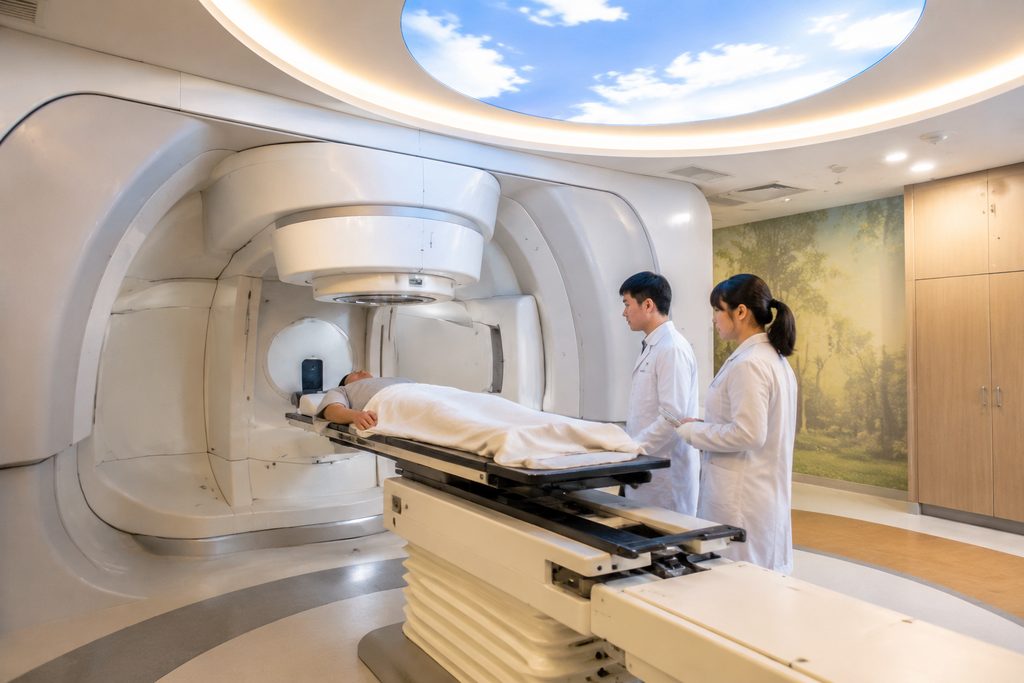
Foreigners can receive treatment in China’s best hospitals, but the word “international” needs unpacking. You have three genuine routes: the international/VIP departments of top public hospitals, JCI-accredited private hospitals, and specialized centers with dedicated expat services. The best international hospitals in China for foreigners cluster in Beijing, Shanghai, and Guangzhou — 21 of the Fudan-ranked Top 100 public hospitals sit in Beijing alone, with 18 more in Shanghai.
The catch? Almost none of them let you book a surgery slot from abroad through the standard outpatient system. Public hospital registration opens on the day, queues are massive, and surgical scheduling requires an in-person consultation first. That single fact reshapes every plan a foreign patient makes.
Who This Is Right For — and Who It Isn’t
China’s international medical infrastructure suits a specific profile. You’re likely a good candidate if you need elective surgery with a long wait at home, want a second opinion from a high-volume specialist, or are already in China for work and need coordinated care.
Good candidates typically include:
- Patients needing cardiac, orthopedic, oncology, or reproductive procedures where Chinese hospitals perform thousands of cases annually
- Those with confirmed diagnoses and complete medical records ready for specialist review
- Families accompanying a patient for treatment longer than 30 days
- Expats living in China who want English-speaking coordination without flying home
Who should think twice? Anyone with an unstable acute condition that could deteriorate mid-flight. Patients whose primary need is long-term chronic disease management — China’s system rewards episodic, high-acuity care, not indefinite follow-up. And if insurance requires in-network providers in your home country, out-of-network Chinese hospitals may leave you with significant unreimbursed costs.
The Options, Compared
Three models dominate the landscape. The table below reflects 2026 pricing and structural realities across public VIP wings, private international hospitals, and specialty high-volume centers.
| Model | Typical Cost vs. US | English Support | Booking Reality | Best For |
|---|---|---|---|---|
| Public Hospital International/VIP Wing | 1/5 to 1/10 of US prices | Dedicated English staff, variable quality | Coordination required; faster than standard outpatient | Complex surgery, top specialists |
| JCI-Accredited Private Hospital | 1/3 to 1/2 of US prices | Consistently strong, Western-style | Direct booking possible, insurance billing common | Maternity, checkups, non-emergency procedures |
| High-Volume Specialty Public Center | 1/8 to 1/12 of US prices | Limited; companion essential | Standard outpatient rules apply | Cardiac surgery, orthopedics, oncology |
If you want the deepest specialist bench and are comfortable with coordination, the public VIP route wins. If you want predictability and direct insurance billing, look at JCI-accredited hospitals in Shanghai and Beijing. The specialty centers are where volume drives outcomes — Fuwai Hospital performs over 14,000 cardiac surgeries a year, a scale no Western center matches.
How to Book Surgery in China as a Foreigner: The Sequence That Actually Works
Here’s the process, stripped of marketing gloss. You cannot email a hospital and reserve an operating room. You need a staged approach.
Stage one: remote evaluation. Send your existing scans, reports, and history to the relevant department for written review. This costs $300–500 for a top-specialist written second opinion. It answers the threshold question — does this hospital think your case is treatable here?
Stage two: video consultation. Speak directly with the specialty team for $500–800. They’ll explain the proposed approach, timeline, and what additional testing you’ll need on arrival.
Stage three: in-person consultation. Once you land, the hospital’s international department arranges the formal outpatient visit. Surgery gets scheduled after this face-to-face assessment. Expect 3–7 days between arrival and a surgery date for most elective procedures.
Stage four: admission and treatment. Public hospitals require prepayment. Private JCI hospitals may bill your insurer directly. Either way, bring a payment method that works in China — many international cards fail at hospital counters.
What It Costs
How much does heart surgery cost in China? A coronary artery bypass at a top public hospital runs $12,000–20,000, versus $120,000+ in the US. Valve replacement lands in the $15,000–25,000 range. Orthopedic procedures show similar spreads: a total hip replacement costs $8,000–15,000 in China against $40,000–60,000 stateside.
Prices vary by hospital tier and case complexity. The VIP wing of a Fudan-ranked hospital charges 1.5–2 times the standard rate — you’re paying for English coordination, faster scheduling, and private rooms. Still, even doubled, the numbers stay far below Western bills.
What’s not included? Flights, accommodation, post-discharge rehabilitation, and any complication-related extended stay. Budget 10–15% above the quoted procedure price for incidentals.
Practical Considerations: Visas, Records, and Language
Can foreigners get medical treatment in Beijing? Yes — and the visa path is clearer than most assume. Medical travelers use the S2 visa, annotated for treatment purposes. Stays beyond 180 days require S1. Family members accompanying you apply for S2 as well. The M visa is for commercial and trade activities — it has nothing to do with medical care. Bring your hospital invitation letter and confirmed appointment documents to the embassy or consulate.
Records matter enormously. Chinese specialists want raw imaging files, not just written reports. Bring DICOM-format scans on a USB drive, plus translated summaries of every prior treatment. Translation quality affects clinical decisions.
Language is the daily friction point. Even in international departments, the nurse who draws your blood at 6 a.m. may not speak English. A bilingual companion handles registration, queueing, payment, and translation — from $300 per day. It’s not a luxury add-on; it’s the difference between a smooth admission and a missed consultation.
Insurance: most Chinese public hospitals operate on a pay-first, reimburse-later model for international patients. Private JCI facilities — including United Family, Jiahui, and Raffles — often bill insurers directly. Check before you fly.
Frequently Asked Questions
Not through standard public channels. The hospital’s international department can note your preference, but the formal consultation happens in person. Some VIP wings allow pre-arranged specialist consultations with a coordination fee of $800–1,200, but surgery itself still requires the on-site assessment.
Medical tourism packages China price ranges from $5,000 to $8,000 for end-to-end coordination, excluding hospital charges. That covers airport transfers, accommodation guidance, appointment scheduling, and bilingual accompaniment. Whether it’s worth it depends on your tolerance for navigating an unfamiliar system alone. The package doesn’t buy you better medicine — it buys you fewer logistical failures.
Chinese law holds hospitals to national clinical standards, but pursuing malpractice claims as a foreigner is genuinely difficult. Language barriers, unfamiliar legal procedures, and the need for local representation make it a steep climb. Your realistic protection is choosing a hospital with strong international accreditation and confirming your travel insurance covers medical complications abroad.
The Fudan University hospital rankings are the most reliable public benchmark. The comprehensive Top 100 list uses tier bands (A++++ through A) rather than numeric ranks, while the specialty reputation lists name top-10 hospitals across 45 departments. Cross-reference your diagnosis with the specialty rankings by department to shortlist candidates, then verify JCI status if you’re considering a private facility.
Your Next Step
The core message: China’s top hospitals offer genuine clinical depth at a fraction of Western prices, but access runs through coordination, not a website booking form. The system rewards preparation — complete records, the right visa, and an honest remote evaluation before you commit to travel.
We run China Medical Services, a coordination team that helps international patients navigate hospital selection, remote consultations, and on-the-ground logistics. We are not a hospital and we do not diagnose or treat. If you’re weighing whether treatment in China makes sense for your case, start with a free consultation — explain your situation, and we’ll tell you honestly whether the path is worth pursuing.
For more medical information and treatment options in China, visit chinamedservices.com (China Medical Services).
