Sun Yat-sen University Orthopedics: International Patient Costs & Pathways
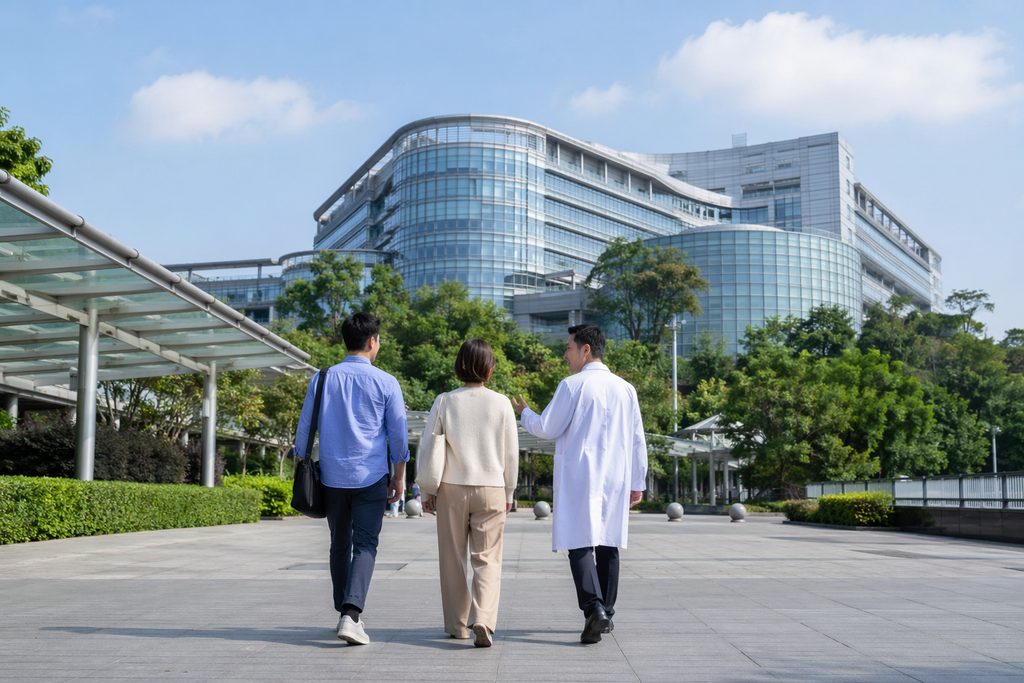
When 54-year-old Daniel from Manchester first saw his MRI results showing advanced osteoarthritis in both knees, his orthopedic surgeon laid out the path: total knee replacement on the right side, then the left six months later. The quote for private surgery in the UK made him pause. £14,500 per knee. Then a colleague mentioned something unexpected — that some of the world’s highest-volume joint replacement centers are in China, and that the orthopedic surgery cost at First Affiliated Hospital Sun Yat-sen University typically runs 60–75% below Western private rates. Daniel had never considered medical travel. Six months later, he was walking the corridors of a Guangzhou hospital with a bilingual coordinator at his side. This article explains what he learned, what the process actually involves, and how to decide if this path makes sense for you.
We work with international patients every week who ask the same questions: Is the hospital legitimate? How do I book surgery from abroad? What happens if something goes wrong? The answers are more concrete than most people expect. Let’s walk through the real sequence.
How This Actually Works, Step by Step
The process starts long before you board a plane. It begins with your existing medical records. You send us your imaging — X-rays, MRI scans, CT reports — along with your orthopedic surgeon’s notes and any blood work. Our team translates these documents into Chinese and submits them to the orthopedic department’s international coordination desk. A senior orthopedic specialist reviews your case. This is not a chatbot or a sales call. It’s a physician looking at your films and determining whether you’re a surgical candidate.
Within 5–10 business days, you receive a written assessment. It includes a preliminary surgical recommendation, an estimated hospital stay, and a cost range for the procedure. If you want to speak directly with the specialist before committing, you can schedule a video consultation. That typically costs $500–800 for a top specialist at this level of hospital.
Once you agree to proceed, we coordinate your S2 visa application. The hospital issues an official treatment invitation letter, which you submit with your visa application. S2 is the short-stay category used for private medical treatment in China. Processing takes 1–4 weeks depending on your home country’s consulate. Meanwhile, we book your surgical date through the hospital’s international department — not the general outpatient queue. This is the critical distinction most foreigners miss.
You arrive in Guangzhou. You meet your surgeon in person for a final pre-operative assessment. Surgery happens. You recover in the hospital, then in a nearby serviced apartment before flying home. The entire on-the-ground period for a knee replacement: 3–4 weeks. For a complex spinal fusion: 4–6 weeks.
Is Sun Yat-sen University Hospital Good for Joint Replacement?
The short answer: yes, by any measurable standard. The First Affiliated Hospital of Sun Yat-sen University (FAH-SYSU) consistently ranks among China’s top orthopedic centers in the Fudan University Hospital Rankings — the country’s most authoritative hospital evaluation system. Its orthopedics department is listed in the national top 10 for orthopedic reputation. That’s not a marketing claim. It’s the result of peer surveys among Chinese specialists and objective metrics like surgical volume, complication rates, and research output.
What does that mean for you? Volume matters in joint replacement. Surgeons who perform 300+ knee replacements annually have demonstrably lower complication rates than those who do 50. At FAH-SYSU, the joint replacement team handles over 1,000 primary total joint procedures per year. The hospital performs more than 14,000 orthopedic surgeries annually across all subspecialties. These are the numbers that predict outcomes.
But volume alone isn’t the full picture. The hospital is also a major teaching and research institution — the flagship hospital of Sun Yat-sen University’s medical school, which dates back to 1866. Its orthopedic surgeons publish in international journals, attend global conferences, and use the same implant systems you’d find in a leading US or European center: Zimmer Biomet, DePuy Synthes, Stryker, Smith & Nephew. The hardware is identical. The difference is the cost structure.
One honest caveat: the public outpatient clinics at FAH-SYSU are crowded. Daily patient volume can exceed 10,000 across the hospital. Navigating that environment without Chinese language skills is genuinely difficult. This is why international patients use the international department or VIP orthopedic pathway, which provides English-speaking coordination, priority scheduling, and private recovery rooms. It costs more than the standard public rate — roughly 1.5 to 2 times — but still lands far below Western prices.
A Realistic Timeline
People underestimate the lead time. Here’s what a typical orthopedic surgery journey looks like for an international patient at FAH-SYSU:
| Stage | Duration | What Happens |
|---|---|---|
| Records collection & translation | 3–7 days | You gather imaging and reports; our team translates into Chinese |
| Specialist review | 5–10 business days | Orthopedic surgeon evaluates your case; written assessment returned |
| Optional video consultation | 1–2 weeks scheduling | Direct conversation with the specialist; treatment plan discussion |
| S2 visa processing | 1–4 weeks | Hospital issues invitation letter; consulate processes application |
| Surgical date confirmation | 2–6 weeks lead time | International department books operating room and surgeon |
| Arrival & pre-op assessment | 2–4 days | In-person consultation, final imaging, anesthesia clearance |
| Surgery & hospital stay | 3–10 days | Varies by procedure: knee replacement ~5 days; spinal fusion ~7–10 days |
| Local recovery | 1–3 weeks | Hotel or serviced apartment near hospital; outpatient rehab sessions |
| Return home & remote follow-up | Ongoing | Video check-ins with your Chinese surgeon at 1, 3, and 6 months |
Total realistic timeline from first contact to surgery: 2–4 months. If you’re flexible on dates, it can be faster. If you need a specific senior surgeon with a packed schedule, it can stretch to 5 months. Plan accordingly.
What Can Go Wrong — and What Happens Then
Let’s be direct about the risks. Medical travel adds layers of complexity that local care doesn’t have. The most common issues we see:
Surgical complication requiring extended stay. Infection rates for joint replacement at top Chinese centers run 0.5–1%, comparable to Western benchmarks. But if a complication occurs, your planned 3-week stay becomes 6–8 weeks. You need financial buffer and travel insurance that covers medical complications abroad. Standard travel insurance almost never does. You need a specialized medical travel policy.
Visa delay or denial. S2 visa approval rates are high when documentation is complete, but consulates can take longer than expected. If your visa is delayed, your surgical date may need to shift. We’ve seen this happen during peak seasons. The recourse: apply early, submit complete documentation, and maintain flexible travel dates.
Post-operative care gap at home. You fly back to Manchester or Toronto, and your local orthopedic surgeon is expected to manage follow-up for a surgery they didn’t perform. Some surgeons are comfortable with this. Others are not. Before you commit to surgery in China, have a conversation with your home physician. Confirm they’ll handle wound checks, physical therapy referrals, and any late complications. If they won’t, you need a plan B — typically a private orthopedic clinic that accepts international surgical patients.
Communication breakdown. Even with a bilingual coordinator, moments of confusion happen. A nurse asks a question you don’t understand. A pharmacy instruction is unclear. This is why we never let patients navigate the hospital alone. Our bilingual medical companion stays with you during appointments, procedures, and discharge. It’s not a luxury. It’s a safety measure.
Choosing Between Public, International, and Private Orthopedic Pathways in Guangzhou
Guangzhou doesn’t offer one way to access FAH-SYSU orthopedics. You have three distinct routes, and the differences matter more than most patients realize.
The public pathway is what Chinese citizens use. It’s the cheapest — a total knee replacement might run $8,000–12,000 — but it requires navigating a massive public hospital system in Chinese. You cannot pre-book surgery from abroad through this route. You’d need to arrive, register, queue for an outpatient appointment, see a surgeon, and then wait for a surgical slot. For a foreigner without fluent Chinese, this is impractical and stressful. We don’t recommend it for international patients.
The international department pathway is the standard route for medical travelers. You get English-speaking coordination, priority scheduling, and access to senior surgeons. The same knee replacement costs $15,000–22,000. Still far below the $45,000–70,000 typical in the US or the £14,500+ in UK private hospitals. This is the sweet spot for most patients.
The private international hospital pathway — facilities like United Family Guangzhou or Jiahui — offers a Western-style experience with English-speaking staff throughout, direct insurance billing, and hotel-like amenities. But these hospitals typically don’t have the same orthopedic surgical volume as FAH-SYSU. For complex procedures like revision joint replacement or multi-level spinal fusion, we generally recommend the international department of a top public hospital over a private facility. The surgical team’s experience matters more than the decor.
Your choice depends on your procedure, your budget, and your comfort level. A straightforward knee replacement in a healthy 54-year-old? International department at FAH-SYSU is the rational choice. A complex spinal deformity correction? Same answer, with even more reason to prioritize surgical volume.
How Much Does Spine Surgery Cost in China?
Spine surgery costs vary more than joint replacement because the procedures range from microdiscectomy to multi-level fusion with instrumentation. At FAH-SYSU and comparable top-tier centers, here’s what international patients should expect through the international department:
- Lumbar microdiscectomy: $8,000–12,000 (US private: $20,000–35,000)
- Single-level spinal fusion: $18,000–28,000 (US private: $80,000–120,000)
- Multi-level fusion (3+ levels): $30,000–45,000 (US private: $150,000–250,000+)
- Cervical disc replacement: $15,000–22,000 (US private: $40,000–60,000)
These figures include surgeon fees, hospital stay, implants, anesthesia, and standard post-operative care. They do not include your flights, accommodation, visa fees, or our coordination services. Costs vary by hospital and case complexity — a patient with diabetes and hypertension will have a higher quote than a healthy patient having the same procedure.
Is Sun Yat-sen University hospital good for spine surgery specifically? The orthopedics department covers all major subspecialties, including spinal surgery, joint replacement, sports medicine, and trauma. Its spine surgeons handle complex deformity cases referred from across southern China. The hospital’s overall orthopedic reputation in the Fudan rankings reflects this breadth.
Practical Considerations: Records, Visa, Payment, Insurance, and Follow-Up
Medical records. Bring everything. Original imaging on CD or USB, not just printed reports. Your surgeon will want to see the actual DICOM files, not a radiologist’s summary. Include any previous surgical notes, implant cards if you have existing hardware, and a current medication list. Incomplete records cause delays.
Visa. You’ll apply for an S2 visa with a treatment purpose annotation. Your accompanying family member applies for their own S2 visa. The hospital’s international department issues the invitation letter, which is a required supporting document. Processing times vary by consulate — plan for 2–4 weeks. We provide document checklists and application guidance, but final approval rests with the Chinese consulate in your country.
Payment. Chinese public hospitals require pre-payment. You’ll deposit an estimated amount before surgery, and the hospital draws down from that deposit as services are rendered. Any surplus is refunded at discharge. International departments accept wire transfers and major credit cards. Private international hospitals often have direct billing arrangements with insurers like Cigna, Aetna, and Bupa — but the public hospital international departments typically do not. You pay, then claim reimbursement from your insurer.
Insurance. Check your policy carefully. Some international health insurance plans cover treatment in China. Many do not. If yours doesn’t, you’re paying out of pocket. For a $20,000 knee replacement, that’s a significant consideration. But compare it to your home-country deductible and out-of-pocket maximum — for many American patients with high-deductible plans, paying cash in China is cheaper than using their insurance at home.
Follow-up at home. Your Chinese surgeon will want to see you via video at 1 month, 3 months, and 6 months post-op. You’ll send updated X-rays. Your local physician handles wound care and physical therapy. This hybrid model works well for most patients — but confirm your local doctor’s willingness before you travel.
Frequently Asked Questions
Yes. It is the flagship teaching hospital of Sun Yat-sen University’s medical school, founded in 1866. It consistently appears in the Fudan University Hospital Rankings among China’s top comprehensive hospitals, and its orthopedics department ranks in the national top 10 for orthopedic reputation. The hospital treats over 3 million outpatients annually.
Yes, through the international department pathway. You cannot pre-book through the general public outpatient system, but the international department accepts overseas patients with prior specialist review. The process starts with submitting your medical records for evaluation, followed by a video consultation and surgical date confirmation. This is the standard route for medical tourism orthopedic packages at Sun Yat-sen University.
Revision surgery is a known risk in any joint replacement — roughly 5–10% of knee replacements require revision within 15 years. If you need a revision, you have two options: return to FAH-SYSU for the procedure, or have it done by a local orthopedic surgeon. Chinese surgeons use internationally standard implant systems, so a Western surgeon can typically perform a revision on hardware placed in China. Discuss this scenario with both your Chinese surgeon and your home physician before committing.
The hospital provides a written cost estimate after reviewing your case. It’s an estimate, not a fixed contract. If your surgery is more complex than anticipated — longer operating time, additional hardware, unexpected findings — the final bill can exceed the estimate by 10–20%. We always advise patients to budget for this buffer. The hospital’s international department is transparent about cost structures, but no surgeon can guarantee the final bill before opening the joint.
That depends on your procedure, your home-country options, and your comfort with medical travel. If you need a routine joint replacement and have excellent insurance at home, staying local may be simpler. But if you’re facing high out-of-pocket costs, long wait times, or need a complex procedure where surgical volume matters, China’s top orthopedic centers — including FAH-SYSU — offer a compelling alternative. The top-ranked hospitals in our database span 37 cities, and Guangzhou is one of the strongest for orthopedics specifically.
Your Next Step
Daniel’s second knee was replaced eight months after the first. Total out-of-pocket for both procedures, including flights, accommodation, and coordination: under $45,000. His UK private quote for both knees would have been £29,000 — roughly $37,000 — without any travel costs. The savings were real, but the bigger factor was speed. He didn’t wait 18 months on an NHS list. He chose his timeline.
China Medical Services helps international patients evaluate Chinese hospitals, coordinate appointments, and navigate the logistics of medical travel. We don’t perform surgery. We don’t promise outcomes. We connect you with the right specialists at the right institutions and make sure you’re never alone in a foreign hospital. If you’re considering orthopedic surgery in China, start with a conversation. Send us your
For more medical information and treatment options in China, visit chinamedservices.com (China Medical Services).
