Beijing Anzhen Hospital Thoracic Surgery: What International Patients Should Know
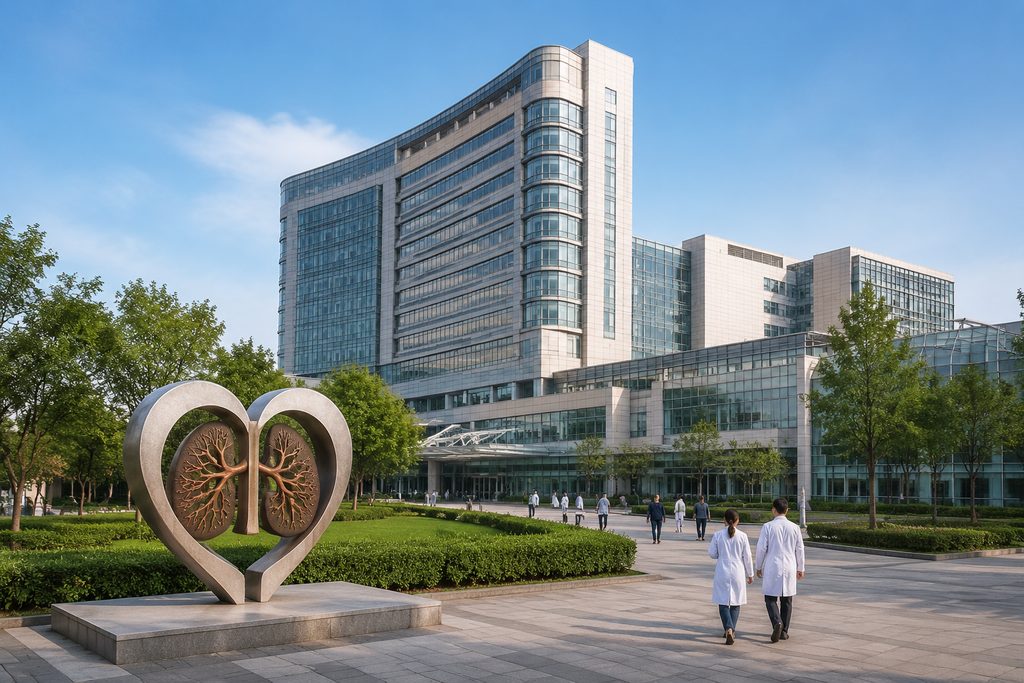
Beijing Anzhen Hospital Thoracic Surgery for International Patients: A Practical Guide
Thoracic surgery covers operations on the lungs, esophagus, trachea, chest wall, and mediastinum — the space between your lungs. For international patients, the Beijing Anzhen Hospital thoracic surgery price for foreigners is a common starting question. But pricing alone rarely tells the full story. What matters more is whether the clinical volume, surgical expertise, and operational reality match what you actually need. Beijing Anzhen Hospital, located in Beijing’s Chaoyang District, is one of China’s most recognized cardiovascular and thoracic centers. Our team at China Medical Services has helped patients from over a dozen countries evaluate this exact decision. This guide breaks down what Anzhen offers, what it costs, and where the process gets complicated for someone without Chinese language ability or local navigation experience.
Key Takeaways
- Beijing Anzhen Hospital performs a high volume of complex thoracic procedures annually, with particular depth in lung cancer resection and esophageal surgery.
- Thoracic surgery costs at Anzhen for international patients typically range from $8,000 to $25,000 depending on procedure complexity — roughly one-fifth to one-tenth of US equivalents.
- Public outpatient registration cannot be secured from overseas; surgery scheduling requires an in-person consultation first, unless you use the hospital’s international or VIP channel.
- Language barriers are significant. Anzhen’s standard wards operate in Mandarin, and bilingual support is not guaranteed outside designated international departments.
The Problem: Thoracic Surgery Costs Are Crushing Patients in Western Systems
A lung lobectomy — the surgical removal of one lobe of the lung, often for early-stage cancer — costs between $40,000 and $80,000 in the United States before complications. Add hospital stay, imaging, pathology, and follow-up, and the total frequently exceeds $100,000. In the UK, NHS wait times for lung cancer surgery have been a persistent concern. A 2023 Royal College of Surgeons report found that some patients waited more than 62 days from urgent referral to first definitive treatment, breaching the national target. In Canada, the median wait for thoracic surgery after specialist consultation stretches to several weeks, sometimes months in provinces with fewer cardiothoracic surgeons.
For uninsured patients, underinsured patients, or those facing long public-system queues, these numbers are not abstract. They mean delayed treatment for a disease where timing directly affects survival. Lung cancer remains the leading cause of cancer death worldwide, with approximately 1.8 million deaths annually according to the World Health Organization. Every month of delay can shift a resectable tumor into a more advanced stage.
This is the context in which international patients begin researching Chinese hospitals.
Why Beijing Anzhen Hospital Delivers Results in Thoracic Surgery
Clinical Volume That Builds Surgical Muscle Memory
Beijing Anzhen Hospital is not a small boutique clinic. It is a major tertiary hospital with a national reputation in cardiovascular and thoracic disease. The hospital’s thoracic surgery department handles several thousand procedures annually — a volume that places it among the busiest thoracic centers in China. High-volume centers consistently demonstrate lower complication rates and better long-term outcomes in lung cancer surgery. A 2015 study published in The Annals of Thoracic Surgery found that hospitals performing more than 46 lobectomies annually had significantly lower mortality than low-volume centers. Anzhen operates far above that threshold.
What does this mean for you? Surgeons who perform a procedure 200 times a year simply encounter and manage complications more effectively than those who perform it 20 times. The muscle memory is real. Anzhen’s thoracic team routinely handles complex cases — locally advanced esophageal cancer, sleeve resections, chest wall reconstruction — that smaller centers refer elsewhere.
Technology and Efficiency at Scale
Anzhen was an early adopter of video-assisted thoracoscopic surgery (VATS) and has integrated robotic-assisted thoracic surgery into its program. VATS lobectomy, which uses small incisions instead of a large thoracotomy, reduces hospital stay from 7-10 days to 3-5 days in many cases. Patients experience less postoperative pain and return to normal activity faster. The hospital’s imaging infrastructure — 3D reconstruction for surgical planning, PET-CT for staging — supports precise preoperative assessment.
The operational scale is also worth understanding. Chinese top-tier hospitals move enormous patient volumes daily. Anzhen’s outpatient halls see thousands of patients per day. That density creates efficiency in imaging, laboratory work, and surgical scheduling that smaller Western hospitals cannot match. A CT scan ordered in the morning is often completed the same day. Pathology turnaround for surgical specimens runs days, not weeks. For international patients, this compressed timeline means a consultation, imaging, surgical planning, and procedure can sometimes be completed within a single trip — assuming proper coordination.
Cost Advantage Without Quality Compromise
Now to the question most readers actually search for: how much does lung surgery cost at Beijing Anzhen Hospital? The honest answer is that it depends on the procedure, the surgical approach, and whether you use the standard public channel or the international/VIP channel.
As a benchmark, a VATS lobectomy at a top-tier Chinese public hospital typically ranges from $8,000 to $18,000 for the surgical procedure and hospital stay. Open procedures with longer recovery run higher. Esophagectomy — a more complex operation — ranges from $12,000 to $25,000. These figures are one-fifth to one-tenth of US equivalents. The structural reasons are straightforward: lower labor costs for nurses and support staff, high surgical volume that spreads fixed costs, and a hospital financing model that does not carry the same administrative overhead as US systems.
Lower cost does not mean lower quality. China’s top hospitals, including Anzhen, undergo rigorous accreditation. Many departments benchmark their outcomes against international standards. The Fudan University hospital rankings — China’s most authoritative — consistently place Anzhen among the top cardiovascular and thoracic centers nationally, though the composite ranking system uses tiered bands rather than specific numerical positions.
Is Beijing Anzhen Hospital Good for Thoracic Surgery? What the Evidence Shows
The short answer: yes, with clear caveats. Anzhen’s thoracic surgery department is not the only strong option in China — Shanghai Chest Hospital, Zhongshan Hospital in Shanghai, and Peking Union Medical College Hospital all have excellent thoracic programs. But Anzhen holds a specific advantage: its integration with a top-tier cardiovascular center means complex cases involving both heart and lung function are managed with unusual depth.
Patients with compromised cardiac function who need lung surgery — a common scenario in elderly patients with lung cancer — benefit from Anzhen’s ability to coordinate cardiology and thoracic surgery under one roof. The hospital’s anesthesia team is experienced with high-risk thoracic cases. That matters when your ejection fraction is borderline or your pulmonary function tests show limited reserve.
However, the honest caveat: Anzhen’s standard public wards are not designed for international patients. English-speaking staff are limited. Signage, meal ordering, and nursing communication operate in Mandarin. If you arrive without a bilingual companion or an international department arrangement, the experience can be disorienting. This is not a criticism of clinical quality — it is a statement of operational reality at most Chinese public hospitals.
Beijing Anzhen Hospital Medical Tourism Package: What Actually Exists
Search for a “Beijing Anzhen Hospital medical tourism package” and you will find mostly third-party agencies selling coordination services. The hospital itself does not market packaged medical tourism in the way that, say, Bumrungrad in Thailand or Apollo in India does. What exists instead is a layered system:
The standard public channel requires in-person registration, a queue number, and a consultation before any surgical scheduling. You cannot book a lobectomy from abroad through the public system. The international/VIP channel — which Anzhen operates — offers expedited appointments, English-speaking coordination, and priority access to senior specialists. This channel costs approximately 1.5 to 2 times the standard public rate. For a procedure that would cost $12,000 publicly, expect $18,000 to $24,000 through the VIP channel.
What does a realistic package look like? It includes: initial video or written consultation with the thoracic team, in-person consultation and imaging, surgical scheduling, hospital admission, the procedure itself, postoperative inpatient care, and discharge coordination. A bilingual medical companion — who handles registration, translation, payment, and navigation — costs from $300 per day in Beijing. Airport transfer runs around $200 round-trip. These are service costs, separate from hospital fees.
| Procedure | China Top Public (Standard Channel) | China VIP/International Channel | US Average |
|---|---|---|---|
| VATS Lobectomy | $8,000 – $14,000 | $12,000 – $20,000 | $40,000 – $80,000 |
| Open Lobectomy / Complex Resection | $12,000 – $18,000 | $18,000 – $25,000 | $60,000 – $100,000 |
| Esophagectomy | $12,000 – $20,000 | $18,000 – $28,000 | $80,000 – $120,000 |
| Mediastinal Tumor Resection | $6,000 – $12,000 | $9,000 – $18,000 | $30,000 – $60,000 |
These ranges vary by hospital and case complexity. A straightforward VATS wedge resection in an otherwise healthy patient sits at the low end. A re-operative case with adhesions and comorbidities sits at the high end. Always request a written cost estimate after your records have been reviewed.
How to Book Thoracic Surgery at Beijing Anzhen Hospital as an International Patient
The process for an international patient trying to book thoracic surgery at Beijing Anzhen Hospital follows a predictable sequence, but each step contains friction points that are invisible until you hit them.
First, gather your complete medical records: pathology reports, CT/PET-CT imaging in DICOM format, pulmonary function tests, cardiac workup if relevant, and a summary letter from your treating physician. These must be translated into Chinese for the surgical team to review. A written second opinion from a top Chinese thoracic specialist costs $300 to $500 and typically takes 5-10 business days. This step alone can save you a wasted trip if the Chinese team determines your case is not surgically appropriate or requires additional staging.
Second, decide on your channel. The public channel means arriving in Beijing, registering in person, waiting for a consultation slot, and then waiting again for surgical scheduling. Total time on the ground: 2-4 weeks, sometimes longer. The international/VIP channel compresses this to 1-2 weeks, with the trade-off of higher costs. There is no way to lock in a surgical date before you arrive unless you use the VIP channel.
Third, handle the visa. Medical treatment in China falls under the S2 visa category, which covers short-term private affairs including medical treatment. Your accompanying family members also apply for S2 visas. You will need supporting documents from the hospital — an invitation letter or treatment confirmation — to submit with your application. Processing time varies by embassy, but allow 2-4 weeks. The S2 visa does not guarantee approval, and requirements shift by consulate. Check with the Chinese embassy or consulate in your country for current rules.
Fourth, prepare for payment. Chinese public hospitals require prepayment — a deposit is placed before admission, and the balance is settled at discharge. International credit cards are not universally accepted. Wire transfer or a Chinese bank card is often necessary. Private international hospitals in Beijing, such as United Family or Jiahui, accept international insurance directly, but Anzhen’s public system does not. You pay out of pocket and seek reimbursement from your insurer afterward. Confirm your insurance policy’s stance on overseas elective surgery before committing.
Who Should Not Choose Beijing Anzhen Hospital for Thoracic Surgery
This is the section most promotional content skips. Anzhen is an excellent hospital, but it is not the right choice for every patient.
If you require extensive English-language communication with your surgical team throughout your stay, a Chinese public hospital — even with VIP channel support — will frustrate you. The surgeons are world-class, but their English varies. You will rely on interpreters for substantive clinical conversations. If that feels unacceptable, consider a JCI-accredited private international hospital in China instead, where English is the operational language and insurance billing is direct. The trade-off: private hospitals in China have lower thoracic surgical volumes than Anzhen, and costs run higher.
If your case requires prolonged postoperative ICU care with complex multi-system management, the communication burden multiplies. ICU rounds, nursing updates, and family consultations all happen in Mandarin. A bilingual companion becomes essential, not optional.
If you are seeking experimental therapies or cutting-edge clinical trials, Anzhen may not be the best fit. Shanghai Chest Hospital and Guangzhou Medical University’s affiliated hospitals have more active thoracic oncology trial portfolios. Anzhen’s strength is surgical execution, not necessarily novel drug development.
And if your insurance explicitly excludes overseas treatment, the financial calculation changes completely. The cost savings only materialize if you are paying out of pocket or have a policy that reimburses international care.
Practical Considerations: Documentation, Visa, and Follow-Up After Returning Home
Before you board a flight to Beijing, you need more than a passport and a referral letter. Here is what actually matters.
Medical records translation. Chinese thoracic surgeons will not review English-language records in detail. Professional medical translation — not Google Translate — is required. The translation must preserve technical precision: tumor staging, lymph node status, margin status, molecular markers. A mistranslated pathology report can change the surgical plan. Budget $200 to $500 for professional translation of a complete thoracic case file.
Visa timing. The S2 visa is the correct category for medical treatment and private affairs. It is typically issued for 30 to 180 days, with extensions possible in China. Your family members who accompany you apply for S2 visas as well. Start the visa process only after you have a hospital invitation letter or treatment confirmation in hand. Applying without hospital documentation will likely result in rejection. The Beijing city guide on our site covers additional logistics for international patients.
Payment mechanics. Public hospitals in China operate on a prepayment model. You deposit funds at admission, and the hospital draws against that deposit as services are rendered. If the deposit runs low, you top it up or services pause. At discharge, you receive a detailed itemized bill. International wire transfers can take 3-5 business days to clear, so arrange payment before you arrive or carry sufficient funds in a format the hospital accepts. Some international patients open a Chinese bank account upon arrival, which requires a local phone number and passport.
Postoperative follow-up. After you return home, your local thoracic team will handle surveillance imaging and ongoing care. Chinese hospitals provide discharge summaries and operative reports — request English translations before you leave. Anzhen’s international department can arrange follow-up video consultations at $100 to $300 per session if your local team has questions about the surgical details. The 90-day credit rule matters here: any remote consultation fee you paid before traveling is credited in full toward on-the-ground coordination services if you proceed with treatment within 90 days.
Language and interpretation. Do not assume you will find English-speaking staff on Anzhen’s standard wards. You will not. A bilingual medical companion handles registration, queue management, payment, translation during consultations, and communication with nurses. This is not a luxury — it is the difference between a coherent treatment experience and a confusing one. Our bilingual medical companion service covers these functions for patients at Anzhen and other Beijing hospitals.
Frequently Asked Questions
Foreigners pay the same hospital rates as Chinese patients in the standard public channel, but most international patients use the VIP/international channel, which costs 1.5 to 2 times more. A VATS lobectomy through the VIP channel typically runs $12,000 to $20,000; through the standard channel, $8,000 to $14,000. These are hospital fees only and exclude coordination, translation, and travel costs.
Yes. Anzhen’s thoracic surgery department is consistently ranked among China’s top programs by the Fudan University specialty rankings, particularly for lung and esophageal cancer surgery. Its integration with a leading cardiovascular center is a distinct advantage for patients with cardiac comorbidities. That said, Shanghai Chest Hospital and Zhongshan Hospital in Shanghai are equally strong alternatives depending on your specific diagnosis.
Not through the public system. Public hospital rules require an in-person consultation before surgical scheduling. The international/VIP channel allows remote evaluation of your records first, followed by a compressed in-person timeline — but even this does not guarantee a specific surgical date before you arrive. Anyone promising otherwise is not being honest about how Chinese public hospitals operate.
What happens if something goes wrong during surgery in China?
Chinese law requires hospitals to
For more medical information and treatment options in China, visit chinamedservices.com (China Medical Services).
