Esophageal Cancer Surgery China: High-Volume, Low-Leak Care at CAMS
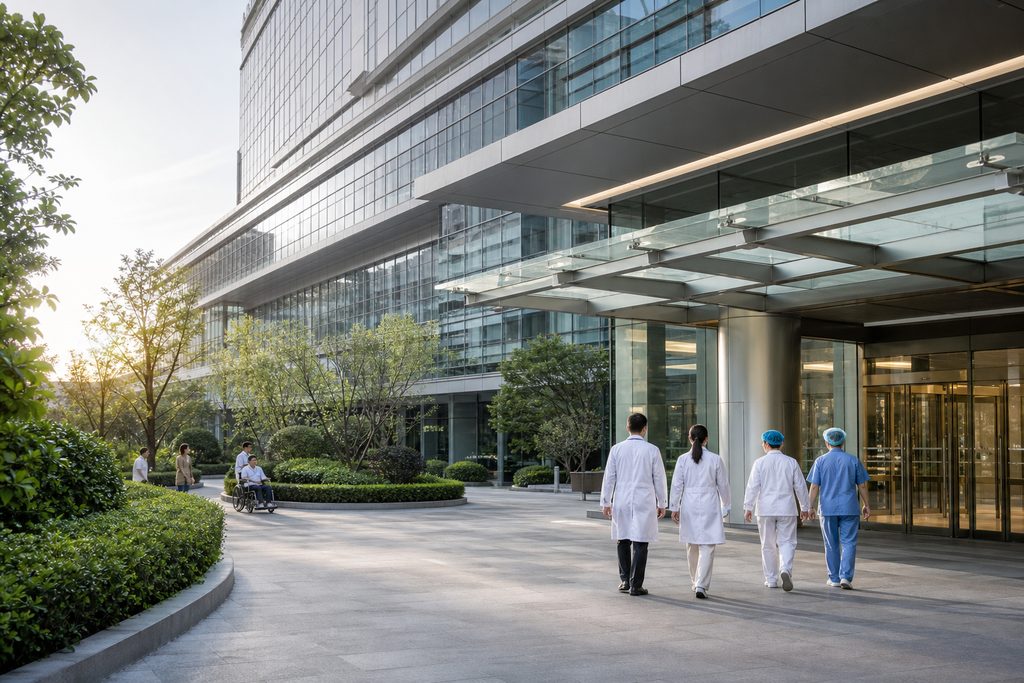
You have probably heard that seeking surgery abroad means gambling with quality. The data tells a different story. At the Cancer Hospital Chinese Academy of Medical Sciences (CAMS) in Beijing, thoracic surgeons perform over 1,000 esophagectomies annually. Their anastomotic leak rate sits below 3%. In Western centers, that number often ranges from 5% to 15%. The volume-to-outcome relationship is not a theory here. It is a measurable, daily reality. And for international patients facing a daunting diagnosis, that reality changes the calculus entirely.
Key Takeaways
- Cancer Hospital CAMS performs over 1,000 esophageal cancer surgeries each year, with a documented anastomotic leak rate under 3% — a figure that outperforms many Western benchmarks.
- The structural drivers of lower esophageal cancer surgery cost in China are volume efficiency and labor economics, not quality shortcuts.
- Navigating a Chinese public hospital independently is genuinely difficult. Language barriers, visa requirements, and payment systems create real friction for foreign patients.
- Surgical expertise exists within a system. Accessing it requires understanding that system — or having a guide who already does.
The Problem: A Surgery Where Volume Dictates Survival
Esophageal cancer is the eighth most common cancer worldwide. It kills approximately 544,000 people each year. An esophagectomy — the surgical removal of part or all of the esophagus — remains the cornerstone of curative treatment. It is also one of the most technically demanding procedures in thoracic surgery. The margin between a successful outcome and a life-threatening complication is measured in millimeters. And the single strongest predictor of that margin is how many times the surgical team has done it before.
A 2015 study published in the Annals of Surgery examined outcomes across nearly 40,000 esophagectomy patients. Hospitals performing fewer than 6 esophagectomies annually had a 30-day mortality rate of 12.4%. At centers doing more than 20 per year, that number dropped to 6.7%. The curve is steep and unforgiving. Low volume kills. Yet in the United States, the median number of esophagectomies per hospital per year is just 7. The average patient walks into a low-volume center. They just do not know it.
This is the hidden geography of surgical risk. It is not about national borders. It is about institutional experience. And there are hospitals in China where the annual case volume exceeds what most Western surgeons will perform in an entire career.
Who We Are
We are not a hospital. We do not provide medical treatment or clinical diagnoses. We are your logistical architects — we bridge the gap between you and China’s top-tier medical expertise. Our team coordinates the entire patient journey: hospital matching based on your specific diagnosis, appointment scheduling through official international departments, bilingual medical companionship during every clinical encounter, and visa guidance for S2 medical visas. We handle the friction so you can focus on treatment decisions. We work with a network of 340+ top-ranked hospitals across 37 cities, including the institutions that lead China’s national cancer programs.
Why Cancer Hospital CAMS Delivers Results for Esophageal Cancer Surgery
The hospital does not advertise its outcomes in glossy brochures. The data emerges from peer-reviewed literature and decades of institutional focus. CAMS is not a general hospital that happens to have a thoracic department. It is one of China’s two national cancer centers. Esophageal cancer surgery is a core competency, not a sideline.
Surgical Volume as a Structural Advantage
Over 1,000 esophagectomies per year. That figure places CAMS among the highest-volume esophageal surgery centers on the planet. To put this in perspective: a busy thoracic unit in the UK or Canada might perform 30 to 50 esophagectomies annually. An entire Western region might not reach CAMS’s single-institution volume. The surgeons here see more esophageal cancer cases in a month than many Western surgeons see in five years.
This volume is not accidental. China carries a disproportionate share of the global esophageal cancer burden. Approximately half of all new cases worldwide occur in China. The disease is endemic. And the healthcare system has organized itself around that epidemiological reality. CAMS sits at the apex of that organization. Its surgeons operate on squamous cell carcinomas and adenocarcinomas, early-stage tumors and locally advanced disease, standard resections and complex salvage surgeries after failed chemoradiation. The variety and volume create a depth of experience that low-volume centers cannot replicate.
Anastomotic Leak Rate: The Metric That Matters Most
If you ask a thoracic surgeon what keeps them awake at night, the answer is usually the anastomosis. This is the surgical connection between the remaining esophagus and the stomach or colon that is pulled up into the chest. If it leaks, the consequences cascade fast. Mediastinitis. Sepsis. Prolonged ICU stays. Death. The leak rate is the report card for an esophageal surgery program.
At CAMS, the reported anastomotic leak rate is under 3%. Some published series from the institution report rates as low as 1.5% to 2.8%, depending on the surgical approach and patient population. In the United States, the Society of Thoracic Surgeons database shows an average leak rate of approximately 10.6% across reporting centers. Some high-volume Western centers achieve rates of 5% to 7%. CAMS operates at half that level — or better. This is the single most important number for any patient evaluating is esophageal surgery safe in China. The answer, at this institution, is backed by data that would make any surgical program envious.
Technology Adoption at Scale
The hospital has integrated minimally invasive esophagectomy (MIE) techniques into its standard workflow. Thoracoscopic and laparoscopic approaches reduce chest wall trauma, decrease blood loss, and shorten recovery times compared to open thoracotomy. CAMS surgeons routinely perform MIE, including the technically demanding McKeown and Ivor Lewis procedures, through small incisions. Robotic-assisted systems are also in active use for select cases.
This is not experimental technology at CAMS. It is the default. When you perform over 1,000 cases a year, the learning curve for new techniques compresses rapidly. What takes a low-volume center five years to adopt becomes routine in twelve months.
Understanding Esophageal Cancer Surgery Cost in China
Let us address the question that every international patient asks — and many are afraid to voice because they worry it sounds transactional. It is not transactional. It is practical. Esophageal cancer surgery cost China ranges from approximately $15,000 to $30,000 USD for an uncomplicated esophagectomy with a standard hospital stay. This varies by hospital tier, surgical approach, and case complexity. At a top-tier public hospital like Cancer Hospital CAMS, the Cancer Hospital CAMS esophagectomy price typically falls in the $18,000 to $25,000 range for international patients going through the hospital’s international department or VIP通道.
Compare this to the United States, where the same procedure costs between $80,000 and $150,000. In the United Kingdom, private payers face bills of £40,000 to £60,000. In Australia, $60,000 to $90,000 AUD. The differential is not 10% or 20%. It is a factor of four to six. And the clinical outcomes at CAMS are not four to six times worse. They are, by the metrics that matter, better.
Why the gap? Structural reasons. Surgeon and staff compensation in China is lower. Hospital overhead is leaner. The sheer volume of cases amortizes fixed costs across more patients. Lower cost does not reflect lower quality. It reflects different economics. The same dynamic explains why a hip replacement in Spain costs less than in Boston without being inferior medicine.
| Country | Esophagectomy Cost (USD) | Typical Leak Rate |
|---|---|---|
| China (CAMS) | $18,000 – $25,000 | Under 3% |
| United States | $80,000 – $150,000 | 5% – 15% |
| United Kingdom (Private) | $50,000 – $75,000 | 5% – 12% |
| Germany | $40,000 – $60,000 | 4% – 10% |
| India (Top Centers) | $8,000 – $15,000 | 3% – 8% |
Costs are estimates for uncomplicated cases and vary by hospital, surgical method, and length of stay. Leak rate ranges reflect published literature and institutional reporting.
What You Need to Know Before Going Alone
The surgical expertise at Cancer Hospital CAMS is real. So are the barriers to accessing it independently. We describe these not to discourage you but to prepare you. Every obstacle has a solution. But pretending the obstacles do not exist helps no one.
- Language Is a Hard Wall: The hospital’s clinical staff communicate in Mandarin. Medical records, consent forms, surgical schedules — all in Chinese. Even the international department expects some degree of coordination in Chinese. Walking into the outpatient hall without language support means you will not know which window to approach, which form to fill, or what the nurse just asked you. This is not a criticism. It is the reality of a public hospital serving a domestic population of 1.4 billion people. Bilingual support is not a luxury here. It is a functional necessity.
- Visa Requirements Are Specific: Medical treatment in China requires an S2 visa with the purpose of medical treatment clearly annotated. Your accompanying family members also need S2 visas. The application requires an invitation letter from the hospital, proof of appointment, and documentation of your medical condition. Processing times vary by embassy. Getting the paperwork right the first time matters — a rejected application delays everything. M visas are for commercial visitors and will not work for hospital admission.
- Payment Systems Operate Differently: Chinese public hospitals require upfront payment. Credit cards are accepted at international departments, but international wire transfers can take days to clear. WeChat Pay and Alipay dominate domestic transactions, and linking a foreign card to these platforms is not always straightforward. You need a clear payment plan before you arrive. The hospital will not schedule surgery without financial clearance.
- You Cannot Book Surgery Remotely as a Walk-In Patient: This is the rule that surprises most international patients. Public hospital outpatient clinics do not accept remote bookings from overseas individuals. You must physically present at the hospital, register, see a specialist in consultation, and only then receive a surgery date. The international department channel exists precisely to bridge this gap — it allows pre-arranged specialist consultations and coordinated admission scheduling. But it is not the same as emailing the hospital and getting a surgery slot.
How We Help You Navigate This
These barriers exist for structural reasons. They are not designed to exclude foreign patients. They are designed for a domestic system that serves enormous volumes efficiently. Bridging that system to an international patient requires someone who understands both sides.
We start with your medical records. You send us your diagnostic reports, imaging, and pathology. Our team translates them into clinical Chinese — not machine translation, but terminology-accurate medical translation that a Chinese thoracic surgeon can review without ambiguity. We present your case to the hospital’s international department and secure a specialist consultation slot. We do not promise a specific surgeon. We promise that your case will be reviewed by the appropriate thoracic oncology team at CAMS.
Once the consultation is confirmed, we coordinate your S2 visa invitation letter. We guide you through the embassy submission, flag common rejection triggers, and keep the timeline moving. You book your flight. We arrange airport pickup and accommodation near the hospital. On consultation day, a bilingual medical companion meets you at the hospital entrance. They handle registration, queue management, payment processing, and real-time interpretation during your surgeon meeting. You ask questions. The surgeon answers. Nothing is lost in translation.
If surgery is indicated, we coordinate admission, pre-operative testing, and scheduling. During your hospital stay, our companion visits daily to ensure communication between you and the nursing staff remains clear. After discharge, we arrange follow-up appointments, medication guidance, and recovery support. When you are ready to fly home, we coordinate medical clearance documentation and airport transfer. The entire arc — from first inquiry to post-operative departure — is managed.
What about the cost? For case management services — medical translation, hospital coordination, and bilingual companionship — fees start from $300 for appointment coordination and $200 per day for on-the-ground companion support. Any consultation or coordination fees are credited in full toward on-the-ground services if you proceed with treatment within 90 days. This is a one-time credit applied to our coordination fee, not to hospital charges.
What Is the Leak Rate After Esophagectomy — And Why It Defines Your Risk
Surgery at a top-tier public hospital like CAMS ranges from $18,000 to $25,000 USD for international patients. Adding flights, accommodation for four to six weeks, visa fees, meals, and local transport, the total typically lands between $30,000 and $40,000. This compares to $80,000 to $150,000 for the surgery alone in the United States. The all-in cost is still a fraction of the surgical fee in many Western countries.
Some senior surgeons at CAMS speak functional English, particularly those who have trained or presented internationally. But clinical consultations, nursing care, and hospital administration are conducted in Mandarin. Relying on a surgeon’s variable English for critical treatment discussions is risky. A bilingual medical companion ensures nothing is lost — your questions are translated precisely, and the surgeon’s responses are conveyed without medical ambiguity.
Post-operative complications, including late anastomotic strictures or delayed leaks, can occur weeks after surgery. CAMS provides discharge summaries and operative notes in both Chinese and English (with our translation support). These documents allow your home-country thoracic surgeon to understand exactly what was done and how to manage any late issues. We also facilitate follow-up video consultations with your CAMS surgeon if needed. Continuity of care does not end when you board the plane.
CAMS is the highest-volume esophageal surgery center in China by published data. Other excellent options exist — Zhongshan Hospital in Shanghai, West China Hospital in Chengdu, and Peking University Cancer Hospital all run strong thoracic surgery programs. The best hospital for esophageal cancer surgery abroad depends on your specific tumor characteristics, stage, and personal logistics. Our team helps match your case to the right institution, not just the most famous one. Volume matters. But so does subspecialty fit.
Your Next Step
Esophageal cancer forces decisions under pressure. The data points toward one conclusion: surgical volume and institutional experience are the strongest predictors of a good outcome. Cancer Hospital CAMS offers both at a scale that few centers in the world can match — and at a cost that makes treatment accessible without financial ruin. The barriers to accessing that care are real but entirely navigable with the right support.
If you are considering esophageal surgery abroad, start with information. Send us your medical records. We will review your case, explain your options honestly, and help you understand whether CAMS — or another Chinese center — is the right fit. There is no cost for the initial consultation. There is no pressure to commit. There is only clarity about what is possible. Get a free consultation today.
Frequently Asked Questions
Yes. We work with JCI-accredited and major Grade 3A tertiary hospitals that follow international safety standards comparable to top hospitals in the US and Europe. Surgical teams perform high volumes of procedures — often more than their Western counterparts — which studies show leads to better outcomes.
Costs vary by procedure and hospital, but international patients typically save 40-80% compared to US prices — even when factoring in travel and accommodation. A consultation with our team will give you an exact, all-inclusive quote with no hidden fees.
Send us your existing medical reports. The relevant specialty reviews them and gives you a written opinion, including treatment direction and options, before you commit to any travel. From there you can add a video consultation with the doctor, or have us attend an appointment on your behalf.
For more medical information and treatment options in China, visit chinamedservices.com (China Medical Services).
