PUMCH Rheumatology for International Patients: Costs, Booking & What to Expect
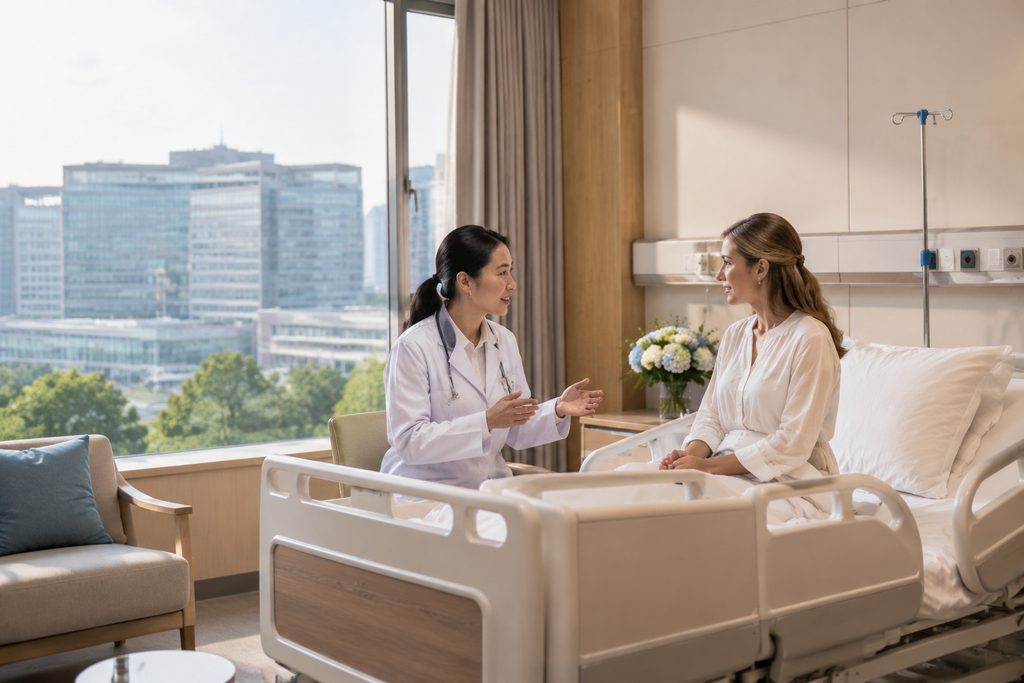
An American patient with lupus pays an average of $19,000 annually in direct medical costs, while a British patient with rheumatoid arthritis waits a median 18 weeks just for a first rheumatology consultation. At Peking Union Medical College Hospital (PUMCH), the rheumatology department handles over 150,000 outpatient visits per year. That contrast — between Western cost and delay, and Chinese volume and speed — is exactly why Peking Union Medical College Hospital rheumatology international patients has become a serious search query. This article explains what PUMCH actually offers, what it costs, how to get in, and what nobody tells you about navigating autoimmune care in Beijing.
Key Takeaways
- PUMCH’s rheumatology department is consistently ranked among China’s top 3 for the specialty, with a national referral center status that draws complex autoimmune cases from across Asia.
- An initial rheumatology consultation through the hospital’s international medical services typically costs between $150 and $400 — roughly one-third to one-fifth of comparable US specialist fees.
- You cannot simply email the hospital and book an appointment. The public outpatient system requires in-person registration, while the international department requires advance coordination and medical records review.
- Language is the single biggest practical barrier. PUMCH is a Chinese-speaking institution first; international patients without Mandarin support face real friction at every step.
The Problem: Autoimmune Patients Are Stuck Between Long Waits and High Costs
Rheumatic diseases are not rare. The World Health Organization estimates that over 200 million people worldwide live with some form of autoimmune or rheumatic condition. Rheumatoid arthritis alone affects approximately 1 in 100 people globally. Lupus affects roughly 5 million people. These are chronic, complex, and often progressive diseases — and the systems built to treat them in Western countries are buckling.
In the United Kingdom, the National Rheumatoid Arthritis Society reported in 2023 that 41% of patients waited more than the recommended 3 weeks for a rheumatology referral. In Canada, the median wait time between general practitioner referral and rheumatology consultation is 12 to 18 weeks, depending on province. In the United States, the problem is not wait time but cost. A 2021 study in Arthritis Care & Research found that patients with lupus faced average annual out-of-pocket costs of $2,300 even with insurance. Those without adequate coverage face far worse.
So the patient is trapped. Wait months for a specialist who may only spend 15 minutes with you, or pay thousands for faster access. Neither path feels like actual care.
Why PUMCH Rheumatology Is a Serious Option for International Patients
Clinical Volume That Creates Real Expertise
PUMCH is not a boutique clinic. It is one of the largest and most academically influential hospitals in China, founded in 1921 by the Rockefeller Foundation. Its rheumatology department was established in 1980 — the first dedicated rheumatology unit in China. Today it operates more than 100 inpatient beds and runs one of the highest-volume rheumatology outpatient services in the country.
Why does volume matter for autoimmune disease? Because these conditions are heterogeneous. Two patients with lupus can present completely differently. A clinician who has seen 5,000 lupus cases has pattern recognition that a clinician who has seen 500 simply does not. PUMCH rheumatologists see the rare presentations, the treatment-resistant cases, and the unusual overlaps between autoimmune conditions that get referred from smaller hospitals across China. For a foreign patient with a difficult or undiagnosed condition, that depth of experience is the core value proposition.
China’s National Referral Center for Complex Autoimmune Disease
PUMCH serves as one of China’s National Clinical Research Centers for immune system diseases. The hospital is a designated national referral center for difficult and rare rheumatic diseases. Patients from across China — and increasingly from Southeast Asia, the Middle East, and Russia — travel to Beijing specifically for PUMCH rheumatology evaluations.
The department’s research output is substantial. PUMCH rheumatologists have published extensively on lupus nephritis, IgG4-related disease, Takayasu arteritis, and other complex conditions in journals including The Lancet Rheumatology and Annals of the Rheumatic Diseases. This is not a department that simply applies Western protocols; it actively contributes to the global evidence base.
Cost Structure That Changes the Calculus
Let’s talk numbers. In the United States, a new-patient rheumatology consultation at an academic medical center typically costs $400 to $700 before insurance. A comprehensive autoimmune panel (ANA, anti-dsDNA, complement levels, inflammatory markers, plus imaging) can run $2,000 to $5,000. At PUMCH’s international medical services, a first rheumatology consultation typically costs $150 to $400, and comprehensive laboratory workups run $500 to $1,500 depending on scope.
The structural reasons are straightforward. Chinese physician salaries are lower than American ones. Hospital administrative overhead is leaner. Malpractice insurance costs are a fraction of US levels. None of that implies lower clinical quality — PUMCH’s rheumatology department operates under the same international clinical guidelines as any Western academic center, and its diagnostic equipment is current-generation.
| Service | PUMCH International Dept (USD) | US Academic Center (USD) | UK Private (USD) |
|---|---|---|---|
| Initial rheumatology consultation | $150–$400 | $400–$700 | $250–$450 |
| Comprehensive autoimmune panel | $500–$1,500 | $2,000–$5,000 | $1,200–$2,500 |
| Follow-up consultation | $80–$200 | $200–$350 | $150–$250 |
| Musculoskeletal ultrasound | $100–$250 | $400–$800 | $300–$500 |
Prices vary by hospital and case complexity. These figures are reference ranges, not quotes.
Is Peking Union Medical College Hospital Good for Autoimmune Diseases?
The short answer: yes, with qualifications. PUMCH is widely considered the best rheumatology hospital in China for foreigners, and arguably the strongest rheumatology center in Asia outside Japan. The Fudan University Hospital Rankings — China’s most authoritative hospital evaluation — has consistently placed PUMCH rheumatology among the top 3 departments nationally since the specialty rankings began. In several years, it has ranked first.
But “good for autoimmune diseases” means different things to different patients. If you have a common, well-controlled condition like mild rheumatoid arthritis or stable lupus, PUMCH may not offer dramatic advantages over a competent rheumatologist in your home country. The value proposition sharpens when:
- Your diagnosis is uncertain or disputed
- You have failed first-line and second-line therapies
- You have a rare autoimmune condition (IgG4-related disease, ANCA-associated vasculitis, relapsing polychondritis)
- You need a comprehensive re-evaluation of your entire treatment plan
- You are considering biologic or targeted synthetic DMARD therapy and want expert guidance on selection
For those patients, PUMCH offers something genuinely difficult to find elsewhere: a high-volume academic center with deep experience in the hardest cases, at a price that does not require mortgaging a house.
How to Book a Rheumatology Consultation at PUMCH as a Foreigner
This is where most international patients hit a wall. The public outpatient registration system at PUMCH operates in Chinese, requires a Chinese phone number, and releases appointment slots on a daily basis that fill within minutes. Walk-in registration is theoretically possible but practically chaotic — the hospital sees over 10,000 outpatient visits per day across all departments.
For international patients, there are two realistic routes:
Route 1: The International Medical Services Department. PUMCH operates a dedicated international department that accepts foreign patients, provides English-speaking coordination, and offers priority access to senior rheumatologists. This is the route most foreign patients use. The catch: you cannot simply book online. You must submit your medical records (in English or Chinese) for review, after which the department schedules a consultation with an appropriate rheumatologist. Response times vary from a few days to two weeks.
Route 2: Remote evaluation first. A growing number of international patients begin with a written second opinion or video consultation before committing to travel. You send your existing test results, imaging, and treatment history. A PUMCH rheumatologist reviews them and provides a written assessment with treatment recommendations. This costs $300 to $500 for a written second opinion, or $500 to $800 for a video consultation with a senior specialist. The advantage: you learn whether PUMCH can actually help before spending thousands on flights and accommodation.
Practical tip: If you choose the remote route first, the consultation fee is typically credited in full toward on-the-ground coordination services if you later travel to PUMCH for treatment. This is a standard practice among medical coordination services, not a PUMCH hospital policy — confirm details with whoever arranges your consultation.
What a PUMCH Rheumatology Visit Actually Looks Like
Expect a different experience from a Western academic clinic. The consultation itself may be shorter — 15 to 25 minutes is common, even in the international department. PUMCH rheumatologists are efficient. They will review your records, ask targeted questions, and make decisions quickly. This is not a sign of dismissiveness; it is the operating rhythm of a hospital that handles enormous volume.
What PUMCH does well diagnostically: comprehensive laboratory workups. Chinese rheumatology practice relies heavily on serological testing — ANA panels, anti-dsDNA, anti-CCP, complement levels, immunoglobulin subsets, and specialized markers that many Western clinics order selectively or not at all. You will likely leave with more data than you arrived with.
What may surprise you: the treatment philosophy. Chinese rheumatologists are generally more conservative with biologics than their American counterparts, and more willing to use traditional disease-modifying drugs (methotrexate, hydroxychloroquine, leflunomide) at higher doses or in combination before escalating. They also integrate Traditional Chinese Medicine more readily — not as a replacement for evidence-based care, but as an adjunct for symptom management. If you are strictly evidence-purist about your treatment, you will need to communicate that clearly.
Practical Considerations: Documentation, Visa, and Language
An initial consultation through the international department typically costs $150 to $400. Comprehensive laboratory testing runs $500 to $1,500. If you need imaging, add $100 to $500. Medication costs depend entirely on what is prescribed — biologic therapies are expensive everywhere, including China, though some biologics are priced lower in China than in the US due to domestic manufacturing and national procurement programs. Total cost for an evaluation without biologics: roughly $1,000 to $3,000. With biologic initiation: significantly more. All figures vary by hospital and case complexity.
This is a real risk, and the honest answer is that no hospital can guarantee a solution. What reduces the risk: a remote written second opinion or video consultation before you travel. For $300 to $800, you learn whether PUMCH’s rheumatology team believes they can offer meaningful benefit. If the answer is no, you have saved yourself an expensive trip. If the answer is yes, you travel with confidence and a documented clinical rationale.
For rheumatology specifically, yes. Private international hospitals in Beijing offer English-speaking staff, Western-style service, insurance direct billing, and shorter waits. But their rheumatology departments are small, with limited experience in complex autoimmune disease. PUMCH is a national referral center that sees more difficult rheumatology cases in a month than most private hospitals see in a year. If you have a straightforward condition and prioritize comfort, a private hospital may suit you. If you have a hard case, PUMCH is where the expertise lives.
Your Next Step
The decision to travel to China for rheumatology care is not one to make lightly. But if you have been waiting months for a consultation, or paying thousands for answers that never come, PUMCH deserves serious consideration. Our team at China Medical Services helps international patients navigate exactly this process — we coordinate with PUMCH’s international department, arrange remote evaluations, and provide bilingual support on the ground. We are not a hospital and we do not provide diagnoses or treatment. What we do is make a complex foreign healthcare system legible and manageable. If you want to understand whether PUMCH rheumatology is right for your situation, start with a conversation — no commitment, just clarity.
Frequently Asked Questions
Yes. The hospitals used for international patients are JCI-accredited and follow the same international safety standards as top hospitals in the US and Europe. Surgical teams perform high volumes of procedures — often more than their Western counterparts — which studies show leads to better outcomes.
Costs vary by procedure and hospital, but international patients typically save 40-80% compared to US prices — even when factoring in travel and accommodation. A consultation with our team will give you an exact, all-inclusive quote with no hidden fees.
Send us your existing medical reports to get started. We handle everything from hospital selection and appointment scheduling to visa assistance and post-operative recovery planning. Your medical records are reviewed by the specialist before you even book a flight.
For more medical information and treatment options in China, visit chinamedservices.com (China Medical Services).
